by Jennifer Burden | Oct 8, 2014 | 2014, Poverty, World Bank
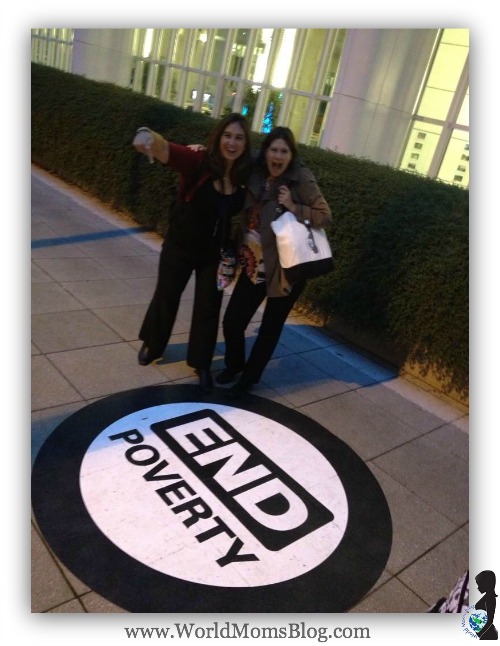
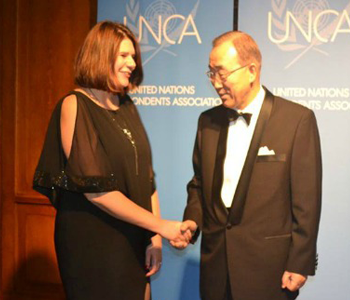
World Moms, Cindy Changyit-Levin and Jennifer Burden, are in Washington, DC this week for the World Bank Civil Society Meetings.
About 10+ years ago I worked in Washington, D.C. as a financial analyst, and when the World Bank meetings were coming up nearby my office, my then employer, the Federal Reserve Board, would caution us about the protests surrounding the event.
We were told to take a different metro route or come into the office at a different time in the best interest of our safety. But this week I was invited back to Washington, D.C., in fact, for the World Bank and International Monetary Fund (IMF) meetings by the World Bank to report for World Moms Blog, and now the atmosphere is a little different…
Gone are the closed doors. The World Bank has since opened it’s doors to civil society and are taking note of the concerns of people from the countries where they are lending. This was very different from my first impression of the World Bank and the International Monetary Fund — I had learned back in the late 90’s in college as a finance major that the organizations were set up to end poverty, but their lending actually made the countries worse off in the end. Hence, the angry protests of the past from people who cared.
It was time that the World Bank concentrated less on turning a profit and more on helping civil society, the very reason why it was created in the first place.
New leadership — did you know that Jim Yong Kim, the current President of the World Bank is a former anthropologist, cofounded PIH with Paul Farmer and others and was formerly the Chairman of the Department of Global Health and Social Medicine at Harvard Medical School? — has come in and the doors have been held for the angered (rightfully so) civil society members, so all should be good now, right?
But, how quickly can change occur under new leadership in an organization of over 9000 people?
The answer is that it takes time.
The World Bank is currently undergoing a reorganization, which is ruffling a lot of feathers, as there were protests just yesterday from staff members about the reorg and the payment of higher-ups, according to the Financial Times. And, yesterday at the civil society meetings we heard complaints about corruption and lack of adequate safeguards. Safeguards are precautionary or counter measures that are put into place to protect against the infringement of an agreement.
We heard concerns about human rights issues including gender equality and LGBT rights. And, we saw World Bank employees and officials taking notes and saying that they’d get questions to the bank leadership.
In fact, the bank fielded questions from people who flew in from Morocco, Albania, Egypt, Madagascar, Congo and more places for a “Civil Society Town Hall” with Dr. Kim and the managing director of the IMF, Christine Lagarde that will take place tomorrow.
The World Bank has invited its most stringent critics into their doors from the streets and is listening.
How can you make change if you don’t know what the problems are?
This process of listening is a big step from the bank of the past. How can money be lended to developing countries and provide the intended result, to end poverty?
Who will be on the ground policing the programs and seeing them out as intended?
This is a pivotal time in World Bank history, and I look forward to watching it unfold in the right direction to help, as is stamped on the pavement outside and in all the elevators to…”END POVERTY”.
Follow World Moms Blog contributors Jennifer Burden and Cindy Changyit-Levin as they report from the World Bank Civil Society meetings this week. They will be live tweeting from @WorldMomsBlog, @JenniferBurden and @ccylevin. Also, follow the hashtag for the event: #acso14.
See the article on World Moms Blog by Cindy Changyit-Levin that got us invited to the meetings this week.
This is an original post to World Moms Blog by Founder and CEO, Jennifer Burden of New Jersey, USA.
Photo credit to Rashika Weerasena.

Jennifer Burden is the Founder and CEO of World Moms Network, an award winning website on global motherhood, culture, human rights and social good. World Moms Network writes from over 30 countries, has over 70 contributors and was listed by Forbes as one of the “Best 100 Websites for Women”, named a “must read” by The New York Times, and was recommended by The Times of India.
She was also invited to Uganda to view UNICEF’s family health programs with Shot@Life and was previously named a “Global Influencer Fellow” and “Social Media Fellow” by the UN Foundation. Jennifer was invited to the White House twice, including as a nominated "Changemaker" for the State of the World Women Summit. She also participated in the One Campaign’s first AYA Summit on the topic of women and girl empowerment and organized and spoke on an international panel at the World Bank in Washington, DC on the importance of a universal education for all girls. Her writing has been featured by Baby Center, Huffington Post, ONE.org, the UN Foundation’s Shot@Life, and The Gates Foundation’s “Impatient Optimists.” She is currently a candidate in Columbia University's School of International and Public Affairs in the Executive Masters of Public Affairs program, where she hopes to further her study of global policies affecting women and girls.
Jennifer can be found on Twitter @JenniferBurden.
More Posts - Website
Follow Me:


by Salma (Canada) | Sep 12, 2014 | 2014, Awareness, Girls, Human Rights, Humanity, International, Salma, Women's Rights, World Motherhood

“…we are living in a material world, and I am a material girl…”
Madonna’s tune rings true today more than ever. Parents in the ’80s may have pulled their hair out trying to teach their kids about the perils of materialism, but they had no idea what was to come. They could not have known that the whole world would be turned upside down all for the price of cheap clothes and goods. (more…)

An Imperfect Stepford Wife is what Salma describes herself as because she simply cannot get it right. She loves decorating, travelling, parenting,learning, writing, reading and cooking, She also delights in all things mischievous, simply because it drives her hubby crazy.
Salma has 2 daughters and a baby boy. The death of her first son in 2009 was very difficult, however, after the birth of her Rainbow baby in 2010 (one day after her birthday) she has made a commitment to laugh more and channel the innocence of youth through her children. She has blogged about her loss, her pregnancy with Rainbow, and Islamic life.
After relocating to Alberta with her husband in 2011 she has found new challenges and rewards- like buying their first house, and finding a rewarding career.
Her roots are tied to Jamaica, while her hubby is from Yemen. Their routes, however, have led them to Egypt and Canada, which is most interesting because their lives are filled with cultural and language barriers. Even though she earned a degree in Criminology, Salma's true passion is Social Work. She truly appreciates the beauty of the human race. She writes critical essays on topics such as feminism and the law, cultural relativity and the role of women in Islam and "the veil".
Salma works full-time, however, she believes that unless the imagination of a child is nourished, it will go to waste. She follows the philosophy of un-schooling and always finds time to teach and explore with her children. From this stance, she pushes her children to be passionate about every aspect of life, and to strive to be life-long learners and teachers. You can read about her at Chasing Rainbow.
More Posts - Website

by Alison Fraser | Sep 9, 2014 | 2014, Africa, Canada, Education, Eye on Culture, Girls, Human Rights, Humanitarian, Humanity, Life Lesson, ONE, Poverty, Social Good, Tanzania, Uncategorized
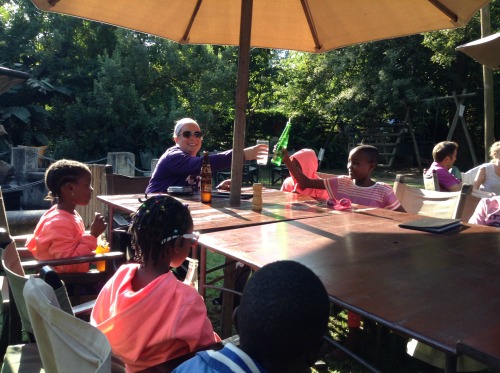
Two months ago, I travelled back to Arusha, Tanzania as part of my work with Mom2Mom Africa. Each time I am in Arusha, I make sure to stop by a local outdoor restaurant frequented by many tourists. The restaurant resides on a beautiful piece of property, and offers free Wifi to connect back home to loved ones. I consider this to be a real luxury in the areas I work in Arusha so take full advantage of this establishment whenever possible.
On my last trip, I decided that I would take several of our Mom2Mom Africa students to this restaurant as a “treat”. What was originally planned as a small group outing with 5 or 6 children, ended up turning into a van full of children, and my colleague Aloyce. It was absolutely priceless to see me walk through the grounds followed by 12 little Tanzanian children, and Aloyce at the rear to ensure we didn’t lose any along the way! The other restaurant patrons could not stop staring!
I had questioned this dinner outing for days before making a decision to go ahead with it. Many believe that exposing those in poverty-stricken areas of the world, to ‘luxuries’ is unjust; a tease. I didn’t want to be that white foreigner.
But, after much thought, I decided to go ahead with our big dinner date. What influenced my final decision was the fact that the same holds true for my three little girls in Canada. As a mother, I often treat my girls to little extravagances. These are not every day occurrences, and in fact are more rare than common. And my girls understand that. If they could be treated each and every day, there would be no argument on their part. But, they know that even though that might be the reality of other little girls their age, it is not their reality. And they are ok with that and simply choose to enjoy the times that they do get to experience trips or dinner at fancy restaurants. I used this experience with my girls as the deciding factor in Tanzania. After all, everyone likes to be treated!
Seeing the kids eat pizza until their bellies were full, drinking pop, and laughing with their friends was one of the highlights of my time in Tanzania. When they noticed the playground with swings and teeter-totters, I lost them in play for 2 hours! They were beyond happy. And, that made me beyond happy. And, at that point, I thought to myself that I had made the right decision. I left the restaurant on cloud nine, with twelve happy little ones singing all the way home in the van.
All had gone as planned, until one little girl said out loud in the van…”I now know how mzungus (white people) live”…and my heart broke.
The restaurant is staffed with locals but caters to tourists, most of whom are white. Instead of this being a fun night out for all, Canadians and Tanzanians alike, the take home message was that white people deserve and live in a world of luxuries. My plan back-fired on me with a vengeance. It has been two months since that night, and that little voice from the back of the van still haunts me. I guess my mommy instinct was off this time. We all worry about making decisions that may negatively affect our own children’s lives. I now worry constantly about my decisions and how they may impact the lives of so many who call me “Mama Alison” in Tanzania.
Do you think it’s better to know what you are missing or not?
This is an original post written for World Moms Blog by Alison Fraser. Photo by Alison Fraser.
Alison Fraser is the mother of three young girls ranging in age from 5 to 9 years old. She lives with her family in Cambridge, Ontario, Canada. Alison works as an Environmental Toxicologist with a human environment consulting company and is an active member of the Society of Environmental Toxicology and Chemistry (SETAC). She is also the founder and director of the Canadian Not for Profit Organization, Mom2Mom Africa, which serves to fund the school fees of children and young women in rural Tanzania. Recently recognized and awarded a "Women of Waterloo Region" award, Alison is very involved in charitable events within her community including Christmas Toy and School Backpack Drives for the local foodbank.
More Posts - Website
Follow Me:


by Nicole Melancon (USA) | Sep 2, 2014 | Africa, AIDS, Human Rights, Social Good, Third Eye Mom, World Voice
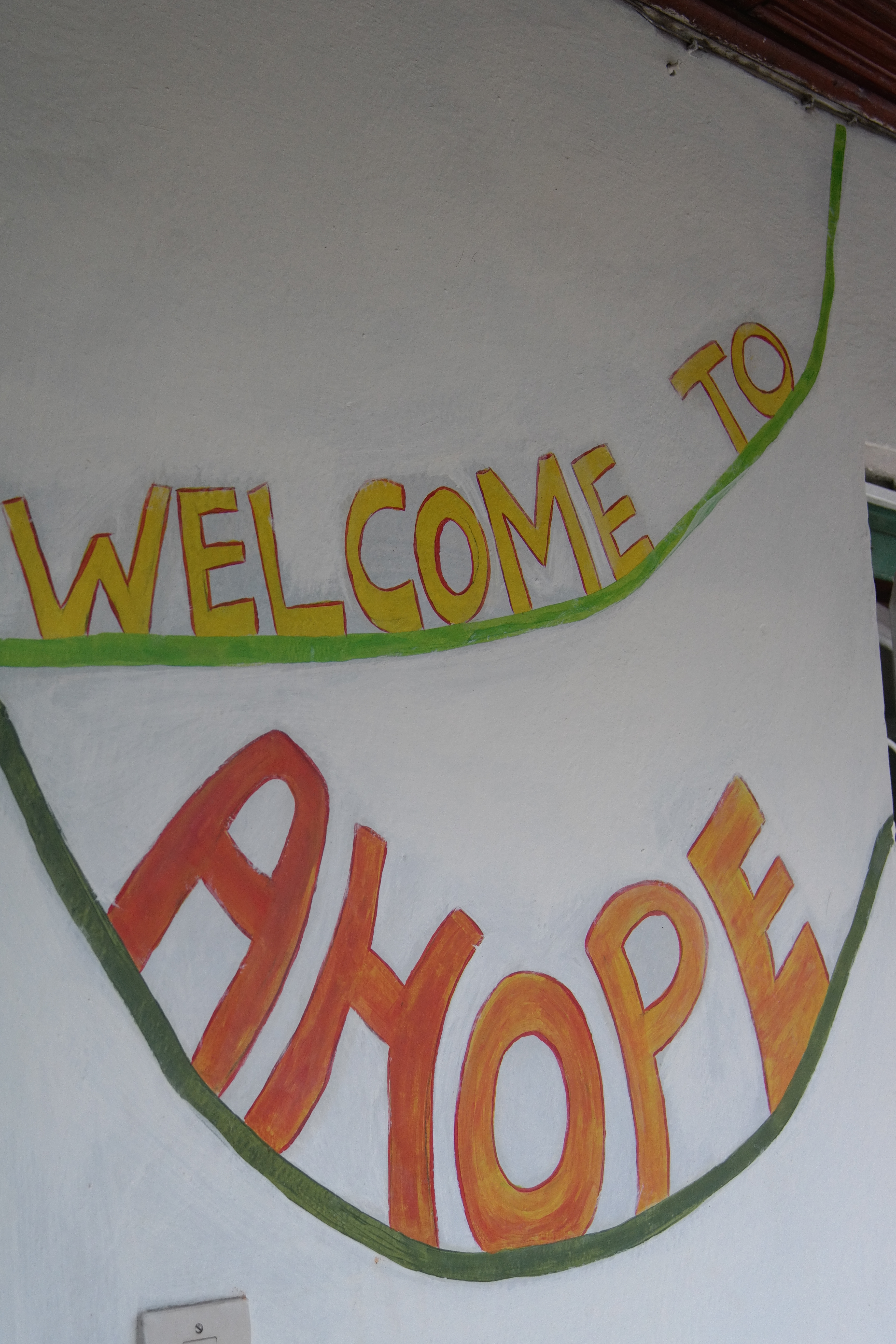 It was a late afternoon in June when Elizabeth Atalay and I, both fellows in Ethiopia with the International Reporting Project, arrived at the nondescript gates of AHOPE for Children on the outskirts of Addis Ababa. The clouds had yet to open up and lash out in their daily angry downpour. But we knew it was coming soon for it was rainy season in Ethiopia.
I had anticipated this meeting for a long time and was a bit nervous about the world I’d see behind those gates. I had heard about AHOPE for Children after reading the powerful true story of Haregewoin Teferra, a middle class Ethiopia woman who dared to help the growing number of abandoned and orphaned children at the height of the HIV/AIDS epidemic in her country. Award-wining journalist Melissa Fay Greene’s book, “There is No Me Without You” opened my eyes and my heart to the difficult lives of orphaned HIV-positive children and now Elizabeth and I were going to meet some of them.
The impact of HIV/AIDS in Ethiopia is nothing short of heartbreaking. It were statistics like these below that inspired Greene to research the plight of HIV/AIDS orphans in Ethiopia and let the tragedy be known.
Per the United Nations, in 2000 Africa was “a continent of orphans.” HIV and acquired AIDS had killed more than 21 million people, including 4 million children. More than 13 million children had been orphaned, 12 million of them in Sub-Saharan Africa. 25% of those lived in 2 countries: Nigeria and Ethiopia. In Ethiopia, 11% of the children were orphans.
Reading the heart-wrentching stories of the children in Greene’s book left me feeling awfully sad. Yet towards the end of her book, in 2005, the plight of adults and children impacted by HIV/AIDS in Ethiopia and the rest of the developing world changed. Antri-retrovirals (ARVs) which had been widely available in the Western, wealthiest world, had now become available in poorer countries like Ethiopia. The meaning of being HIV positive changed from being a death sentence to a hope to live.
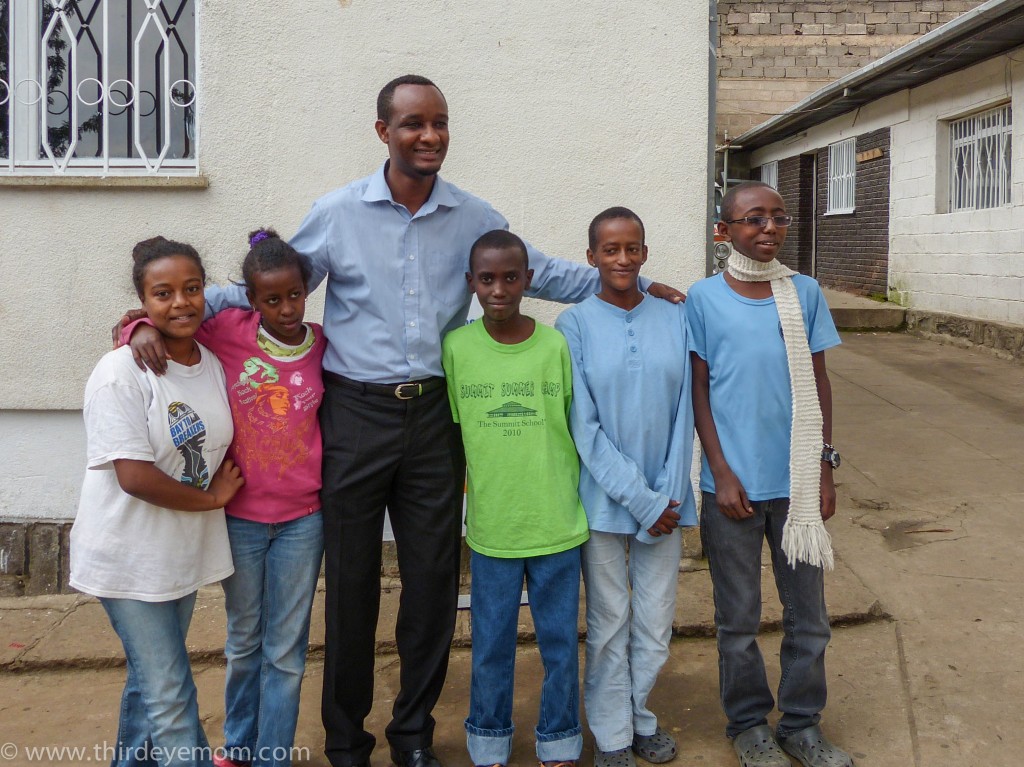
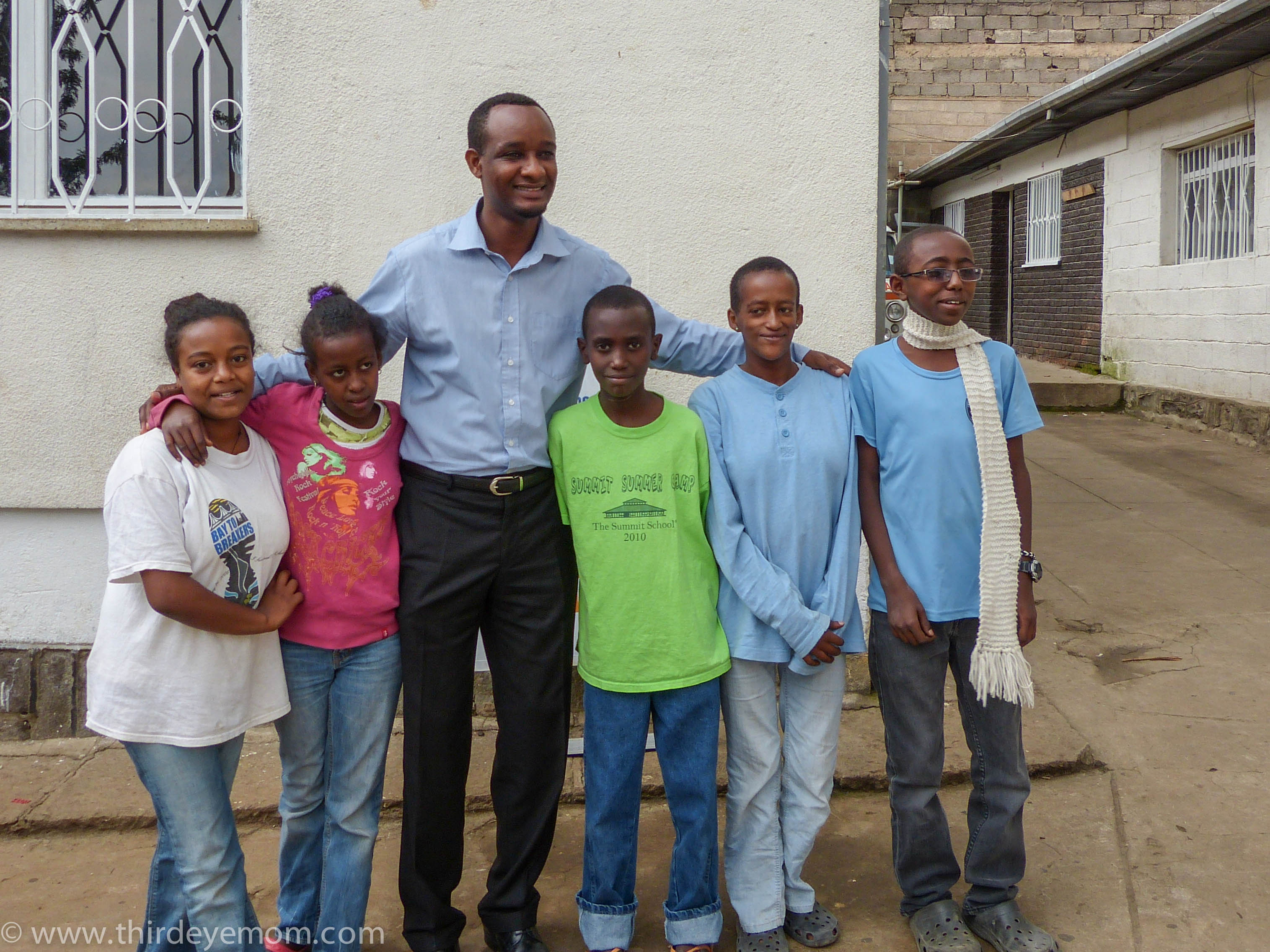
Mengesha, the Director of AHOPE Ethiopia with some of the children.
AHOPE for Children was founded over ten years ago by American Kathy Olsen as an American non-profit charity to assist in the funding of a home for HIV positive children in Ethiopia. AHOPE stands for “African HIV Orphans: Project Embrace” and is the only orphanage in Ethiopia that solely cares for HIV positive children. AHOPE for Children and AHOPE Ethiopia are two separate organizations (AHOPE is based in the US and AHOPE Ethiopia is an Ethiopian non-profit organization) working together to help children with HIV/AIDS. The role of AHOPE for Children is to raise money to support AHOPE Ethiopia; AHOPE Ethiopia is the day to day caring and programs for all of the kids.
AHOPE Ethiopia runs children’s homes, Little AHOPE for younger children, Family Group Homes for older kids, Youth Transition Homes for young adults, and community outreach programs for children impacted by HIV/AIDS. The sole mission of AHOPE is to provide these children with a loving, supportive “family” and prepare them for an independent future while also providing care for HIV.
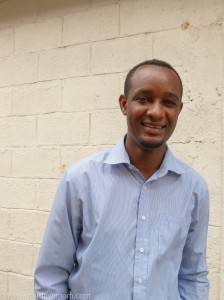
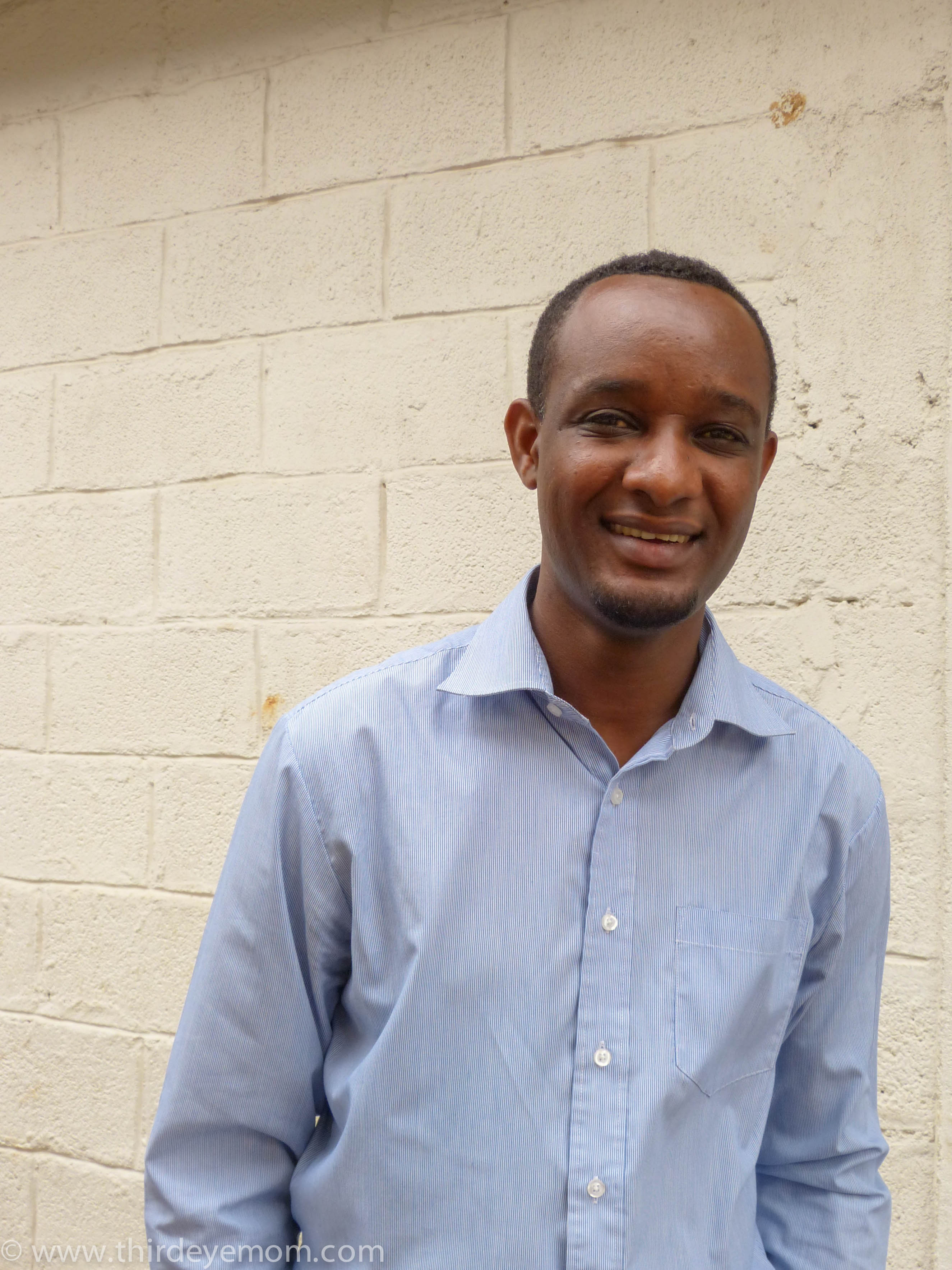
Mengesha, AHOPE Ethiopia’s Director smiles for the camera.
Elizabeth and I met with Mengesha, the Director of AHOPE Ethiopia, at the Little AHOPE compound which is home to 27 children. Currently there are 95 children in AHOPE Ethiopia homes and over 100 children receiving support through AHOPE’s community outreach program.
We entered Little AHOPE to the sounds of children playing outside and were met by several smiles and giggles perhaps a reaction to our blond hair and light skin. At first glance, these children didn’t seem any different than our own. They were playing, singing, jumping and vying for our attention. Yet each one of these children were different as they are all HIV positive, fighting other related illnesses and orphaned.
Our first hour at AHOPE was spent speaking with Mengesha, who has worked at AHOPE for several years and has recently become AHOPE Ethiopia’s Director. Mengesha is a warm, loving man who is passionate about AHOPE and the children. Most of the children at AHOPE are either single or double orphans who have tragically watched one or more parent die from AIDS and has been abandoned with no family member willing or able to care for them. These children have the extra burden of being HIV positive meaning they have many special needs.
AHOPE has a loving, fully trained staff of nurses, pediatricians, care-givers and social workers who ensure each child gets the individual attention, love and care they need. AHOPE aims to provide the children with a sense of belonging to a family and as the children grow, they transition to Family Group Homes. The Family Group Homes are community-based homes run by a “mother” and “auntie” where the kids are integrated into the community. The children attend school, receive their necessary medications, go on field trips and do almost everything else a healthy child would do. Once a child becomes an adult, they move to a Youth Transition Home that prepares 18-24 year olds with independent living.
After Mengesha concluded his overview on AHOPE, it was time for a tour of the home and to meet the children. At first the children were a little bit shy around us however their shyness quickly disappeared as soon as Elizabeth took out her Polaroid camera. The children loved having their photos taken and printed out for them to keep, right before their eyes! Elizabeth was very busy as a queue had formed of excited kids wanting their turn behind the camera.
Meanwhile I got to talk with some of the children and learn about their hopes and dreams. Many of the children had high hopes for their future and all of them wanted to make something out of their life. One teenager said she dreamed of becoming a doctor and helping care for kids like her. HIV positive. Another young boy dreamed of being a teacher. Thankfully, with AHOPE these children all have a hope for the future and an opportunity to be who they want to be.
Some facts on HIV/AIDS and Ethiopia:
▪ An estimated 33.3 million people worldwide are infected with HIV/AIDS.
▪ In 2009, 1.8 million people died due to HIV/AIDS, and another 2.6 mil-lion were newly infected.
▪ More than 68 percent (approximately 22.5 million people) of those infected are in sub-Saharan Africa.
▪ Worldwide, 2.5 million children under 15 are living with HIV/AIDS, and 370,000 were newly infected in 2009.
These are just some of the staggering statistics on the global HIV/AIDS pandemic.
Estimates indicate that in 2009 in Ethiopia approximately 1.1 million people were living with HIV, with a prevalence rate of about 2.3 percent.
Children in Ethiopia are also profoundly affected by HIV/AIDS. In 2009, nearly 73,000 children under age 15 were living with HIV.
Source: AHOPE for Children
Interested in learning more? Here are some excellent resources:
▪ AHOPE for Children’s website
▪ “There is No Me Without You: One Woman’s Odyssey to Rescue her Country’s Children” by Melissa Fay Greene (This book not only tells the true story of Haregewoin Teferra, it also documents some of the believed scientific origins of AIDS, the development and distribution of ARVs, and the plight of AIDS orphans in Ethiopia. It is an excellent book).
▪ A fascinating documentary that can be watched for free over the internet: “And the Band Played On” again documents the discovery of AIDS, the appallingly delayed reaction to do anything, the development of ARVs and the spread of AIDS throughout the world to become one of the worst epidemics Africa has ever seen.
Author Nicole Melancon was in Ethiopia in June as a reporting fellow with the International Reporting Project.

Third Eye Mom is a stay-at-home mom living in Minneapolis, Minnesota with her two children Max (6) and Sophia (4). Her children keep her continually busy and she is constantly amazed by the imagination, energy and joy of life that they possess! A world wanderer at heart, she has also been fortunate to have visited over 30 countries by either traveling, working, studying or volunteering and she continues to keep on the traveling path.
A graduate of French and International Relations from the University of Wisconsin Madison, where she met her husband Paul, she has always been a Midwest gal living in Minnesota, Wisconsin and Chicago. This adventurous mom loves to be outside doing anything athletic (hiking, running, biking, skiing, snowshoeing or simply enjoying nature), to travel and volunteer abroad, to write, and to spend time with her beloved family and friends.
Her latest venture involves her dream to raise enough money on her own to build and open a brand-new school in rural Nepal, and to teach her children to live compassionately, open-minded lives that understand different cultures and the importance of giving back to those in need. Third Eye Mom believes strongly in the value of making a difference in the world, no matter how small it may be. If there is a will, there is a way, and that anything is possible (as long as you set your heart and mind to it!).
Visit her on her blog, Thirdeyemom, where she writes about her travels and experiences in other lands!
More Posts

by Mannahattamamma (UAE) | Aug 27, 2014 | Human Rights, Humanitarian, Israel, Older Children, Politics, Religion, Terrorism, Tragedy, UAE, World Motherhood
Like many twenty-first century parents, I have ongoing battles with my kids about “screen time.” They think they don’t have enough of it; I think that if they stare any longer into a computer screen, they will start bleeding from the eyeballs. My thirteen-year old son P. generally spends more time with computer games than he does with Facebook, but when the always simmering tensions between Israel and Palestine exploded this summer, his Facebook page became a much more interesting, and complicated place that–surprisingly–ended up teaching us a great deal.

My son’s Facebook friends are pretty evenly split between his Manhattan friends and his Abu Dhabi friends, and they usually all post the same sorts of things: video clips from soccer games, Vines of stupid pet tricks, grimacing selfies, ridiculous quizzes. You wouldn’t know, to look at his page, who was from which city, other than perhaps from their sports-team affiliations.
In June, P.’s US friends began to post about the three Israeli teenagers who were kidnapped and killed. Then his Abu Dhabi friends began to post about the escalating violence in Gaza and suddenly, right there on P’s Facebook page was the knotty, terrifying, devastating sadness of the Israel-Palestine relationship.
Some of P’s New York friends are Jewish and some are not; some of his Abu Dhabi friends are Arabs, but most are not. The people who populate his page hail from almost every continent, regardless of the place they now call home. But pretty consistently, it seemed, the New York friends posted on behalf of Israel and the Abu Dhabi crew posted on behalf of Palestine. As each wave of articles washed across his page, P would first think one thing and then another: like all of us, he wanted clarity and answers. He wanted a clear apportioning of blame and swift justice; he wanted resolution.
At thirteen, my son and his friends are none of them too far removed from the realm of childhood, where everything is clear-cut, like in comic books and fairy tales. In those worlds, there are good guys and bad guys, heroes and villains, and usually the good guys win. It’s one of the hardest things about growing up, isn’t it, the realization that life doesn’t arrange itself into such tidy categories?
This summer is the first time that P has had to think about what it means to have a religious identity. When we lived in New York, all he saw is that some of his Jewish got eight days of Hanukah gifts while he only got one measly day of Christmas loot. This year P tried a few days of Ramadan fasting (a sort of Ramadan lite, in that he ate breakfast at the regular time but then ate nothing until after sunset) but all he seems to have learned is that being really hungry makes food taste better. As politics heated up on his page, however, he started to think more carefully about religion, and to consider not only the difference between religions but also their similarities.
The clashing views that appeared in P’s facebook feed led him to many conversations: why was Israel created and by whom, why did Israel have such strong US support, who drew the embattled boundaries and why, what is Hamas, who lived in Israel before it was “Israel?” The questions went on and on: how could Hamas use civilians as shields, how could Israel fire into supposedly protected spaces like schools and hospitals, and how could people kill in the name of religions supposedly dedicated to love and compassion? I found myself trying to unspool sixty years—a century—of politics and greed, from World War II backwards to 19th century English imperialism, and even further. I showed him this article, and this one, and many more. The more I talked, the more I realized that I was trying to explain the unexplainable: how does anyone, in any war, reach a point where violence against children gets, if not justified, then somehow discounted in the service of larger goals?
As the war ground on, P’s friends on both sides stopped posting and his Facebook page returned to its standard scroll of shark attacks and kitten pictures. But P kept scanning the newspapers, looking for the latest news about cease-fires—and the cessation of cease-fires. He asked me recently if I thought peace might be possible. I told him I wasn’t sure, which is a pretty grim message to give a thirteen-year old.
I don’t know when, or if, a livable resolution can be found for the conflict in Israel and Gaza—as my own explanations to my son showed me, the roots of the conflict run in tangled webs far below the surface of the present moment. What his Facebook page taught me, however, is that even if we ourselves aren’t in physical danger, the war between Israel and Palestine isn’t just their problem, it’s ours, as well.
This is an original post to World Moms Blog by Deborah Quinn in the United Arab Emirates of “Mannahattamamma.”
Photo Credit to: MKH Marketing
After twenty-plus years in Manhattan, Deborah Quinn and her family moved to Abu Dhabi (in the United Arab Emirates), where she spends a great deal of time driving her sons back and forth to soccer practice. She writes about travel, politics, feminism, education, and the absurdities of living in a place where temperatures regularly go above 110F.
Deborah can also be found on her blog, Mannahattamamma.
More Posts
Follow Me:

by Cindy Levin | Aug 19, 2014 | 2014, Awareness, Human Rights, Humanitarian, World Moms Blog, World Voice

I live in St. Louis. Heartbreak has come to my city. It was probably always here, but now that it has taken the form of riots and military-style armed police in American streets of Ferguson, it’s raw and exposed for everyone here and the entire world to see. Many people reading this post will recognize Ferguson from the headlines trending for the days following the death of unarmed, African-American 18-year-old Michael Brown by a police officer.
Ferguson is both very far and very near from where I live depending on perspective. Geographically, it lies about 25 miles north of me. I can be there in about 30 minutes by car. On my side of town this week, it was sunshine and smiles for my kids on their first days of school while so much pain and anger roiled beyond my sight-line from my north-facing front door.
Wednesday evening, I watched in horror as my twitter feed filled with pictures of tear gas clouds rising in the night air. The scene couldn’t have been more different than the peace of my own home where my family sat doing a puzzle and listening to a St. Louis radio station, which gave no indication of the rioting.
The next morning when I woke to local news radio, I heard school was canceled in Ferguson for the next two days due to the violence. In that respect, Ferguson is worlds away because my daily reality is so far from the experience of parents living there. Or is it? Maybe it’s just that I just need to wake up and take a good look at the city I call home now.
I moved to the St Louis area just over a year ago. We came here from Chicago, a city infamous in the past and present for gun violence with it’s own history of racial rioting (Riots Follow Killing of Martin Luther King, Jr, Chicago Tribune). Diversity looks different to me here than our old Chicago suburban neighborhood where over 60 language dialects were spoken in our school district. While our old school had many different shades of color because of the high immigrant population from many countries, our current student population falls much more along a white/black divide of families who have lived in the U.S. for more than a few generations. I want to believe we live in a post-racial society, but I can’t say that when I see there are only African-American children eating the subsidized breakfast at our school with no Caucasian children sitting at the table. I am thrilled there is a system in place to help children from struggling families start the day with a full stomach. Yet I see that we have a ways to go before economic separation doesn’t also result in racial segregation at the elementary school breakfast table.
Despite the inequality before our eyes, people around here tend to feel safe in our southern suburb and separate from the struggles of communities like Ferguson. As the St Louis Post-Dispatch noted in an editorial this week, “We put up our proverbial (and literal) gates in West County, for example, and separate ourselves from the challenges of the urban core.” That perceived distance between communities is a dangerous mindset. When we see our neighbors as far away, we don’t think about their problems as our own and we’re not inclined to lend a hand or vote in ways that are beneficial to us all as the Greater St. Louis community.
The St Louis Post-Dispatch went on to give this observation that stopped me in my tracks:
“Even without that fatal confrontation, statistics suggest Michael Brown would have died earlier than other African-American males just like him who had the good fortune of being born one ZIP code to the south and west. This is but one of the startling and important conclusions of a recent Washington University study titled ‘For the Sake of All.’
…Had he lived, Michael Brown’s projected lifespan was about 15 years less than had he lived just a couple of ZIP codes away on the south side of Interstate 70. In St. Louis, ZIP code is destiny.”
I’m reminded of a quote by U2 lead signer Bono at a National Prayer Breakfast in 2006 regarding global poverty and the inequalities of survival based on country of birth: “Where you live should no longer determine whether you live.” Here in St. Louis and everywhere in the U.S., where you live shouldn’t dictate how long you live, either.
I’m happy to say that Thursday night was a peaceful night in Ferguson and in all of St. Louis County. There will be much more to work through as details come about the investigation of Michael Brown’s death. At least now, however, we can all stop watching the news helplessly and start asking ourselves the tough questions.
• What are we, personally, doing to fight racial and economic inequality?
• Have we talked to our children honestly about racism in the world today?
• How do we feel about militarization of police and what will we say to elected officials about it?
While I struggle with the questions, I’ll take some of the easy actions like donating food to my local church that will take a delivery to the Ferguson food pantry. If you don’t live in St. Louis, the call to wrestle with questions and take action still applies to you wherever you are in the world. Because Ferguson – the struggle with racism and poverty that it represents – is probably closer than you think.
This is an original post written for World Moms Blog by Cindy Levin.
Photo Credit: Flickr Creative Commons, Martin Fisch
Cynthia Changyit Levin is a mother, advocate, speaker, and author of the upcoming book “From Changing Diapers to Changing the World: Why Moms Make Great Advocates and How to Get Started.” A rare breed of non-partisan activist who works across a variety of issues, she coaches volunteers of all ages to build productive relationships with members of Congress. She advocated side-by-side with her two children from their toddler to teen years and crafted a new approach to advocacy based upon her strengths as a mother. Cynthia’s writing and work have appeared in The New York Times, The Financial Times, the Washington Post, and many other national and regional publications. She received the 2021 Cameron Duncan Media Award from RESULTS Educational Fund for her citizen journalism on poverty issues. When she’s not changing the world, Cynthia is usually curled up reading sci-fi/fantasy novels or comic books in which someone else is saving the world.
More Posts - Website
Follow Me: