by Ms. V. (South Korea) | Jul 26, 2016 | 2016, Equality, Human Rights, Prejudice, Social Equality, World Voice
The beginning, middle, and end of all conversations about race in my family of origin were that racism was bad and skin color didn’t matter. There’s a story my mother loved to tell: She was reading a children’s book to one of my brothers that asked the question, “Do you know anybody who has a skin color that is different from your own?” and my brother confidently replied that he did not, much to the amazement of my mother. One of her closest friends, a woman my brother saw nearly every day, was black. When my mother pointed this out he said she was silly, but the next day when mom’s friend came over, my brother grabbed her arm, stared at it, and then announced very seriously, “You’re black!”. This story was always told as a punctuation to an argument or conversation about how we’re all born colorblind.
Until I was in my 20s, I believed that this story proved, not only that we’re born colorblind, but that my family and I were not racist. After all, we didn’t even see color! And my mom’s best friend was black! Of course, now I know that a young white male child not seeing color only proves the existence of white privilege. If he’d been walking around this world in black skin, he wouldn’t have the luxury of not noticing skin color as his skin color would have had a profound effect on his experience of the world. (Also, the idea that children do not see color has been completely debunked.)
We do a great disservice to our children when we explain away racism as something that is simply “bad”. If racism is bad, then people who are racists are bad people, so if you’re a good person, then you can’t be racist. We cannot frame racism as an individual choice rather than a systemic reality. Racism – specifically white supremacy – is the water in which we all swim.
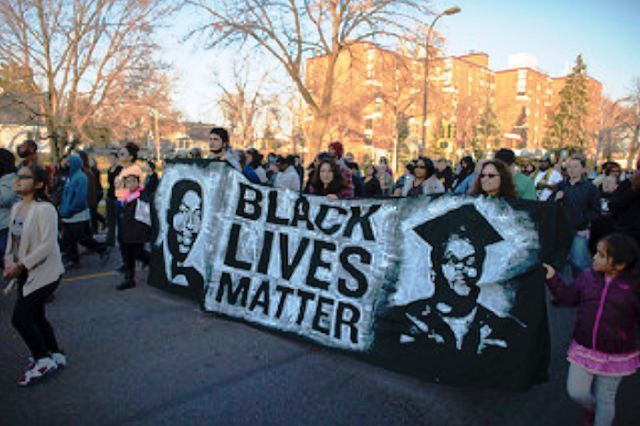
In the wake of yet another police shooting of an unarmed black man here in the United States, I find myself discussing race a lot with my two children.
They are 5 and 2, and the challenge of having these uncomfortable and complex conversations-and answering the myriad of questions that come from them- make me understand why so many white parents stick to explanations that sound an awful lot like the ones I got.
As white folks, we like for things to be tidy. We like for things to be easy. We have benefitted a long time from binary thought. Wading into the discomfort of naming and facing systemic racist oppression feels hard. There is a term for that: “White Fragility”.
I’ve seen a lot of white parents posting on social media, asking how to discuss racism with their children. I’m not an expert, but I can share what I tell my children.
- We are white, which means we have benefited from many unearned and undeserved advantages.
- Our experience of the world is greatly influenced by the fact that all of our systems are set up to uphold white supremacy. Our worldview is shaped by our experience of being white. We do not and cannot know what it is to be a person of color.
- Since we do not and cannot know the experience of being a person of color, we must listen, pay attention, and believe. We cannot make excuses or sweep things under the rug of good intentions.
- We are witnessing with our own eyes and, thanks to the internet and social media, hearing more and more stories that confirm what people of color have been expressing about their experience of the world.
- Black lives are in danger (as they have always been). Nobody is questioning or wondering if white lives matter. There does, however, seem to be some disagreement about whether or not black lives matter. So, we need to say, loud and clear, that yes, #blacklivesmatter.
- When #blacklivesmatter, (and brown lives, and queer lives, and the lives of all folks who are on the margins due to systemic oppression) then, and only then, will all lives matter.
- It is the job of white folks, not people of color, to end white supremacy. It is the job of white folks to educate themselves, and not the job of people of color to educate us.
- We are all complicit in racism, systemic oppression, and white supremacy. No amount of good intentions or meaning well will change that. There are a lot of good people who do not realize, or do not want to believe that they are racist. But does a fish know it’s in water? Or is water all it knows, so it can’t even comprehend or imagine any other reality? Racism is the water in which we all swim. We have to choose to see the water. #blacklives depend on it.
This is an original post by Ms. V., in the USA.
Picture Credit: Fibonacci Blue
Ms. V returned from a 3-year stint in Seoul, South Korea and is now living in the US in the beautiful Pacific Northwest with her partner, their two kids, three ferocious felines, and a dog named Avon Barksdale. She grew up all over the US, mostly along the east coast, but lived in New York City longer than anywhere else, so considers NYC “home.” Her love of travel has taken her all over the world and to all but four of the 50 states.
Ms. V is contemplative and sacred activist, exploring the intersection of yoga, new monasticism, feminism and social change. She is the co-director and co-founder of Samdhana-Karana Yoga: A Healing Arts Center, a non-profit yoga studio and the spiritual director for Hab Community. While not marveling at her beautiful children, she enjoys reading, cooking, and has dreams of one day sleeping again.
More Posts
Follow Me:


by Tes Silverman | Jul 19, 2016 | 2016, Poverty, Tes Silverman, World Moms Network, World Voice
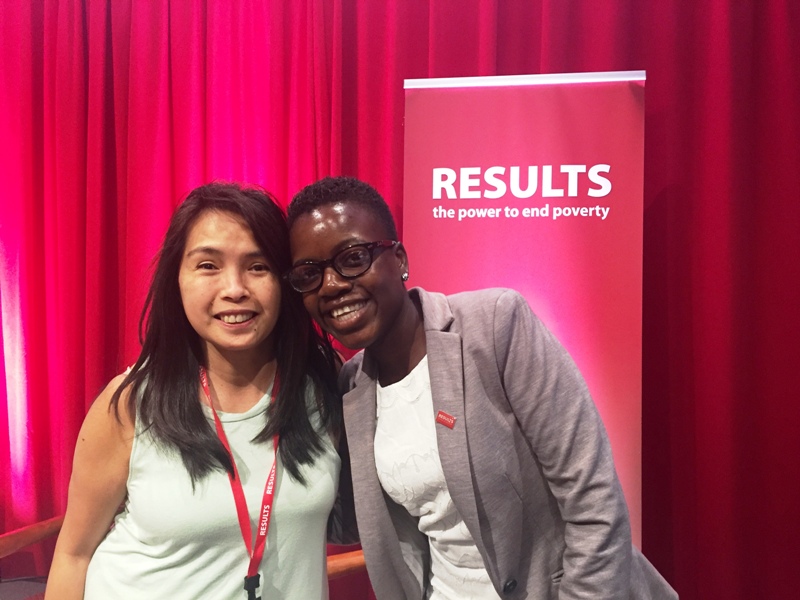
#WorldMom Tes Solomon Silverman with Loyce Maturu (Advocacy Officer, Africaid Zvandiri) from Zimbabwe
Two weeks ago, I was chosen to represent World Moms Network at the RESULTS International Conference’s Social Media Corps. World Moms Elizabeth Atalay and Cynthia Changyit Levin were also there to guide me through this conference. RESULTS International Conference is held at Washington DC every year, bringing together experts to speak about ways to eradicate poverty in the US and other parts of the world.
I have always thought of myself as being aware of what’s happening in the world, but I was wrong. During the four day conference I was blown away by the speakers and their stories and how naive I have been with regards to poverty.
I listened to speakers like Tianna Gaines-Turner (RESULTS Advocate & Expert on Poverty) & Angela Sutton (RESULTS Advocate & Expert on Poverty) who spoke about their struggle to feed their families with the help of SNAP (Supplemental Nutrition Assistance Program). I heard about how crucial it is to keep this program going.
In Sutton’s words, “it affects anyone and everyone, so we must bridge the gap to understand that poverty doesn’t discriminate”.
In addition to addressing poverty, issues that affect women and children both in the US and in other countries were discussed. Of the speakers that I heard, the one that made an impact on me was Loyce Maturu (Advocacy Officer, Africaid Zvandiri) from Zimbabwe. Maturu lost her mother and brother to AIDS in 2000. As devastated as she was about their deaths, she was unprepared for how her life would further change when she was diagnosed in 2004 at the age of 12 with HIV and tuberculosis. Living in a country where fear of the unknown and the stigma surrounding HIV and tuberculosis made it difficult for Maturu to remain where she lived so she was sent to live with her aunt and uncle.
For most people, being sent to live with family could be seen as a blessing, but for Maturu, it was a nightmare that added to her feeling of isolation. She was physically and emotionally abused by her relatives, and even had thoughts of taking her own life in 2010 because she felt alone.
Her life changed when she able to receive treatment as a result of programs funded by the Global Fund. Founded in 2002, the Global Fund is a financing institution designed to establish partnerships between governments, communities and the private sector, with the goal of ending AIDS, tuberculosis and malaria as epidemics. Since its inception, programs supported by the Global Fund have saved 17 million lives and are on target to reach 22 million lives by the end of 2016.
While treatment for Maturu was available, access to medication was difficult because of drug shortages. In addition, one had to travel long distances to get access to medication and families couldn’t afford to pay the transport necessary to get to a facility.
For Maturu, now 24, the Global Fund has made it possible for her to get the treatment she needs to be able to tell her story. Since 2009, she has been a volunteer peer counsellor, going to schools and sharing her story by about living with HIV, especially to adolescents and young people who are affected by the stigma associated around AIDS. She believes it is important to educate people that adolescent and young people can lead healthy lives even if affected by HIV and tuberculosis.
Maturu believes that continued financial support of the Global Fund is crucial in fighting diseases of poverty. This September, funding for it is up for replenishment. Every three years, the Global Fund holds a pledging meeting where donors make specific financial commitments to support the fight against HIV/AIDS, TB and malaria. This year, the United States is being asked to continue its pledge of ⅓ of the Global Fund’s requested $13 billion, as it has three years ago.
According to Maturu, “the Global Fund transforms lives and gives us hope to continue to fight and end these epidemics”.
As someone who has never been afflicted by HIV or tuberculosis, I can’t imagine the heartache and desperation Maturu felt after being diagnosed. Her determination and courage to fight every obstacle she came across with, to receive treatment and live through them is inspiring. As a parent, all I want is for my family to stay healthy and be able to provide a future for my child, but I also know that a health crisis or job loss can alter it in an instant.
As a journalist whose job is to inform others about what I learned from the RESULTS conference, I do so by relaying the stories of Tianna Gaines-Turner, Angela Sutton and Loyce Maturu. By telling their stories, I hope to bring awareness to issues of poverty here and other parts of the world. No one is immune to sickness or crises, but with education and awareness, a lot can be done to fight these issues.
In Maturu’s words, “If I’m going to live in this world, I want to share my story and let people know that they can have healthy, happy lives”.
At the end of the day, don’t we all want the same thing?
To find out about more about RESULTS, click below:
http://results.org/
[ABTM id=123]

Tes Silverman was born in Manila, Philippines and has been a New Yorker for over 30 years. Moving from the Philippines to New York opened the doors to the possibility of a life of writing and travel. Before starting a family, she traveled to Iceland, Portugal, Belgium, and France, all the while writing about the people she met through her adventures. After starting a family, she became a freelance writer for publications such as Newsday’s Parents & Children and various local newspapers. Fifteen years ago, she created her blog, The Pinay Perspective. PinayPerspective.com is designed to provide women of all ages and nationalities the space to discuss the similarities and differences on how we view life and the world around us. As a result of her blog, she has written for BlogHer.com and has been invited to attend and blog about the Social Good Summit and Mom+Social Good. In addition, she is a World Voice Editor for World Moms Network and was Managing Editor for a local grass roots activism group, ATLI(Action Together Long Island). Currently residing in Virginia Beach, VA with her husband, fourteen year-old Morkie and a three year old Lab Mix, she continues to write stories of women and children who make an impact in their communities and provide them a place to vocalize their passions.
More Posts - Website
Follow Me:


by Cindy Levin | Jul 12, 2016 | 2016, Independence, Politics, Poverty, Social Good, Uncategorized, USA, World Voice
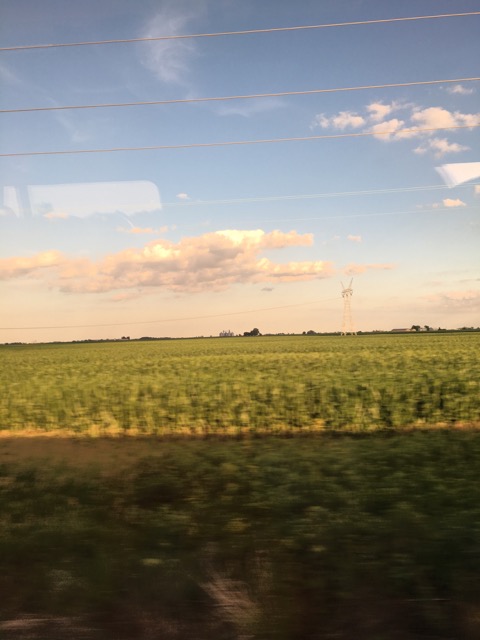
Rushing past rural cornfields in Missouri by train
I spent a quiet Fourth of July watching the heartland of America roll by my train window on a journey from Chicago to St. Louis. Playing in my headphones was the soundtrack of an old educational cartoon called “Schoolhouse Rocks!” In honor of my country’s Independence Day, I was listening to musical explanations of the American Constitution, the concept of “manifest destiny” (the 19th-century idea that expansion of the U.S. from the Atlantic Ocean to the Pacific was justified and inevitable), and the American Revolution. The simplistic way the songs presented information to me as a child in the 1970’s led me to believe that everything my government did was right and good. I completely trusted American authority despite glaring evidence that manifest destiny didn’t work well at all for the Native Americans who already lived in the center of the continent.
Now, in my 40’s, I know better. I see that the America that I live in, is not a nationally shared experience. For instance, the little rural towns I saw from the train are not my day-to-day reality although almost 1/5 of all U.S. residents live in communities like them. Here’s another difference: twenty-three million Americans live in food deserts – urban and rural – with little to no access to fresh fruits and vegetables while others are surrounded by high end grocery stores. Other differences are not bound by location. From sea to shining sea, challenging voices ring out to proclaim “Black Lives Matter” to help everyone understand that shootings of citizens by police officers is a reality for people of some skin tones and not for others. Each person lives a different truth depending on one’s geography, race, income, and a host of other factors. Clearly, for all its wealth and power, the United States is letting many of our people down.
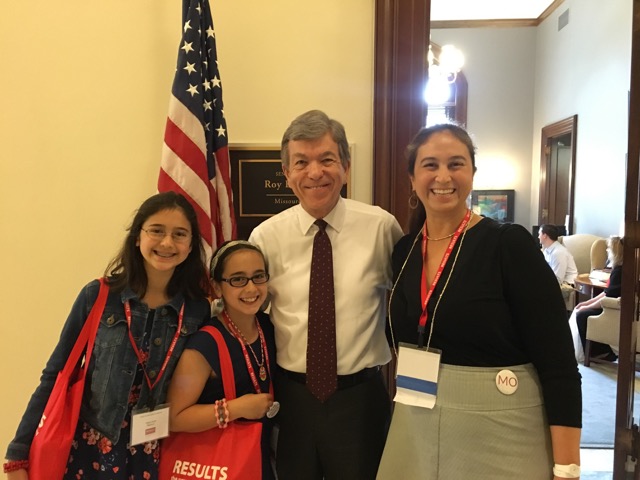
#WorldMom Cindy and her daughters with U.S. Senator Roy Blunt in Washington D.C.
Such everyday injustices are what led me to Washington D.C the week before Independence Day to join hundred of anti-poverty advocates at the RESULTS International Conference and Lobby Day with my daughters. We visited the offices of our elected officials and urged them to change systems that keep so many people in poverty across the U.S. and around the world.
Every year we go, we wade into a hostile partisan landscape. We have to move past the open negativity our leaders show on T.V. in order to connect with the individual humans they are and paint a picture of what life is like for Americans they might never meet. If left to their own devices, party extremists drift further apart. Like a mother bringing arguing siblings back together, it’s our responsibility as citizens to reach out and remind them how they are connected to all of us. In this way, we guide our country toward fairer tax policies, better nutrition, and improved maternal/child health…all with a goal of providing each person with opportunity to reach their full potential in life.
Back on the train, hearing the words of our constitution sung in folk-style harmonies reminded me how every person in our political extremes truly believes she or he is honoring the American founding fathers’ vision. No matter how far apart we are on policy ideas, every one of us wants our country to thrive. We want to be treated with respect and raise our children in safe communities with good schools. We truly have more shared values than we often think we do.
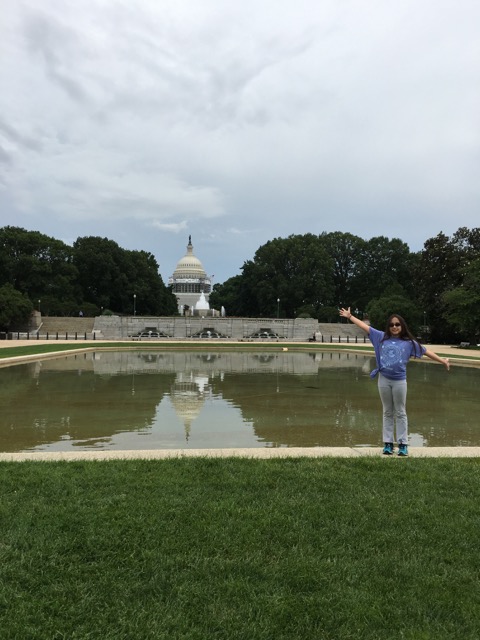
Cindy’s daughter in front of the United States Capitol building
Here is my vision of my country and for my country:
My America is a place where diversity is strength, not something to be feared. It’s where voices can be heard when we find the courage to speak out. It’s a place where my children can live, grow, and thrive. It’s not colorblind. It’s not perfect. It’s not best in the world about everything, but we are a country of possibilities and leadership. My America is a place where we can speak truth to power and come closer to becoming a more perfect union.
How would you finish the phrase “My country is…” for the place you currently call home? What parts of your answer are different for your fellow citizens? How can you be engaged in helping your country be the best it can be for all people?
Cynthia Changyit Levin is a mother, advocate, speaker, and author of the upcoming book “From Changing Diapers to Changing the World: Why Moms Make Great Advocates and How to Get Started.” A rare breed of non-partisan activist who works across a variety of issues, she coaches volunteers of all ages to build productive relationships with members of Congress. She advocated side-by-side with her two children from their toddler to teen years and crafted a new approach to advocacy based upon her strengths as a mother. Cynthia’s writing and work have appeared in The New York Times, The Financial Times, the Washington Post, and many other national and regional publications. She received the 2021 Cameron Duncan Media Award from RESULTS Educational Fund for her citizen journalism on poverty issues. When she’s not changing the world, Cynthia is usually curled up reading sci-fi/fantasy novels or comic books in which someone else is saving the world.
More Posts - Website
Follow Me:
by Kristyn Zalota | Jul 5, 2016 | 2016, Women's Rights, World Voice

I started CleanBirth.org with a mission of improving birth safety for moms in Laos because I am a mom and I wanted to support other mothers.
Being a mother is a challenging role for me. It isn’t always easy setting aside the “me” and putting my kids first. But it’s what moms do, right? Right.
Mothers often go so far as to prioritize kids’ needs at the expense of our own health. This is a mistake. To ensure good health for themselves and their children, women need competent health care before and after giving birth.
In developed countries, we are in most cases lucky enough to have sufficient practitioners and hospitals. This is not the case in the developing world. The WHO finds:
”The risk of a woman in a developing country dying from a maternal-related cause during her lifetime is about 33 times higher compared to a woman living in a developed country. Maternal mortality is a health indicator that shows very wide gaps between rich and poor, urban and rural areas, both between countries and within them.”
Here is the WHO’s advice in a nutshell about what is needed to prevent needless maternal deaths:
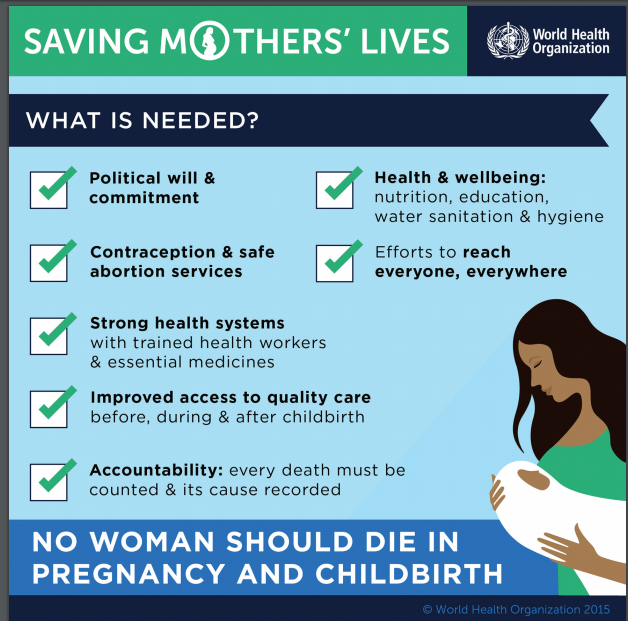
We atCleanBirth.org agree that no woman should die in pregnancy and childbirth. We are doing our small part by promoting maternal health among poor, rural, minority familiesin Salavan Province, Laos. We provide moms with safe birthing supplies in a cute pink bag and fund counseling from local nurses, who we train twice annually.
We work to ensure that mothers survive birth. Please join us by donating $5 which gives a mom and baby a birth kit that prevents infection: www.cleanbirth.org/donate.
What programs do you know of that have been effective in improving maternal health?
Kristyn Zalota, a World Moms Blog contributor from the USA, is a mom of two and also the founder of Cleanbirth.org, a registered 501(c)(3) non-profit organization. Working with a local Lao partner, Cleanbirth.org empowers nurses to provide women in their communities with Clean Birth Kits and safe birthing education. To date, Cleanbirth.org has provided 5,000 birth kits and funded training for 250 nurses.
Kristyn brings her years of experience as an entrepreneur and serial volunteer to CleanBirth.org. She holds a MA, has run small businesses in Russia and the US, and has volunteered in Nicaragua, Costa Rica, Thailand, Cambodia, Laos and Uganda on projects related to women’s empowerment.
After having children, Kristyn became an advocate for mothers in the US, as a doula and Lamaze educator, and abroad, as the Founder of CleanBirth.org. She is honored to provide nurses in Laos with the supplies, funding and training they need to lower maternal and infant mortality rates in their villages.
More Posts

by Nicole Melancon (USA) | Jun 28, 2016 | 2016, Poverty, World Moms Blog, World Voice
Meet Elisabetta Colabianchi, Founder of Kurandza, a non-profit social enterprise that invests in the future of women in Mozambique. I have featured her work and organization before on my blog and include their products under my Gifts that Give Back Guide. Kurandza uses education, entrepreneurship and sustainable development programs to help create opportunity and change for women and their communities. A devastating two-year drought in Mozambique has caused widespread hunger inspiring Elisabetta to shift gears and focus on hunger relief. Here is her heartwarming story.
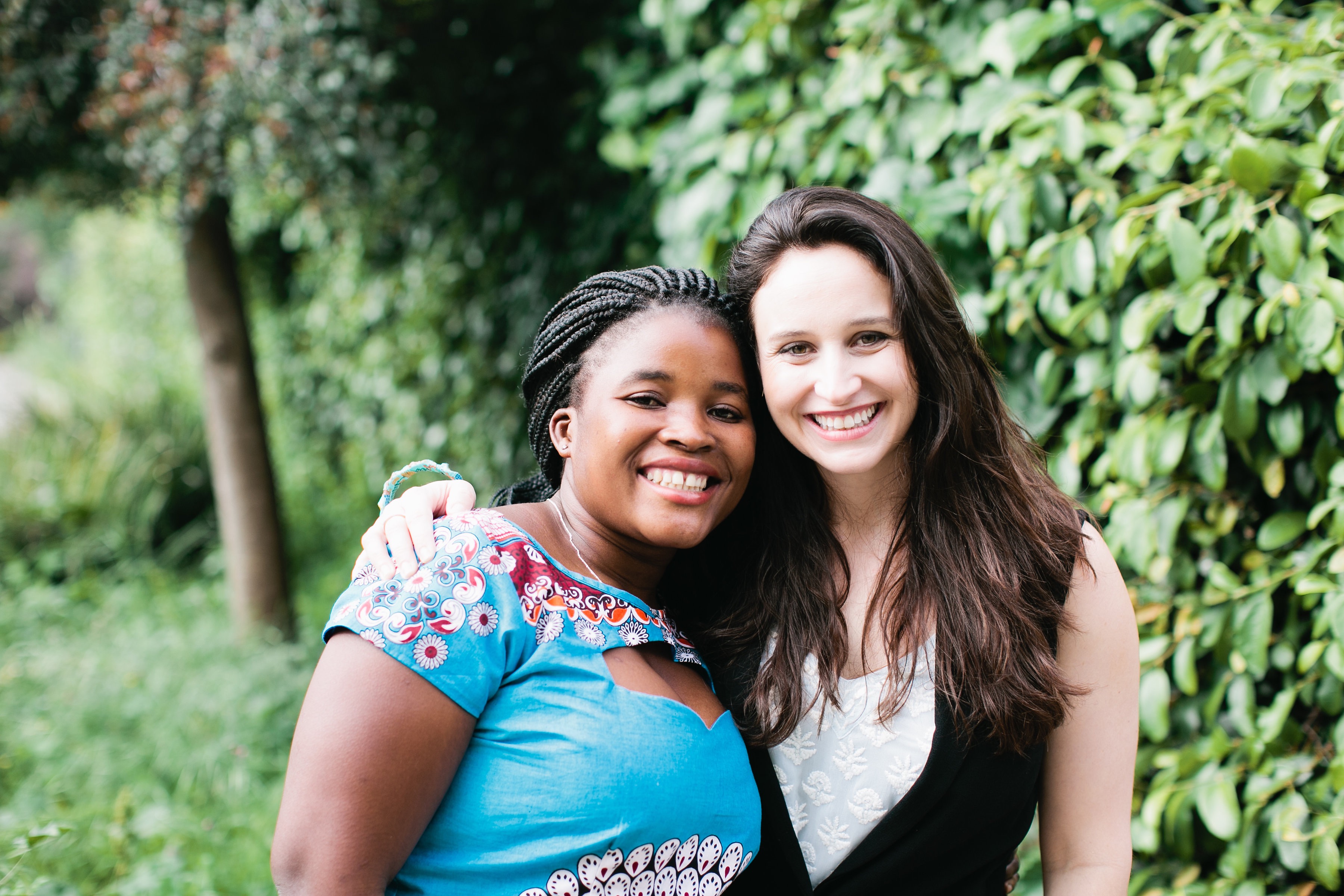
Percina and Elisabetta, two wonderful friends who met in a village in Mozambique while Elisabetta was a Peace Corps volunteer. Photo credit: Nicole Anderson of Sorella Muse Photography
“Kurandza: To Love”: Written by Elisabetta Colabianchi, Founder and Designer, Kurandza
I’d known there was a hunger crisis in Mozambique, but what really got to me was hearing that HIV positive mothers were faced with choosing between letting their children starve or nursing their children past the recommended time despite the risk of passing on HIV.
Prior to founding my non-profit organization, Kurandza, which means “to love” in the local Changana language, I lived in Mozambique as a Peace Corps volunteer for three years. While there, I worked at a rural hospital counseling mothers on the prevention of HIV transmission to their babies, and had successfully prevented the transmission to hundreds of children.
At first, I thought that maybe the mothers who continued to nurse despite the risk were doing this because they forgot their training. Or I thought perhaps I hadn’t taught them very well after all.
But when I counseled one of these mothers over the phone last month from my home, now living thousands of miles away in California, I realized she knew exactly what she was doing, and that it hurt her to do so. She knew that by continuing to nurse her child past the recommended time, she was putting her baby at risk to contract HIV. She knew that when a child contracts the HIV virus, it often leads to mortality.
This mother has already successfully raised five HIV-free children because she followed the prevention techniques. But this time is different. This time there isn’t any food for her to feed her child because of the two-year drought. There isn’t any water to grow crops on her farm to produce the food that her child desperately needs to survive. Water is a life source that they are without. Like all the women in her community, she knows that if she stops nursing, her baby will most likely die of malnutrition. So she is making the best choice for her baby by nursing despite the possible outcome.
The women facing this impossible choice is what made me pause and reassess the work I was already doing in Mozambique through Kurandza. Even though we’re in the middle of creating new educational and entrepreneurial programs for the women there, we’re refocusing our energy to something more urgent this month, because I know in my heart that we need to address the hunger crisis now.
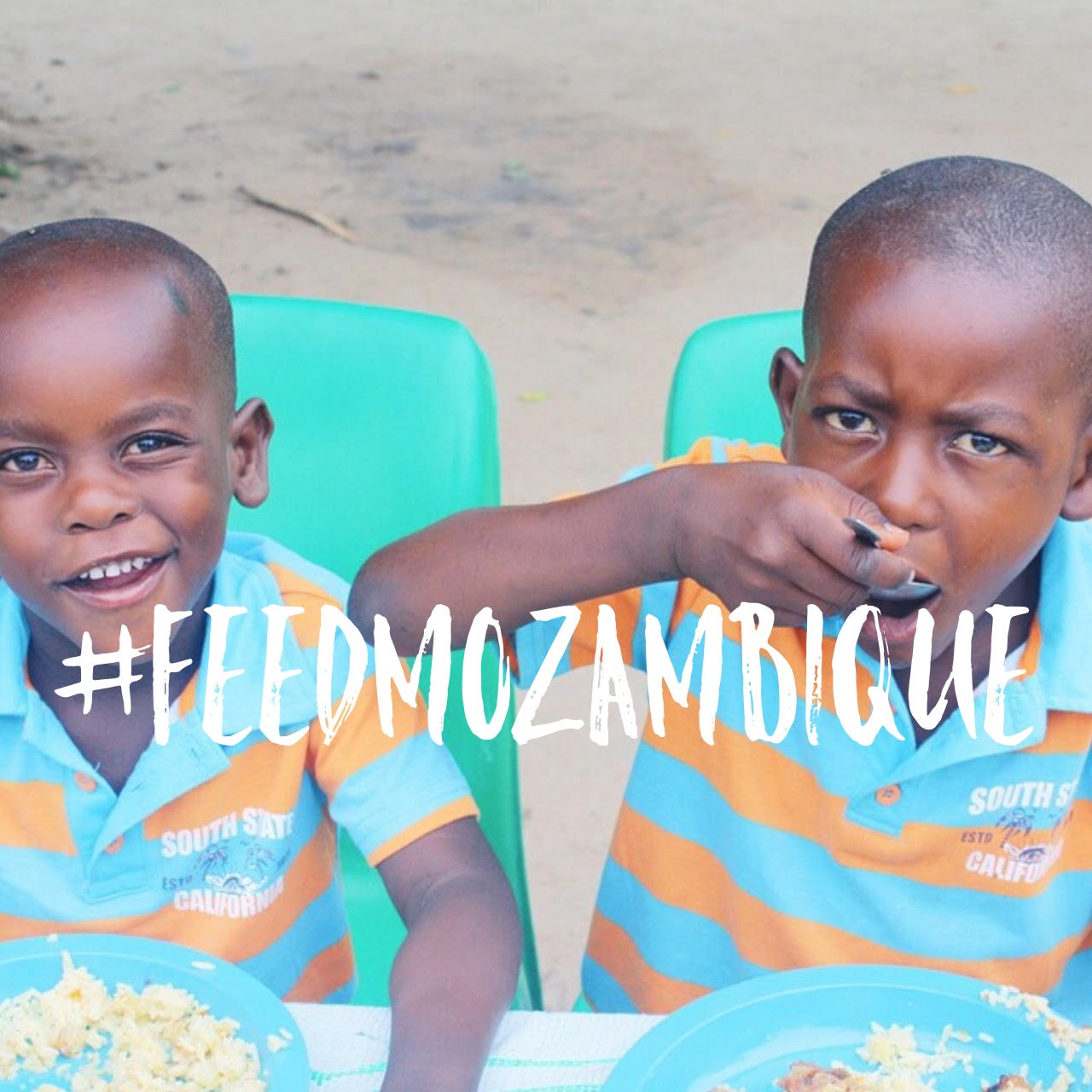
Over 25 million people in Mozambique don’t have enough food or water
The drought has caused crops to die and food prices in the nearest stores to increase by over 200%. In a community of high unemployment and dependence on farming their own crops to survive, villagers are unable to purchase food for themselves. Because of the hunger crisis, children are eating one meal a day.
In response to the hunger crisis, Kurandza is raising $250,000 this month to provide immediate food along with long-term water and sustainable agriculture solutions so that the community can continue to farm, growing their own crops if the drought persists. All the food aid will be sourced in the local community to boost local commerce.
It’s important to supplement humanitarian assistance with long-term solutions such as building multi-functional water wells so that the community will be able to continue farming and growing their own crops even if the drought continues.
If you would like to learn more, visit www.kurandza.org.

Third Eye Mom is a stay-at-home mom living in Minneapolis, Minnesota with her two children Max (6) and Sophia (4). Her children keep her continually busy and she is constantly amazed by the imagination, energy and joy of life that they possess! A world wanderer at heart, she has also been fortunate to have visited over 30 countries by either traveling, working, studying or volunteering and she continues to keep on the traveling path.
A graduate of French and International Relations from the University of Wisconsin Madison, where she met her husband Paul, she has always been a Midwest gal living in Minnesota, Wisconsin and Chicago. This adventurous mom loves to be outside doing anything athletic (hiking, running, biking, skiing, snowshoeing or simply enjoying nature), to travel and volunteer abroad, to write, and to spend time with her beloved family and friends.
Her latest venture involves her dream to raise enough money on her own to build and open a brand-new school in rural Nepal, and to teach her children to live compassionately, open-minded lives that understand different cultures and the importance of giving back to those in need. Third Eye Mom believes strongly in the value of making a difference in the world, no matter how small it may be. If there is a will, there is a way, and that anything is possible (as long as you set your heart and mind to it!).
Visit her on her blog, Thirdeyemom, where she writes about her travels and experiences in other lands!
More Posts

by Aisha Yesufu | Jun 21, 2016 | 2016, Equality, Human Rights, Social Equality, Social Good, The Advocates of Human Rights, Women's Rights, World Voice
 My name is Aisha Yesufu and I happen to be a human being with the reproductive organs of a female so I am called a woman. When I demand for equality I am not demanding to change my womanhood for manhood. That would be an insult to the ME that I am. When I demand equality I am merely asking to be treated equally. When I demand for equality I am not saying I want to take over a man’s job I am merely saying I want to have my own job and not handout. When I demand for equality I want to be looked at as a human being with all her 5 senses and an accompanying brain and not as a toy to be toyed with.
When I demand for equality I am not saying I want to beat up a man I am just saying I should not be seen as one to be beaten with impunity. When I say I want equality I am not saying I want to take over the pay of a man I am just saying I deserve fair pay based on what I bring to the table. When I demand for equality I am not saying the Boy-Child shouldn’t be sent to school I am just saying that the Girl-Child has a place in the classroom. When I demand for equality I am not saying a Boy-Child born should be frowned at I am just saying the Girl-Child born should be heralded with joy.
When I demand for equality I am not saying the wife should be above the husband I am just saying the wife should have a place in the partnership. When I demand for equality I am not saying Men have to do the cooking I am just saying whoever wants to should be allowed to. When I demand for equality I not saying men should become Mijin Hajiya (Men controlled by women). I am just saying women should be matar Alhaji(a wife) with rights. When I demand for equality I am not saying men should be disinherited I am just saying women have a right to inherit and be inherited from. When I demand for equality I am not saying I am better than you. I am just saying you should not be afraid of who I am.
At the end of the day my demand for equality does not take anything away from you. It only ensures I get what is truly mine so why all the bad belle(hatred)?
This is an original post written for World Moms Blog by Aisha Yesufu in Nigeria.