Hockey is Canada’s national winter sport, with most Canadians huddled around the television on Saturday nights to cheer on their favourite teams being featured on “Hockey Night in Canada”. Boys love hockey. Girls love hockey. And, they love it equally. But the treatment of both genders in the world of hockey is very different.
I live in a country where gender equality is of such importance.
Canadian Prime Minister Justin Trudeau was applauded for electing equal numbers of men and women to Cabinet during his 2015 election. When asked why this was important, he simply said “Because this is 2015”.
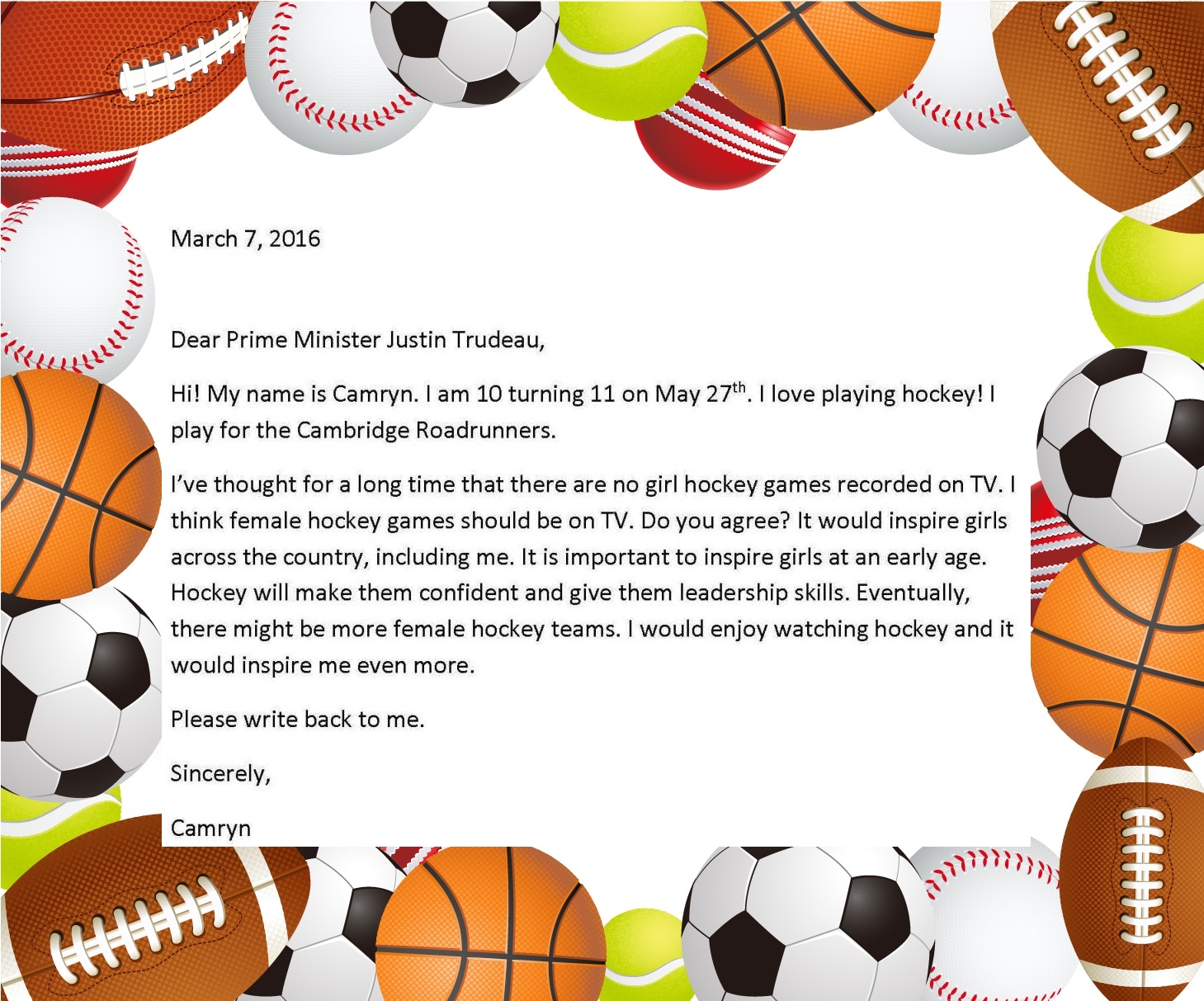
So true. But gender equality in hockey does not always exist in Canada. Not even in 2016. And this is incredibly frustrating for the many girls and women who live and breathe the sport throughout the year. I have three daughters, and two play hockey. I have overheard men in our community, as I was rushing into an arena on a cold winter morning with one of my daughters, making comments about how it is a waste for girls’ hockey teams to be given ice time, as it was taking away from the boys. Our highest ranking women’s Canadian hockey teams never get the media coverage they deserve. Most Canadians don’t even know these female leagues exist, despite the incredible talent and sportsmanship these young women exhibit game after game.
This inequality is trickling through to younger generations as well. My one daughter plays on a co-ed hockey team. At only 10 years of age, she is already having to hear the boys on the bench tell each other NOT to pass to her because she is a girl.
One of our greatest Canadian hockey players, Hayley Wickenheiser, has spoken about the challenges girls face in sport. When people would say to her, “Girls don’t play hockey; girls don’t skate”, she would say – watch this!
Staying true to her word, Hayley has won multiple Olympic medals for hockey. Decades later, however, little girls who look up to Wickenheiser are still having to defend their place in Canadian hockey.
This is 2016, so when someone says you “play like a girl” it should be taken as a compliment. After all, this is Canada, a nation that prides itself on equality.
This is an original post by Alison Fraser who is Founder and Director of Mom2Mom Africa.
Alison Fraser is the mother of three young girls ranging in age from 5 to 9 years old. She lives with her family in Cambridge, Ontario, Canada. Alison works as an Environmental Toxicologist with a human environment consulting company and is an active member of the Society of Environmental Toxicology and Chemistry (SETAC). She is also the founder and director of the Canadian Not for Profit Organization, Mom2Mom Africa, which serves to fund the school fees of children and young women in rural Tanzania. Recently recognized and awarded a "Women of Waterloo Region" award, Alison is very involved in charitable events within her community including Christmas Toy and School Backpack Drives for the local foodbank.
Violence against women in many countries occurs at an alarmingly high rate, but a new bill being proposed by a Pakistani Islamic council may just push the envelope further.
According to the proposed bill by Mohammad Khan Sheerani, the leader of this council, men will be allowed to “lightly beat” their wives with a small stick if they believe it to be necessary. Some of the criteria this council has listed as being necessary for disciplinary purposes are: not wearing a hijab, talking with strangers or men, speaking too loud or giving money to others without the husband’s permission. In addition to these, the proposed bill would allow husbands to “lightly beat” their wives if they refused to have sex, not bathe after intercourse or their menstrual period, and especially if they took birth control without their husband’s permission.
I can understand being reprimanded if one’s wife was not wearing a hijab, but to be physically punished for religious reasons or worse, for a woman’s perceived negligence of hygiene or opting for birth control is unbelievably demeaning and wrong.
How is it okay for women to participate in politics, but be in danger of punishment for not obeying their husband’s desires?
If this bill were to pass, it would give way to other laws that are just as absurd and endanger women further.
As a woman and wife whose marriage stems from a partnership of equals, it is unbelievable to me that this law is even being proposed in this day and age. I understand that as someone who has grown up in the western culture, there are numerous laws in other countries that may not make sense to me, but if a law is used to subjugate women for the underlying purpose of harming them physically, emotionally and mentally, then it should not be passed.
I, myself, was born in the Philippines where patriarchy is dominant in a family setting. While I grew up in a family dynamic where the Father was the prominent figure in my nuclear and extended families, I was raised to believe that being married doesn’t diminish my rights as a person or self-worth..
Why must women continue to endure suffering at the mercy of patriarchal ideologies that are archaic and demeaning?
How is this proposed law deemed acceptable by a religious council when it calls for punishing women for saying “no” to their husbands, making it difficult for them to stay safe in their marriage?
Maybe I’m too much of a Western woman who believes that marriages are composed of men and women who value each other’s opinions and thrive from it, as opposed to beating one’s wife for not obeying what they believe as Islamic laws. As I sit here in disbelief and anger, I do hope that the women of Pakistan muster the courage to fight and make sure this proposed law doesn’t get passed.
Tes Silverman was born in Manila, Philippines and has been a New Yorker for over 30 years. Moving from the Philippines to New York opened the doors to the possibility of a life of writing and travel. Before starting a family, she traveled to Iceland, Portugal, Belgium, and France, all the while writing about the people she met through her adventures. After starting a family, she became a freelance writer for publications such as Newsday’s Parents & Children and various local newspapers. Fifteen years ago, she created her blog, The Pinay Perspective. PinayPerspective.com is designed to provide women of all ages and nationalities the space to discuss the similarities and differences on how we view life and the world around us. As a result of her blog, she has written for BlogHer.com and has been invited to attend and blog about the Social Good Summit and Mom+Social Good. In addition, she is a World Voice Editor for World Moms Network and was Managing Editor for a local grass roots activism group, ATLI(Action Together Long Island). Currently residing in Virginia Beach, VA with her husband, fourteen year-old Morkie and a three year old Lab Mix, she continues to write stories of women and children who make an impact in their communities and provide them a place to vocalize their passions.
The other day I went to my teenage son’s soccer tournament, and because his game was delayed, I watched a girls’ match finish on the other field. Actually, thanks to the British history in Abu Dhabi, I should say that I went to the “football fixture,” watched the girls play “on the other pitch,” and then at the end of the day took my son to the sports store so he could buy a new pair of “boots” (not cleats). Who knew when we moved here five years ago that one of the ways we would adapt is learning to speak a different version of our native tongue?
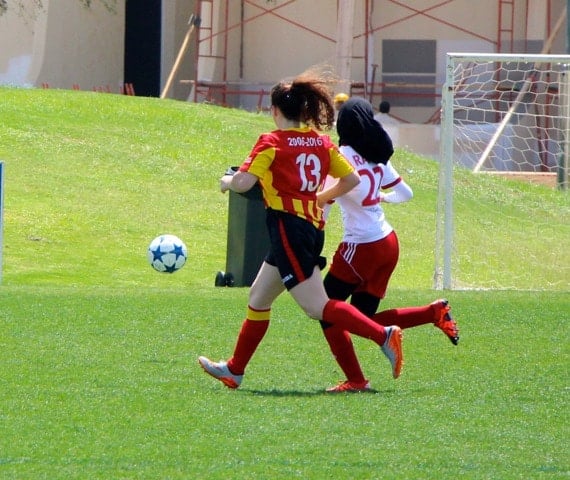
As I watched the girls’ match, two girls maneuvered the ball across the pitch, their teammates shrieking encouragement. One girl—a headscarf covering her hair, and leggings under her athletic shorts—passed the ball to her teammate, whose long ponytail was streaked light blue. They brought the ball down the pitch—passed left, passed right—and then Ponytail shot for the goal. The ball bounced off a goal post, looked like it was going to go wide, and then sank into the back of the net past the goalie’s outstretched hands.
“Nice shot,” murmured my son. “Really good pass, too.” Neither of us knew the girls who were playing, but his comment made me happy nevertheless. As the mother of sons, I collect “girl power” moments like this one to remind my sons that they do not have the market cornered on sports excellence. Now that he’d seen for himself, I wouldn’t have to risk being Tiresome Mom by pointing out that those were girls playing pretty kick-ass football.
It’s easy to see in this little episode a lesson about hijab not being the symbol of oppression that so many non-Muslims are quick to assume it is. This girl left her opponents in the dust as she raced down the field, and she pounded her thighs in elation when the ball went into the net. Her war whoop as she ran to the sidelines to celebrate with her teammates would be recognized anywhere as the screech of a happy athlete.
But that’s not really the point. The point has to do with the fact that my fifteen-year-old son didn’t notice the headscarf or the leggings—or the blue ponytail, for that matter—he noticed the football. He noticed what the girls were doing, not what they looked like. As my son moves closer to manhood, a process that seems to be unfolding faster and faster despite my attempts to keep him “my boy” as long as I can, I wonder if my feminist politics have rubbed off: will he become a man who sees what women can do rather than how they look or what they’re wearing?
Isn’t that the question we ask ourselves as our children—those firm little packages of flesh that seemed at one point soldered to our hips—move out into the world: we want to know if our lessons have sunk in, if they’ve been listening even as they seem glued to the Snapchat world in their phones. Does my darling son talk about girls as “hotties” when he’s with his buddies; does he chime in when the conversation turns to which girl has the best body and why?
I don’t know. All I can know is that the other day, what he saw was two people playing great football.
Who knows. Maybe if enough children grow up appreciating what people can do, rather than what they look like or what they do (or don’t) wear on their heads, the world might become a more level playing field pitch.
How do you create awareness about gender equality for your children?
After twenty-plus years in Manhattan, Deborah Quinn and her family moved to Abu Dhabi (in the United Arab Emirates), where she spends a great deal of time driving her sons back and forth to soccer practice. She writes about travel, politics, feminism, education, and the absurdities of living in a place where temperatures regularly go above 110F.
Deborah can also be found on her blog, Mannahattamamma.
This week marks the fifth anniversary of the beginning of the Syrian war. Five years of fighting, death, destruction. Heartbreaking stories, loss and questions. How much longer can this go on for? How is this going to end? (more…)
Nadege Nicoll was born in France but now lives permanently in New Jersey with her family. She stopped working in the corporate world to raise her three children and multiple pets, thus secretly gathering material for her books. She writes humorous fictions for kids aged 8 to 12. She published her first chapter book, “Living with Grown-Ups: Raising Parents” in March 2013. Her second volume in the series just came out in October 2013. “Living with Grown-Ups: Duties and Responsibilities” Both books take an amusing look at parents’ inconsistent behaviors, seen from the perspective of kids. Nadege hopes that with her work, children will embrace reading and adults will re-discover the children side of parenthood. Nadege has a few more volumes ready to print, so watch this space…
Today (March 22) is a big deal to me because it is World Water Day.
Actually, access to clean water and sanitation is a big deal to me year round.
The seed was planted a few years back when I was first connected to WaterAid America as a member of the Global Team of 200, an offshoot of Mom Bloggers for Social Good. My first water-related post was published on my blog, another jennifer, in January of 2013. I was struck by the statistics around how women and girls in particular were affected by the water crisis, not to mention just how many people still lacked access to clean water and sanitation.
Since then, I’ve written many more posts on the topic, donated to WaterAid America, visited classrooms to talk about the importance of water and toilets and had the opportunity to visit Nicaragua to see WaterAid’s work on the ground firsthand.
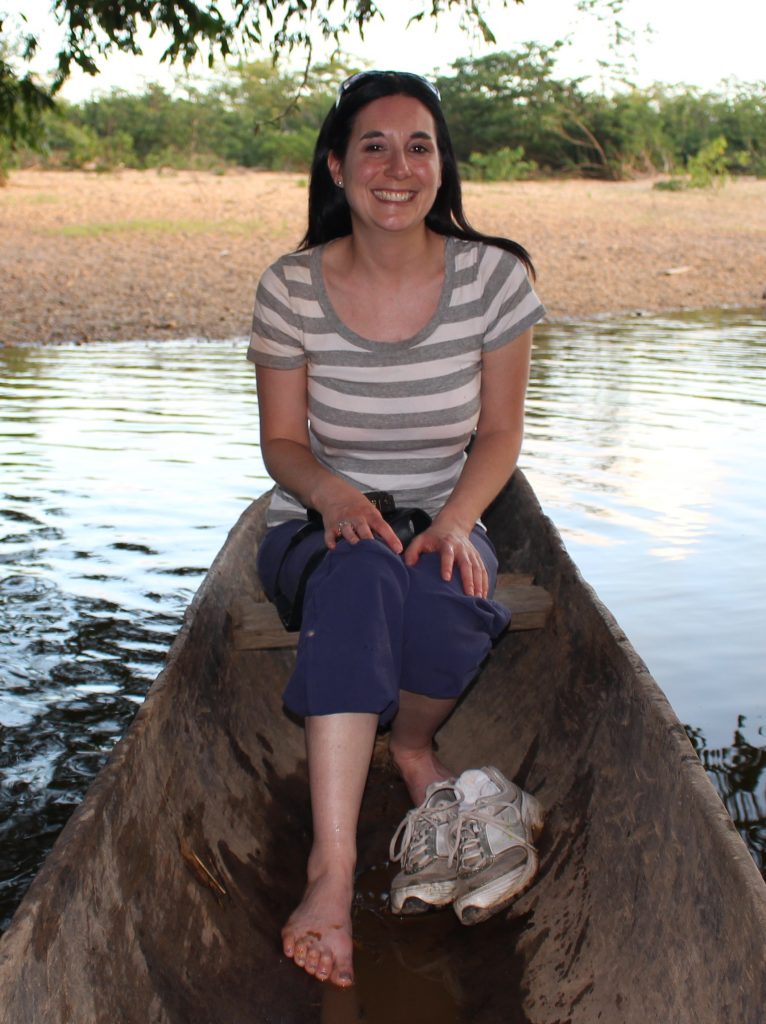
The Author in Nicaragua. Photo Credit: Alanna Imbach/WaterAid
Why is water so important to me?
I start my day with a hot shower that is only 10 steps from my king-sized comfy bed.
I brush my teeth, often leaving the water running while I do so, and don’t worry about swallowing the water from the faucet.
I fill a water bottle directly from my kitchen sink without any additional filtration.
I have all the water I need to cook, water my plants or wash my car in the driveway.
I pay less than $0.60 per day for easy access to clean, safe water in the home I own, an extremely low percentage of my personal income.
This privilege is not lost on me and is particularly poignant when I read through WaterAid America’s State of the World’s Water 2016 report.
While it’s easy to assume that the poorest people don’t have water access because they can’t afford to pay the bills that come along with it, the report actually shows us that the poorest are often paying significantly more than citizens who are lucky or wealthy enough to have an “official” water point.
Here are some of the key findings of the report:
Papua New Guinea, Equatorial Guinea and Angola are the nations in the world with the lowest percentage of households with access to clean water.
In Papua New Guinea, an average person living in poverty will spend 54% of their salary to access the World Health Organization-recommended minimum of 50 water liters per day to meet basic needs. The average use in the US is about 370 liters per person, per day.
India, China and Nigeria have the highest numbers of people waiting for access to clean water.
Cambodia, Mali, Laos and Ethiopia have made more progress than any other nations on improving access to water for their populations.
There remain 16 countries in the world where 40% or more of their population does not have access to clean water – due to lack of government prioritization, lack of dedicated funding, shortages in human resources and/or the exacerbating effects of climate change on water availability and quality combined.
I was particularly struck by the fact that the United States of America was not included in the list of 42 countries with 100% access to safe water (0.8% of the population is without access; 63 countries are listed ahead of the USA).
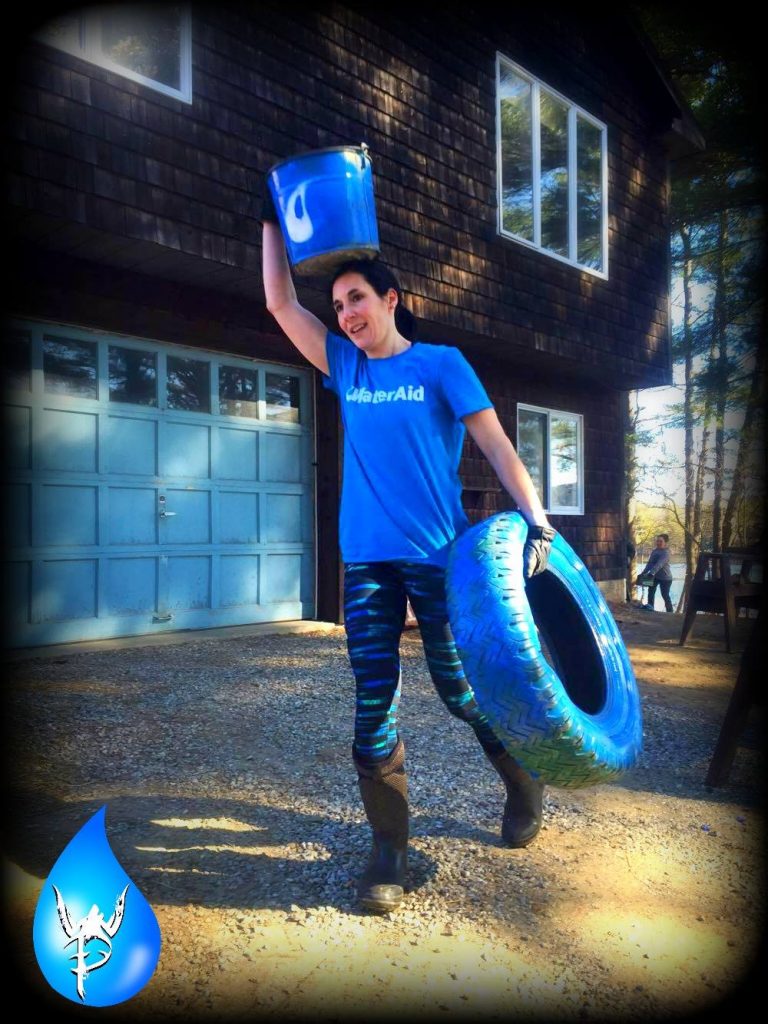
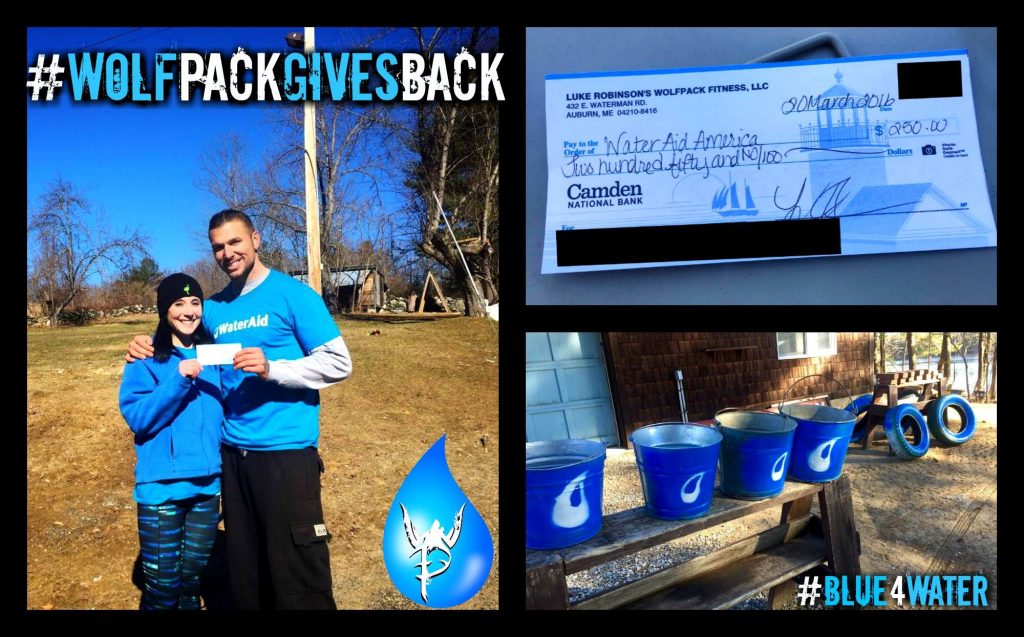
Everything I do for WaterAid America or for the cause of clean water and sanitation is on a completely volunteer basis. I make the time to write, give, talk and act. This past Sunday, I got my gym, WolfPack Fitness, involved with a water-themed outdoor workout for the second year in a row. We wore #blue4water while raising awareness, weight and funds for WaterAid America. It is my way of being part of a global conversation that needs to be had to ensure that marginalized communities are not left without a resource that is a basic human need.
Photo Credit: WorlfPack Fitness
What will you do to celebrate World Water Day?
This is an original post written by Author and Blogger Jennifer Iacovelli for World Moms Blog.
Being a working mom is not an easy feat. You are constantly on your toes both on the work front and on the home front where you need to give both your 101%. But while it may have it’s fair share of challenges, I’m glad to be a working mom in Singapore where the marketplace recognises the value of what women can bring to the table.
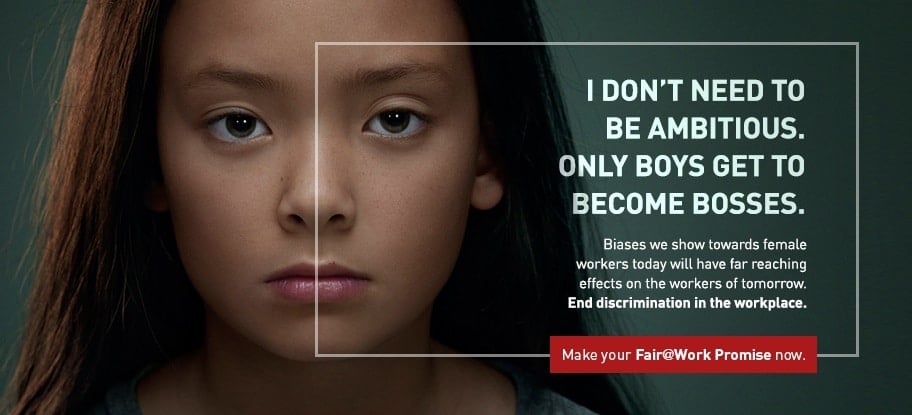
In the past, it’s not uncommon to hear how employers will show gender preference towards men who are perceived to be go-getters, sharp and gets things done. And what’s unsaid is that men will not disappear for a good four months when a baby comes along. And their hesitation to employ women doesn’t end there as the mother is usually the one to drop everything at work if anything happens at home, especially when there are young kids at home. And even with female employees, they often get by-passed for promotion and get lower salaries than their male counterparts.
As a small nation whose only resources lie in our human capital, we simply cannot afford to allow this bias to prevail in our society where women take a back seat when they start to have a family. The journey to overcome this gender discrimination at the work place has taken a long time. With efforts from both the state as well as employers the results are encouraging with 76% of women in their prime working ages of 25 to 54 years are in employment in Singapore.
But what really worked was the mindset that women can have their place in the workforce and are equally capable and dedicated to their work as well as their families.
As we celebrate International Women’s Day on March 8th, I hope that all women will have equality in employment opportunities as we continue to strive for gender equality in the workplace to transform the society to be fair and inclusive.
Susan is from Singapore. As a full-time working mom, she's still learning to perfect the art of juggling between career and family while leading a happy and fulfilled life. She can't get by a day without coffee and swears she's no bimbo even though she likes pink and Hello Kitty. She's loves to travel and blogs passionately about parenting, marriage and relationship and leading a healthy life at A Juggling Mom.


 Hockey is Canada’s national winter sport, with most Canadians huddled around the television on Saturday nights to cheer on their favourite teams being featured on “Hockey Night in Canada”. Boys love hockey. Girls love hockey. And, they love it equally. But the treatment of both genders in the world of hockey is very different.
 But gender equality in hockey does not always exist in Canada. Not even in 2016. And this is incredibly frustrating for the many girls and women who live and breathe the sport throughout the year. I have three daughters, and two play hockey. I have overheard men in our community, as I was rushing into an arena on a cold winter morning with one of my daughters, making comments about how it is a waste for girls’ hockey teams to be given ice time, as it was taking away from the boys. Our highest ranking women’s Canadian hockey teams never get the media coverage they deserve. Most Canadians don’t even know these female leagues exist, despite the incredible talent and sportsmanship these young women exhibit game after game.