by World Moms Blog | Oct 22, 2014 | 2014, Africa, Awareness, Being Thankful, Caring, Casting a Wider Net, Communication, Economy, Education, Girls, Government, Guest Post, Helping, Human Rights, Humanitarian, Humanity, Inspirational, International, Life, Loss of Child, Media, Motherhood, Nigeria, Older Children, Poverty, Prejudice, Relationships, Safety, School, Social Equality, Terrorism, Tragedy, Women's Rights, Working Mother, World Mom Feature, World Motherhood, World Voice
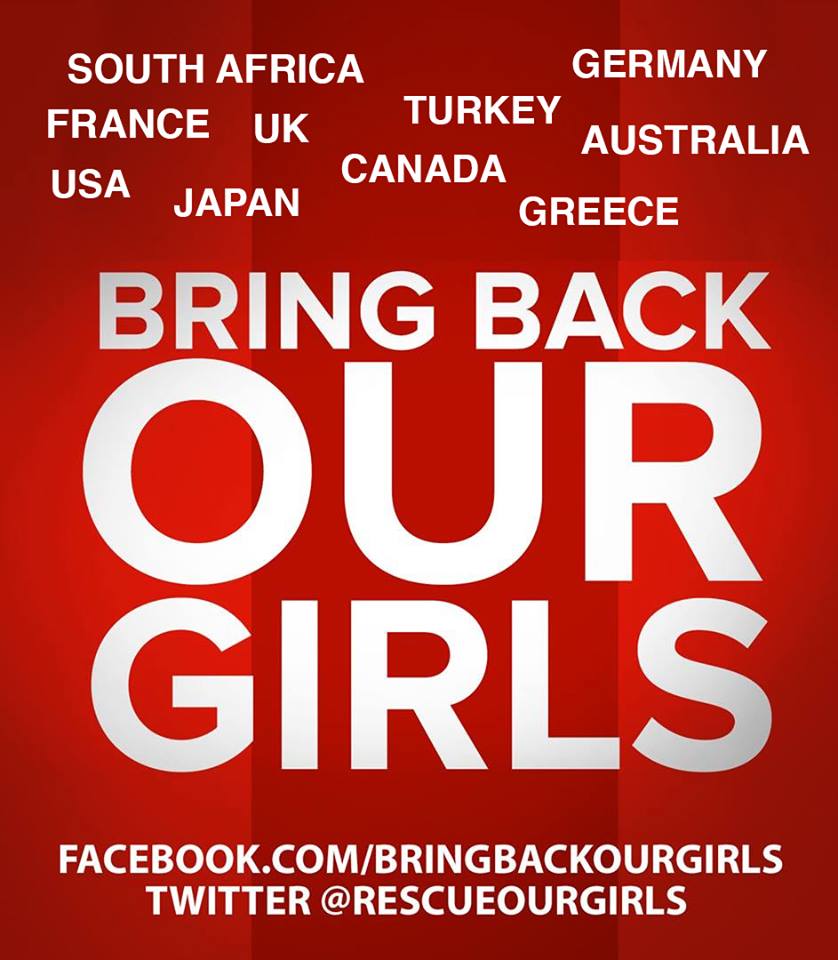 “My daughter said she was going to go to school so that she can wipe away my tears. How is she wiping my tears away in the den of the terrorists?”
-mother of one of the #ChibokGirls, abducted on April 14th, 2014, speaking on Day 188 of their abduction -October 19th, 2014
As I looked at her I realized that all this woman’s hopes and aspirations rest on her daughter. For most of the poor people in this part of the world, children are like a source of pension; they are the ones that will help you in the future. They are the ones that will take care of you in your old age, when you are unable to look after yourself. They represent life. As I looked at her I also realized that her daughter means more to her than I can ever imagine. Her daughter is her everything. A source of hope.
These parents are ready to give their lives for their children to have an education. That was what the #ChibokParents did. Amidst the insecurity in Nigeria, they still wanted their children to be educated to better their positions in life. They knew the only way to break the shackles of poverty was through education. For daring to send their children to school to have a better life, instead they have been punished.
These children grow up to not only take care of their parents but siblings as well so that a generation of people who have survived the shackles of poverty would emerge.
For some, poverty is going to school in the morning without breakfast and returning home not expecting lunch but still striving everyday to be in school so that one day you will look back and say I SURVIVED (I AM A SURVIVOR).
I remember one of the fathers at one of our Sit Ins for the #BringbackOurGirls campaign—which started on April 30th with a protest demanding for the rescue of #ChibokGirls—saying he does not have a Television. All he has is a Radio from which he gets to hear of our activities. I wept! In this day of iPads, Tablets, iPhones and what have you, someone does not have a simple television that most of us take for granted.
So now you can begin to understand that to the #ChibokParents these girls are much more than daughters, they are future benefactors
A lot of parents, especially mothers, are forced to live a life of servitude and poverty in order for their children to be educated. The education that is taken for granted in most developed countries is not so in Nigeria and many other African countries.
I remember growing up and how my parents had to struggle to make sure we were educated. We often had to go without food when the situation grew dire but never were my school fees unpaid. I remember my father trekking long distance to buy a textbook I needed badly because the money was not enough for him to pay for a bus. All the suffering was for the children to be able to break the vicious cycle of poverty and one day to be able to take care of ourselves and also take care of our parents and siblings.
A lot of parents invest all they have in their children. For those who are poor, they do not have cars, houses or any investments. All they have are their children. Can you imagine these children being abducted, as is the case with the #ChibokGirls, abducted from school, where they wanted to get an education and make life better for themselves and their families? When these children of the poor are abducted and taken away, the future of a whole generation also is taken away.
As I looked at the woman with tears streaming down her face, all I could see was my own mum, who had to be the head-of-household, who worked all day and night to ensure I had an education. I look back to the days when there was no food to be eaten and yet we found our way to school. I thought of what a burden it must have been for my parents to get us educated, to sacrifice all that they had.
While some of my parent’s contemporaries were busy enjoying life in the way they could with what they had, my parents tightened their belt to make sure that we, their children, had an education and of course today we are their pension. If any of us had been abducted while seeking an education, where would we be today?
As I stood watching the Chibok mother, all I could think about was my mother struggling to give her children the life she did not have and how hard she worked to provide that for us. I thought of my mother, now living in the lap of luxury because she worked so hard four sake. As I stood looking at the Chibok Mother, I realized she too must be allowed to break the shackles of poverty. She too must live in comfort, as her daughter promised her. Her tears must be wiped away. As I stood looking at her I realized that I cannot stop demanding for the rescue of the #ChibokGirls, for that Chibok mother who has given her all, hoping that one day her tears would be wiped away.
I realized that I must demand the rescue of the Chibok girls.We all must.
Demanding the safe return of the Chibok girls to me is like making a demand for the ME that was 23 years ago. As I stood I realized that no matter how hard it gets, no matter how much we are intimidated and harassed, no matter the threat of arrest from our government, I cannot afford to give up on the #ChibokGirls.
To give up on the #ChibokGirls is to give up on myself (the WHO that I have become) and to give up on the mother with tears streaming down her face, waiting for her daughter, who promised to wipe away her tears.
This is an original, Guest Post for World Moms Blog from our sister in Nigeria and mother of two, Aisha Yesufu.
Aisha Yesufu was born in Kano, Nigeria. When she turned 40, in December 2013, she decided it was time to devote her life fully to the services of others. As she describes it,
‘The first 40 years of my life I devoted to myself, so I could be financially independent and help others. But they say: you can’t help the poor by being poor yourself, so the next 40 years, God willing, I am going to devote to others; for me, a full life will be based on what positive differences I have made in the life of another.”
And in came the unfortunate tragedy of the abduction of the #ChibokGirls. Following their abduction, on April 14th 2014, Aisha joined a group of like minded people to demand the rescue of the 219 school girls, who still today remain in the hands of the terrorists. These girls, between the ages of 16 to 18, were abducted from their school, in their quest for knowledge. The group known as the #Bring Back Our Girls campaign has been able to push the issue of their rescue in public discussion both locally and internationally.
Aisha is the coordinator of the daily Sit In for the #BringBackOurGirls campaign group. The group has, without fail, come out daily since the 30th of April, 2014, despite all forms of intimidations and harassment by sponsored persons.
To get involved in the conversation and learn more about the plight of the 219 Nigerian School Girls, visit: #BringBackOurGilrs
World Moms Blog is an award winning website which writes from over 30 countries on the topics of motherhood, culture, human rights and social good. Over 70 international contributors share their stories from around the globe, bonded by the common thread of motherhood and wanting a better world for their children.
World Moms Blog was listed by Forbes Woman as one of the "Best 100 Websites for Women 2012 & 2013" and also called a "must read" by the NY Times Motherlode in 2013. Our Senior Editor in India, Purnima Ramakrishnan, was awarded the BlogHer International Activist Award in 2013.
More Posts
by Jennifer Burden | Oct 14, 2014 | 2014, Social Good, World Bank, World Voice
In the U.S., I find myself sometimes avoiding conflict in social situations. My kids…well, not so much…
“You can’t take that, it’s mine!!!” Or…
“She is writing on the kitchen table!”, while my girls battle for a crayon. Or…
“If you knock over my blocks, I’m telling!”, while just seconds later, my little one knocks the blocks with a cheeky grin. Or…
This is the reality now with a 7 and 3 year old, but I’m predicting that when they’re teenagers that they will rebel in the same way I did. Fight with their parents for a later curfew. Disagree with their mom because they want to wear a strapless dress to the eighth grade dance. Insist that they’re dating whoever they want. I hope their outspoken fire to challenge society will grow into and beyond their teenage years. I didn’t say that I am prepared for it, but I can accept that it is coming…I think.
But, as adults, it seems many of us tend to harden and lose that fire over time. The fire that ignited our teenage passions to think in a different way. The fire that kept us learning to support our own stance, for what is right. Going with the flow just feels more comfortable sometimes, especially when big odds are not at stake.
But, at the World Bank and IMF Civil Society meetings last week, big odds — which impact the lives of the world’s people and often the most vulnerable among us — were at stake. I witnessed change-makers taking a stand for the greater good. Here are some people who are carving out the new, more responsible way forward for the World Bank, IMF and beyond…
Jessica Evans of the Human Rights Watch challenged World Bank officials on incorporating human rights into new banking safeguards. She said that in the past the World Bank didn’t touch corruption because the institution wasn’t supposed to engage in politics according to its policy of the past, but now fighting corruption is fair game and a larger part of the World Bank’s mission. She pointed out this ability for the bank to change in a positive way on corruption, but its failure to do the same considering human rights.
She (Jessica Evans of the Human Rights Watch) claimed that human rights should not fall into the ‘political’ category. They are a necessity for responsible lending practices and should be incorporated into the current safeguards as they are being rewritten now, not as an afterthought a year later when they will be completed.
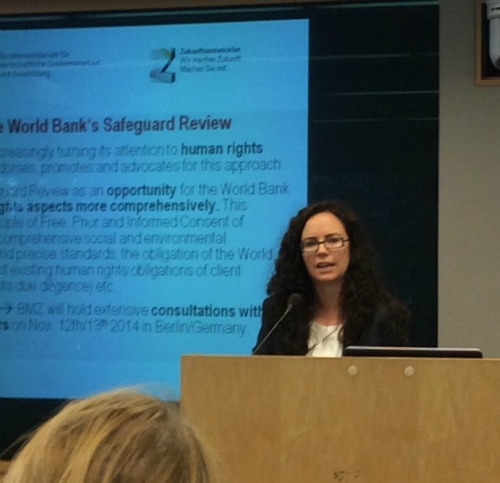
Jessica Evans of the Human Rights Watch speaks about the importance of human rights on a World Bank Civil Society Meeting in Washington, DC. October 7th, 2014.
To my surprise, I also had the chance to reconnect with a fellow Villanova University alum, Joseph Robertson, now Strategic Director of the Citizens’ Climate Lobby. He questioned Dr. Kim, President of the World Bank, and Mme. Lagarde, President of the IMF, on carbon pricing during the Civil Society Town Hall. Joe is championing a coalition called Pathway to Paris, which is seeking to mount a global coalition effort “to secure an agreement to motivate carbon pricing country by country.”
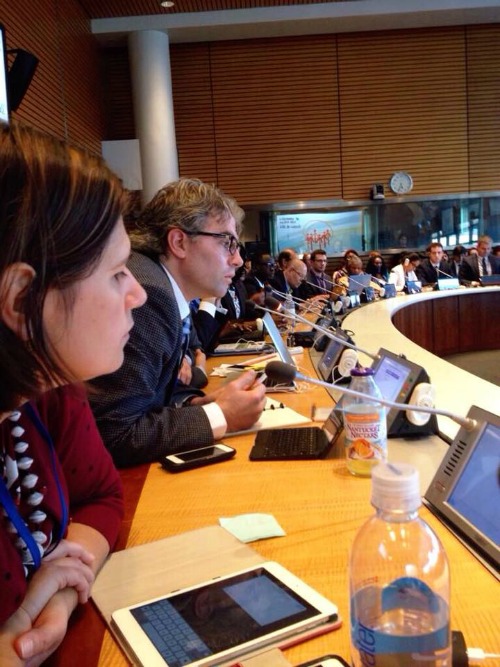
Joseph Robertson of Citizens Climate Action, questions World Bank President Dr. Kim and IMF President Mme. Lagarde on carbon pricing.
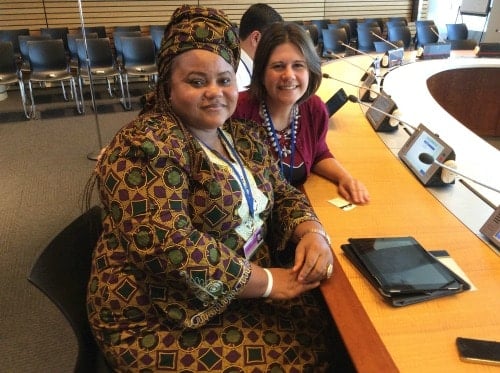
I also met the bold, Faith Nwadishi, Executive Director at the Koyenum Immalah Foundation, who had come so many miles — from Nigeria — to Washington, DC to put pressure on organizations to come together in the fight against Ebola in West Africa. Faith had no qualms about later taking the spot right next to Dr. Kim during the Town Hall. I was inspired by her energy!
Faith Nwadishi came all the way from Nigeria for the World Bank’s Civil Society Meetings in Washington, DC. Pictured here with Jennifer Burden of World Moms Blog on October 8th, 2014.
And, I could have listened to Patrick from the Congo speak for days. He’s a 28-year old masters student (his second, this one in international development). Patrick is enacting change at home through an organization he founded that educates both, women and men, on rape prevention in Congo. He sees his little sister within every woman in his home country and is dedicated to making Congo a safer place for women.
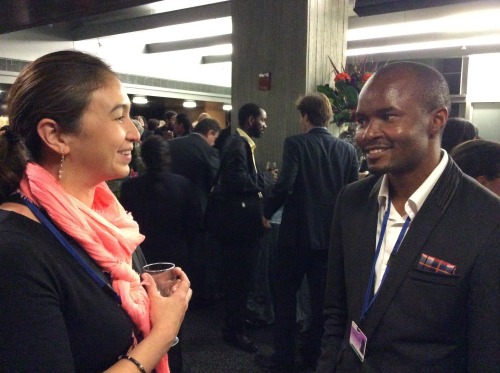
World Mom and RESULTS Board Member, Cindy Levin, talks with graduate student and change maker Patrick from Congo at the reception following the World Bank and IMF Civil Society Town Hall. October 8th, 2014.
There is no doubt the World Bank and IMF’s lending practices of the past have negatively affected civil society. And there is no doubt that the organization in the past had closed their doors to the voices of those very same people.
But, the cultural shift at the World Bank Civil Society Meetings is one that encourages change makers to join them in debate, intellectualism, passion, heated discussions and a lot of heart, which are all clearly the silver lining from the bank’s closed door past.
The current bank President, Dr. Jim Yong Kim is even a former bank protester, which is an indicator on how the tide is turning.
It is time for the world to listen to the likes of Jessica Evans, Joseph Robertson, Faith Nwadishi, Patrick and many more change makers around the world. They are the kind of people that will press and lead the World Bank toward it’s goal to end poverty. You can join them, too…what are you waiting for?
This is an original post by World Moms Blog founder, Jennifer Burden in New Jersey, USA. Jennifer and Cindy Levin of Missouri, USA were invited by the World Bank to take part in the bank’s Civil Society Meetings in Washington, DC. See additional posts by Cindy Levin about their experience on her blog, Anti-Poverty Mom:
Keeping It Civil at the World Bank
A Different View of Citizen Engagement at the World Bank
A New Course for the Big Ship of the World Bank
Photo credits to the author and Cindy Levin.
Jennifer Burden is the Founder and CEO of World Moms Network, an award winning website on global motherhood, culture, human rights and social good. World Moms Network writes from over 30 countries, has over 70 contributors and was listed by Forbes as one of the “Best 100 Websites for Women”, named a “must read” by The New York Times, and was recommended by The Times of India.
She was also invited to Uganda to view UNICEF’s family health programs with Shot@Life and was previously named a “Global Influencer Fellow” and “Social Media Fellow” by the UN Foundation. Jennifer was invited to the White House twice, including as a nominated "Changemaker" for the State of the World Women Summit. She also participated in the One Campaign’s first AYA Summit on the topic of women and girl empowerment and organized and spoke on an international panel at the World Bank in Washington, DC on the importance of a universal education for all girls. Her writing has been featured by Baby Center, Huffington Post, ONE.org, the UN Foundation’s Shot@Life, and The Gates Foundation’s “Impatient Optimists.” She is currently a candidate in Columbia University's School of International and Public Affairs in the Executive Masters of Public Affairs program, where she hopes to further her study of global policies affecting women and girls.
Jennifer can be found on Twitter @JenniferBurden.
More Posts - Website
Follow Me:


by Purnima Ramakrishnan | Oct 11, 2014 | 2014, Feminism, Girl Child, Human Rights, Humanity, India, Inspirational, Maternal Health, Purnima, School, Sex, Sexuality, Social Equality, Social Good, The Advocates of Human Rights, The Alchemist, United Nations, Women's Rights, World Events, World Interviews, World Mom Feature, World Moms Blog, World Motherhood, World Tour, World Voice
In celebration of International Day of the Girl, our Senior Editor in India, Purnima Ramakrishnan, interviewed the heads of a very special school in India. What she learned and felt was nothing short of amazing…
I was ushered in, inside the Vice-Principal’s room when I expressed my desire to interview both, the VP and the Head-Mistress. It was a completely relaxed chat, and I was so surprised about the open-door policy embraced by this school for all its teachers and students. All my prepared interview questions flew out of my head as they talked about the school, the students and their passion for teaching.
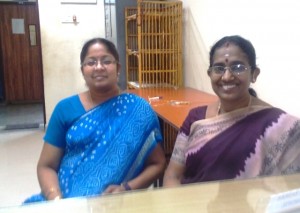
Mrs. Bhavani Baskar, The Vice-Principal (left) and Mrs. Jayashree Subramanian, Head-Mistress (right) of the PSBB Millennium School
During the chat, I observed so many students and teachers, and other staff members of the school, knocking and walking in with something or the other which needed either the Vice Principal’s or Head mistress’ intervention. No, you don’t need any appointment to go and say ‘Hello’ to them. None of the students did.
And as we proceeded to chat, I became more surprised and awed at the way they addressed students on a first name basis, from various grades who had popped in for a chat. Who could remember so many names? They did!
It has been a great pleasure to chat with Mrs. Bhavani Baskar, The Vice Principal and Mrs. Jayashree Subramanian, the head Mistress of PSBB Millennium School in Chennai, India. They spoke about their teaching journey, their vision for girls and boys in the school and the murals. It was the murals which sparked my curiosity and led me into their doorway. I included picture of them throughout the interview below, and I hope you find them as beautiful, as I did! Now on to the interview…
What inspired the murals? Who did them?
Initially, we got a palm imprint from all the girls of the school to say, “I am proud of being a girl.” The boys of the school wanted to join, too, to say, “We respect you.” This was done to celebrate the “Day of the Girl Child.”
These murals were an extension of the same theme.
The senior students were encouraged to paint the walls sharing their thoughts on being a girl, and the boys also joined, to express how they felt about their girl-classmates. The result was the lovely messages that came across on the walls.
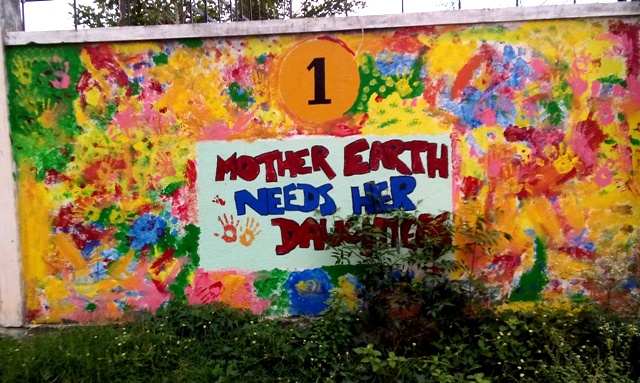
Mother Earth Needs Her Daughters
What was the effect of the murals?
They are receiving a lot of attention. The occurrences of boys teasing girls has reduced considerably. Bullying is also greatly reduced. Respect between the genders has increased. The general attitude has improved.
These murals are painted at the backdrop of the playground, and all the children at some point in time look at them at least once a day. And whether they want to or not, they have to acknowledge their presence consciously or subconsciously. Children right from grade 1 to 12 share the playground and so they would look at them. They would talk about them. And it would create an impact as to how girls are viewed.
The murals affect the thought process of both the boys and girls as they grow up. Boys would respect girls and girls would grow up to be secure, and confident in this society.
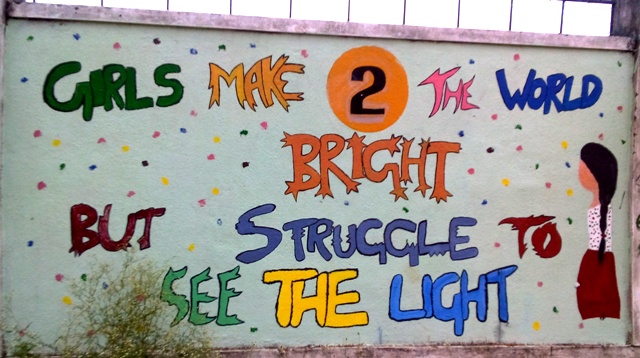
Girls Make The World Bright, But Struggle To See The Light
What is the % of boys and girls in the school?
Boys beat girls by being 54% and girls are 46%. But this is still a great ratio for the state where female infanticide is rampant in the rural areas.
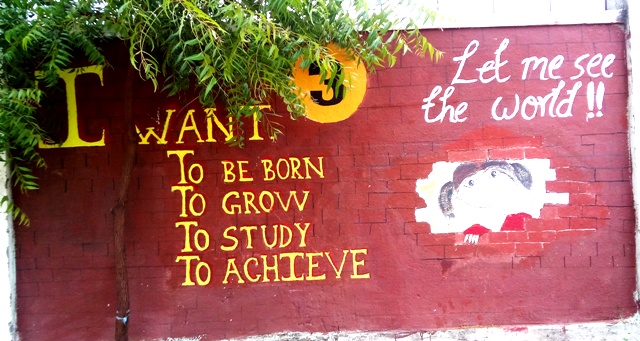
Let Me See The World
Can you comment about the performance of the girls and boys in the school?
Girls always out-beat boys! They are more sincere, they are meticulous in their planning and definitely more hardworking.
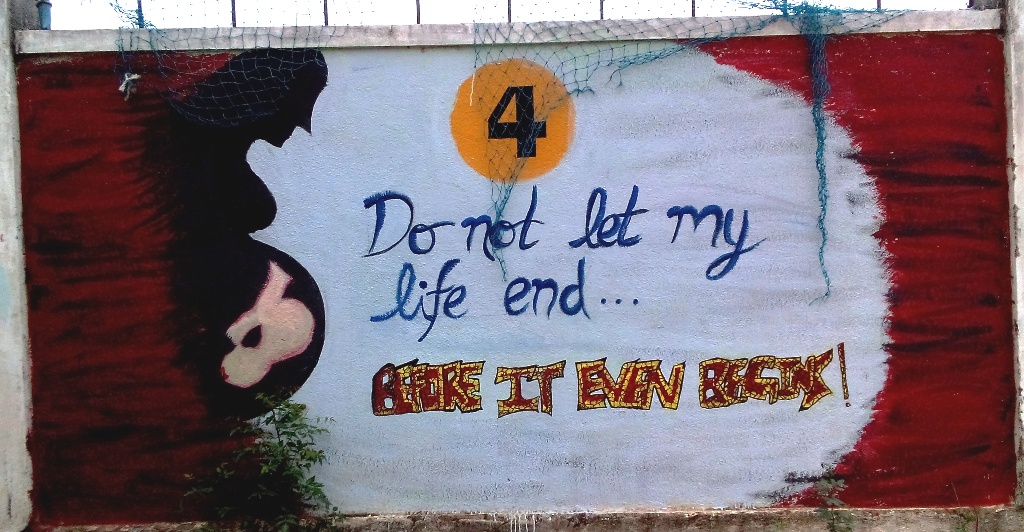
Do Not Let My Life End
They also spoke about their respective personal teaching career and their journey in the school. Mrs. Bhavani Baskar, the Vice Principal joined as a Mathematics teacher and now in addition to her duties as a Vice Principal, she continues teaching Mathematics for Grade 12. She is also the HOD for the Math department. She has more than 20 years of teaching experience in mathematics, and she is passionate about it.
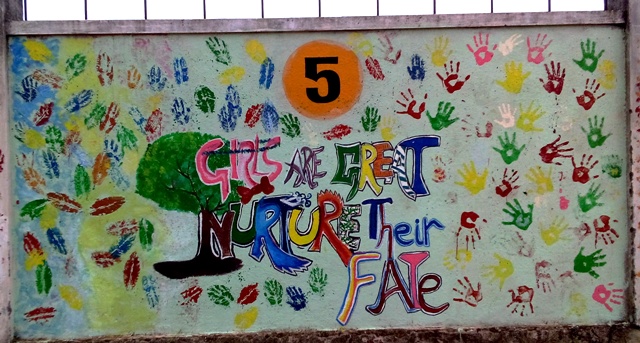
Girls Are Great, Nurture Their Fate
Mrs. Jayashree Subramanian, the Head Mistress is also the HOD of the Social Science department. She also manages dual responsibilities and says she would never trade the joy she finds in teaching for anything. When I asked about her retirement, she says, she is a grandmother, too, and would love to go and spend time with her grandchild. But she feels strongly attached to the school, the children, and even to the principal.
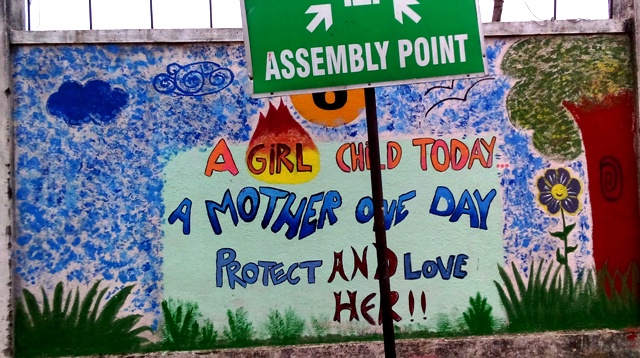
A Girl Child Today, A Mother One Day
The Principal of the PSBB Millennium School, Mrs. Sita Uma Maheswaran also had a few words for World Moms Blog in spite of her very busy schedule. The below conversation is from the Principal.
Do you feel like there is a true cultural shift taking place to recognize the importance of the girl child?
On one hand, we Indians, have so many woman deities being worshipped as God. On the other hand, we still have women and young girls being gang raped.
There is a lot of talk happening about justice and equality but it us yet to reach the rural level. Urban girls are more enthused, and they do pride in their being a woman and appreciating girls. But it is a known fact that there are certain cities where women fear to step out.
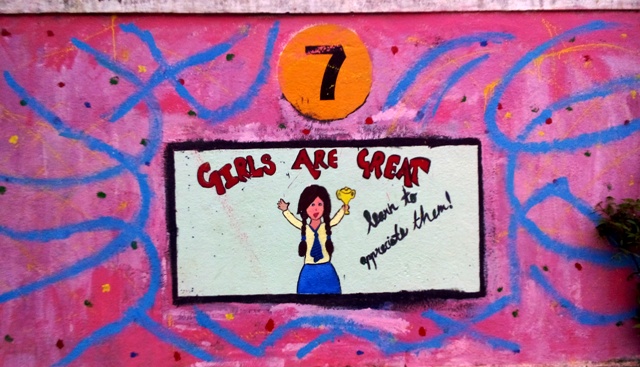
Girls Are Great, learn To Appreciate Them
What is the main factor driving this force?
Attitude among men is the main factor, irrespective of whether they are educated or not. The way they have been brought up with values in life, the way they have seen their mother or sister being treated – this can have a great effect!
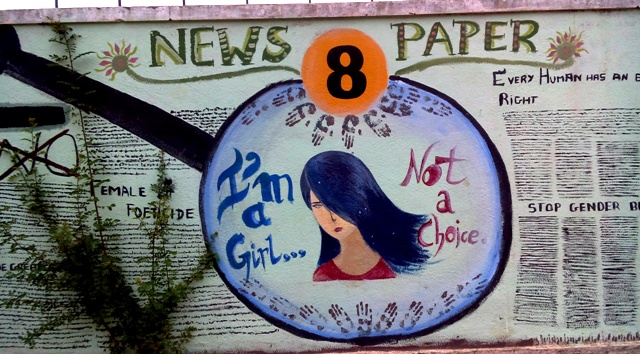
I Am A Girl, Not A Choice
How do you think these murals are affecting the thought process of girls and boys in the school?
There is respect which is breeding unknowingly for the girls, from the side of the boys. They realize that girls are to be respected and appreciated.
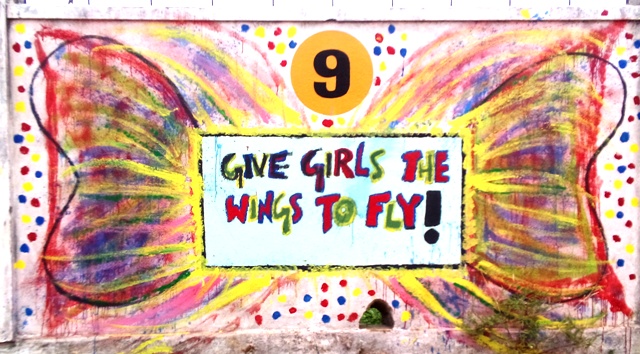
Give Girls The Wings To Fly
What was your journey like to become the principal of such a prestigious school?
I began as a Teacher Trainee in PSBB Senior Secondary School in 1986. It has been a roller coaster ride since then. There have been many a thrilling moments and a lot of learning. It is but natural when you get to work under some one like Dr Mrs Y G Parthasarathy, The Dean and Director of the school. Becoming Principal was a lot of responsibility. The work is more challenging. My perspectives have changed, too, because of the broader outlook. I work with more people now, and the goals that I set for myself are different, too.
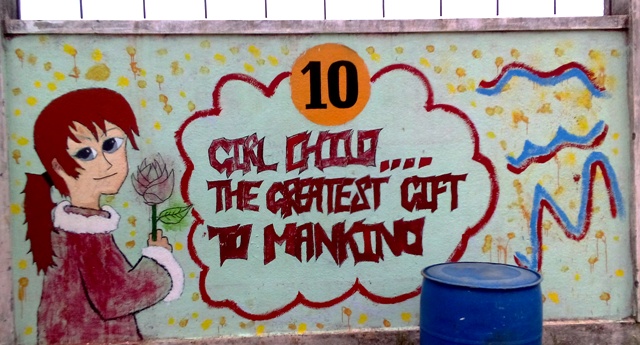
Girl Child – The Greatest Gift To Mankind
What is your one wish for girls in your school and all over the world?
Mrs. Jayashree Subramanian, the Head-Mistress said, ” I want girls in my school and all over the world to have self-respect, self-esteem and know that they are powerful. I want to teach the girls in my school to face the challenging world with confidence and courage and know that they can be whatever they aspire you to.”
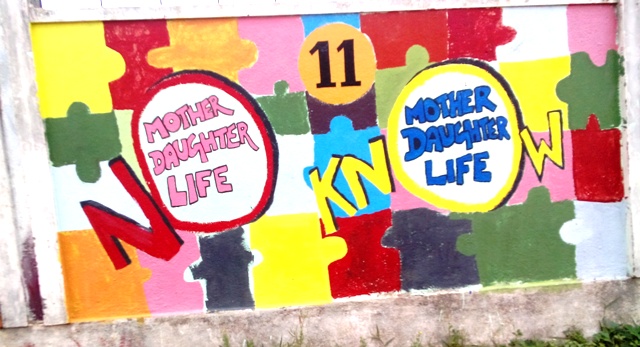
K(no)w Mother, K(no)w Daughter, K(no)w Life
Mrs. Bhavani Baskar, The Vice Principal said, “I want to teach my girls courage, valor and self-esteem. The great South Indian poet Bharathi said, “It is a great blessing to be born as a human, and even greater honor and privilege to be born as a woman.” I want my girls to realize that. I want my girls to be mothers, sisters, daughters and to be an embodiment of love for this entire race.”
There were a few other teachers too who shared their wish for girls everywhere.
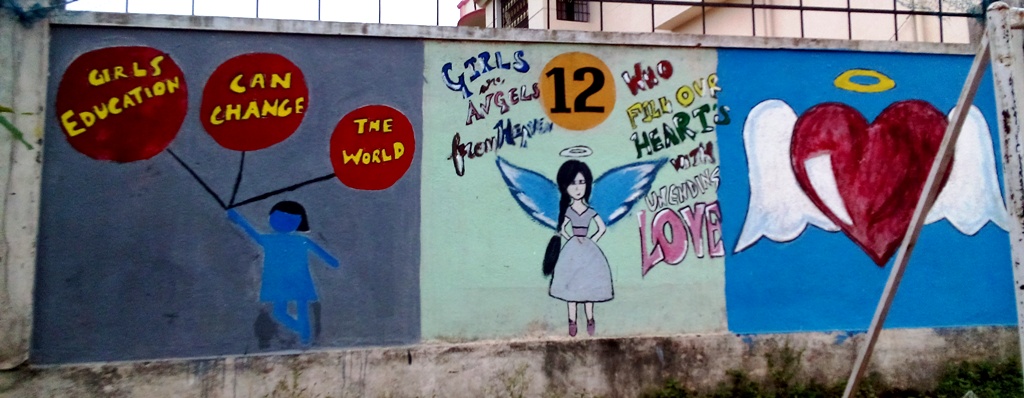
Girls Education Can Change The World
Mrs. Mukhtar Tahsin Fathima, 3 – grade teacher
Mrs. Mukhtar Tahsin Fathima, the third grade teacher said, “I want all girls to have awareness about sexual education. I want them to know and be able to protect themselves under any untoward circumstances. I want little children, both, boys and girls, to be given adequate sexual education, and the ability to take care of themselves and seek help when they need it. They should also let down their reservations, shyness and taboo and come out and speak and discuss and be aware of things.”
Mrs. Deepa Seshadri, English Teacher
Mrs. Deepa Seshadri, the English teacher said, “I want my girls to be able to wear and talk what they feel like. They should have the freedom to be natural and happy. They should not have to live in a world where any spontaneous or innocent act is misconstrued in a wrong way. My girls as well as boy students should be able to live in a world which is liberated from prejudice of gender-related actions.”
Mrs. Banu, Kindergarten Teacher
Mrs. Banu the Kindergarten teacher said, “I want equality for all my students. When gender equality is ensured, everything else follows. Education of girl-child, empowerment of women, better living conditions for girls and women and many such issues are resolved.
Girls have a say in everything happening with them. They are independent, and they get to decide what they want to do with their lives. I have brought up my daughter, instilling that she is equal or better than just about any of her counterparts. Every mother and teacher need to do the same with their children. “
The Principal of the school, Mrs. Sita Umamaheswaran said, “I want my girls to know they are no less than any boy or man. To dream big, and set goals that they can work toward. Enjoy womanhood and be in a world that respects women and safeguards them.”
The students of this school have expressed their wish for girls across the world, through these hand-painted, beautiful and striking murals.
What is your wish for the Girl-Child across the world?
This is an original post from our World Mom and Senior Editor in India, Purnima Ramakrishnan on the occasion of the “#DayOfTheGirl Child.”
Her contributions to the World Moms Blog can be found here. She also rambles at The Alchemist’s Blog.
Photo credit for the murals, to the PSBB Millennium School.

by Jennifer Burden | Oct 8, 2014 | 2014, Poverty, World Bank
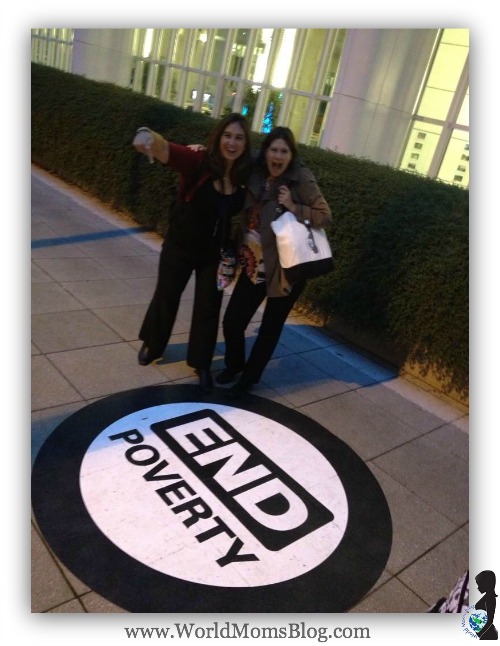
World Moms, Cindy Changyit-Levin and Jennifer Burden, are in Washington, DC this week for the World Bank Civil Society Meetings.
About 10+ years ago I worked in Washington, D.C. as a financial analyst, and when the World Bank meetings were coming up nearby my office, my then employer, the Federal Reserve Board, would caution us about the protests surrounding the event.
We were told to take a different metro route or come into the office at a different time in the best interest of our safety. But this week I was invited back to Washington, D.C., in fact, for the World Bank and International Monetary Fund (IMF) meetings by the World Bank to report for World Moms Blog, and now the atmosphere is a little different…
Gone are the closed doors. The World Bank has since opened it’s doors to civil society and are taking note of the concerns of people from the countries where they are lending. This was very different from my first impression of the World Bank and the International Monetary Fund — I had learned back in the late 90’s in college as a finance major that the organizations were set up to end poverty, but their lending actually made the countries worse off in the end. Hence, the angry protests of the past from people who cared.
It was time that the World Bank concentrated less on turning a profit and more on helping civil society, the very reason why it was created in the first place.
New leadership — did you know that Jim Yong Kim, the current President of the World Bank is a former anthropologist, cofounded PIH with Paul Farmer and others and was formerly the Chairman of the Department of Global Health and Social Medicine at Harvard Medical School? — has come in and the doors have been held for the angered (rightfully so) civil society members, so all should be good now, right?
But, how quickly can change occur under new leadership in an organization of over 9000 people?
The answer is that it takes time.
The World Bank is currently undergoing a reorganization, which is ruffling a lot of feathers, as there were protests just yesterday from staff members about the reorg and the payment of higher-ups, according to the Financial Times. And, yesterday at the civil society meetings we heard complaints about corruption and lack of adequate safeguards. Safeguards are precautionary or counter measures that are put into place to protect against the infringement of an agreement.
We heard concerns about human rights issues including gender equality and LGBT rights. And, we saw World Bank employees and officials taking notes and saying that they’d get questions to the bank leadership.
In fact, the bank fielded questions from people who flew in from Morocco, Albania, Egypt, Madagascar, Congo and more places for a “Civil Society Town Hall” with Dr. Kim and the managing director of the IMF, Christine Lagarde that will take place tomorrow.
The World Bank has invited its most stringent critics into their doors from the streets and is listening.
How can you make change if you don’t know what the problems are?
This process of listening is a big step from the bank of the past. How can money be lended to developing countries and provide the intended result, to end poverty?
Who will be on the ground policing the programs and seeing them out as intended?
This is a pivotal time in World Bank history, and I look forward to watching it unfold in the right direction to help, as is stamped on the pavement outside and in all the elevators to…”END POVERTY”.
Follow World Moms Blog contributors Jennifer Burden and Cindy Changyit-Levin as they report from the World Bank Civil Society meetings this week. They will be live tweeting from @WorldMomsBlog, @JenniferBurden and @ccylevin. Also, follow the hashtag for the event: #acso14.
See the article on World Moms Blog by Cindy Changyit-Levin that got us invited to the meetings this week.
This is an original post to World Moms Blog by Founder and CEO, Jennifer Burden of New Jersey, USA.
Photo credit to Rashika Weerasena.
Jennifer Burden is the Founder and CEO of World Moms Network, an award winning website on global motherhood, culture, human rights and social good. World Moms Network writes from over 30 countries, has over 70 contributors and was listed by Forbes as one of the “Best 100 Websites for Women”, named a “must read” by The New York Times, and was recommended by The Times of India.
She was also invited to Uganda to view UNICEF’s family health programs with Shot@Life and was previously named a “Global Influencer Fellow” and “Social Media Fellow” by the UN Foundation. Jennifer was invited to the White House twice, including as a nominated "Changemaker" for the State of the World Women Summit. She also participated in the One Campaign’s first AYA Summit on the topic of women and girl empowerment and organized and spoke on an international panel at the World Bank in Washington, DC on the importance of a universal education for all girls. Her writing has been featured by Baby Center, Huffington Post, ONE.org, the UN Foundation’s Shot@Life, and The Gates Foundation’s “Impatient Optimists.” She is currently a candidate in Columbia University's School of International and Public Affairs in the Executive Masters of Public Affairs program, where she hopes to further her study of global policies affecting women and girls.
Jennifer can be found on Twitter @JenniferBurden.
More Posts - Website
Follow Me:
by Elizabeth Atalay | Sep 30, 2014 | 2014, Awareness, Childhood, Education, Humanitarian, Interviews, Preschool, Save The Children, School, Social Good, USA, World Interviews
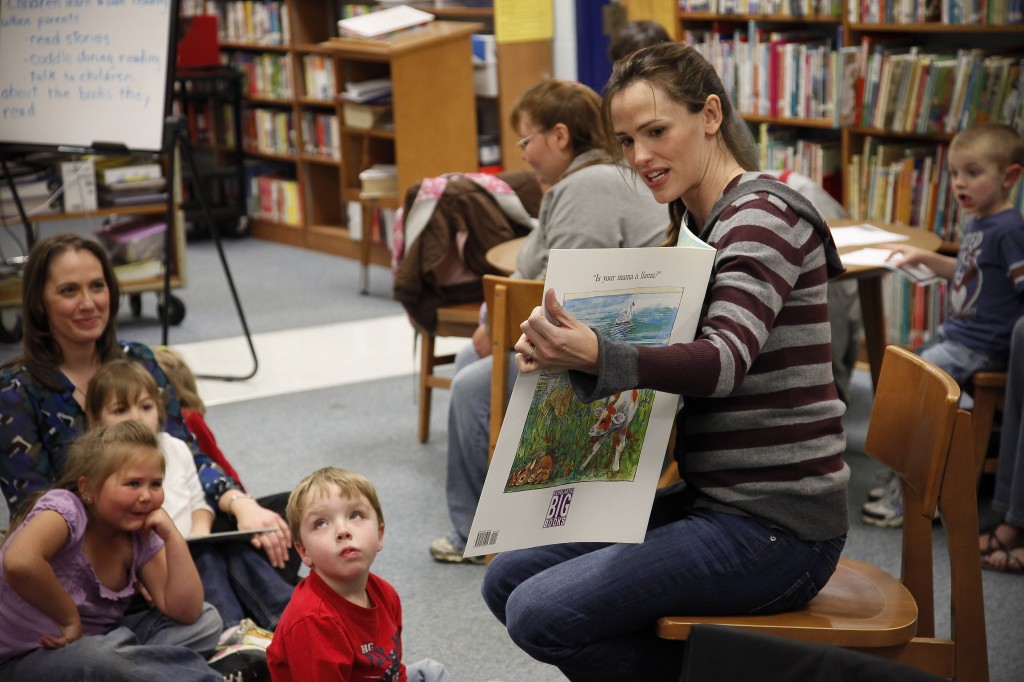
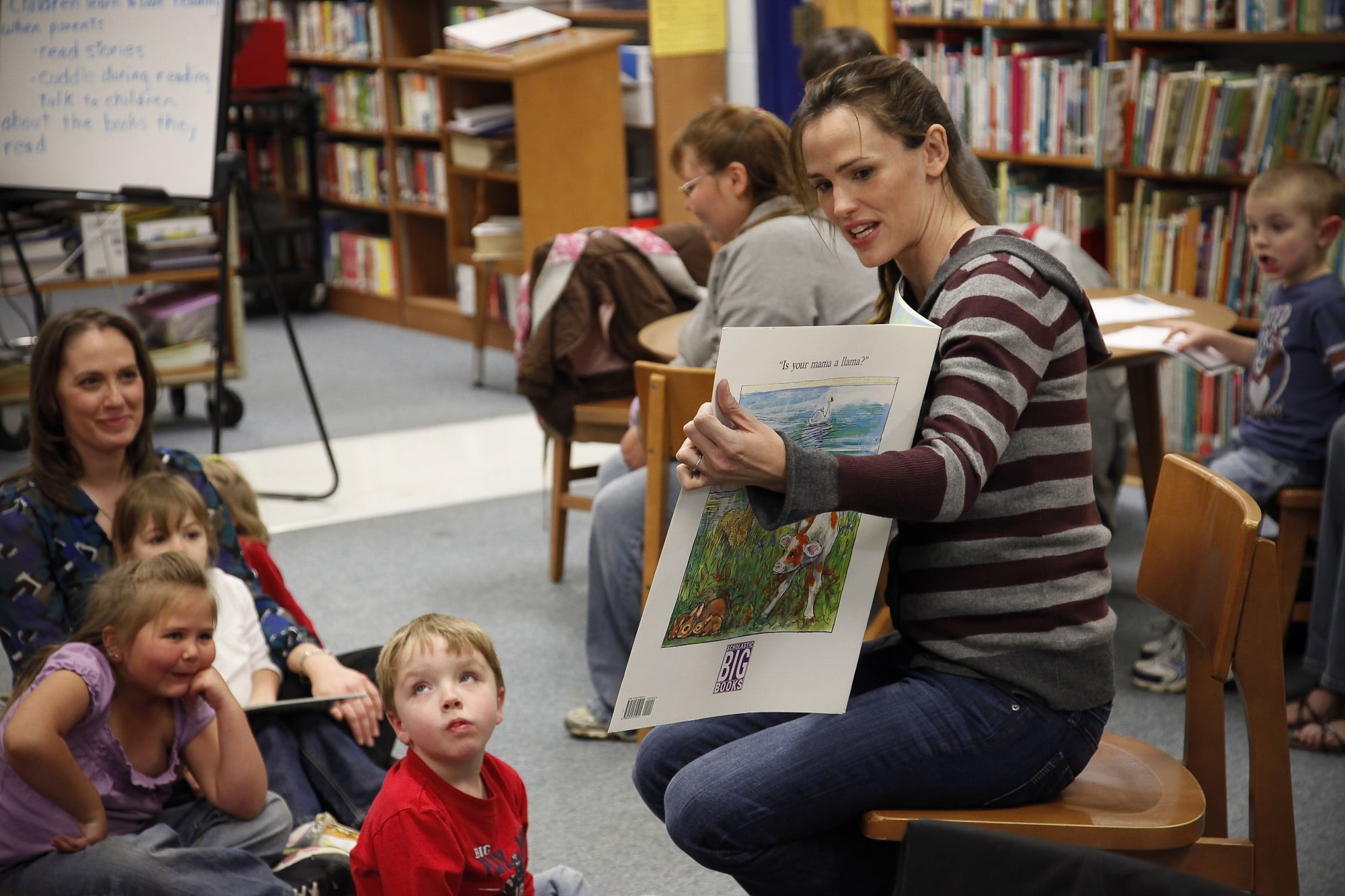
Actor Jennifer Garner visits with school children who are participants of a Save the Children reading program at LBJ Elementary School in, Ky. Photo by David Stephenson
“OPTIMISM”, Jennifer Garner chose the word optimism when we interviewed her about her work with Save The Children and the #FindTheWords campaign. My word had been “LEAD”, Jen Burden’s was “CREATE”, and Stacey Hoffer Weckstein of Evolving Stacey, who did the interview with me, had “COURAGE”. These were our words in the 30 words, 30 days blogger challenge for #FindTheWords to represent the 30 million fewer words kids would learn in homes without early education. In turn, when we had the exciting opportunity to interview her, we asked Jennifer Garner what her word would be.
“If you are working with a baby, with a mom, with a toddler, there is just so much optimism, she explained. I just feel like it’s just the most optimistic thing in the world to work on early childhood stuff”.
The investment in early education is optimism at it’s best. Studies have shown that the impact of early education can have long reaching effects as a child grows up. Kids are better academically prepared, socially adjusted, and tend to stay in school longer when they receive early education. In our conversation Jennifer Garner pointed out that some states have figured out that the money they spend from birth to five years old goes so much further than the recidivism that they would otherwise spend when a child is older and having trouble.
The hard facts cited by Save The Children are that in the United States 1 in 4 children lives in poverty and many do not have a single book in their home. These kids are not read to, and will not have access to a pre-school education. By age three they will have heard an average of 30 million less words than their peers which puts them at a great disadvantage before they even reach school. Ultimately these kids are 70% more likely to be arrested for violent crimes, 40% more likely to become a teen parent and 25% more likely to drop out of school.
“The injustice of it hits me at my very core.” said the mother of three.”So I just feel this drive to help be a part of making it be better.”
Jennifer Garner feels lucky to have come from a home with educated parents, but growing up in rural America, in West Virginia, she was aware that it was education that had made an enormous difference in both of her parents’ lives. In each case they were the first in their families to go to college, and it made her wonder who was around to help other kids like them to succeed without role models? Once she knew that this was the area in which she wanted to use her voice to make a difference, it was Mark Shriver, and Save The Children that she found was making the type of impact she was looking for in rural America.
Taking time out of her busy day with one of her little ones not feeling well, less than two weeks before her latest film, Alexander and the Terrible, Horrible, No Good, Very Bad Day hits theaters, to tell us why the issue of early education resonates with her was gracious beyond belief. She explained that her experience in the field with Save The Children, visiting mothers and children, had only made her want to do more. “The more you are let into people’s homes, and into people’s lives, and into people’s struggles, the more driven you become to do what you can to help them.”
Of the mothers she has had the chance to visit Jennifer says often “These moms are isolated, they’re tired, they don’t have mom friends or computers to read what you guys are writing about or to be encouraged.” ….” so when Save The Children rolls up and goes once a week to see them, they bring them books , they bring light, they bring life. And the main thing that I love to see is they bring encouragement for these moms.”
I asked Jennifer Garner her wish for all moms, to which she replied….
“Motherhood is the great equalizer, right? We’re all, as soon as you have a baby, we all have the same love and hopes, and dreams, and fears, and vulnerabilities, and I would just hope that nobody feels like they are going through it alone……it’s really hard to do on your own”
That’s exactly how we feel in our global community of World Moms, we are here to remind each other that we are not alone, in this crazy adventure of motherhood.
This is an original post written for World Moms Blog by Elizabeth Atalay. Elizabeth had the opportunity to interview Jennifer Garner as part of the #FindTheWords campaign with Save The Children. She also writes at documama.org.

Elizabeth Atalay is a Digital Media Producer, Managing Editor at World Moms Network, and a Social Media Manager. She was a 2015 United Nations Foundation Social Good Fellow, and traveled to Ethiopia as an International Reporting Project New Media Fellow to report on newborn health in 2014. On her personal blog, Documama.org, she uses digital media as a new medium for her background as a documentarian. After having worked on Feature Films and Television series for FOX, NBC, MGM, Columbia Pictures, Warner Brothers, 20th Century Fox, and Castle Rock Pictures, she studied documentary filmmaking and anthropology earning a Masters degree in Media Studies from The New School in New York. Since becoming a Digital Media Producer she has worked on social media campaigns for non-profits such as Save The Children, WaterAid, ONE.org, UNICEF, United Nations Foundation, Edesia, World Pulse, American Heart Association, and The Gates Foundation. Her writing has also been featured on ONE.org, Johnson & Johnson’s BabyCenter.com, EnoughProject.org, GaviAlliance.org, and Worldmomsnetwork.com. Elizabeth has traveled to 70 countries around the world, most recently to Haiti with Artisan Business Network to visit artisans in partnership with Macy’s Heart of Haiti line, which provides sustainable income to Haitian artisans. Elizabeth lives in New England with her husband and four children.
More Posts

by Jennifer Burden | Sep 24, 2014 | 2014, International, Social Good, World Voice
Following the Social Good Summit, World Moms Blog was invited to a private event focused on the immediate humanitarian need to contain and eradicate the Ebola virus. It was eye opening, and we can’t wait to share what we learned and what actions everyday citizens can take…
“We have to get ahead of this crisis.” — Carolyn Miles, CEO of Save the Children on the Ebola outbreak in West Africa.
Carolyn Miles, CEO of Save the Children, reported that her organization is working in all three countries with the most Ebola cases: Guinea, Liberia and Sierra Leone. Ebola has a high fatality rate and isolation helps calm the virus down. Children are being orphaned at an increasing rate, and burial practices and safety are of importance, as the virus is still active after death. As the crisis increases, Miles says the goal is to also increase the amounts of Ebola Community Units (EBCs) that Save the Children has been setting up.
The introduction of an EBC gives aid workers the ability to work with people in the communities affected to increase trust in the treatment of the dangerous virus and helps get people out of their homes to decrease the chance of infecting family members. Miles also noted that the governments of the US and the UK are also running treatment centers in the countries affected.
Christopher Elias, President of Global Development at The Bill and Melinda Gates Foundation, describes the space and scope of Ebola “unlike anything they have seen.”
This is the first outbreak in Western Africa and the 1st in urban areas. In fact, just two weeks ago, The Bill and Melinda Gates Foundation ear tagged $50 million dollars to go toward eradicating Ebola. By the time they had made the announcement, they had already handed out the first $13 million, which indicates the urgency of the need, according to Elias. The $50 million commitment is the largest Gates has made to a humanitarian crisis. This is just the beginning, as $1 billion is needed to complete the mission, according to the ONE Campaign. Christopher Elias explains the 4 part strategy for the Ebola funding, as follows:
The 1st part of the strategic plan for where the Gates money will benefit is to partners such as the U.S. Centers for Disease Control (CDC), the World Health Organization (WHO) and others. In fact, the first $1 million was allotted to UNICEF.
The second step is to fund research, as there is a need for both, a cure and a better test to diagnose Ebola.
Third, the strategy is focused at the country level.
Something very unique to controlling this outbreak is the use of health systems previously in place from the efforts to eradicate polio in Lagos, Nigeria.
The capital city had 19 cases, but health workers were able to control it quickly. Same was true for Senegal, where there was one case that was rapidly contained. Part three of the strategy will be how resources in countries affected can be complemented to help.
And the fourth part of the financing strategy for the Gates commitment is to join partnerships with the CDC and others to calculate which countries will be at risk for the spread of Ebola. Identifying and anticipating where Ebola could travel next, will help those countries prepare if the virus does indeed arrive. As already mentioned, the quicker the containment of the disease, the less likely it is to spread.
Carolyn Miles noted that where there are no health systems intact, in the more rural areas, there is the most risk of the virus spreading. In the more urban areas, as mentioned, the legacy of the polio eradication efforts are already in place to contain and treat Ebola.
We also heard from Jamie Drummond, co-founder of the ONE campaign, who pointed out that strengthening the economies in countries vulnerable to the disease is important. The world needs more sustainable systems, and, in fact, according to Drummond, it is estimated that $1 billion is needed for the Ebola crisis. He explained that the money could come from GAVI, but that would come at the expense of endangering the vaccination programs already planned to prevent other deadly diseases. Realistically, we need to deal with Ebola AND get GAVI the money it needs to carry on it’s already life-saving work.
The three countries currently affected by Ebola have significant natural resources. Had these natural resources been managed well in the past, the money to combat the virus would be here today. ONE insists that we need long-term investments in functioning economies.
On that note, we were told about the “Publish What You Pay” campaign to expose corruption and unveil money laundering schemes. In many countries throughout Africa there is no budget transparency, and citizens cannot see how the money is used. This campaign is working hard toward better functioning economies in Africa.
Towards the end of the conference, actor Idris Elba, famous for his role as Nelson Mandela, among others, arrived. Having roots in Sierra Leone and Ghana, he explained that he is dedicated to lend his celebrity to help the crisis in West Africa. He also noted that the Sierra Leone economy has been slashed by over 30% and that 75% of the Ebola victims are young women, who are more likely the caregivers for people suffering from the virus. In addition, he explained that in Sierra Leone there is a large group of thousands of young adults mobilized and going door to door to give out information about Ebola. But, this group is heavily fatigued. Elba is hoping to rally them forward.
World Moms, Elizabeth Atalay, Kyla P’an and myself, left the conversation briefed on just how large of a problem Ebola is and can be, and the importance of immediate action.
Three Steps YOU can take to help #ENDEBOLA right now!!!
1.) Sign this petition to tell world leaders to ACT on Ebola now!
2) Donate. Every little bit helps, to organizations on the ground, such as Save the Children.
3) Share. Download this image and share on Facebook, Twitter, Instagram, etc.:

Together, we can take action to save lives!
This is an original post to World Moms Blog by founder, Jennifer Burden, in New Jersey, USA.
Image credit to ONE.org.
Jennifer Burden is the Founder and CEO of World Moms Network, an award winning website on global motherhood, culture, human rights and social good. World Moms Network writes from over 30 countries, has over 70 contributors and was listed by Forbes as one of the “Best 100 Websites for Women”, named a “must read” by The New York Times, and was recommended by The Times of India.
She was also invited to Uganda to view UNICEF’s family health programs with Shot@Life and was previously named a “Global Influencer Fellow” and “Social Media Fellow” by the UN Foundation. Jennifer was invited to the White House twice, including as a nominated "Changemaker" for the State of the World Women Summit. She also participated in the One Campaign’s first AYA Summit on the topic of women and girl empowerment and organized and spoke on an international panel at the World Bank in Washington, DC on the importance of a universal education for all girls. Her writing has been featured by Baby Center, Huffington Post, ONE.org, the UN Foundation’s Shot@Life, and The Gates Foundation’s “Impatient Optimists.” She is currently a candidate in Columbia University's School of International and Public Affairs in the Executive Masters of Public Affairs program, where she hopes to further her study of global policies affecting women and girls.
Jennifer can be found on Twitter @JenniferBurden.
More Posts - Website
Follow Me: