“Are you okay?” The emails and Facebook queries began pouring in even before I knew what had happened. “Were you there?” One particularly dramatic friend asked if “what happened” made me think about moving home.
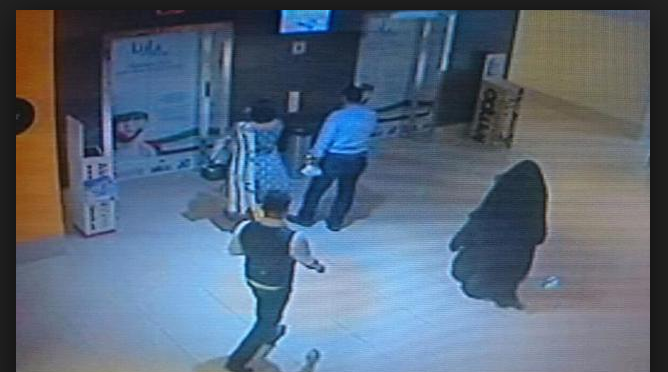
Their queries followed the terrible news that had gone viral almost as soon as it happened: in a mall bathroom in Abu Dhabi, where I live, a veiled woman had killed a Western woman—-an American teacher-—with a long kitchen knife. Adding to the horror of the attack was the fact that the victim’s children, eleven-year old twins, were apparently hanging out in the mall waiting for their mother to come back from the bathroom.
I didn’t hear the news until I got home from work that day and opened Facebook. I suppose that people were particularly worried because I am also an American teacher, and about a month ago, the US Embassy in Abu Dhabi reported that anonymous threats against American teachers had been made on a jihadi website. For a day or two after the attack, news reports tossed around the possibility that the veiled woman was somehow in league with ISIL, or some other terrorist organization.
As it happens, however, the murderer had no discernible terrorist allegiances, and what happened in that mall bathroom was just an appalling act of violence. Some of us who live here speculated about the difference between what happens in the US when an unstable person finds a weapon and what happened here:
a butcher knife is a brutal instrument, it’s true, but it creates far less mayhem than, say, a semi-automatic rifle.
According to a 2007 survey, the US ranks first in the list of number of guns owned by civilians (90 guns per 100 residents); the UAE ranks 24th (22 guns per 100).
Violent crime is incredibly rare in Abu Dhabi. Yet, despite the rarity of violence here, and despite the stability of the Gulf States, there was the chatter on Facebook; there were the emails; there were the questions about whether this attack would cause me to move home. “Home” is a bit complicated for me: I’ve lived in Abu Dhabi for almost four years, but had been in Manhattan for almost twenty years before that. So “home” is here. . . and there.
Before we moved to Abu Dhabi, my family and friends were worried about other things. “Are you going to have to, you know,” they’d ask, swirling their hands around their head as if describing the world’s biggest beehive hairdo. Their swirl implied “covering”: would I have to wear a headscarf or an abaya when I went out in public? The answer is no. I feel free to walk around alone wherever I please, dressed much the same way I would be in New York. There are no laws governing how people dress here; women are free to cover or not cover, and on the beaches you see burqas and bikinis with equal frequency.
In fact, I feel as safe walking alone in Abu Dhabi as I ever did in New York. It’s the kind of place where I leave the car doors unlocked when I run into the grocery store, and where more than once I’ve forgotten my phone in some public place, only to run back ten minutes later to find it exactly where I left it.
I share the sentiments of my local friend, Ken. In response to the news, he posted the following message on his Facebook page: “Thank you for your e-mails and messages about the American woman who was killed here on December 1st. I appreciate your concern. But please be assured that I don’t feel in any greater danger being a Westerner in Abu Dhabi than I felt being a gay man in New York City. In fact, it’s the opposite. I’m used to danger.
The only way to protect oneself completely from acts of terror or random violence is by not participating in the world. I won’t do that.”
The expressions of worry that came from my family and friends in the aftermath of this attack were real, I know. And there is no doubt that what happened is appalling and has ripped apart the lives of this woman’s family. But I can’t help but suspect that this story got as much coverage as it did (there are more than thirteen pages of hits for “American teacher slain Abu Dhabi) because the attacker is so visibly Other: a veiled woman, an exotic symbol of “the Middle East,” which to much of the West is still an undifferentiated blur of veils, oil rigs, and jihadis.
Here’s the teaser from CNBC when the story about the knife attack first broke:
I wonder about the leap: that an attack in a mall bathroom by a woman with a knife might have implications for “foreigners” living anywhere in the Middle East.
It’s a strange twist, isn’t it, to think that had the Western media simply assumed that the attack was an isolated, horrifying incident—the work of one crazy woman—it might have represented a step forward?
This is an original post written for World Moms Blog by Deborah Quinn.
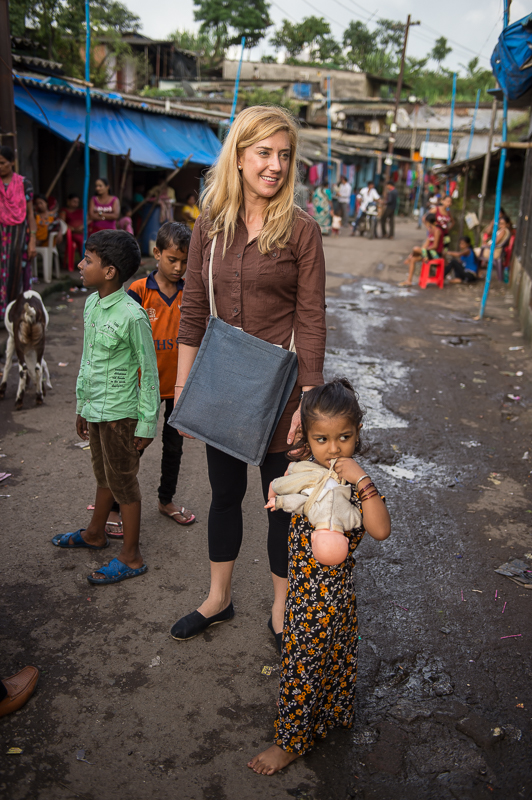
After twenty-plus years in Manhattan, Deborah Quinn and her family moved to Abu Dhabi (in the United Arab Emirates), where she spends a great deal of time driving her sons back and forth to soccer practice. She writes about travel, politics, feminism, education, and the absurdities of living in a place where temperatures regularly go above 110F.
Deborah can also be found on her blog, Mannahattamamma.
1. Learn about the Universal Declaration of Human Rights. The full UDHR is on the UN website here, but you can also find a simplified version of the UDHR here. And check out this cool video created by the Human Rights Action Center that summarizes the rights in the UDHR:
2. Be a mapper for UNICEF Voices of Youth. UNICEF has created an online platform to empower youth around the world to map important issues in their community, advocate and bring change. A featured tool from Voices of Youth Maps is UNICEF-GIS – a youth-friendly mobile mapping application that produces web maps and visual reports on youth-related issues. UNICEF is asking youth to
Open a window into your community and share issues that you and your friends and family face. Tell us about the experiences you live, share your success stories and show us the beauty of your cultural background. Post on Voices of Youth and make your voice heard!
3. Make a Human Rights Calendar for 2015. Choose a UDHR article (or two or three) to focus on each month. Decorate the calendar with photos and drawings that illustrate the right(s). Try to coordinate the UDHR rights with local, national, and international holidays. For example, choose Article 15 (right to a nationality) for the month of your country’s national independence day and Article 18 (right to practice your religion) during a religious holiday period. You can download free calendar templates here.
4. Learn about a human rights heroine or hero. Pick your favorite activist for social justice, either from your country or another country. Go to the library to find a biography or search online for information about her/his life. Try to find out
When the person lived (if not still living).
What problem (or problems) they faced.
Who or what formed their opposition.
What was the outcome of the stand they took, in which they believed?
What tactics did they use in their campaign?
How much success do you think they had?
What did you learn that surprised you? What else would you like to know about this person? Brainstorm your own questions together!
5. Explore what it means to be a peacemaker. You can interview each other or other kids or adults. Ask each other
What does peace mean to you?
Describe a time when you experienced peace. Where were you? What were you doing? Who was with you?
When was a time when you were a peacemaker? What happened? Who were the people involved? How did it turn out?
Are there some ways that you think you are not a peacemaker?
Who do you know who you would describe as a peacemaker? What does this person do that you consider peacemaking? Why do think of these actions as peacemaking?
6. Learn more about the work of United Nations human rights experts. “Special Rapporteur” is a title given to individuals working on behalf of the United Nations who bear a specific mandate from the UN Human Rights Council to investigate, monitor and recommend solutions to human rights problems. Appointed by the UN Secretary General, these experts are “of high moral character and recognized competence in the field of human rights.” They act independently of governments. Special Rapporteurs often conduct fact-finding missions to countries to investigate allegations of human rights violations. They also regularly assess and verify complaints from alleged victims of human rights violations. Once a complaint is verified as legitimate, an urgent letter or appeal is sent to the government that has allegedly committed the violation. To learn more, you can listen to the podcast series Meet the Special Rapporteurs.
7. Participate in the 7 Billion Others project. In this beautiful series of portraits of humanity, more than 6000 people from around the world have answered the same 40 questions, including: What did you learn from your parents? What would you like to pass on to your children? What challenges have you had to face? What does love mean to you? Series creator Yann Arthus-Bertrand says,
There are more than seven billion of us on Earth, and there will be no sustainable development if we cannot manage to live together. That is why 7 billion Others is so important to me. I believe in it because it concerns all of us and because it encourages us to take action. I hope that each one of us will want to reach out and make these encounters to listen to other people and to contribute to the life of 7 billion Others by adding our own experiences and expressing our desire to live together.
8. Look for human rights in the news. Clip articles about local, national and international human rights issues out of newspapers and magazines. Listen to radio or watch television news programming and point out the human rights coverage. Be sure to look for news about human rights successes as well as news about human rights problems.
9. Learn more about the human rights issues related to the products you buy. The International Labour Organization estimates that more than a quarter of a million children work in the cocoa plantations of West Africa that produce most of the world’s chocolate. It’s hazardous work, which exposes children to injury and highly toxic pesticides. Hershey’s, the largest chocolate manufacturer in North America, has not thoroughly addressed accusations of child labor in its supply chain and refuses to release any information about where it sources its cocoa. Consumers play an essential role in diminishing the food industry’s injustices. You and your children can make the choice to buy chocolate that is not made with child labor. See a list of the companies that do NOT use child labor in their chocolate production here. Read more about child labor in the cocoa industry here.
10. Get out there and raise your voice for what you believe in. Participate in a march or protest related to an issue that is important to you. And be sure to bring your kids! There is no better way to teach empathy and compassion for others than by doing it together.
You and your kids are on your way to a great Human Rights Day! What are YOU going to do this year? Please share YOUR ideas for human rights activities with us in the comments.
ADDITIONAL RESOURCES: If you are a classroom teacher or homeschooling your kids (or if you just want to dig deeper), you can find tons more ideas through the following resources:
ABC – Teaching Human Rights – practical activities in English, French, Russian, Arabic, Chinese, and Spanish from the UN Office of the High Commissioner for Human Rights
Jennifer Prestholdt is a lawyer and the Deputy Director of The Advocates for Human Rights, a volunteer-based human rights organization that works locally, nationally and internationally. Her work in human rights takes her around the world, but she spends most of her time in Minneapolis, MN, where she lives with her children (two sons and one daughter), her husband, an elderly cat and a dwarf hamster.
As Jennifer’s kids are now all in school (1st, 4th and 6th grades), she is finally finding more time to do the things that she used to love to do, especially running, writing and knitting. Jennifer loves to travel and has had the dubious distinction of having been accidentally locked in a bathroom on five continents so far. Australia and Antarctica await!
In January 2011, Jennifer made a New Year’s Resolution to start writing about her experiences in order to share with her children the lessons learned from 15 years of work in human rights. The result is her personal blog, The Human Rights Warrior. The name comes from her son Simon, who was extremely disappointed to learn that his mother is a lawyer, not a warrior.
TO THE MARKET | Survivor-made Goods (TTM) combines the powers of commerce and storytelling to empower the world’s most courageous survivor populations. We’ve developed a three-pronged social enterprise model that we believe reflects the needs of organizations employing survivors of abuse, conflict, or disease to help ensure that these organizations can continue to provide steady work to the survivors.
Our goal is that the survivors in our network eventually achieve economic independence, meaning that they aren’t dependent on someone or something else.
Our model includes (1) promoting survivor-made goods via our multiple distribution channels, including pop-up shops, custom sourcing, retail partnerships, and our online marketplace; (2) offering a platform for survivors and their champions to share their stories through TTM’s Stories and Huffington Post blogs; and (3) providing tailored services, such as trend forecasting and basic mental health resources, to our partners to improve production and management.
I started TTM after a trip to Kolkata, India revealed a way to impact the most vulnerable survivor communities by offering them an opportunity to earn an income.
I saw the light in the eyes of the survivor turned artisans when they were given the chance to earn—they wanted the dignity of work. I began speaking to incredible people all over the globe (including in the U.S.) who had created social enterprises to employ different survivor populations, usually by employing them to produce handicrafts.
I heard really positive feedback about the model of employing survivors (and all of the incredible benefits to the self-esteem and trajectory of the survivor and his or her children). However, I also heard about the challenges of making this model work—TTM aims to help augment these challenges.
Who are the artisans at To the Market?
TTM identifies and teams up with existing organizations currently employing survivors of abuse, conflict, or disease. We call these organizations “local partners”. Local partners consist of non-profits and for-profit social enterprises that have already set up shop, hired, and trained survivors to produce products.
TTM focuses on certain types of survivor populations. This includes, but is not necessarily limited to; survivors of abuse, such as survivors of domestic violence, physical and sexual abuse, and human trafficking; survivors of conflict, such as war widows, refugees, or persons living in conflict/post-conflict states ; or survivors of disease, including populations living with HIV/AIDS, leprosy, or physical disabilities.
We have partners across the globe, including in the U.S., South America, Africa, and Asia.
Do you see a pattern in consumers’ behavior when it comes to shopping responsibly?
I think there is a desire to shop more responsibly, but it often comes down to what people can afford. I am really proud of the fact that our local partners make a variety of products at all different price points—on-trend bracelets for under twenty dollars to timeless cashmere scarves for several hundred dollars.
Can you share a personal story that you think best represents the mission of the online shop?
I recently spent nearly a month in Nepal and India visiting with many of our local partners. I was particularly reminded of how transformational economic independence can be to these survivors when I spent time with their children—their daughters, especially. Most of the survivors we work with are women. When the women achieve economic independence, their daughters are so much less likely to be exploited. We recently wrote about a shelter in New Delhi, India that employs HIV/AIDs infected and affected women. You can see the video about the shelter and read about it on our Stories blog here.
How did you get involved with this work?
I began my career in counterterrorism with a focus on the intersection of women and security. Much of my mission was to try to elevate the role of women in national security-related issues, but I consistently found that women with some form of economic independence had so much more leverage in their family, community, and country than those with none.
That (five year) experience got the wheels turning quickly about the importance of economic independence in empowering vulnerable populations. When I went to work for the McCain Institute on human trafficking, I really saw how vital it was for survivors of some sort of trauma (whether it be abuse, conflict, or disease) to have access to some income.
It brings me extraordinary joy to be a part of the life-changing process of gaining even the slightest bit of independence.
What are your favorite picks for this holiday season?
For Mom: I love this 100% cashmere scarf hand spun by master spinners in the Kashmir Valley! Each scarf contains the women’s initials that made it.
For Dad: I love this red spice and merlot trivet. It’s the perfect size for cuff links, receipts, or coins and is neutral enough to sit comfortably on a nightstand or office desk. It’s hand-woven by craftswomen in Rwanda.
For college kids: I have to suggest the patrice signature bag, which I am currently carrying by No41. It has two major points of impact!
First, it provides a stable job and sustainable income to a young woman transitioning into a life of independence from living in an orphanage in Rwanda.
SECOND (and perfect for the college student), it provides 240 meals to a secondary student in Rwanda!
For kids: I love these brightly colored elephant ornaments (in pink or blue) hand-sewn by women in the Ivory Coast. Pink and blue patterns make it easy to pick for a boy or girl.
For the office or book/dinner club gift exchange: I selected either a Sari Coin Purse hand-sewn by human trafficking survivors in Kolkata, India or this Hope Ornament pounded out of recycled metal oil drums in Haiti. Even if you don’t have a tree, you can hang this Hope sign up to encourage you! Both come in under $10, the perfect price point for small gifts.
I am also including a couple “splurge on yourself “ items because I feel like most moms that I know only spend on others! I’ve included the Holiday Festive skirt, because it’s the perfect pattern for this time of year and also because it’s made by stay-at-home moms in Belize who are caring for sick children. Or, this Soledad Peru bag. The Suede straps and bottom make it strong enough to carry six wine bottles (yes, please!). The bag was made by women weavers in a valley deeply scarred by the Shining Path.
How can World Moms help spread the word about shopping responsibly this holiday season and beyond?
What a great question! Helping to get the word out about social enterprises like TO THE MARKET via social media and blogging is a tremendous help, in itself. Someone doesn’t have to have a huge following, either! Just telling your family or friends that these social enterprises exist makes a difference. So much of why so many social enterprises struggle is because they don’t have the marketing budget that big box retailers have to tell their story. There is nothing more flattering (or effective) than a personal referral!
This is an original interview with To the Market founder, Jane Mosbacher Morris, for World Moms Blog. You can learn more about the good work and great products To The Market sells by visiting their website (http://www.tothemarket.com/goods)
The image in this post is used by permission from To the Market.
World Moms Blog is an award winning website which writes from over 30 countries on the topics of motherhood, culture, human rights and social good. Over 70 international contributors share their stories from around the globe, bonded by the common thread of motherhood and wanting a better world for their children.
World Moms Blog was listed by Forbes Woman as one of the "Best 100 Websites for Women 2012 & 2013" and also called a "must read" by the NY Times Motherlode in 2013. Our Senior Editor in India, Purnima Ramakrishnan, was awarded the BlogHer International Activist Award in 2013.
I am by no means an expert on HIV or AIDS. In fact, other than knowing some basic statistics and facts on transmission, I have never really given much thought to the social implications of living with the virus. This wasn’t intentional, but most likely the result of the small bubble in which I was living for most of my life; a bubble that did not include any friends or family directly affected by the virus. That all changed, last November, when I visited Arusha, Tanzania to meet some of the students in the Mom2Mom Africa Organization, a small not for profit that I founded several years before. I knew some of our students came from families in which some members were positive. Some were left orphaned by the disease. But what I didn’t realize was how this impacted these children in terms of treatment by their local community, regardless of their HIV status. I learned of children who were shunned by the church because the deaths of their parents was attributed to AIDS. I learned of other families shunned by their own relatives for the same reason. In some instances, the children were not even aware of why their parents died. It was hidden to protect them.
I left Tanzania with a heavy heart, but it was made heavier by the stories of the struggles of some of our students because of the AIDS pandemic. I had suspected that discrimination existed but I now had little faces associated with that discrimination haunting me, making it more real. Students are accepted into Mom2Mom Africa regardless of HIV status…I can think of operating no other way. In fact, we only request medical information so we can provide the appropriate health care.
I was now beginning to understand that this virus was not only killing people, but leaving behind families to deal with the shameful treatment by society.
Our affected students not only required extra medical attention, but also more emotional support.
I began to wonder if those affected by HIV/AIDS in Canada feel the same degree of isolation. Did being HIV positive in Canada carry with it the same stigma as in Tanzania? I decided to find out. Speaking to the AIDS Committee of Cambridge, Kitchener, Waterloo & Area (ACCKWA), I learned that, unfortunately, Canadians often face the same discrimination and stigma. Although laws are in place to help prevent discrimination, it still occurs. Many of those affected by HIV are judged, and often blamed for their HIV status. Thankfully, there are support groups such as the ACCKWA that provide a safe place and much-needed services to those living with HIV in our local community.
After speaking to ACCKWA, I contacted my friend, and fellow World Moms Blog contributor, Nancy Sumari to discuss what support services are in place for those living with HIV, and their families, in Tanzania. Nancy is part of the “I am Positive” Campaign in Tanzania. The campaign was established in response to reports by those living with HIV of being discriminated against and, in some cases, being physically assaulted and emotionally abused because of their HIV status. The campaign has several main objectives, but the one that hit home the most was:
“To live with HIV/AIDS is NOT to live without human rights and dignity”.
The power of that message is not only incredible, but universal. Regardless of what country you live in, what part of the world you live in, and what your HIV status is, you have the right to basic human rights and to live with dignity. We ALL deserve this.
As I reflect on this past year, and what I have learned about the realities those living with HIV face each and every day, I can’t help but dream of a day when the stigma no longer exists; a day when judgement and discrimination are replaced with support and understanding. Or better yet, I dream of a day when HIV and AIDS move from pandemic status to curable infection. But, until then, I hope that empathy prevails for all those living with HIV, as well as for their families.
This is an original post written by Alison Fraser for World Moms Blog.
Alison Fraser is the mother of three young girls ranging in age from 5 to 9 years old. She lives with her family in Cambridge, Ontario, Canada. Alison works as an Environmental Toxicologist with a human environment consulting company and is an active member of the Society of Environmental Toxicology and Chemistry (SETAC). She is also the founder and director of the Canadian Not for Profit Organization, Mom2Mom Africa, which serves to fund the school fees of children and young women in rural Tanzania. Recently recognized and awarded a "Women of Waterloo Region" award, Alison is very involved in charitable events within her community including Christmas Toy and School Backpack Drives for the local foodbank.
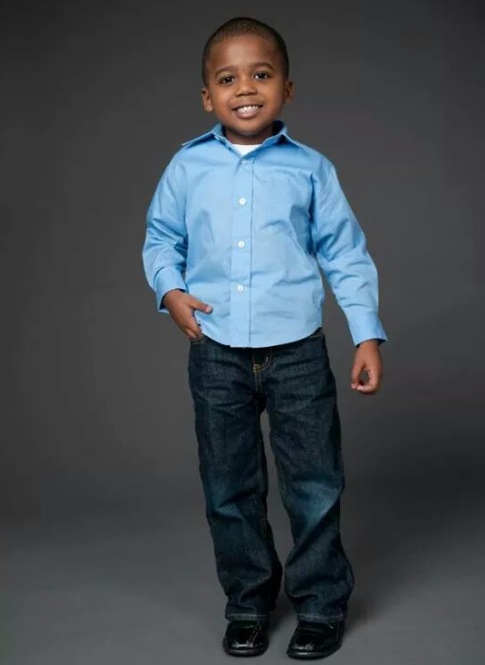
Positive Images of Black Boys in Protest of Ferguson Tragedy
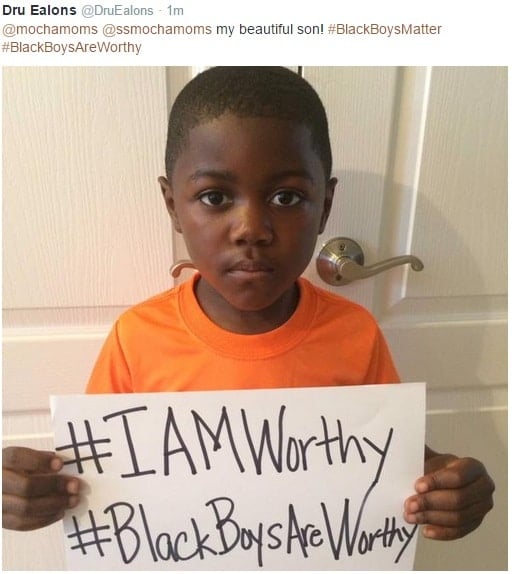
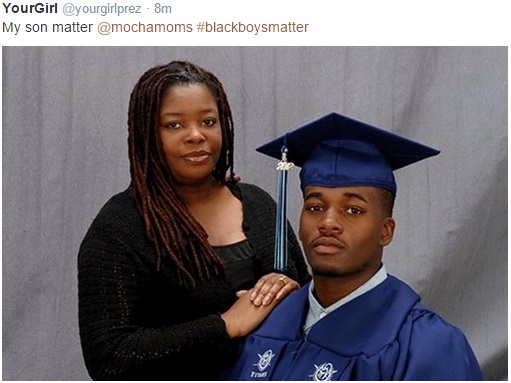
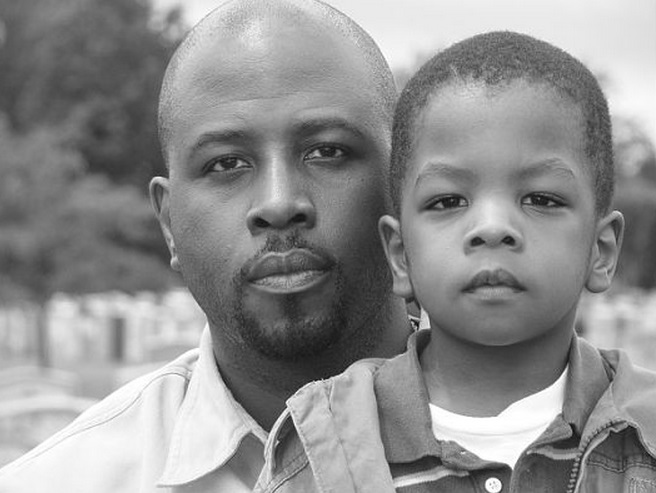
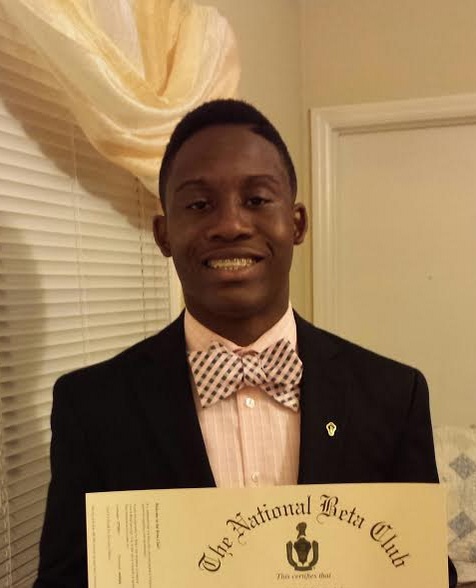
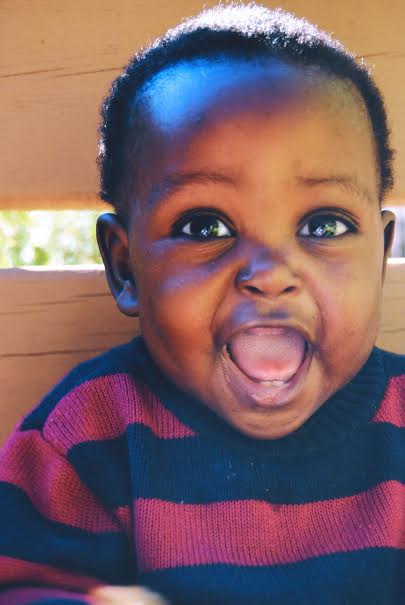
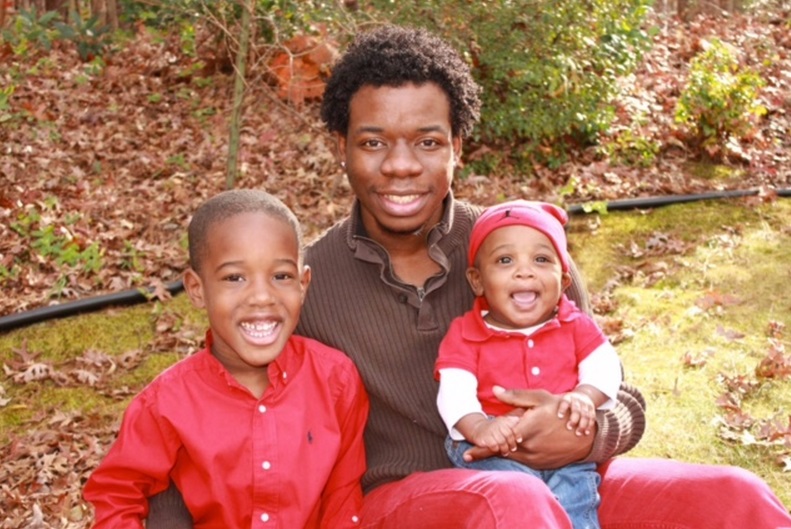
Mocha Moms, Inc. members, many of whom are the mothers of sons, are outraged by the failure to indict Darren Wilson in the Michael Brown, Ferguson grand jury case. But we realize we can’t change the decision, nor bring back Michael Brown, Trayvon Martin and countless other unarmed black boys, and men who have lost their lives. We chose to take to social media and flood our Facebook, Twitter and Instagram pages with positive images of our sons with hashtag #blackboysmatter. This is our way of peacefully organizing via the power of social media to change the way our society views black males. At the time of this article, our social media campaign has garnered nearly 5 million impressions and that number is steadily growing.
Our sons are not thugs, robbers or murderers. They are educated, professional, philanthropic, law-abiding men who give back to their communities and families. Their precious faces should not evoke a sense of fear simply because they are black.
We are not saying that all lives are not precious and equally important, or that our girls, white or brown children don’t matter. But these children are not being gunned down like animals in the street.
We invite moms from around the world, no matter the race, to join us in solidarity and help us spread the word by sharing photos of your precious sons of any color with #blackboysmatter. But don’t stop there!
Talk to your children about equality. Share the struggles of people who are not treated fairly and are discriminated against. Raise them to understand that no matter the color of someone’s skin, they deserve the same rights as everyone.
We shudder to think that civil rights icon and scholar, W.E.B. DuBois, was accurate in his statement;
“A system cannot fail those it was never meant to protect.”
This is an original post written by LaShaun Martin, National Director of Social Media, Mocha Moms, Inc. for World Moms Blog.
LaShaun Martin is National Director of Social Media and Community Service for Mocha Moms, Inc. a national 501(c)(3) support group for stay-at-home mothers of color. LaShaun currently works to manage and promote community service programs for the organization to include teen mentoring, Boys Booked on Barbershops literacy program, America’s Promise, MomsRising, Moms Clean Air Force, U.S. Environmental Protection Agency, and U.S. Department of Education. She is a frequent guest of the White House for events focused on women and girls including tea with First Lady Michelle Obama.
LaShaun holds a Bachelor of Science degree in Business Administration. LaShaun spent 20 years with the State of California, the State of Maryland Department of Corrections managing public education, research, FBI programs and later Hewlett Packard. LaShaun now serves as CEO and Designer of her own company, Shootie Girl™ Custom Rhinestone Apparel and Shootie Girl™ Blog – Positive Messages for Women and Girls. Shootie Girl™ designs have been featured with CNN’s Soledad O’Brien, Sherri Shepherd of The View, Carol’s Daughter, Clinique Cosmetics, Jack and Jill of America, Inc., Still Standing Movie, Dr. Sherry Blake of Essence Magazine and Aja Dantzler of R&B singing couple Kindred and the Family Soul and Blogalicious.
LaShaun is passionate about giving back and ensures her company reflects a heart for service by donating many “t-shirts for a cause” to Heart of Haiti, the women of Zimbabwe and The United Nations Foundation Shot@Life Campaign. She also serves on the Advisory Board of MOMentumNation and the Epilepsy Foundation.
LaShaun’s greatest passions are her husband, two lovely daughters and music.
Blog: http://www.shootiegirl.net
Custom Rhinestone Apparel: http://www.shootiegirl.com
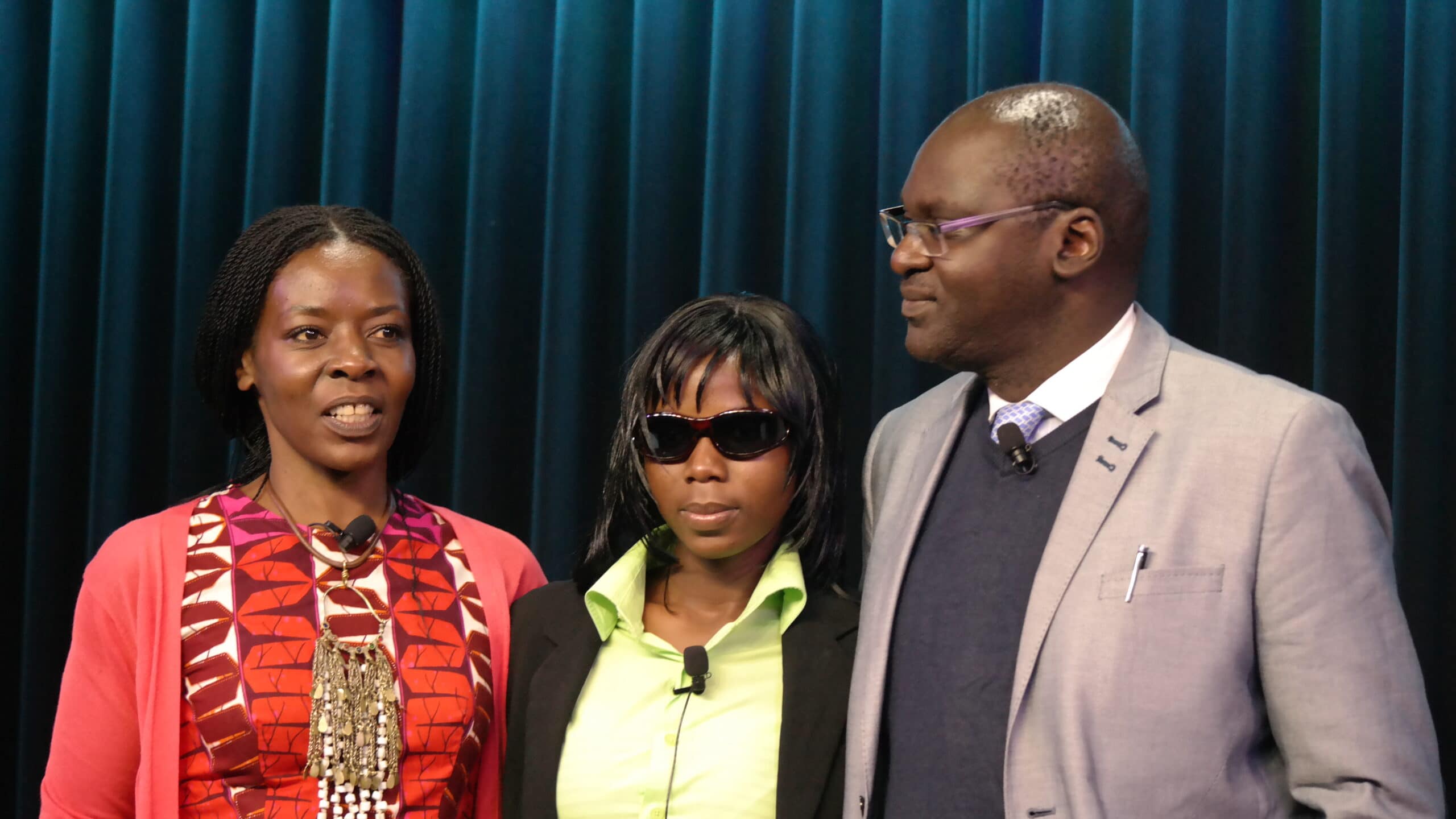
They sat in the back row of the ONE Campaign’s AYA Summit with me in Washington D.C., keeping to themselves and wearing sunglasses in an already darkened room. A computer on their laps, two teenage girls whispered to one another as together we watched videos and heard speakers talking on all ranges of topics affecting girls and women around the world. Vaccines, education, access to electricity, human trafficking, genocide…it was both a heavy and inspiring range of topics as speakers bounced back and forth between storytelling about problems and discussing solutions. Sitting with them and trying (unsuccessfully) to engage them in friendly conversation during breaks, I had no idea how intimately these topics were affecting their lives…
I sat in the back because back row chairs sit beside outlets and I could recharge my phone easily. They sat in back shadows for a very different reason. Because of uncertainty…a desire for anonymity…maybe even fear. One of the two had more immediate reason for concern than the other. Without our knowledge, she was nervously waiting all day for her turn to speak to us and tell us her story.
Her name was Saa* and seven months ago she was kidnapped by Boko Haram from her school in Nigeria.
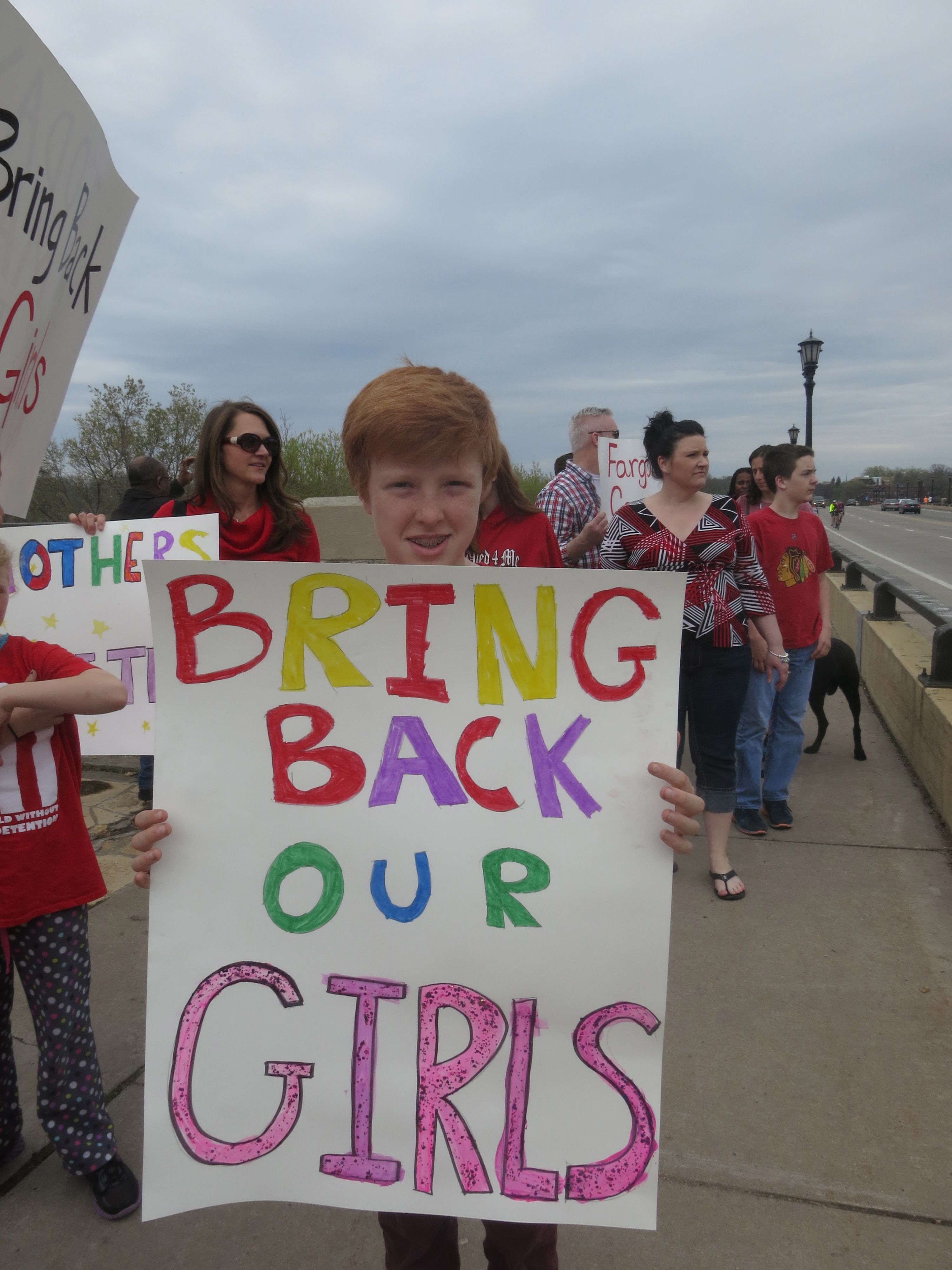
Last April, the whole world exploded in outrage demanding for these terrorists to #BringBackOurGirls. And then…we heard nothing. Governments searched. Leaders demanded. Parents wept. And we heard nothing.
Then, as if out of the blue, Saa appeared in our midst ready to speak at the AYA Summit to a group of parents armed with laptops and 45 million social media followers.
This is her story.
On April 14, kidnappers from the terrorist group Boko Haram entered Saa’s school in Chibok with a plan to capture all the girls who studied and slept at her school. At 11:30PM, Saa and her classmates heard terrible noises of violence. Scared, she called her father and asked what she should do. He told her to stay where she was and wait for help.
No help came.
Collecting all the girls to a common area, kidnappers started burning everything from the school. Surrounded by weapons, the girls were told if they shouted or ran away, they would all be killed. Gunmen started demanding information about the location of a local mission, the location of the boys in the school (there were no boys), and where the school kept food. Two girls showed them where the food was and the guards emptied the store of food supplies.
They forced them away from the school and gathered them under a big tree, bringing vehicles including small cars and big trucks. The girls were ordered to enter big, high trucks by climbing up upon a small car and into the truck. “They said if any girl did not want to go into the trucks, she should come out and they would kill her,” Saa told us. After moving to another village, they moved the girls from trucks and started filling the car with the girls sitting on laps. There was not enough room for everyone to sit and three girls were left outside. The men asked the first girl if she was Muslim or Christian. She was Muslim, so they moved on and asked the same of the next girl who – despite being Christian – replied that she was Muslim out of fear for what they might do to her. When the third girl admitted that she was Christian under questioning, one of the kidnappers decided he should kill her right there and let the Muslim girls go. Other kidnappers fortunately intervened and convinced him not to kill her then, and there. Amazingly, those three girls were released for lack of room, but told not to turn back or everyone would be killed. Those girls ran away to the town.
As the vehicles started to travel and moved past one village, a few girls started to jump from the trucks. Saa decided for herself that she would rather jump and die than face the uncertainty of what lay ahead. She told her plan to friend saying, “I would rather that my parents have to bury me in a coffin.” Her friend agreed to jump, too. The truck continued through the middle of a forest in the dark with cars following behind. The girls waited for an opportunity when the following cars were not within sight then leapt from the trucks, Saa first and then her friend. After the jump, Saa discovered her friend had injured her leg and was unable to move very far. She helped her friend into the forest away from the road, so they would not be discovered. They moved as far as they could and slept in that spot until morning.
In the morning – with her friend still unable to travel – Saa sought out help. The first person Saa met was a shepherd. She asked him for help, but he refused out of fear for his own safety. He advised them to wait until 9 or 10 AM when some people may travel that way going to market and possibly help them. Saa argued that not many people would come by because the violence from the night before would make them afraid to come. They must move quickly because the “bad people” may follow that road again. Finally, he agreed to help and carried Saa’s friend on a bicycle.
On the road, they did meet people who were coming to look for their daughters who helped bring the girls back to Chibok. Then, they went back to their hometown. When they arrived home, Saa was reunited with her parents who met her in tears. All of her relatives were weeping because of the ordeal.
Saa didn’t cry as she related her story. She spoke softly and quickly in a matter-of-fact manner. I wondered how many times she had told her story and if sticking just to the facts helped her remain detached enough to get the story out. Even though this was only the second time she had spoken publicly about it, I imagine she must have related it many times to her family and to authorities trying to glean clues to recover her classmates who are still missing.
In the audience, we sat in shock…surprised to be in her presence and horrified by the audacity of Boko Haram to violate their freedom in this way. Most of us were mothers who had a very visceral reaction to the thought of someone stealing our daughters away in the night to be sold, raped, married, or killed.
I thought about that horrible conversation Saa’s father in which he faced a terrible choice of how to advise his daughter over the phone. Would you tell your daughter to run and risk her being shot in the back? Or would you tell her to wait for help, knowing that she might be trafficked and violated if no one comes to help? I thought about the shepherd, afraid for his life. He balked, but did the right thing in the end. I admired Saa’s skillful persuasion in arguing with him to provide aid and her courage to leap from a moving truck in the midst of a forest full of danger from animals and humans.
To my horror, on my Twitter feed that very night as we gathered around Saa to thank her for her courage and her story, I saw 25 more girls had been captured by these monsters. In a video delivered 200 days after Saa’s kidnapping, Boko Haram leaders scoff at the idea at negotiating for release along with ceasefire agreements. The group’s leader, Abubakar Shekau, flanked by gunman reportedly said, “The issue of the girls is long forgotten because I have long ago married them off…Don’t you know the over 200 Chibok schoolgirls have converted to Islam? They have now memorized two chapters of the Koran.” According to A World At School, Boko Haram claims to be holding 500 women and girls against their will.
I write this blog because the issue of the 219 Chibok schoolgirls is not forgotten. Not by Saa. Not by me. Not by a long shot. Saa told her story and gave us permission to use her picture for a very specific reason…to have us share it with others. If sharing her picture and her story is a way to get people to remember why we stand up for girls’ education and why the U.S. should put pressure on the Nigerian government to stop these atrocities and recover the victims, then that’s what I will do. And that’s what I ask you to do.
1. Continue to use the #BringBackOurGirls hashtag on Twitter. When you see news about it, tweet it to your networks and your members of Congress
2. Use Saa’s story and write your own blogs or letters to the editor about it to keep it in the media and social media
3. Be a champion for global girls’ education. As I said in my World Moms Blog post last may, What Can Americans Do for Abducted Nigerian Schoolgirls?, “The welfare of the kidnapped girls rests in someone else’s hands in the short-term, but I advocate against poverty and injustice wth an eye for the long-term. While we wait and we pray for these girls, shouldn’t we be using this anger and anguish to secure a future for all girls?”
I’d like to leave you with a happy thought about Saa’s education. Saa, her friend, and two other escaped Chibok schoolgirls have been brought to the United States where they will be able to study freely alongside other young women who don’t know what it means to live in fear for the right to learn. Her family knows she is safe. Her future is in her own hands. But she continues to fear for her classmates…as do we all. Read her story again. Think on it. Then, act on it.
*”Saa” is a pseudonym she uses for her own protection
This is an original post written by Cindy Levin for World Moms Blog.
Cynthia Changyit Levin is a mother, advocate, speaker, and author of the upcoming book “From Changing Diapers to Changing the World: Why Moms Make Great Advocates and How to Get Started.” A rare breed of non-partisan activist who works across a variety of issues, she coaches volunteers of all ages to build productive relationships with members of Congress. She advocated side-by-side with her two children from their toddler to teen years and crafted a new approach to advocacy based upon her strengths as a mother. Cynthia’s writing and work have appeared in The New York Times, The Financial Times, the Washington Post, and many other national and regional publications. She received the 2021 Cameron Duncan Media Award from RESULTS Educational Fund for her citizen journalism on poverty issues. When she’s not changing the world, Cynthia is usually curled up reading sci-fi/fantasy novels or comic books in which someone else is saving the world.

 “Are you okay?” The emails and Facebook queries began pouring in even before I knew what had happened. “Were you there?” One particularly dramatic friend asked if “what happened” made me think about moving home.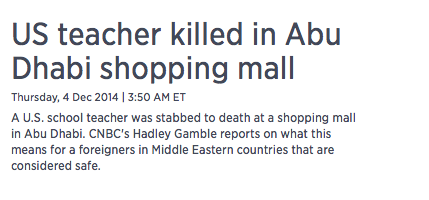


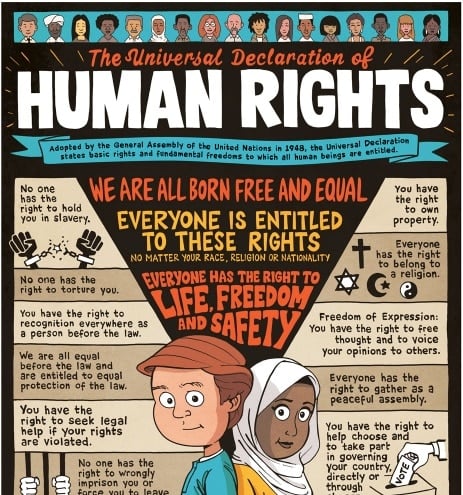
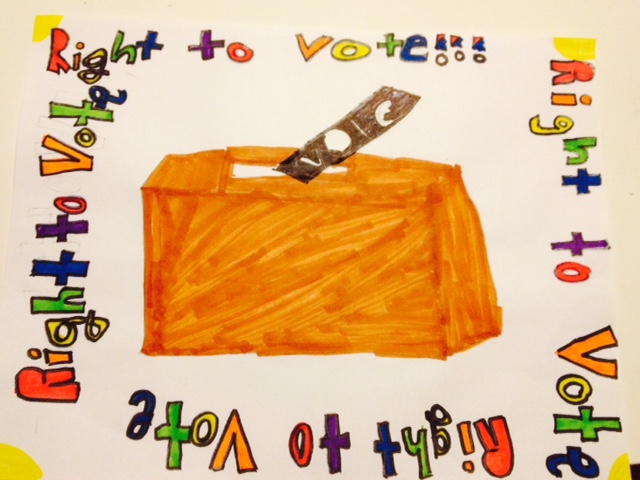
 Each year on December 10, people all around the world celebrate