by World Moms Blog | May 20, 2014 | 2014, Awareness, Girls, Government, Human Rights, Humanitarian, International, Social Good, Social Media, World Moms Blog
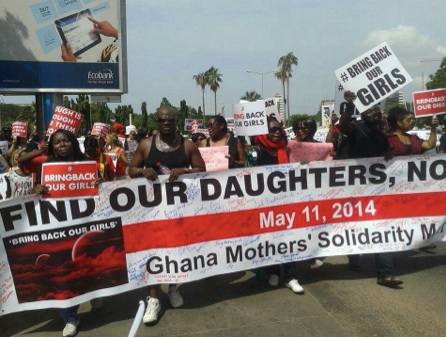
As a mother, it is really hard to see other mothers go through certain challenges. I think it’s in me to be supportive in whichever way that I can when there is something I can do about a situation….like the hundreds of Nigerian schoolgirls who have been kidnapped; I marched to show my support on Mother’s Day.
Every mother’s dream is to see her children have the best in life, which includes education. A famous quote by renowned Ghanaian educationist Dr James Kwegir-Aggrey is:
“if you educate a man you educate an individual, but if you educate a woman you educate a whole nation”
This describes the power of educating young girls. It is every girl’s right and boys too to have an education but when these dreams are shattered it becomes a concern to all. Everyone knows the power of education, and it is evident that when a child is educated, he or she is set on the path to greatness.
‘Education is the most powerful weapon which you can use to change the world’- Nelson Mandela.
Taking these girls away from school is like taking them away from their paths to greatness. We hope and pray that they are returned safely to their families. This is why mothers of Ghana joined the campaign to #BringBackOurGirls on this past Mother’s Day in Accra. It was a solidarity march to present a petition to the Nigerian high commissioner in Ghana organised by Yasmeen. A mother herself, she is a songstress with a golden voice and a concerned citizen of our continent Africa. You can listen to her here .
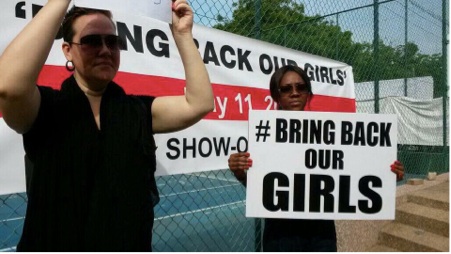
Mother’s Day is no fun if you know that another mother is grieving over her lost child. This was a great initiative by a group who care to march in solidarity in support of the kidnapped Nigerian school girls of Chibok. I saw the post on twitter and immediately wanted to be a part of this great cause. Thank you Yasmin for organising this!
It was an experience for both the young and the old as the children and babies were not left out. There were placards for everyone with ‘Bring Back Our Girls’ boldly inscribed on them. The media was present to cover the event, and the police were also there to ensure the safety of all who came for the walk.
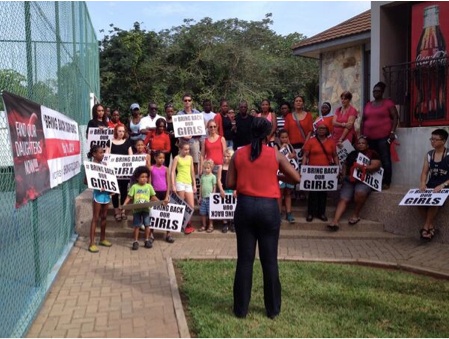
Almost everyone who came wore black and red to signify solemnity. Signatures were also appended on a banner which was later presented to the high commissioner. The walk was through some parts of the capital city of Ghana to the Nigerian High commissioner’s residence. It was such a solemn march and the support was so immense. As mothers everywhere are celebrated this month, let us not forget the ones who are heartbroken over their missing girls.
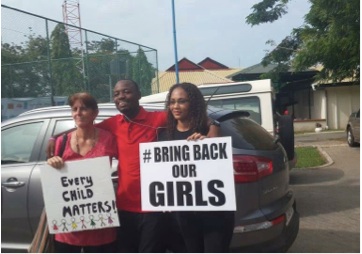
My heart aches each time I think of these girls or see a post about #BringBackOurGirls. We will not relent but continue to pray for the safety of the girls, their families and especially their mothers!
This is an original post written by Adwoa Gyimah of Ghana for World Moms Blog. Photo credits: Adwoa Gyimah
What more can we do to #BringBackOurGirls !?
World Moms Blog is an award winning website which writes from over 30 countries on the topics of motherhood, culture, human rights and social good. Over 70 international contributors share their stories from around the globe, bonded by the common thread of motherhood and wanting a better world for their children.
World Moms Blog was listed by Forbes Woman as one of the "Best 100 Websites for Women 2012 & 2013" and also called a "must read" by the NY Times Motherlode in 2013. Our Senior Editor in India, Purnima Ramakrishnan, was awarded the BlogHer International Activist Award in 2013.
More Posts

by Elizabeth Atalay | May 13, 2014 | 2014, Economy, Education, Environment, Ethiopia, Girls, Government, Health, Human Rights, Humanitarian, International, Maternal Health, Natural Disaster, Poverty, Social Good, Vaccines, World Moms Blog
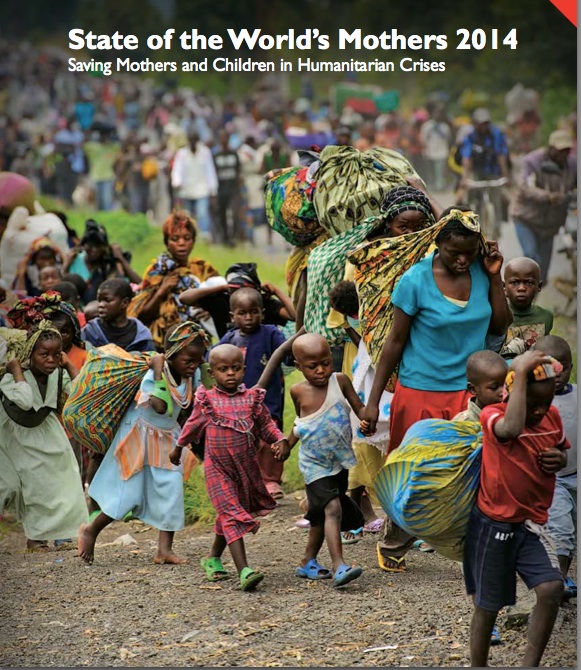
State of the Worlds Mothers Report Cover Photo By Phil Moore
The 15th annual State of the World’s Mothers Report was released last week by Save The Children, just in time for Mother’s Day, and World Moms Blog was there at the launch. The focus of the 2014 report is on saving mothers in humanitarian crisis, and the launch of the report in New York City was co-hosted by the Permanent Mission of the Philippines to the United Nations. In his welcome address to the room Permanent Representative H.E. Mr. Libran Cabactulan of the UN Mission of the Philippines acknowledged from first hand experience, that women and children suffer the most in crisis situations.
The report notes that worldwide women and children are up to 14 times more likely than men to die in disaster. In fact it is no surprise that also according to the report more than half of all maternal and child deaths world-wide take place in countries suffering conflict or natural disasters. As Werner Obermeyer, Deputy to the Executive Director of the WHO office to the UN stated, It is not the armed component in conflicts we are worried about, it’s those who are suffering from the armed component.
The purpose of the annual report is to further the mission of Save The Children in protecting the worlds most vulnerable mothers and children. The State of the World’s Mothers report does so by highlighting where we are failing, what effective solutions need to be put in place, and recommended policy changes towards progress. Despite the fact that 80% of the countries are not on target for achieving MDG 4 and 5, maternal and child health goals, the extreme progress seen in other countries previously failing, tells us that it is possible.
Ethiopia for example has reduced its risk of maternal death more than any other African country, by nearly two-thirds. H.E. Mr. Tekeda Alemu of Ethiopia stated that the progress there was due to a well crafted policy based on the participation of people on the local level. 48,000 health extension workers were fanned out throughout the country to mobilize women volunteers in what they called the Women’s Development Army to reach remote villages. Afghanistan has also cut maternal death rates by 60-70 percent, moving up 32 places on the Mothers’ Index Rankings of the best and worst countries in which to give birth. This proves that the combined investment of minds and funding works. If these countries with terrible track records have been able to make such significant improvements, there is no reason we can not see this type of progress universally with proper programs and support.
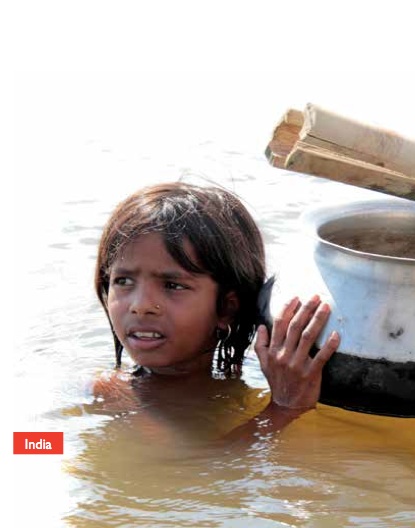
Photo Credit: Save The Children
Climate change is the wild card that threatens even the countries that have made the most progress in maternal and child health. Climate related disasters and extreme weather are factors that can cause severe set backs in development.
The recommendations of the report call for a collaboration between governments, donor countries, international organizations, private sector and civil society to take responsibility, and each do their part to ensure mothers, and children in crisis situations have the best chance to survive, and thrive. Here is what we need to do:
1. Ensure that every mother and newborn living in crisis has access to high quality health care
2. Invest in women and girls and ensure their protection
3. Build longer term resilience to minimize the damaging effects of crises on health.
4. Design emergency interventions with a longer term view and the specific needs of mothers and newborns in mind.
5. Ensure political engagement and adequate financing, coordination and research around maternal and newborn health in crisis settings.
Save The children’s 15th annual State of the Worlds Mothers report comes at a pivotal moment in history, when humanitarian crises have focused a spotlight like never before on the needs of mothers and children who are struggling to survive. With record numbers of people displaced by war and conflict and increasingly severe natural disasters causing unspeakable destruction, it is clear we must do more to help the worlds poorest and most vulnerable families. We must give mothers the support they need to keep their children safe and healthy, even in the darkest times. -Carolyn Miles, President and CEO of Save The Children USA
You can read the State of the Worlds Mothers report in full here. See where your country falls on the Mothers’ Index Rankings here.
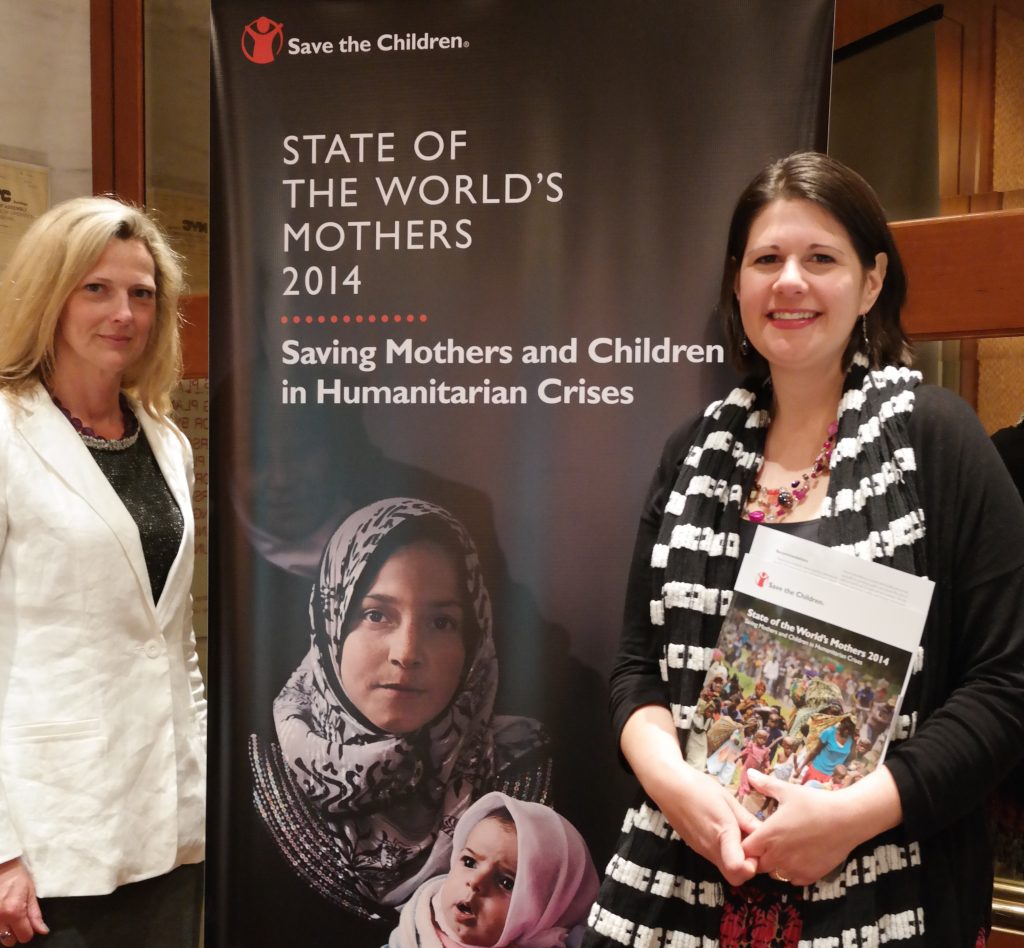
World Moms Blog Founder Jennifer Burden and Senior Editor Elizabeth Atalay at the State of the Worlds Mothers report launch in NYC.
This is an original post written for World Moms Blog by Elizabeth Atalay of Documama.

Elizabeth Atalay is a Digital Media Producer, Managing Editor at World Moms Network, and a Social Media Manager. She was a 2015 United Nations Foundation Social Good Fellow, and traveled to Ethiopia as an International Reporting Project New Media Fellow to report on newborn health in 2014. On her personal blog, Documama.org, she uses digital media as a new medium for her background as a documentarian. After having worked on Feature Films and Television series for FOX, NBC, MGM, Columbia Pictures, Warner Brothers, 20th Century Fox, and Castle Rock Pictures, she studied documentary filmmaking and anthropology earning a Masters degree in Media Studies from The New School in New York. Since becoming a Digital Media Producer she has worked on social media campaigns for non-profits such as Save The Children, WaterAid, ONE.org, UNICEF, United Nations Foundation, Edesia, World Pulse, American Heart Association, and The Gates Foundation. Her writing has also been featured on ONE.org, Johnson & Johnson’s BabyCenter.com, EnoughProject.org, GaviAlliance.org, and Worldmomsnetwork.com. Elizabeth has traveled to 70 countries around the world, most recently to Haiti with Artisan Business Network to visit artisans in partnership with Macy’s Heart of Haiti line, which provides sustainable income to Haitian artisans. Elizabeth lives in New England with her husband and four children.
More Posts

by World Moms Blog | May 10, 2014 | 2014, Education, Girls, Government, Human Rights, Humanitarian, International, Nigeria, School, Social Equality, Social Good, Social Media, Women's Rights, World Moms Blog
Abducted. Scared. Abused.
Sold.
That’s the likely fate 276 girls are facing, taken from their schools in the remote reaches of north-eastern Nigeria by the terrorist group Boko Haram. It’s been over three weeks since this started. We don’t what’s happening to them and we all fear the worst.
We’re sickened. We’re outraged. We also have no idea what to do. So, we’re doing what Americans tend to do. We’re taking selfies of ourselves with the #BringBackOurGirls hashtag. We’re tweeting. We’re posting facebook rants. In the lack of anything else to do, we’re signing online petitions by the thousands to make the world pay attention.
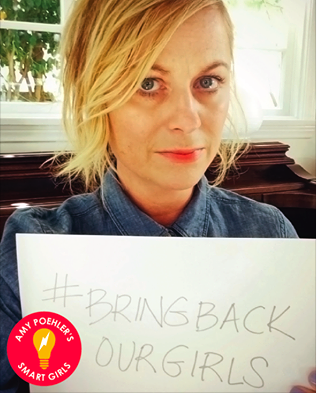
I’m not saying this these are bad actions to take. No! I signed the petition myself. I tweeted #BringBackOurGirls. I liked and shared Amy Poehler’s Smart Girl posts on facebook to help focus the national conversation on them. I was thrilled to hear that the U.S. is sending support and I believe social media was a part of that. But after I did those things, I was still sickened. Still outraged. I still didn’t know what to do.
And then I thought of this girl.
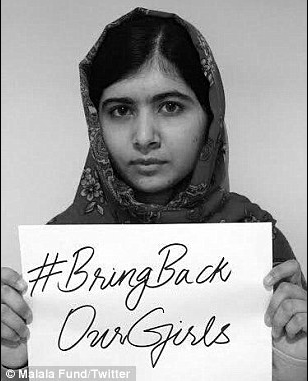
Malala Yousafzai. A Pakistani girl shot in the head by the Taliban at the age of 15 who still fights daily for girls’ education knows a little something about this issue, don’t you think? She has said, “The extremists are afraid of books and pens, the power of education frightens them. They are afraid of women.”
Then, let those men be afraid of me. I am even more dangerous than a schoolgirl with a pen. I’m an educated mother with a laptop. And I’m not just coming after them. I’m coming after their whole oppressive way of life.
The welfare of the kidnapped girls rests in someone else’s hands in the short term, but I advocate against poverty and injustice with an eye for the long term. While we wait and we pray for these girls, shouldn’t we be using this anger and anguish to secure a future for all girls coming after them?
If all children were in school as a normal matter of course, then schools with girls would cease to be obvious targets. That fundamental paradigm shift would be more effective than sending a SEAL Team in to get the girls (even though that is what I dearly want to happen right now) because educated and empowered girls become mothers who raise enlightened sons.
Here’s another Malala quote:
“Our men think earning money and ordering around others is where power lies. They don’t think power is in the hands of the woman who takes care of everyone all day long, and gives birth to their children.” But the men are wrong. Indeed, the hand that rocks the cradle rules the world.
So, what concrete actions can we – as Americans – take right now to hasten this reality? We can start by demanding that our U.S. Representatives pass the Education for All Act (H.R. 2780), which specifically calls out victims of human trafficking as some of the most vulnerable children to help. We can also call on them to sign U.S. Representative Jan Schakowksy’s letter to the Obama administration to fund $250 million over 2 years to the Global Partnership for Education, which aims to raise $3.5 billion from donor governments at a pledging conference this June. With $3.5 billion invested by donors, the Global Partnership can secure an additional $16 billion from developing country governments. By 2018, that investment can support quality education for 29 million children, largely in fragile and conflict-affected states.
As badly as we need the #BringBackOurGirls social media awareness today for the 276 girls we keep vigil for, these two steps are even more needed in the long run to help millions of other girls at risk now and in the future.
So, after you’ve tweeted and posted your selfie on facebook, do not stop there. Click on these links to contact your U.S. Representative about the Education for All Act and the Global Parntership for Education. Tell them that girls are showing incredible courage just to go to school, and the U.S. should support them. Educating all girls and boys will create a world where kidnapping and selling students is not acceptable in any culture on the planet.
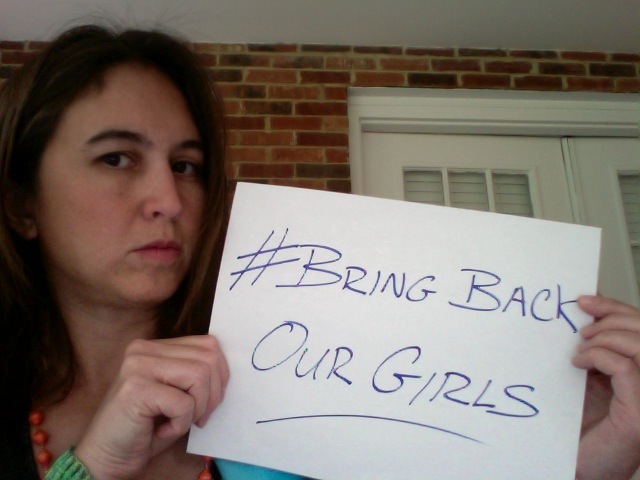
This is an original Post for World Moms Blog by Post by Cindy Changyit Levin who writes the Anti-Poverty Mom blog and is volunteer advocate for RESULTS, Shot@Life and the ONE Campaign. She can also be found on twitter @ccylevin.
Are you ready to take action?
World Moms Blog is an award winning website which writes from over 30 countries on the topics of motherhood, culture, human rights and social good. Over 70 international contributors share their stories from around the globe, bonded by the common thread of motherhood and wanting a better world for their children.
World Moms Blog was listed by Forbes Woman as one of the "Best 100 Websites for Women 2012 & 2013" and also called a "must read" by the NY Times Motherlode in 2013. Our Senior Editor in India, Purnima Ramakrishnan, was awarded the BlogHer International Activist Award in 2013.
More Posts

by Meredith (USA) | May 8, 2014 | 2014, Human Rights, World Voice

Background on Nigeria
Nigeria is a land of conflict and contrast. Since it’s civil war in the late 1960’s and even earlier, this country is no stranger to acts of violence and tragedy.
According to an article from CNN written by Faith Karimi , “Nigeria is Africa’s most populous nation with 175 million people living within its borders. It is a key partner to the U.S., is rich in oil, and a major trading partner with China.”
According to Wikipedia, “it [Nigeria] has one of the highest economic growth rates in the world at 7.4% over the last decade, but it has retained its high level of poverty at 63% of its people living at or below $1 a day. It’s two main resources are oil and agriculture. However, oil contributes to government revenues and about 15 percent of the Gross National Product and only employs a fraction of the population. Agriculture revenues go to 45 percent of the Gross National Product but employ about 90 percent of the population.
Nigeria’s government provides Nigeria’s states and local governments with autonomy including 50 percent of government revenues as well as responsibility for public services. But, lack of stringent regulator and monitoring systems has allowed for rampant corruption. It has hindered past poverty alleviation efforts and will continue to do so since resources meant for public goods or directed towards investments (and so create employment and other opportunities for citizens) are being misappropriated.”
Add the fact of centuries of tribal rivalry and war and you can understand why Nigeria is where it is today.
Southern Nigeria
The southern part of Nigeria is made up mostly of Yoruba and Igbo peoples (Nigerian tribes). Most Nigerians in this part of the country are Christian and there are a few Muslims, and this part of the country has embraced western ways.
Northern Nigeria
In the North, there are many Hausa people (Nigerian tribe). It is a much heavier Muslim population. For the most part, the Muslim population in the Northern part of Nigeria is peaceful and follows the teaching of Mohammed and his peaceful ways. However, there is a small sect of Islamic Militants who are enforcing Sharia law (Islamic Law) over the majority through terror and violence. Unfortunately, this group is usually what puts Nigeria in the headlines. This group is called Boko Haram and their name means “ Western education is a sin.” in Hausa.
Like so many religious leaders who have called for violence under the cover of religion, that is exactly what this terrorist sect is trying to do. According to an article written by Rosie Collyer for Nigeria Report in November 24, 2011, “people manipulate the system for political and religious reasons,” she adds. “And the average person either doesn’t understand the system or doesn’t have the means [financial], required to navigate it.” (quote from Remi Atunwa, practicing Muslim and barrister in Northern Nigeria).
According to an article written by Faith Karimi for CNN entitiled “ Boko Haram: A Bloody Insurgency, A Growing Challenge”, “Boko Haram was founded 12 years ago by Muhummad Yusuf. He was killed in 2009 by the military forces. After the killing of its leader, Boko Haram became even more defiant and a new leader for the organization came to power named Abubukar Shekeu.”
As stated before, anyone can manipulate something for different reasons and that is what is happening with Boko Haram and it’s interpretation of Sharia Law. Right now, 9 states in the north are under full Sharia law and 3 states have some form of Sharia law in the Muslim population.
Some may ask, how can the people in northern Nigeria agree to these practices? Most people in the north do not support Boko Haram but there is some sympathy for Sharia law according to Faith Karimi in her article for CNN. She reports that “there is much sympathy because many Muslims in the north see it as the only way to end an inept, corrupt government.”
She goes on to report,” Poverty is prevalent in the North region. The military is trying to halt Boko Harams’s attacks but the group is winning the most important battle: Making Nigerians question government competency.” She continues to report that Boko Haram has been responsible for several attacks in Nigeria ; the most recent ones being in 2011 with a suicide bombing in Abuja (Nigeria’s capital) outside the United Nations building which killed 25 people. In November, several Christian women (pregnant and others with small children) were kidnapped and later returned. And most recently a few weeks ago, Boko Haram was responsible for blowing up a bus station in Abuja and killing 71 people.
#BRINGBACKOURGIRLS
As a result of Sharia law, this militant group believes that girls should not be educated and should be married off which led to the capture and abduction of over 200 girls from a government school in Chibok, a city in the north of Nigeria.
The fact that these girls were attending school at all meant that each day they were putting their lives in danger for something that we, in the west, take for granted. With each passing day, the likelihood of the girls returning gets smaller and smaller.
Some parents of the kidnapped girls are afraid to talk to the police for fear that their daughters will be harmed by the militant group. The fact that they are too afraid to talk to the police only strengthens what is already widely known to many Nigerians: they cannot trust the government to do their jobs. But, in turn, without cooperation from the parents to supply any kind of vital information, it becomes less likely for the police to do their job at all. And so, the cycle of ineptitude continues…
In a book I recently read entitled “Every Day is For the Thief” by Teju Cole, a Nigerian author, he says there is a saying in Nigeria that says “idea l’a need” which means “all we need is the general idea or concept.” I saw this many times myself while living in Lagos. When Lagos state instituted a law saying that all okada (motorcycle) drivers and their passengers had to wear helmets, the drivers wore mopping buckets on their heads and the passengers riding the okadas simply held a helmet, bowl or bucket over their heads (who had just had their hair done simply held a bucket over their head without it even touching their heads) because it was the idea that they had a helmet…it didn’t actually have to function. There are so many things like that which I observed happen while I lived in Nigeria.
My hope is that President Goodluck Jonathan does not take the approach of “idea l’a need”.
I hope he doesn’t think just by doing his one press conference on Sunday that he somehow fulfilled the concept of what a president should do to help his people and will actually be a functioning president to do something to get these girls back to their homes. The whole world is his stage right now, and we are all watching this performance unfold. It is time for the government of Nigeria to show the world it can function and that it cares for its people and their desperate needs. It needs to function to protect its children.
These kidnappings are a cry to the world that the people in Nigeria are desperate, and if the Nigerian government ignores the poverty and ineptness in its government too long, the people of that country will only see what they already know in their hearts. They will witness a government that is there in concept only and not really there to take care of its people.
For more information on what you can do to help, see our previous post, Standing in Solidarity to #BRINGBACKOURGIRLS.
What are your thoughts on what is happening in Nigeria? Anything you’d like to add to this post?
This is an original post by Meredith. You can check out Meredith’s life as an expat in Nigeria and her transition back to life in the U.S. on her blog at www.wefoundhappiness.blogspot.com/
Photo credit to Flickr creative commons and www.freestock.ca
Articles used in the writing of this article include:
Wikipedia
“Boko Karam:A Bloody Insurgency, A Growing Challenge” by Faith Karimi CNN April 22, 2014
“Sharia favours the Rich, Claim Nigerian Rights Activists” Nigeria Report November 24, 2011 by Rosie Collyer
“Every Day is for the Thief” by Teju Cole (novel)
Meredith finds it difficult to tell anyone where she is from exactly! She grew up in several states, but mainly Illinois. She has a Bachelor of Science degree in Elementary Education from the University of Illinois at Champaign/Urbana which is also where she met her husband. She taught kindergarten for seven years before she adopted her son from Guatemala and then gave birth to her daughter two years leter. She moved to Lagos, Nigeria with her husband and two children in July 2009 for her husband's work. She and her family moved back to the U.S.this summer(August 2012) and are adjusting to life back in the U.S. You can read more about her life in Lagos and her adjustment to being back on her blog: We Found Happiness.
More Posts

by Jennifer Prestholdt (USA) | May 6, 2014 | 2014, Human Rights, World Voice

It’s the kind of thing that keeps you awake at night.
Even if it is not your own child.
On the night of April 14, dozens of armed men showed up at the dormitory of the Government Girls Secondary school in Chibok in northeastern Nigeria. Dressed in Nigerian military uniforms, they told the girls that they were there to take them to safety and herded the girls into trucks and onto motorcycles. At first, the girls believed them. But when the men started shooting their guns into the air and shouting, “Allahu Akbar,” they realized that the men were militants from Boko Haram and that they were in serious danger.
Nearly 50 girls managed to escape by running away or jumping out of the trucks. But as many as 276 school girls (higher than the initial reports of 234) between the ages of 12 and 17 were kidnapped, disappearing into the night without a trace. Three weeks later, their parents still have no idea where they are. And last week reports began surfacing that the abducted girls were taken across the borders to Chad and Cameroon and sold as brides to Islamist militants for 2,000 naira (about $12). While we still don’t know where the girls are or what has happened to them, these reports remain a chilling reminder of the threat of sexual violence faced by women and girls in conflict zones.
One of the worst things in this truly horrible story is that the girls who were abducted were targeted simply because they were exercising their right to go to school. Throughout the world, there is clear evidence that education is the key to reducing poverty for women and girls.
Access to basic education for girls has remained low in Nigeria; the northern region where these girls lived has the lowest girl child enrollment —in 2008 the net enrollment rate for girls into secondary school was only 22 percent. The girls (who were both Christian and Muslim) at the Government Girls Secondary School in Chibok must each have been determined to get an education in spite of tremendous odds. The fact that these girls were also risking violence to be in school illustrates how important the right to education was to each of them.
For more than two weeks, the Nigerian government failed to take effective action to find and rescue the abducted girls. The lack of government response has provoked outrage in Nigeria. Last week, several hundred participated in a “million-woman protest march” in Abuja, Nigeria’s capital to demand that more resources be put toward finding and securing the kidnapped girls. The protesters in Nigeria are joined on Twitter with a growing movement under the hashtags #BringBackOurGirls, #BringBackOurDaughters and #234Girls. Finally, international media outlets are paying attention to the story.
While it is ludicrous that it took more than two weeks of pressure from both inside and outside Nigeria to finally bring about action, there are signs that the increased international attention is having some effect.
This week, President Goodluck Jonathan met “through the night” with security, school and state officials and issued a new directive that “everything must be done” to bring back the abducted girls.
We at World Moms Blog stand in solidarity with the girls and their families. It’s time to #BringBackOurGirls!
Here’s what you can do:
1. Sign the Petition
http://www.change.org/petitions/over-200-girls-are-missing-in-nigeria-so-why-doesn-t-anybody-care-234girls
2. #BRINGBACKOURGIRLS
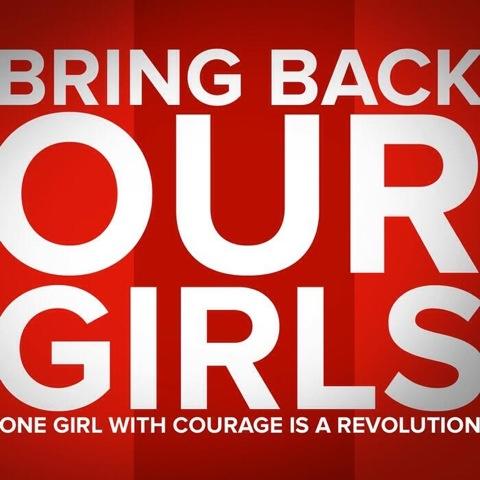
Use social media to spread the word about the situation in Nigeria. Put massive pressure on the government, security forces, and the neighboring governments to spur them to action. Use the hash tag, #BRINGBACKOURGIRLS. Change your profiled picture to Bring Back Our Girls.
3. Get More Information
Read more by World Moms Blog contributor Jennifer Prestholdt in The Advocates for Human Rights post, “Nightmare for Nigeria’s School Girls,” at:
http://theadvocatespost.org/2014/04/30/nightmare-for-nigerias-school-girls/
This is an original post to World Moms Blog by international human rights lawyer, Jennifer Prestholdt, of Minnesota, USA.

Jennifer Prestholdt is a lawyer and the Deputy Director of The Advocates for Human Rights, a volunteer-based human rights organization that works locally, nationally and internationally. Her work in human rights takes her around the world, but she spends most of her time in Minneapolis, MN, where she lives with her children (two sons and one daughter), her husband, an elderly cat and a dwarf hamster.
As Jennifer’s kids are now all in school (1st, 4th and 6th grades), she is finally finding more time to do the things that she used to love to do, especially running, writing and knitting. Jennifer loves to travel and has had the dubious distinction of having been accidentally locked in a bathroom on five continents so far. Australia and Antarctica await!
In January 2011, Jennifer made a New Year’s Resolution to start writing about her experiences in order to share with her children the lessons learned from 15 years of work in human rights. The result is her personal blog, The Human Rights Warrior. The name comes from her son Simon, who was extremely disappointed to learn that his mother is a lawyer, not a warrior.
You can find her on her blog The Human Rights Warrior or on Twitter @Jprestholdt.
More Posts

by Jennifer Burden | May 3, 2014 | 2014, Girls, Human Rights, World Voice
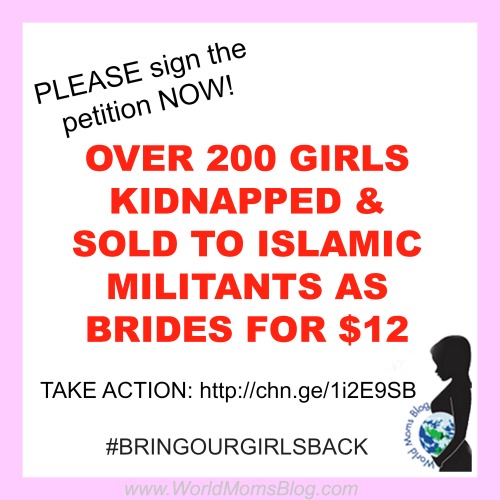
How can this have happened TWO WEEKS ago and no one has intervened yet, and many haven’t heard of it? In northern Nigeria, over 200 girls were kidnapped under the cover of dark last month from their school by a group of men, Islamic extremists who call themselves Boko Haram. Boko Haram translates to “western education is sin.” The men burned the girls school as they left. According to the Washington Post, relatives of the those taken report that there were mass marriages, and the girls were taken into Chad and Cameroon and sold as brides for Islamic militants for $12.
Why has nothing been done?????? Please Sign the Petition to #BRING OURGIRLSBACK:
ALL girls are important!! Please, sign this petition below to show the world that they need to be rescued and brought home. THIS MUST STOP. Time is ticking!! And contact your government officials in your country to ask them what they are doing about this and/or brief them on the subject. Without our help, this CANNOT go on unnoticed.

It takes such a small amount of time to add your voice to something sooo important!!
This is an original post to World Moms Blog by Founder, Jennifer Burden of NJ, USA.
Photo credits to the author.

Jennifer Burden is the Founder and CEO of World Moms Network, an award winning website on global motherhood, culture, human rights and social good. World Moms Network writes from over 30 countries, has over 70 contributors and was listed by Forbes as one of the “Best 100 Websites for Women”, named a “must read” by The New York Times, and was recommended by The Times of India.
She was also invited to Uganda to view UNICEF’s family health programs with Shot@Life and was previously named a “Global Influencer Fellow” and “Social Media Fellow” by the UN Foundation. Jennifer was invited to the White House twice, including as a nominated "Changemaker" for the State of the World Women Summit. She also participated in the One Campaign’s first AYA Summit on the topic of women and girl empowerment and organized and spoke on an international panel at the World Bank in Washington, DC on the importance of a universal education for all girls. Her writing has been featured by Baby Center, Huffington Post, ONE.org, the UN Foundation’s Shot@Life, and The Gates Foundation’s “Impatient Optimists.” She is currently a candidate in Columbia University's School of International and Public Affairs in the Executive Masters of Public Affairs program, where she hopes to further her study of global policies affecting women and girls.
Jennifer can be found on Twitter @JenniferBurden.
More Posts - Website
Follow Me: