by Sisters From Another Mister | Jul 5, 2013 | Adoptive Parents, Communication, Family, Gardening, Home, Kids, Life Lesson, Motherhood, Older Children, Parenting, Women's Rights, World Motherhood
Teaching Responsibility. Responsibility comes in many forms.
I have two girls. They provide constant blog fodder. For the most part, they are okay with that. I even run certain posts by them for approval – after all, it is their story as much as it is mine.
As a parent, we get to help write the stories of our children. The ebb and flow of day-to-day becoming the chapters of their lives through experience and exposure to the world around them.
About a year ago, I wrote a post here called Raising Responsible Citizens. Raising children who are globally aware and are understanding of the need to make a difference in the world is something that is very dear to my heart. It makes me proud to say that my girls have an awareness of the plight of others and the need to be involved. They know the positivity their actions can achieve in bringing change and that their voices can indeed be heard around the world.
This post is a chapter in that book of life on responsibility…because responsibility is a funny thing. We can teach our children about the world and its people, we can teach them laws and rights, and we start when they are just toddlers with the basics of what is right and what is wrong. But what about basic responsibility…let me clarify. (more…)

Sisters From Another Mister ...
A blog born from the love of 'sisters' around the world who come together to lift eachother up no matter where they are on their life journey.
Meet Nicole, a transplanted British born, South African raised, and American made Mom of two girls living on the sunny shores of South Florida, USA. A writer of stories, an avid picture taker and a keeper of shiny memories.
Sharing the travels of a home school journey that takes place around the globe - because 'the world truly is our classroom'. Throw in infertility, adoption, separation, impending divorce (it has its own Doom and Gloom category on the blog) and a much needed added side of European humor is what keeps it all together on the days when it could quite clearly simply fall apart! This segues nicely into Finding a Mister for a Sister for continued amusement.
When not obsessing over the perils of dating as an old person, saving the world thro organisations such as being an ambassador for shot@life, supporting GirlUP, The UN Foundation, ONE.org and being a member of the Global Team of 200 for social good keeps life in the balance.
Be sure to visit, because 'even tho we may not have been sisters at the start, we are sisters from the heart.'
http://www.sistersfromanothermister.com/
https://www.facebook.com/SistersFromAnotherMister
https://twitter.com/thesistershood
http://pinterest.com/thesistershood/
Global Team of 200 #socialgoodmoms
Champion for Shot@Life and The United Nations Foundation
More Posts - Website
Follow Me:


by Mama B (Saudi Arabia) | Jul 3, 2013 | 2013, Politics, Religion, Saudi Arabia, Transportation, Travel, Uncategorized, Women's Rights, World Motherhood
 We always talk about “first world problems,” and, I, most of the time, complain about women not being able to drive in Saudi Arabia in the “first world problem” sense. “My driver is late!” or “It’s too hot in the car. I wish he’d switch on the AC before I get in” or “Why does it take so long for my driver to answer his phone!”
It’s easy for me to forget that for the majority of women in Saudi, it is very much a paralyzing issue. As I was leaving Saudi last week, I was in the airport lounge, and one of the women working there was having a private conversation on her mobile which got progressively louder. She kept saying, “Swear he’s ok! Why can’t I talk to him?”
After she hung up she said to me, “My son has had an accident!” I asked if he was ok. She told me she didn’t know and that someone at the scene had called her and told her about it, but they wouldn’t give him the phone and wouldn’t give her details. I asked why she didn’t just go to him, and she told me she couldn’t.
“Surely your supervisor wouldn’t have a problem with you leaving early to go there!” I said.
“I don’t have any way of getting there!”, she said. “My son is usually my driver. I don’t have brothers, and I’m divorced.”
And that’s the simple truth. Her son was on a street somewhere, in God knows what state ,and she was stuck at work. She eventually took a cab and declined the offer to use my car.
I always dread talking about women driving in Saudi because it’s been talked to death, and there’s nothing to discuss, really, since the fact that women should be allowed to drive is such an obvious one. It’s like discussing if women should be allowed to work… or walk even. Not driving means different things to different people. To me, it’s something I don’t think about on a day-to-day basis, unless we have a driver crisis. But even then, I rely on my mother’s, sister’s or brother’s driver to get me where I need to go, and I have never been stranded at home or elsewhere because of it. I forget that this is not the case for everyone.
Yes, some of my friends can’t do lunches on certain days because of the driver issues (lack of reliable ones or lack of ones all together), so when their husbands work they have to stay home. While many, many Saudi families have a driver working for them, not all of them do. And honestly, who cares if I can’t get to my family visit on time or to the shops before they close, when this mother couldn’t get to her son, who I pray was not badly injured in this accident.
And if, God forbid, he was badly injured, or worse, and he is her only “mahram” (male guardian), then she effectively has to put her life on hold till he gets better. And if it’s not a “getting better” situation, then she is stuck. Driving will be only one of her problems.
We do have taxis, which are generally decent, but many women don’t like to use them or the men in their lives don’t like them to. Which is all fine and dandy if these men are willing to be their wives’ personal chauffeurs, but if they refuse, then the women are stuck. But they do sometimes say “no,” and their wives, sisters, daughters comply. I have never really asked my husband how he would feel about me riding a taxi, since there never was a need to before, but I know that even if he didn’t want me to ride one, for what ever reason, he would never tell me I couldn’t.
Work has already begun on the metro system in Riyadh, and I am assuming that it will have a similar set up to Dubai, where there is a women’s tram. (Although in Dubai it is optional to go on that tram.) It will be interesting to see what we end up with, but is public transportation the answer to this problem? No.
Women being allowed to drive is a change that has to happen. It’s going to happen. I can guarantee that, but when? And the assumption that this is a governmental decision is totally wrong as the government is doing what the majority of the population wants.
When the subject of women driving is raised, it is always surprising how many people are against it. Women included. When they decided to introduce girls’ schools, the community also spoke out against it and were fearful and pessimistic. But the government just made the change, and the people got used to it. Now more than half the college graduates in Saudi are women! So, I hope we just rip the band-aid off.
And maybe the people will come around eventually and want this change, but how long do we want to wait? So many changes have come into our country, culture and environment that people are afraid to open up anymore, but there will be no progress without it.
Maybe I am wrong though. Maybe the views have changed, but the loudest voices are still of those who are against this. In Saudi the moderate voice is the one that talks at home among friends but doesn’t really rock the boat. The extreme views tend to be loud and very well organised.
A little side note to mention is there is no law against women driving. But there is a law against driving without a license, and women can’t get their licenses in Saudi.
It should just be done! Just as the 30 women were elected into the shours counsil by royal decree one morning, this change can happen too. It would, by no means, be mandatory, and whoever doesn’t want to drive, doesn’t have to. But for the women who are paralyzed, stuck and unable to get to their sons when they are hurt, a key to a car is not much to ask.
Do you agree with me that sometimes making unpopular decisions that will better your country is ok? Or is the government’s duty? Or do you think what the people want is more important?
This is an original post to World Moms Blog by Mama B from Saudi Arabia. She can be found writing at her blog, Ya Maamaa.
Photo credit to hhdoan who holds a Creative Commons Attribution license.

Mama B’s a young mother of four beautiful children who leave her speechless in both, good ways and bad. She has been married for 9 years and has lived in London twice in her life. The first time was before marriage (for 4 years) and then again after marriage and kid number 2 (for almost 2 years). She is settled now in Riyadh, Saudi Arabia (or as settled as one can be while renovating a house).
Mama B loves writing and has been doing it since she could pick up a crayon. Then, for reasons beyond her comprehension, she did not study to become a writer, but instead took graphic design courses. Mama B writes about the challenges of raising children in this world, as it is, who are happy, confident, self reliant and productive without driving them (or herself) insane in the process.
Mama B also sheds some light on the life of Saudi, Muslim children but does not claim to be the voice of all mothers or children in Saudi. Just her little "tribe." She has a huge, beautiful, loving family of brothers and sisters that make her feel like she wants to give her kids a huge, loving family of brothers and sisters, but then is snapped out of it by one of her three monkeys screaming “Ya Maamaa” (Ya being the arabic word for ‘hey’). You can find Mama B writing at her blog, Ya Maamaa . She's also on Twitter @YaMaamaa.
More Posts
by Jennifer Prestholdt (USA) | Jun 11, 2013 | 2013, Human Rights, International, Morocco, World Moms Blog, World Voice
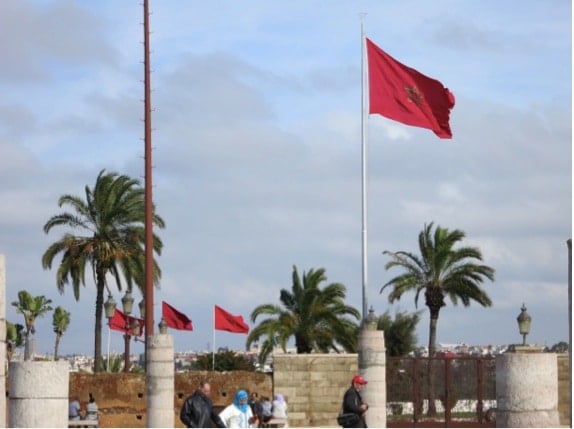
Photo by Jennifer Prestholdt
Hidden Child Labor
While millions of tourists visit Morocco every year, very few are aware of a hidden human rights abuse that is occurring behind closed doors in Morocco’s cities. Morocco has one of the worst child domestic labor problems in North Africa. The International Labour Organization (ILO) has estimated that between 66,000 and 88,000 children between the ages of 7 and 15 – 70% of whom are under age 12 – are working as domestic servants in Morocco.
These children work long hours for little pay and often suffer physical and other forms of abuse. Because domestic work is “women’s work” in Morocco, virtually all of these child domestic workers are girls. In Morocco (a country with a French colonial history), these child domestic workers are called petites bonnes or “little maids”.
I had the opportunity to learn more about the petites bonnes issue during a recent trip to Morocco. The United States Department of Labor’s Bureau of International Labor Affairs describes the problem like this:
Young girls are sent to work as live-in domestic servants, often before they reach age 10. Parents sell their daughters or receive payment of wages in exchange for their daughters’ service. These petites bonnes (little maids) often face conditions of involuntary servitude, including long hours without breaks; physical, verbal and sexual abuse; withheld wages and even restrictions on their movement. Frequently, they are sent from rural villages to more urban areas, and find it difficult to make their way home. Most petites bonnes are denied an education, and illiteracy rates are high among this population.
The Difficult Life of a Petite Bonne
The situation of petites bonnes in Morocco results from a combination of poverty, gender inequality, and lack of access to education. Girls – some as young as my own 8-year-old daughter – are sent to work as petites bonnes to generate income to support their families. They come from poor rural areas to work in cities such as Casablanca, Rabat, Marrakech, Tangiers, Agadir, and Fes. Intermediaries generally broker the arrangement, receiving a fee from the employer. Petites bonnes interviewed by Human Rights Watch reported that their employers frequently beat and verbally abused them, denied them the chance to go to school, and sometimes even refused to provide them with adequate food and sleeping facilities.
In a strange city, separated from their families and often speaking a Berber language instead of the Arabic spoken by a majority of Moroccans, many petites bonnes are extremely isolated and vulnerable. The isolation, along with the privacy of the homes, increases the chance of sexual abuse by male members of their employers’ household. In fact, several studies have found that many unwed young mothers in shelters in Morocco were petites bonnes when they became pregnant.
The difficult life of a petite bonne sometimes ends tragically. The widely reported story of little Khadija, an 11-year-old petite bonnewho was beaten to death by her employer in July 2011, raised calls for the government to take action on the issue. In January 2013, a 17 year old petite bonne in Casablanca attempted suicide by jumping from the fourth floor of her employers’ home. Amateur video of the suicide attempt that was circulated on the internet shocked Moroccans. Most recently, on March 24, 2013, a young domestic worker was taken to the hospital in Agadir with third degree burns on multiple parts of her body. Only 14 years old, she died from the injuries allegedly inflicted by her employers, prompting a UN representative in Morocco to decry child domestic labor by girls as “one of the worst forms of child exploitation” and call on the government to take action. Yet, thousands of petites bonnes in Morocco continue to suffer in silence.
Gaps in Legal Protection
According to NGOs working to help petites bonnes in Morocco, part of the problem relates to gaps in and difficulties with implementation of Moroccan laws. While Moroccan law prohibits employment of children under the age of 15, Morocco’s Labor Code does not apply to domestic work. Therefore, the Labor Codes’ protections for workers regarding hours worked (44 hours per week) and pay (2,333 dirhams or approximately $261 per month) do not apply. Human Rights Watch has documented that petites bonnes work long hours, often seven days a week. They earn an average of 545 dirhams (approximately $61) per month, but some earn as little as 100 dirhans (approximately $11).
In addition, Morocco ratified the Convention on the Rights of the Child (CRC) in 1993 and the ILO Convention No 182 on the Worst Forms of Child Labor. Both international treaties prohibit economic exploitation and employment of children in work that is likely to be hazardous, interfere with their education, or harm their health, safety or development. Unfortunately, neither have been implemented in a way that provides adequate protection to the petites bonnes.
Some Progress in Protecting Children
There is some indication that things are starting to change in Morocco. The government and international human rights organizations report that the number of girls working as petites bonnes is declining. This is due in part to the fact that public awareness about the problems faced by petites bonnes has been raised because of increased media attention to the issue and public education campaigns undertaken by the Moroccan government, NGOs, and United Nations agencies. The Moroccan government has also taken steps to increase school enrollment and this has helped reduce the number of children engaged in child labor.
Yet still more needs to be done. Since 2006, the government has been working on a draft law on domestic work that would for the first time establish a legal framework to better protect petites bonnes, secure rights such as a weekly day of rest and annual leave, and impose sanctions on employers. The Moroccan government has said that the draft Law on Domestic Workers is one of its priorities, but the bill has not yet been considered and passed by Parliament.
Take Action on June 12 – World Day Against Child Labour!
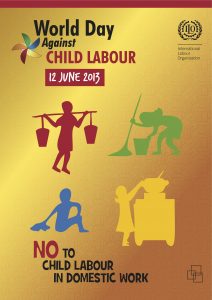 The problem of child domestic workers is not unique to Morocco. In fact, there are an estimated 15.5 million child domestic workers worldwide. The widespread use of children as domestic servants is one of the most hidden forms of child labor.
The exploitation of children, particularly girl domestic workers like petites bonnes, is a serious violation of children’s rights. It perpetuates inequality and inter-generational poverty, and deprives girls of their right to education, health, participation and protection. It also prevents children from acquiring the life skills and education necessary to improve their future.
To draw attention to the issue of child labor, the United Nations has recognized June 12 as the World Day Against Child Labour. In 2013, the focus is on child domestic workers like the petites bonnes of Morocco. On the 2013 World Day Against Child Labour, the international community is calling for legislative and policy reforms to ensure the elimination of child labor in domestic work and the provision of decent work conditions and appropriate protection to young workers in domestic work who have reached the legal working age. In Morocco, the government should:
• Strictly enforce the minimum age of 15 for all employment (including domestic work) and ensure that all children (particularly girls) enjoy the right to free and compulsory basic education;
• Adopt a domestic worker law that ensures compliance with the 2011 ILO Convention 189 on decent work for domestic workers
• Create an effective system for identifying, removing and rehabilitating child domestic workers from illegal or abusive employment.
• Criminally prosecute individuals responsible for violence or other criminal offenses against child domestic workers.
In addition, the World Day Against Child Labour provides the opportunity for all of us to take action to build the worldwide movement against child labor.
Take Action to end child labor. Learn what you can do to inform yourself and raise awareness in your community. The ILO’sSCREAM (Supporting Children’s Rights through Education, the Arts and Media) programme has factsheets, presentations, postcards, poems, and more. The SCREAM education pack is available in multiple languages.
Join the 12to12 to End Child Labour community. Learn more about the issue and join the 12to12 Community Portal, which provides a common platform for experience and knowledge sharing on research, activities and events related to the World Day Against Child Labour.
Find out what kids and teens can do to help. The ILO’s Youth in Action against Child Labour campaign has ideas, information, videos and other resources to help young people take action to end child labor.
Make a pinwheel with your kids. The pinwheel has become the symbol of the international fight against child labor. The pinwheel campaign to raise awareness about child labor began in Brazil in 2004. The five blades of the pinwheel represent the different continents of the world and the wind that makes the pinwheel spin is the will to act and to pass on the message until all countries take adequate measures to end child labor. Download a kit to make a pinwheel to keep the movement going!
This is an original World Moms Blog post written by Jennifer Prestholdt.
Were you aware of the international child labor issue? Does it exist in the country in which you live?

Jennifer Prestholdt is a lawyer and the Deputy Director of The Advocates for Human Rights, a volunteer-based human rights organization that works locally, nationally and internationally. Her work in human rights takes her around the world, but she spends most of her time in Minneapolis, MN, where she lives with her children (two sons and one daughter), her husband, an elderly cat and a dwarf hamster.
As Jennifer’s kids are now all in school (1st, 4th and 6th grades), she is finally finding more time to do the things that she used to love to do, especially running, writing and knitting. Jennifer loves to travel and has had the dubious distinction of having been accidentally locked in a bathroom on five continents so far. Australia and Antarctica await!
In January 2011, Jennifer made a New Year’s Resolution to start writing about her experiences in order to share with her children the lessons learned from 15 years of work in human rights. The result is her personal blog, The Human Rights Warrior. The name comes from her son Simon, who was extremely disappointed to learn that his mother is a lawyer, not a warrior.
You can find her on her blog The Human Rights Warrior or on Twitter @Jprestholdt.
More Posts
by World Moms Blog | Jun 8, 2013 | Feminism, Motherhood, World Motherhood
Today we’re sharing a post from a World Mom living in Laos! If you’re interested in telling your motherhood story on World Moms Blog, email us at contribute2@worldmomsblog.com!
This first “World Mom Feature” is by Miss Pip of Laos…
“Equal to None”
A concerned citizen, upon realizing we had three daughters, recently offered to take my partner ‘upcountry’ to the village to meet the local witch doctor. Apparently, this particular Shaman was able to supply an herbal concoction that would guarantee us a son.
(For the record, we are not having any more children. We are very happy with the ones we already have.)
I am fascinated by how often people feel compelled to tell me that my family is incomplete because I don’t have a son. They remind me that, despite over 100 year of feminism, my three children and I are still considered “LESS THAN” because we were born without a Y-chromosome.
Becoming a mother has enriched my life. I love my daughters, unconditionally. I treasure the opportunity to guide them towards adulthood. Nonetheless, becoming a mother has been a struggle. I have had to fight some very personal demons and have been rather lost and confused along the way. Fundamentally, I have had to redefine myself within the context of being a “Woman”.
Until I had children, I naively defined myself as a “Human” first and a “Woman” second. I studied Feminist Theory at University, but I kind of blew off any notion that MY life was influenced by the patriarchy. I was a kick-ass individual, and I lived my life on equal terms with anyone else.
But becoming a mother made me realize that, in reality, I still live in a world defined by and dominated by men, and my life decisions have been profoundly influenced by that.
My partner and I have been together for 15 years. We got our first jobs together, moved in together, paid the rent together, traveled together – as equals. I was hell-bent on our roles in the relationship being defined equally even though that meant that sometimes, after we have paid our ‘equal’ share of the bills, he still had money to go out, and I didn’t. (Interestingly, even at minimum wage he was paid more than I was!) We shared the chores equally. I NEVER ironed his clothes. I was a proud, fierce and independent woman with my own life and my own career.
But over time things started to change. My business ventures, which had sustained us adequately in early adulthood, became less profitable than his career. He was offered the opportunity to move, first interstate and then overseas. I couldn’t justify preventing his progress just because I was wanted to pursue what was, quite possibly, a pipe dream. Also, I loved him. I was proud of his success. I choose to support him, to follow him. It was my choice.
I could still work, I told myself. I was strong and resilient and very capable. But we moved a lot and, eventually, we reached the point where my income could no longer be relied upon. I was, I realized, financially dependant on my partner.
Becoming a Mother
Then, somewhere along the way, we decided to have children. We talked about it, at length. Having children did not mean ME taking on the only responsibility for caring for the kids and the household. I wanted to work. We would share the responsibilities. Equal opportunity parenting. Yep, sure, sounds like a plan, I am on board, let’s do this.
… Needless to say, that is not quite how things worked out.
My partner now works longer hours and spends more time away then he ever did before we had children. He sometimes feels overwhelmed by what he perceives to be his duty to support and provide for his family.
I now earn less money and spend more time in my house than I ever did before children. I regularly feel overwhelmed by my assumed role as the primary carer, wet-nurse, cook, cleaner, manager, taxi driver, nurse, psychologist, nutritionist, disciplinarian in our family.
My family IS the Perfect Little Patriarchy!
But wait… no it’s not perfect… I forgot… I don’t have a son!
I have three complicated, passionate, articulate, intelligent, determined, manipulative, magnificent GIRLS.
Raising Daughters
One day, my little girls are going to grow up to be WOMEN, how unfair for them and how wonderful for them. They are going to grow up to be HUMANS, what an opportunity for them.
I am their mother and, for me, it’s complicated.
• Shouldn’t I be an example to them, a strong, female role mode
• Have my choices perpetuated the status quo?
• Will they grow up with notions of ‘what women do’ that will go on to influence them as they grow into women themselves?
I am their mother and, for me, it is simple.
• I will practice compassion, identify inequality and I will teach them to do the same. I will continue to grow as a woman and a human because I owe it to them to be the best person I can be.
• I will be proud of my choices – they have given my daughters, a loving and safe home.
• I will encourage my girls to embrace their womanhood. I will teach them that with hard work and dedication they can achieve anything they set their minds to. I will show them they can be the change.
I am their mother. They are my daughters. They are ‘MORE THAN’ anything.
 This is an original post to World Moms Blog by Miss Pip. She lives in Vientiane, Laos with her partner, their three incorrigible daughters (aged 5.5 years, 4.5 years and 16 months) and two well-traveled cats. She says that she used to be fabulous! (We say, she still is!)
Last year Miss Pip turned forty. She says, “That sucked! I had no idea who I was or what made me happy. I was ashamed of who I had become and conflicted about being a mum. It was all very boring, very depressing and was making me, and the people who loved me, miserable.”
So she decided to change. Miss Pip decided to let go of the past, accept her present and embrace a future where SHE IS the fabulous version of herself that she knows she can be. You can also find her on her blog, 44 and a Fourth.
Photo credits to Miss Pip.
World Moms Blog is an award winning website which writes from over 30 countries on the topics of motherhood, culture, human rights and social good. Over 70 international contributors share their stories from around the globe, bonded by the common thread of motherhood and wanting a better world for their children.
World Moms Blog was listed by Forbes Woman as one of the "Best 100 Websites for Women 2012 & 2013" and also called a "must read" by the NY Times Motherlode in 2013. Our Senior Editor in India, Purnima Ramakrishnan, was awarded the BlogHer International Activist Award in 2013.
More Posts

by World Moms Blog | Jun 4, 2013 | 2013, Human Rights, International, Turkey, World Voice

I am a Turkish mom, who is raising my 3 kids in the United States of America during the school season and in TURKEY for the summers. My husband and I made the conscious decision to raise our kids immersed in both of our cultures. Growing up in the democratic and secular country that Ataturk founded, I was nurtured in a climate of peace and freedom. I attended college in Switzerland and then in the United States, and I pride myself in being an independent and strong woman.
Ataturk’s western leaning values and teachings of acceptance, tolerance, honesty, hard work, and respect, still guide me today while I live with my American husband, and raise our kids.
We love taking our kids to Istanbul every summer. We have extended family and friends who welcome us. My oldest son swims in the Cross Continent Swim Meet each year. Where else in the world can one be in Asia and Europe within minutes? The kids spend the summers playing with their second and third cousins, and making new friends. We are exposing our kids not only to their own culture but also to others by traveling to historic sights, living world history, and showing them how all different religions, and ethnicities live in harmony in the same country. Although the religion of the population in Turkey is predominantly Muslim, it’s government is secular, and Turkey is a home for all religions and ethnic backgrounds. Everyone is free to practice what he or she believes. Well I should say everyone WAS free…
As I am sure most of you are aware by now, what started as a peaceful “save the tree” protest last week, has turned into a Revolution. Turkey elected a prime minister more than a decade ago, Recep Tayyip Erdoğan, who has over the years leaned increasingly towards autocracy . He wants to build malls over parks, as a way to fill his pockets, demolish art centers and theaters, and build mosques to force his brand of conservative religion down everyone’s throat. He has sent his forces in to use tear gas, beat, throw illegal chemical compounds, and to imprison others whom he regards as threats to his Islamic régime. As the laws of the land do not seem to apply anymore in the country, I fear for my own children’s future, my niece who is in Istanbul, my family, my friends, my fellow citizens safety, and then I fear for the whole world’s safety. The new growing Turkey that has brought together worlds of religion, cultures and worldly growth is suddenly showing inordinate levels of intolerance.
I am a Turkish American mom who wants raise her kids in a world with peace, love, and tolerance in harmony. The world needs to know what is going on in Turkey right now, and to know that this is not the country that the Turkish people are used to, and apparently, based on the uprisings going on now, it is not the way they wish to live. It is no longer just about saving trees or the park, but about regaining democratic human rights.
This is an original guest post written for World Moms Blog by Ebru who grew up in Istanbul, Turkey, and now splits her time between Istanbul and the United States of America.
Have you been following the story of the uprising in Turkey?
World Moms Blog is an award winning website which writes from over 30 countries on the topics of motherhood, culture, human rights and social good. Over 70 international contributors share their stories from around the globe, bonded by the common thread of motherhood and wanting a better world for their children.
World Moms Blog was listed by Forbes Woman as one of the "Best 100 Websites for Women 2012 & 2013" and also called a "must read" by the NY Times Motherlode in 2013. Our Senior Editor in India, Purnima Ramakrishnan, was awarded the BlogHer International Activist Award in 2013.
More Posts
by Natalia Rankine-Galloway (Morocco) | May 29, 2013 | Childhood, Economy, Expat Life, Eye on Culture, Humanity, Morocco, Parenting, Poverty, Travel
 My mom loves to tell stories about her girls…to anyone who will listen. One of her favorites is about my first plane ride home from her native Peru. At age 6, as I sat in the window seat watching Lima fade away beneath us, I turned to her and said (with wisdom far beyond my years my mum will add) “the trouble with Peru is that the Peruvians don’t take good care of it.”
Admittedly it is one of her less embarrassing stories, better by far than the one that has me passing most of a Greek holiday with a potty on my head. And lately, as my son gets older, I’ve been thinking more about it.
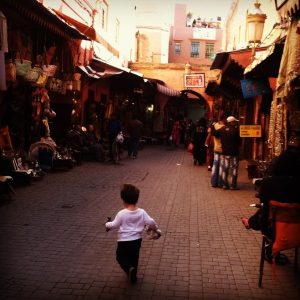
By the time we leave Morocco this fall, he will not quite be three. Throughout our time here, that fact made me sad. There is likely little if anything that he will remember about our year in Morocco and our travels in North Africa. But now, this has also made me slightly grateful.
I have started to see the cogs turning in his little head when we pass the women begging on the street, with toddlers his age strapped to their backs. I see him watching the kids selling cartons of tissues at the stop lights as I guiltily roll up the window.
As his little eyes observe more and more I am starting to be glad that we will leave before the questions start. He hasn’t progressed much past the basic two-word toddler interrogatives: dada gone? more biscuit? But I am imagining the questions forming, and I need more time to come up with good answers.
When he asks me about these babies on their mothers backs, or the ones selling on streets, what do I say? Moreover, how do you explain your own role in the perpetuation of this inequality. How do I explain that being asked for the 19th time in one day to spare just 1 dirham irritates me more and more in spite of the fact that had I given one each time, I would now be short only $2? How would I explain that the shoes he’s wearing would cover our gardeners weekly salary?
Observant though I might have been at age 6 about the socio-economics of Peru, it did not give me any head start on figuring out any actionable recommendations for the Peruvians about how to improve their problems of poverty, inequality, pollution. Nor do I have any for Morocco now, some 25 years later.
I am a big believer in my own and my son’s capacity to save the world. I take part in fundraising campaigns, donate to charity and volunteer. I will always encourage him to live a life of tolerance, patience and understanding. But when you live in the midst of an unequal society – to what extent are you compromising your principles by continuing to live in the manner to which you are accustomed?
So while I doubt that I will ever come up with any Nobel Peace prize winning solutions to global income inequality myself, I would at the very least time to come up with a way of explaining poverty to my son. I would like to be able to explain to him that he is lucky without teaching him conceit or entitlement. I would like to teach him that our relative wealth comes with a responsibility to those less fortunate in such a way that empowers and doesn’t leave me stinking of rank hypocrisy when I look away from the outstretched hands on the street.
How do you teach your children about income inequality when you are living on the “have” side of an unequal society?
This is an original post to World Moms Blog by our contributor, Natalia Rankine-Galloway, who writes at The Culture Mum Chronicles. She is now writing from the U.S. Embassy in Morocco.
Photo credit to the author.

Natalia was born a stone's throw from the Queen's racetrack in Ascot, UK and has been trying to get a ticket to the races and a fabulous hat to go with it ever since. She was born to a Peruvian mother and an Irish father who kept her on her toes, moving her to Spain, Ireland and back to the UK before settling her in New York for the length of middle and high school. She is still uncertain of what she did to deserve that.
She fled to Boston for college and then Washington, D.C. to marry her wonderful husband, who she met in her freshman year at college. As a military man, he was able to keep her in the migratory lifestyle to which she had become accustomed. Within 5 months of marriage, they were off to Japan where they stayed for a wonderful 2 and one half years before coming home to roost. Baby Xavier was born in New York in 2011 and has not slept since.
A joy and an inspiration, it was Xavier who moved Natalia to entrepreneurship and the launch of CultureBaby. She has loved forging her own path and is excited for the next step for her family and CultureBaby.
Natalia believes in the potential for peace that all children carry within them and the importance of raising them as global citizens. She loves language, history, art and culture as well as Vietnamese Pho, Argentinian Malbec, English winters, Spanish summers and Japanese department stores...and she still hopes one day to catch the number 9 race with Queen Liz.
You can find her personal blog, The Culture Mum Chronicles.
More Posts