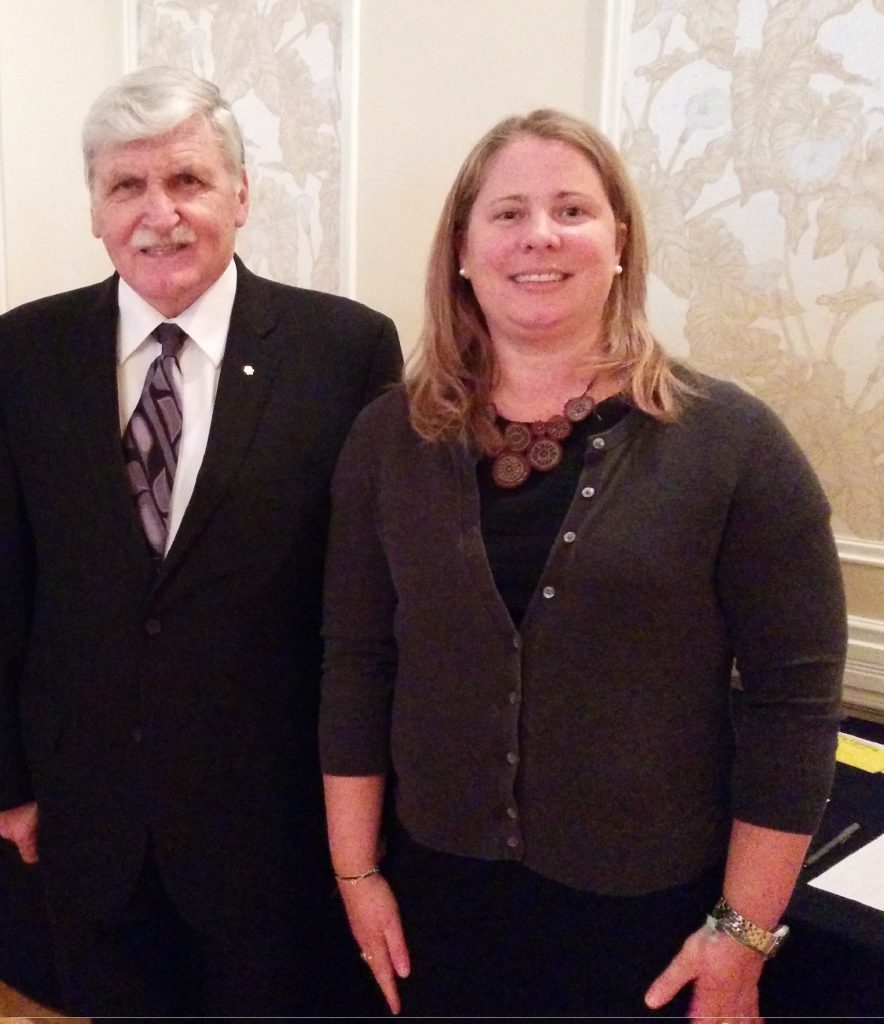
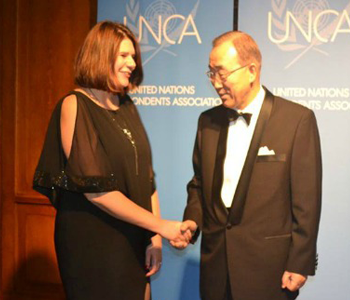
The author Alison Fraser pictured here with General Romeo Dallaire
I have written before on the trials and tribulations that go hand in hand with running a not for profit organization or charity. As we all know, negative words can have a huge impact on how we view ourselves and our work.
What I now realize, is that I have completely underestimated the power of kind words.
Let me explain…
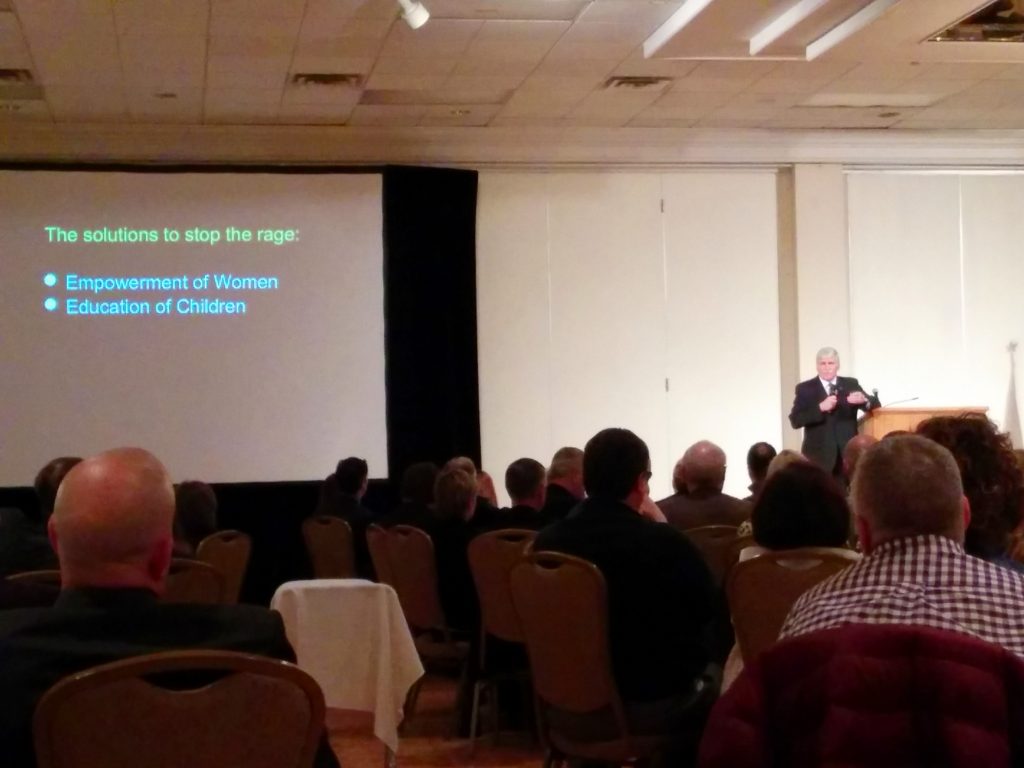
Last month, I had the incredible opportunity to meet General Romeo Dallaire at a local charity event. General Dallaire is a highly respected Canadian general. He braved the Rwandan genocide of 1994, essentially remaining to help when most everyone else left Rwanda, and the world turned a blind eye to the extreme brutality taking place in the African country. As the guest of honour at the event, he spoke of the global injustices plaguing our world and causing, what he refers to, as global rage. We see this rage daily as the stories make headlines. According to General Dallaire, two of the main sources of this rage are our failures with respect to the: (1) empowerment of women and (2) education of children. I felt so uplifted to hear that the work we at Mom2Mom Africa are doing addresses two of the most important social injustices identified by someone as worldly and experienced as General Dallaire.
I raced to introduce myself to him after he spoke, and we chatted briefly about my work in Tanzania. I was so nervous but he put me right at ease. He was so humble and kind. And, at the end, he turned to me and said;
“young lady, keep doing what you are doing. It is the work of small, grassroots organizations like yours that will change the world”.
I could have cried right there on the spot; not out of sadness but instead out of pure joy. This man, who had inspired me in so many ways, just washed away all of my insecurities and doubts, with only a few words.
As the Buddha once said..
“Words have the power to both destroy and heal. When words are both true and kind, they can change our world”.
How great it is when someone, who is such an inspiration and role model, takes the time to encourage others, no matter how small their impact is on the world. Imagine what would happen if this was common practice? What if we built each other up instead of tearing each other down? What if we collaborated and focussed on common goals? Imagine what would be accomplished if we all spent more time being kind and supportive, especially those in positions of power. I am not sure if General Dallaire will ever know just how much his kind words meant to me. He gave me the strength to keep moving forward, to keep tackling and overcoming the obstacles that so many of us face. I will be forever grateful to this man, and I can only hope that others, who are in positions of influence, will follow General Dallaire’s lead. I am so proud of my fellow Canadian!
This is an original post written for World Moms Blog by Alison Fraser of Mom2Mom Africa
Do you remember kind words from another that may have inspired you in your life?
Alison Fraser is the mother of three young girls ranging in age from 5 to 9 years old. She lives with her family in Cambridge, Ontario, Canada. Alison works as an Environmental Toxicologist with a human environment consulting company and is an active member of the Society of Environmental Toxicology and Chemistry (SETAC). She is also the founder and director of the Canadian Not for Profit Organization, Mom2Mom Africa, which serves to fund the school fees of children and young women in rural Tanzania. Recently recognized and awarded a "Women of Waterloo Region" award, Alison is very involved in charitable events within her community including Christmas Toy and School Backpack Drives for the local foodbank.
One moment everything seemed fine and the next I was creating a little puddle of tears on my Yogasana mat.
I emerged from the yogasana pose to find unexpected sobs bursting through my throat, catching me completely unawares. A little part of my mind wondered what this was all about. And then I realized this was probably because of a niggling dissonance within, a reaction to a new milestone in my son’s growth that had not yet been completely accepted or acknowledged. This is what had led to the sudden grey cloud near the heart, that burst through as tears.
This morning, as Abhishek, my son, was having his breakfast before leaving for school, he called out to me saying that there seemed to be a gap between his two lower incisors. I touched a tooth and immediately found it was loose. The milk tooth would soon fall. We grinned and Abhi told me about how Kirti, his school mate, already had two teeth missing. I thought of a couple of his other friends, senior to him by a year, wearing gap-toothed smiles with part-embarrassment, part -pride. Now he would be a part of that gang too.
As we waited at the bus-stop for his school bus, we talked of the concept of the tooth-fairy. We both agreed that the concept was “cute”. I bid him bye, returned home and resumed my morning chores.
But somewhere in the heart, deep, deep down, the unarticulated thought had arrived – our little baby is about to lose his baby teeth. How did the years fly by so fast? And that would have been the genesis of the tears.
The innocence and unsullied grace of childhood are truly magical and seem long-lasting. But the pace of change and growth can actually be so rapid, that the heart can seem overwhelmed. Scarcely does a new milestone–a habit, a skill, or a new activity–set in, than the “Finish” line for that zooms forward, and before one knows it, it is time to say goodbye to yet another phase of one’s child’s growing years.
So much to cherish and so little time! It seems like it was only yesterday that I was rhapsodizing over Abhishek’s four new, shiny little teeth and feeling nostalgic about toothless, gummy smiles. And now it’s time for those very teeth to go!
“So what?”, one may wonder. A purely practical approach to this whole thing would be that his physical growth is going on fine and that I ought to be feeling reassured!
But to me it seems to be much more than that. His shaky little tooth tells me a lot of things. It reminds me that he is growing up quickly and that the only mandate I have been given from the Universe is to give him love, pure and unadulterated, intense and in every moment. It shows me the passage of the seasons of time – the travails of toddler-hood have given way to heart-touchingly earnest attempts at responsibility for this sweet-yet-solemn almost-six-year-old.
But most of all, the tooth reminds me that “this too shall pass!”
So must change be heralded by tears? Not at all. Something tells me that some of the tears were tears of regret, for all those “Not now please, I am busy” moments, when I allowed temporary realities to hijack my energies away from the greater priority of sharing my time and care with him.
Those moments are irretrievable and all I can hope is that this tooth has taught me a valuable learning. And then there were a few tears of concerns: am I ready to guide him right as he reaches a new phase of growth? As ready as I will ever be, I guess.
And then there were tears of joy: my little one, darling creature of the Universe, is growing up.
Motherhood seems like a permanent stage of “Work in Progress”. There is no “Finished Product”, just a heart that smiles, cries, is pulled and stretched and learns to give some more.
This is an original guest post from Piya Mukherjee in Mumbai, India; Mother, Corporate Trainer, Director.
The image used in this post is attributed to Stephanie Sicore of Young@Art. It holds a Flickr Creative Commons attribution license.
World Moms Blog is an award winning website which writes from over 30 countries on the topics of motherhood, culture, human rights and social good. Over 70 international contributors share their stories from around the globe, bonded by the common thread of motherhood and wanting a better world for their children.
World Moms Blog was listed by Forbes Woman as one of the "Best 100 Websites for Women 2012 & 2013" and also called a "must read" by the NY Times Motherlode in 2013. Our Senior Editor in India, Purnima Ramakrishnan, was awarded the BlogHer International Activist Award in 2013.
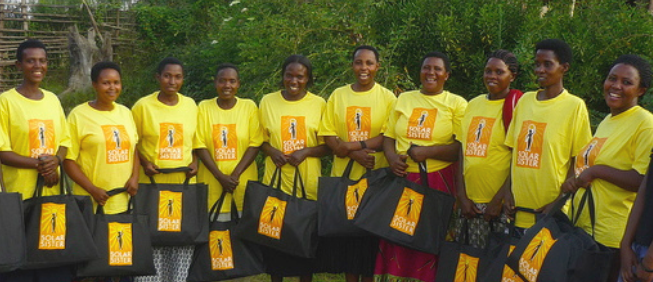
“Solar Sister eradicates energy poverty by empowering women with economic opportunity. We combine the breakthrough potential of solar and clean cooking technology with a deliberately woman-centered direct sales network to bring light, hope and opportunity to even the most remote communities in rural Africa.”-www.solarsister.com
Katherine Lucey is a mother of five and founder and CEO of Solar Sister, a Rhode Island based direct marketing social enterprise that currently operates in the countries of Uganda, Nigeria, and Tanzania. She had previously spent decades in the field of finance, and after having seen first hand the exclusion of women in the energy sector through her work, she formulated her piece of the solution to the problem. Katherine knew that despite the fact that women were being excluded from the energy conversation, they were actually the main household purchasers. On average 40% of that purchasing power was being spent on energy resources such a s wood, kerosine or paraffin, which came with their own set of harmful issues. Burns, respiratory problems, and the dangers of a woman collecting wood on her own, often at dark, inspired Katherine to launch a direct sales solar enterprise that would both empower these women economically and provide an alternative clean energy source for their daily lives.
Five years later Solar Sister has 1,250 entrepreneurs selling solar lamps, lighting solutions, and clean cookstoves, helping communities to leapfrog over older energy technologies in favor of clean, renewable solar energy sourced by the African sun. To celebrate the five year anniversary of Solar Sister, a goal has been set of raising $500,00.00 to train and launch 1,000 new Solar Sister entrepreneurs. This July a group will climb Mount Kilimanjaro, Africa’s highest peak, to raise funds and awareness for their campaign, and as a symbolic tribute to all of the Solar Sister Entrepreneurs.
“Every woman is a Solar Sister” Solar Sister’s Director of Engagement Caroline Mailoux explained as she outlined her goal of taking part in the upcoming Solar Sister Kilimanjaro climb this summer.
“We want to challenge ourselves in the same way these women do, the Solar Sisters are bold, brave, overcoming obsticles, and transforming how people consume clean energy every day.”
The issue of energy poverty is a universal one, and understanding the importance of women and access to clean energy is becoming increasingly important each day.
Investing in women is not only the right thing to do, it is the smart thing to do. Solar Sister creates sustainable businesses, powered by smart investment in women entrepreneurs. When you invest in a woman, you invest in the future. Join us by making an investment in a Solar Sister Entrepreneur today.-www.solarsister.org
This is an original post written for World Moms Blog by Elizabeth Atalay of Documama.
Elizabeth Atalay is a Digital Media Producer, Managing Editor at World Moms Network, and a Social Media Manager. She was a 2015 United Nations Foundation Social Good Fellow, and traveled to Ethiopia as an International Reporting Project New Media Fellow to report on newborn health in 2014. On her personal blog, Documama.org, she uses digital media as a new medium for her background as a documentarian. After having worked on Feature Films and Television series for FOX, NBC, MGM, Columbia Pictures, Warner Brothers, 20th Century Fox, and Castle Rock Pictures, she studied documentary filmmaking and anthropology earning a Masters degree in Media Studies from The New School in New York. Since becoming a Digital Media Producer she has worked on social media campaigns for non-profits such as Save The Children, WaterAid, ONE.org, UNICEF, United Nations Foundation, Edesia, World Pulse, American Heart Association, and The Gates Foundation. Her writing has also been featured on ONE.org, Johnson & Johnson’s BabyCenter.com, EnoughProject.org, GaviAlliance.org, and Worldmomsnetwork.com. Elizabeth has traveled to 70 countries around the world, most recently to Haiti with Artisan Business Network to visit artisans in partnership with Macy’s Heart of Haiti line, which provides sustainable income to Haitian artisans. Elizabeth lives in New England with her husband and four children.
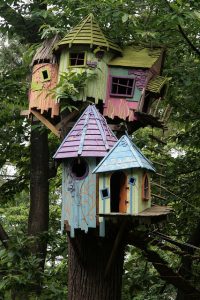
When we first married we lived in an apartment in the heart of a big metropolis. It was practical to live near everything we needed and be able to do all of our errands by foot or bus (in fact, we had no car and walked to work). However, we missed having green. We started looking for a house in a nice region on the outskirts of the metropolitan area, near a forest reservation.
When we finally found a place we could afford to rent it wasn’t exactly your typical house. The owner had built two tiny guest houses in the back of a property he had initially planned to build a regular house in the front of later on; but that never happened.
On the upside we were living glued to a fragment of Atlantic rainforest and our son now had a huge garden to play in. On the downside, the house wasn’t exactly practical.
One of the guest houses had two rooms, a kitchen and a terrace. There we installed our son’s room and ours. However, the kitchen was so small it would only fit the fridge OR the stove, so we had to put the fridge in the second guesthouse and crossover all the time, sun or rain.
The second guesthouse, in turn, had a living room/terrace, one room (which became our library/office), the main bathroom and a pantry of sorts (we squeezed in the fridge instead). The roof had no lining, which wouldn’t be a problem if we didn’t have constant animal visitors coming in (lots of funny stories about that!).
Later on, when we were able to buy the our place, we decided to apply our limited funds to adapt the two guesthouses. An architect friend did his best to join them together into a single, more conventional house.
Our bedroom was expanded and incorporated the tiny kitchen and part of the terrace. A living room was built to join the two houses, which took the shape of a “J”. The main bathroom and former pantry gave place to the new kitchen. Part of the terrace became the laundry room. We lined the roof, installed mold-proof open wardrobes, and installed a large bathtub where our two other children were later to be born.
Nevertheless, all of this did not happen at one time. As I said, we had limited funds and every time these funds began to wane we had to stop.
At three different and stressful moments a lot of work was done in the house, including once, when during three very challenging months, we had to live at my mother-in-law’s.
Now, years later, we still live in a very unconventional house.
Besides the bedrooms, we never put in windowpanes or doors. The terrace/living room still opens completely into the forest – a curse and a blessing all at once! And even though our financial situation has improved considerably over the past few years, it has been four years since our last attempt at home improvement.
Aside from the occasional efforts to clean/fix the roof from the huge amount of leaves we get, we haven’t done much. Every time we think of all the stress involved we decide to postpone any kind of big project.
Despite everything, I love my house and its garden. I believe things will get better as our children grow older and we have more time and energy for housekeeping and improvement. My husband, on the other hand, thinks there is no way to make this house work and we should just move elsewhere, even though he also loves the closeness to the forest. The truth is he would like to live on a small farm, although I have safety concerns. Thus, every once in a while we go house or farm hunting.
Stay tuned! Part 2 coming soon…
How about you, what are your stories with house remodeling and moving? Please share below?
This is part 1 of a two part, original post to World Moms Blog from our contributor and mom of three in Brazil, Ecoziva.
The image used in this post is attributed to Karen Roe. It carries a Flickr Creative Commons attribution license.
Eco, from the greek oikos means home; Ziva has many meanings and roots, including Hebrew (brilliance, light), Slovenian (goddess of life) and Sanskrit (blessing). In Brazil, where EcoZiva has lived for most of her life, giving birth is often termed “giving the light”; thus, she thought, a mother is “home to light” during the nine months of pregnancy, and so the penname EcoZiva came to be for World Moms Blog.
Born in the USA in a multi-ethnic extended family, EcoZiva is married and the mother of two boys (aged 12 and three) and a five-year-old girl and a three yearboy. She is trained as a biologist and presently an university researcher/professor, but also a volunteer at the local environmental movement.
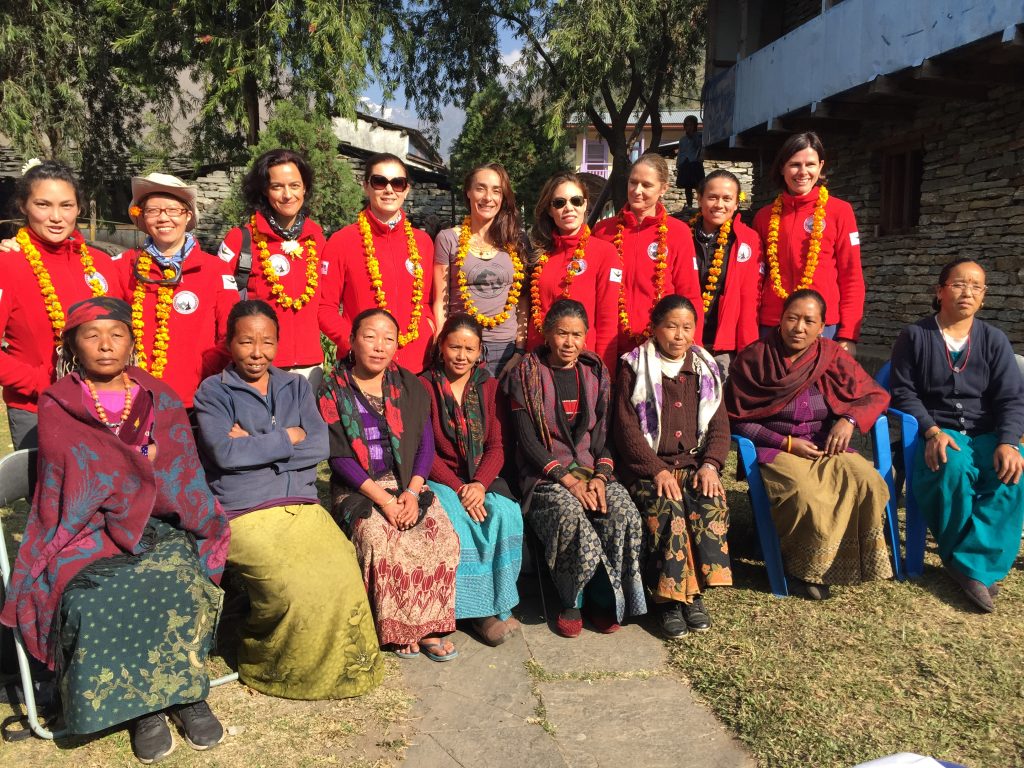
Today our team has returned to the warm embrace of our families in Singapore, but undoubtedly, a piece of our heart was left behind in the sacred Tsum Valley of Nepal, captivated by the thousand smiles we came across during this beautiful and arduous journey. Indeed, Tsum, also known as a beyul or sacred land, had a profound influence on us.
This magical and untouched region of Nepal, one of the most secluded of Himalayan valleys, which only became accessible to tourists in 2008, affected us in ways we don’t yet fully comprehend.
The valley, once part of Tibet, looks completely different in terms of people and culture, from other parts of Nepal. The people of Tsum are Tibetan in origin with their own ancient dialect, art, culture and religion. In addition to the spiritual richness of this expedition, our itinerary was challenging and at times, even a little perilous. It required us to push our physical and mental limits, conquering fears, and dealing with extreme cold and exhaustion, while climbing to increasingly higher altitudes. We gained a total of 4,400 metres of altitude over a distance of 150 kilometres in less than seven days.
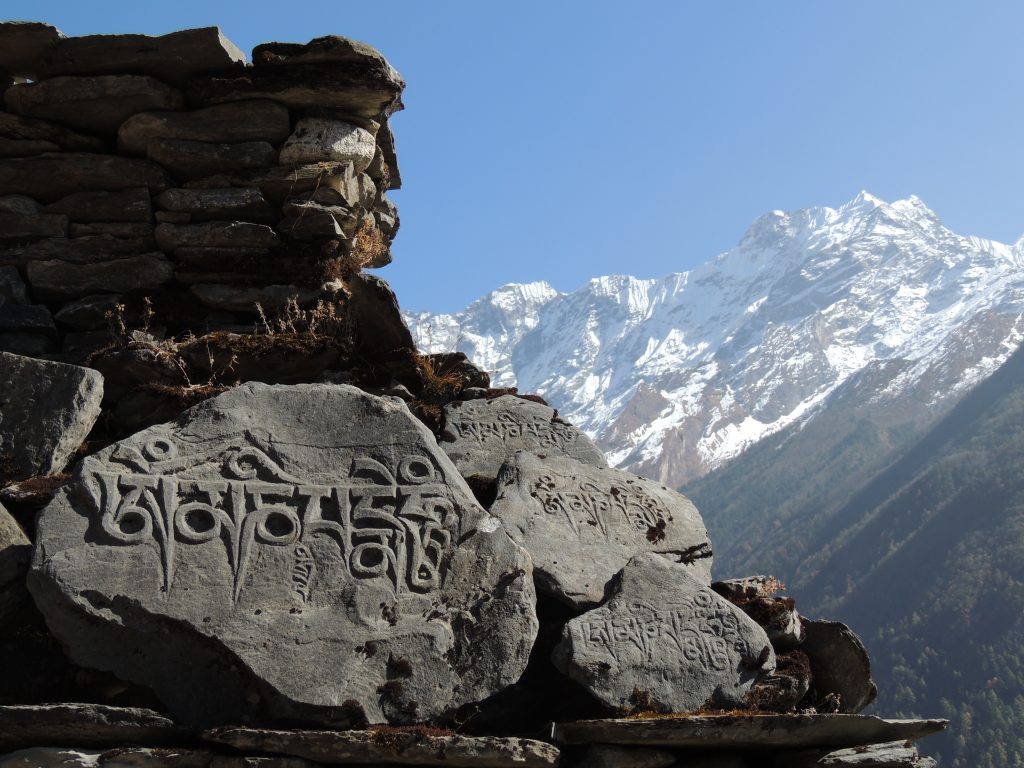
We started in Soti Khola, in the lowlands, visiting sacred caves and secluded villages. As we continued to climb higher, we saw the vegetation and landscape change before our eyes, from thick tropical foliage to lush pine forests. We continued our journey on steep mountainous trails, passing brightly coloured prayer wheels and numerous stupas – little Buddhist shrines. As we gained altitude, the temperatures plummeted, while the landscaped turned moon-like, with a thick blanket of powdery snow covering the peaks surrounding us.
Every day on our journey upwards, we came across caravans of mules and Yaks laden with supplies on their way to and fro Tibet. The people in this region of Nepal have been trading with their Tibetan neighbours for centuries and continue to do so despite the political vagaries affecting Tibet’s status as a nation in relation to the People’s Republic of China.
After an intense week of trekking we reached Mu Gompa (3,700m), where we began a three-day retreat in a century-old monastery. There, we set aside quiet moments in our day for meditation and reflection, as we rested and prepared for our challenging day climb to the Ngula Dhojhyang Pass, perched on the Nepalese-Tibetan border at 5,093m of altitude.
Finally the time came for us to scale the Ngula Dhojhyang Pass. However, because Mu Gompa Monastery is the last place available for trekkers to stay at, past this altitude, if we were to return before dusk, we had to leave no later than 4:30am. An intense 13 to 14-hour climb lay ahead of us.
Luckily the weather had been glorious over the past few days. We were conscious that just a few weeks back, not far from this region, in the Annapurna mountain range, a freak blizzard had just occurred. This unexpected storm arriving in late October, at the peak of the trekking season, had caused the deadliest mountaineering disaster in Nepal’s history. At least 43 people were killed when the blizzard caught them off guard on the trails.
A few other obstacles lay ahead of us on this high pass attempt. For the team to reach that section of the Tibetan border, we had to cross six landslides in total darkness and once again on the way back, ideally while there was still some daylight left.
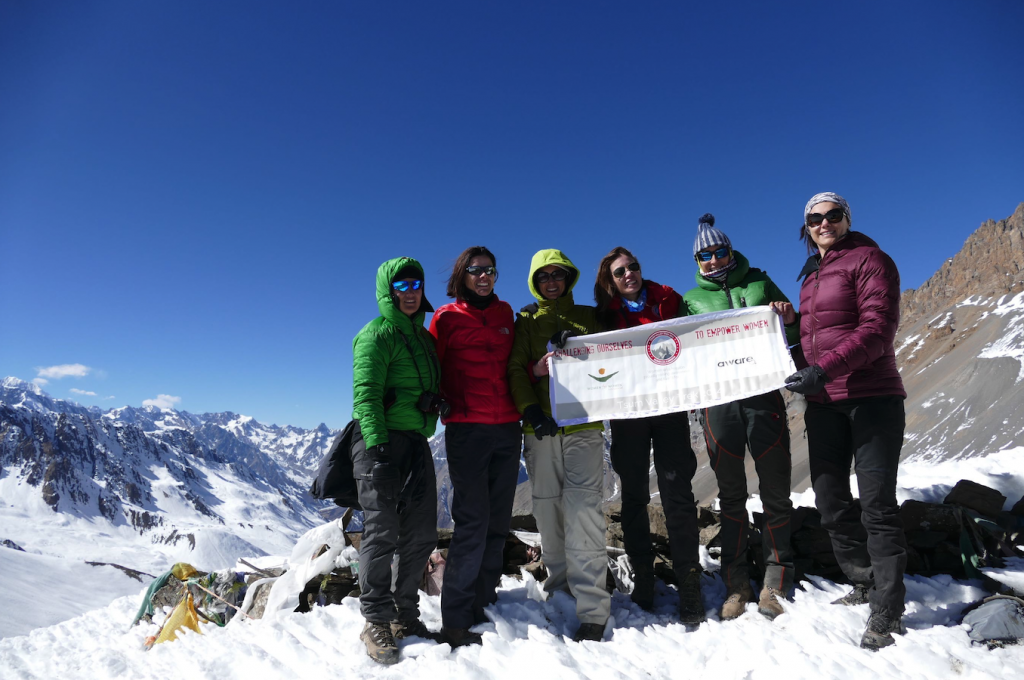
Nevertheless, our determined team left Mu Gompa Monastery with head torches on at 4:30am in below freezing temperatures. The cold was so intense that the water in our camelbaks remained frozen until 9am. We continued climbing, crossing vast windy plains, traversing numerous icy rivers, scrambling over slippery rocks and small glaciers, and scaling a total of 1,400 metres in one go. Finally at noon, exhausted and cold, but euphoric beyond words, we made it to the Nepalese/Tibetan border at the highest point on the ancient trade route.
At the top we unfurled a banner reaffirming our commitment to challenge ourselves and empower women around the world.
We stayed 20 minutes on the windy summit, drinking in the stunning views on both sides, and headed straight back down to Mu Gompa, racing to return before dark. Finally 13 hours after our departure, as daylight began to fade, we walked into the monastery’s dining hall completely shattered and drained, but standing tall despite the overwhelming fatigue, with a deep sense of achievement and pride in our hearts.
As you can imagine on such a journey, there was much laughter and often tears, of both triumph and frustration, but what we discovered at the end of it all was something far more rewarding. We came to know a people who cherish the simplicity of their lives over any material comfort or possessions. On numerous occasions along the trail, the people of Tsum welcomed us, perfect strangers, into their homes. Their hospitality, kindness and wisdom touched our hearts forever.
Ultimately, we embarked on this journey to support other mothers, daughters, and sisters whose lives have been ripped apart by the horrors of war, women who have been humiliated and raped, robbed of their dignity, whose self-esteem and freedom have been taken away from them. Even if we could never claim to truly understand the suffering they went through, doing something out of the ordinary and dedicating it to these brave women made us feel like we were standing in solidarity with them, and it gave us wings as we climbed higher.
Despite the constant longing for clean toilets, hot running water, warm beds and comfort foods—not the mention the rats we encountered running across our sleeping bags, in the middle of the night in one of the lodges —all the little “hardships” we endured were long forgotten once we were safely back home in Singapore.
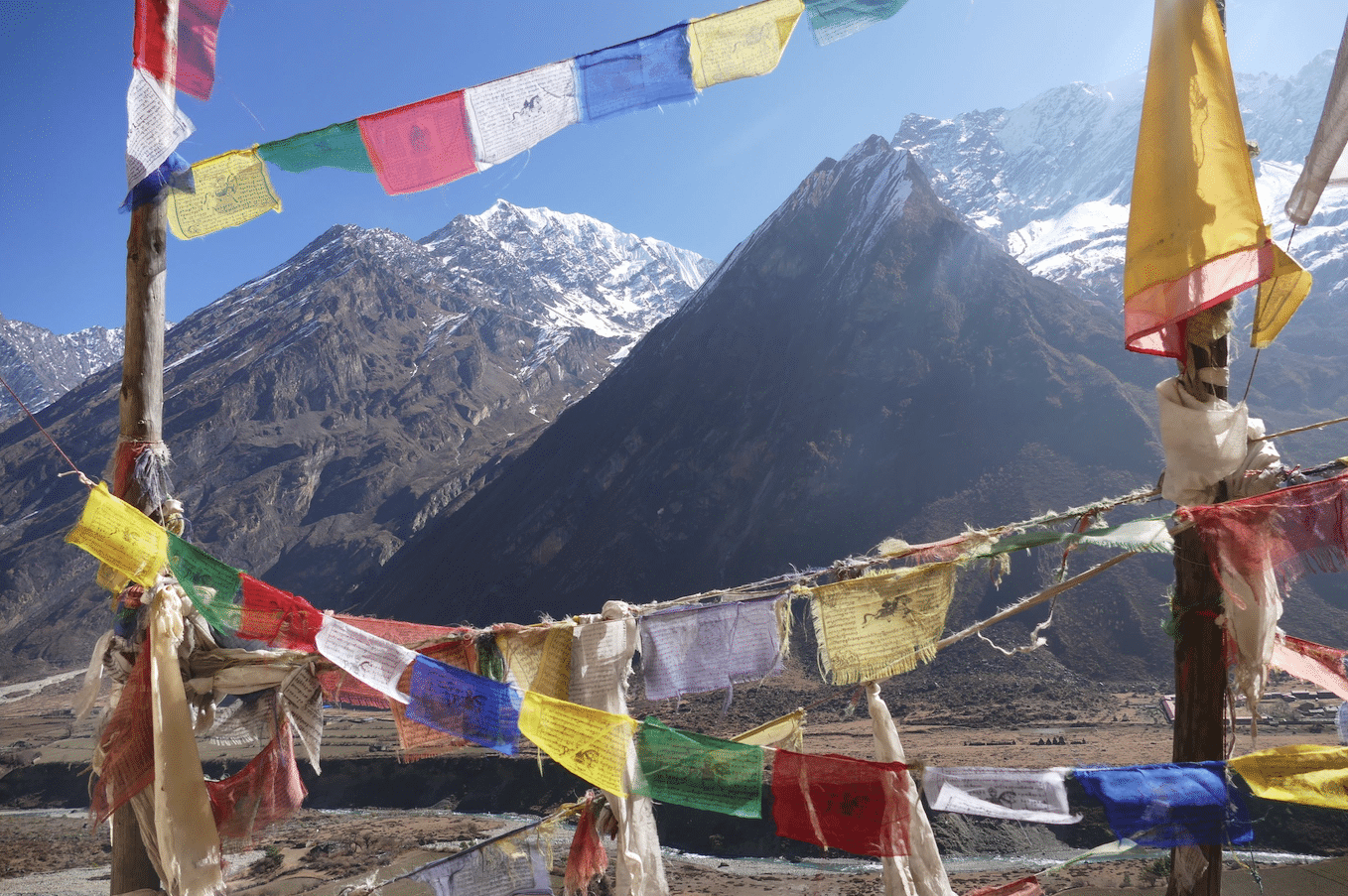
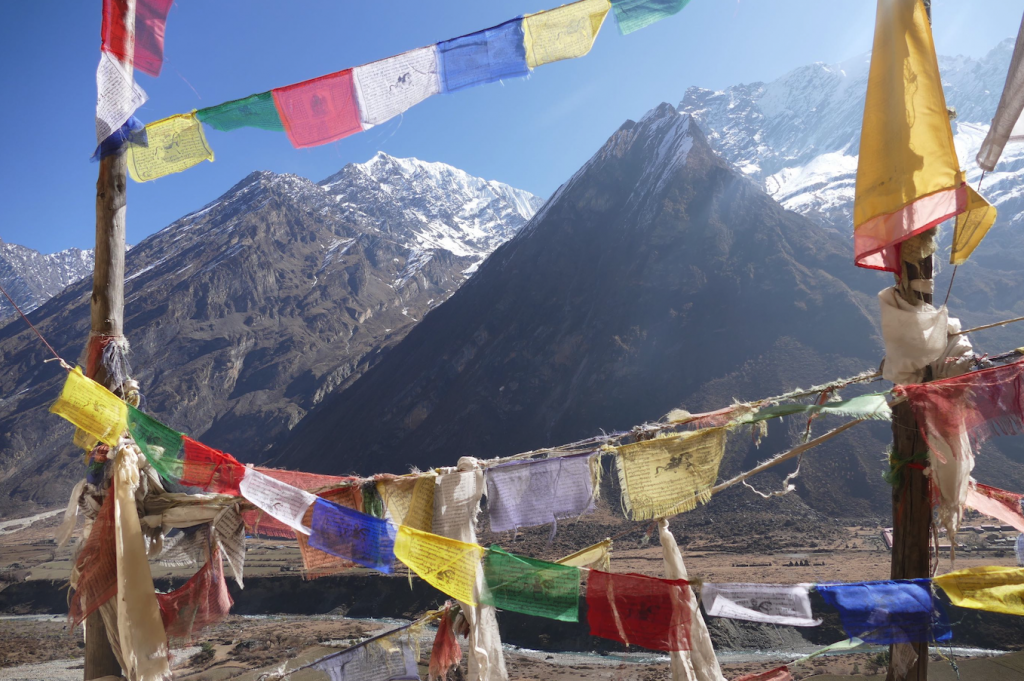
It was truly an unforgettable journey in the land of the clouds. From the many multi-coloured prayer flags fluttering in the wind high above our paths, to the beautiful khata – silk scarves – we received as parting gifts, undoubtedly, the beauty of the Tsum Valley will remain alive, etched in our memories forever. No wonder many believe the Himalayas retain a small part of your soul, forever captured and resting peacefully awaiting your return.
Christine Amour-Levar is the Founding Partner of Women on a Mission (WOAM), a non-profit organization that combines challenging, self-funded, expeditions to remote and majestic locations around the world, with inspirational fundraising events, as a means to raise awareness and funds for women victims of violence.
World Moms Blog is an award winning website which writes from over 30 countries on the topics of motherhood, culture, human rights and social good. Over 70 international contributors share their stories from around the globe, bonded by the common thread of motherhood and wanting a better world for their children.
World Moms Blog was listed by Forbes Woman as one of the "Best 100 Websites for Women 2012 & 2013" and also called a "must read" by the NY Times Motherlode in 2013. Our Senior Editor in India, Purnima Ramakrishnan, was awarded the BlogHer International Activist Award in 2013.
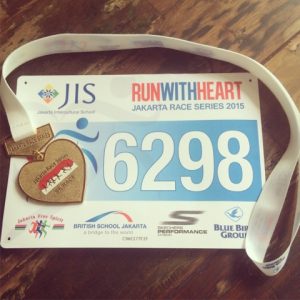
Last Sunday I ran my first 5K race. I still can’t believe that I actually did it – and in the tropical heat, no less. Although I have vaguely considered it a worthy goal, running an actual race wasn’t on my radar even two months ago.
It turns out that 2015 is the year of living dangerously…out of my comfort zone.
My kids often talk about being “risk-takers”. It is one of the ten traits included in the school Learner Profile and students are encouraged to be inquirers, knowledgeable, thinkers, communicators, principled, open-minded, caring, risk-takers, balanced, and reflective. While these traits are all deemed equally important, being a risk-taker is a concept that seems to be especially resonant outside of school too: “I am a risk-taker: I am willing to make mistakes. I am confident and have the courage to try new things.”
For my generally confident (and fruit-averse) daughter, this might mean: “Look Mommy, I’m a risk-taker, I’m eating a mango!” My son takes a more reflective approach – acknowledging when he feels nervous about doing something and emboldening himself with his risk-taker status to eventually take the plunge. Though risk-taking will probably have a different connotation when they are older, I embrace what it means for them now – trying new things and not being afraid to make mistakes.
It’s an important lesson for grown ups, too.
In January, after three years of living in Jakarta, I was starting to feel like my daily life was becoming somewhat routine. Gym, work, grocery store, repeat. To change things up, I found myself saying YES to things that I might not usually consider.
When a friend asked if I wanted to join their early morning running group, I said YES. I knew that the group would likely be too advanced for me but figured that I wouldn’t know if I didn’t try. “What’s the worst that could happen?” I asked myself. I would walk, that’s it. I did walk some at first, but I set my own goals and improved each week. Now we’re training for a 10K.
When another friend asked if I would like to be part of their dance group for an upcoming fashion show event, I said yes to that too. Other friends and even my husband were surprised. Performing a dance routine in front of a huge crowd is WAY beyond my comfort zone, but again I thought: “Why not?” In this case I try not to think about the worst that could happen (falling off the stage comes to mind) but I’m proud of myself for doing it and am actually looking forward to the big night.
I’ve continued with the YES theme in other areas of my life and have already seen positive changes: improved health, new friendships, new possibilities. I’ve realized that pushing my boundaries in this way is also about adjusting my own perceptions of myself. “Oh, but I’m not a runner,” I would repeatedly explain, trying to somehow qualify my actions.
Well now I am a runner. And a dancer. Among many other things.
Life begins at the end of your comfort zone.
Our kids may not recognize some of the bigger risk-taking decisions we’ve made (like moving our lives halfway around the world), but it’s often the smaller actions that resonate the most.
It feels good for them to see that I can be a risk-taker too – I can be afraid sometimes and I can also be brave, just like they are.
When I walked in the door after the race, finisher’s medal around my neck, both kids jumped up from the couch with wide eyes. “Mommy!” my daughter exclaimed, “I didn’t know you would win the race!”
Not exactly…but YES! In my own way, I did.
What risks are you putting out there for yourself this year? How are you embracing these challenges?
This is an original post for World Moms Blog by our mom of twins in Jakarta, Indonesia, Shaula Bellour.
The image used in this post is attributed to the author.
Shaula Bellour grew up in Redmond, Washington. She now lives in Jakarta, Indonesia with her British husband and 9-year old boy/girl twins. She has degrees in International Relations and Gender and Development and works as a consultant for the UN and non-governmental organizations.
Shaula has lived and worked in the US, France, England, Kenya, Eritrea, Kosovo, Lebanon and Timor-Leste. She began writing for World Moms Network in 2010. She plans to eventually find her way back to the Pacific Northwest one day, but until then she’s enjoying living in the big wide world with her family.