by Cindy Levin | Aug 19, 2014 | 2014, Awareness, Human Rights, Humanitarian, World Moms Blog, World Voice
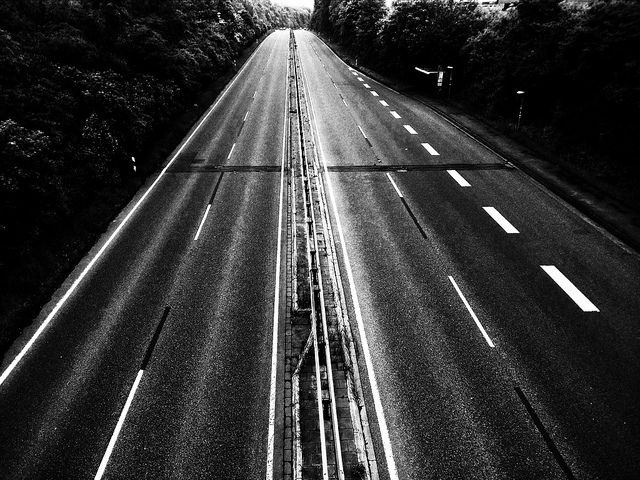
I live in St. Louis. Heartbreak has come to my city. It was probably always here, but now that it has taken the form of riots and military-style armed police in American streets of Ferguson, it’s raw and exposed for everyone here and the entire world to see. Many people reading this post will recognize Ferguson from the headlines trending for the days following the death of unarmed, African-American 18-year-old Michael Brown by a police officer.
Ferguson is both very far and very near from where I live depending on perspective. Geographically, it lies about 25 miles north of me. I can be there in about 30 minutes by car. On my side of town this week, it was sunshine and smiles for my kids on their first days of school while so much pain and anger roiled beyond my sight-line from my north-facing front door.
Wednesday evening, I watched in horror as my twitter feed filled with pictures of tear gas clouds rising in the night air. The scene couldn’t have been more different than the peace of my own home where my family sat doing a puzzle and listening to a St. Louis radio station, which gave no indication of the rioting.
The next morning when I woke to local news radio, I heard school was canceled in Ferguson for the next two days due to the violence. In that respect, Ferguson is worlds away because my daily reality is so far from the experience of parents living there. Or is it? Maybe it’s just that I just need to wake up and take a good look at the city I call home now.
I moved to the St Louis area just over a year ago. We came here from Chicago, a city infamous in the past and present for gun violence with it’s own history of racial rioting (Riots Follow Killing of Martin Luther King, Jr, Chicago Tribune). Diversity looks different to me here than our old Chicago suburban neighborhood where over 60 language dialects were spoken in our school district. While our old school had many different shades of color because of the high immigrant population from many countries, our current student population falls much more along a white/black divide of families who have lived in the U.S. for more than a few generations. I want to believe we live in a post-racial society, but I can’t say that when I see there are only African-American children eating the subsidized breakfast at our school with no Caucasian children sitting at the table. I am thrilled there is a system in place to help children from struggling families start the day with a full stomach. Yet I see that we have a ways to go before economic separation doesn’t also result in racial segregation at the elementary school breakfast table.
Despite the inequality before our eyes, people around here tend to feel safe in our southern suburb and separate from the struggles of communities like Ferguson. As the St Louis Post-Dispatch noted in an editorial this week, “We put up our proverbial (and literal) gates in West County, for example, and separate ourselves from the challenges of the urban core.” That perceived distance between communities is a dangerous mindset. When we see our neighbors as far away, we don’t think about their problems as our own and we’re not inclined to lend a hand or vote in ways that are beneficial to us all as the Greater St. Louis community.
The St Louis Post-Dispatch went on to give this observation that stopped me in my tracks:
“Even without that fatal confrontation, statistics suggest Michael Brown would have died earlier than other African-American males just like him who had the good fortune of being born one ZIP code to the south and west. This is but one of the startling and important conclusions of a recent Washington University study titled ‘For the Sake of All.’
…Had he lived, Michael Brown’s projected lifespan was about 15 years less than had he lived just a couple of ZIP codes away on the south side of Interstate 70. In St. Louis, ZIP code is destiny.”
I’m reminded of a quote by U2 lead signer Bono at a National Prayer Breakfast in 2006 regarding global poverty and the inequalities of survival based on country of birth: “Where you live should no longer determine whether you live.” Here in St. Louis and everywhere in the U.S., where you live shouldn’t dictate how long you live, either.
I’m happy to say that Thursday night was a peaceful night in Ferguson and in all of St. Louis County. There will be much more to work through as details come about the investigation of Michael Brown’s death. At least now, however, we can all stop watching the news helplessly and start asking ourselves the tough questions.
• What are we, personally, doing to fight racial and economic inequality?
• Have we talked to our children honestly about racism in the world today?
• How do we feel about militarization of police and what will we say to elected officials about it?
While I struggle with the questions, I’ll take some of the easy actions like donating food to my local church that will take a delivery to the Ferguson food pantry. If you don’t live in St. Louis, the call to wrestle with questions and take action still applies to you wherever you are in the world. Because Ferguson – the struggle with racism and poverty that it represents – is probably closer than you think.
This is an original post written for World Moms Blog by Cindy Levin.
Photo Credit: Flickr Creative Commons, Martin Fisch
Cynthia Changyit Levin is a mother, advocate, speaker, and author of the upcoming book “From Changing Diapers to Changing the World: Why Moms Make Great Advocates and How to Get Started.” A rare breed of non-partisan activist who works across a variety of issues, she coaches volunteers of all ages to build productive relationships with members of Congress. She advocated side-by-side with her two children from their toddler to teen years and crafted a new approach to advocacy based upon her strengths as a mother. Cynthia’s writing and work have appeared in The New York Times, The Financial Times, the Washington Post, and many other national and regional publications. She received the 2021 Cameron Duncan Media Award from RESULTS Educational Fund for her citizen journalism on poverty issues. When she’s not changing the world, Cynthia is usually curled up reading sci-fi/fantasy novels or comic books in which someone else is saving the world.
More Posts - Website
Follow Me:

by Jennifer Burden | Aug 15, 2014 | 2014, Shot@Life, Social Good, United Nations, World Voice, Youth
World Moms Blog has a long history of advocating for global vaccinations with the UN Foundation’s Shot@Life campaign, and we are honored to host a post for their #Blogust campaign going on this month! The goal of the campaign is to raise awareness for vaccinations for the children who need them most. Every comment on this post will unlock one donated vaccine for a child. And don’t stop there — every social media share counts, too! You can visit all the posts in the relay at www.blogust.org.
So, tell me now, have you ever experienced any “firsts” growing up that were better than you ever expected or were highly impressionable on who you are today? Many highly anticipated first experiences often come and go forgotten or don’t really mean anything today in retrospect, right? But, here’s a story of one first in my life that made an impact, and I admit to even going back for more! It’s not chocolate, but could have been chocolate, but no, it wasn’t.
Ok, here goes…My age was only 14. I boarded a big yellow school bus to travel to the great big city to my first international summit. And I left with a new perspective on what one person, one child, in fact, could have on the world. This is the story of my first trip to the UN in New York city and how I wound up there as a teenager…
Growing up on the Atlantic coast in New Jersey, USA, it’s common to spend many days on the beautiful sandy shores of my home state and playing in the surf. What was not to love back then?
The pollution, that’s what.
Back in the 1990s, plastic bags, straws, cans, plastic tampon applicators, you name it — all washed up on our beaches. Beaches were closed after hypodermic needles arrived on our shores with other hospital waste. We were swimming in this dangerous mess, and as a species, we were not only endangering our fellow humans, but recklessly damaging a habitat that marine life called home.
The pollution and lack of empathy to preserve our planet drove me nuts!
So, as a teenager I wound up joining a local environmental advocacy group to help raise awareness about the importance to keep our oceans clean and attended their beach clean ups. At a meeting back in 1990 they gave us the news that the UN would be hosting an environmental summit for youth in New York City. I had to go — the UN! The environment!! Yes!!!
I took the information about the youth summit to my high school principal and made the case that our school should be represented. On the day of the summit, my school, Brick Memorial High School, had a delegation en route with our amazing science teacher, Mrs. Kingman.
We were wide-eyed while entering the famous main UN room with seats and labels for delegations from each country. It was a place where decisions were made on human rights, trade, embargos, and we sat down and took to playing with the microphone systems (so hard to resist!). We looked around at all the other students, both, similar and different to us. We didn’t know what to expect from the event, and as it got started, out came speaker after speaker — all kids like us, at the time, from around the world. They spoke of environmental issues affecting the areas they lived in and what was needed or what they were doing to make a difference.
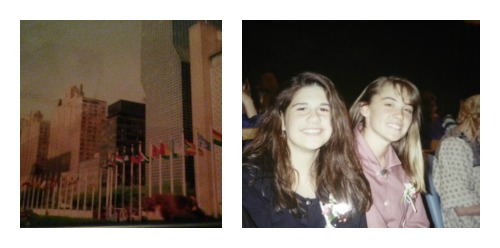
At the UN’s environmental youth summit in the 1990s.
Back in the early 1990s at the UN youth environmental summit, one boy in particular — I remember him being younger than me at the time, maybe 12 years old? maybe younger? — gave a presentation on how the lives of sea turtles in Florida were becoming threatened. He, on his own, was responsible for saving the lives of thousands of babies by protecting their nests and helping the hatchlings out to sea. Our delegation went from wide-eyed to teary eyed. He brought the house down in applause and pride for our fellow youth. That moment engrained in me of how one person, regardless of age, can make an impact on the planet. He was an inspiration.
My first experience at the UN was definitely one that was positive and inspiring — a big realization that we were all players in a world much larger than our own hometowns. And kids could make change, too! They were even already doing it. This mindset is something that inspired me as a kid and will continue to impact how I raise my young daughters today and in the future.
As a part of World Moms Blog, I still jump on the opportunity to head to the UN when we’re invited to report, especially around the UN General Summit & Social Good Summit and for the annual State of the World’s Mother’s Report. We have become our own “United Nations” of moms, here! And additionally, in 2012 when I was asked to be part of a UN Foundation delegation to Uganda with Shot@Life, I was honored to answer the call, too, with the same 14-year old excitement I had when attending the environmental youth summit back in the early 90s. Which brings me back full circle for the purpose of this post…
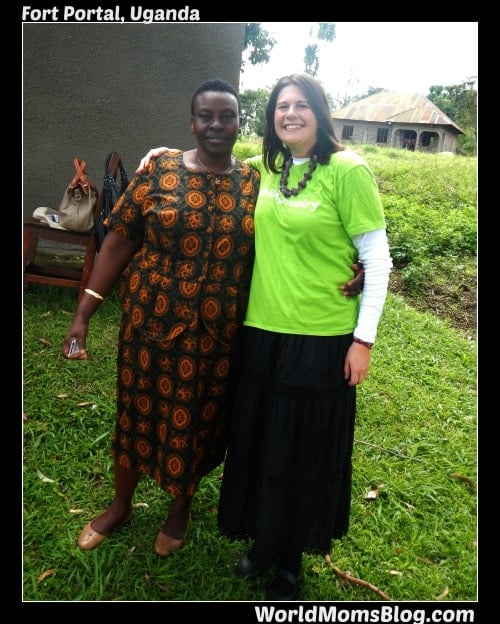
Elizabeth, a volunteer health worker in Fort Portal, Uganda with World Moms Blog Founder, Jennifer Burden on a Shot@Life trip October 2012.
While in Uganda with Shot@Life, I witnessed children receiving life-saving vaccinations at UNICEF’s Family Health Days around the country. We sat under shady trees and spoke with mothers who wanted the same for their children: good health and an education. We played with lots of children, knowing that because they were being vaccinated against measles, pneumonia, rotavirus and polio (the four deadliest killers of children under 5) that they had a healthier shot at living past their fifth birthday and experiencing more “firsts.”
There is no doubt in my mind that life-saving vaccines are needed in the world.
Every 20 seconds a child dies from a disease that could have been prevented through immunization, which is an inexpensive global health solution to save lives. Healthcare in far to reach or developing areas can be ineffective at keeping a child alive in the event of severe diarrhea or pneumonia. A vaccination can work as a shield to protect a child from even contracting these diseases in the first place.
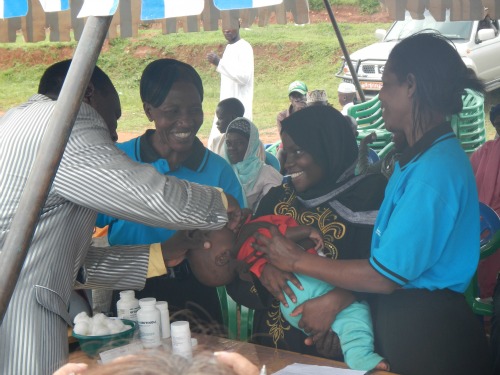
Today, and all this month, you have the unique opportunity to comment on #Blogust posts and help save lives. Walgreens will donate one vaccine to a child who needs it most in response to your comment on this post, those on all the #Blogust posts this month, as well as, any social media shares.
Please, give more children the chance to live past their 5th birthday, the chance to attend a global youth summit, the chance to single-handedly save marine life, the chance to make a positive impact on animal life and on others, the chance to ride a bus to the UN, the chance to live and be a kid. Join me in being a game changer. Help start the conversation to unlock life-saving immunizations!
During Shot@Life’s Blogust 2014—a month-long blog relay—some of North America’s most beloved online writers, photo and video bloggers and Shot@Life Champions will come together and share stories about Happy and Healthy Firsts. Every time you comment on this post and other Blogust contributions, or share them via social media on this website, Shot@Life and the United Nations Foundation pages, Walgreens will donate one vaccine (up to 60,000). Blogust is one part an overall commitment of Walgreens donating up to $1 million through its “Get a Shot. Give a Shot.” campaign. The campaign will help provide millions of vaccines for children in need around the world.
Sign up here for a daily email so you can quickly and easily comment and share every day during Blogust! For more information, visit shotatlife.org or join the conversation on Facebook and Twitter.
This is an original post to World Moms Blog by founder, Jennifer Burden, of New Jersey, USA.
Photo credits to the author.
Jennifer Burden is the Founder and CEO of World Moms Network, an award winning website on global motherhood, culture, human rights and social good. World Moms Network writes from over 30 countries, has over 70 contributors and was listed by Forbes as one of the “Best 100 Websites for Women”, named a “must read” by The New York Times, and was recommended by The Times of India.
She was also invited to Uganda to view UNICEF’s family health programs with Shot@Life and was previously named a “Global Influencer Fellow” and “Social Media Fellow” by the UN Foundation. Jennifer was invited to the White House twice, including as a nominated "Changemaker" for the State of the World Women Summit. She also participated in the One Campaign’s first AYA Summit on the topic of women and girl empowerment and organized and spoke on an international panel at the World Bank in Washington, DC on the importance of a universal education for all girls. Her writing has been featured by Baby Center, Huffington Post, ONE.org, the UN Foundation’s Shot@Life, and The Gates Foundation’s “Impatient Optimists.” She is currently a candidate in Columbia University's School of International and Public Affairs in the Executive Masters of Public Affairs program, where she hopes to further her study of global policies affecting women and girls.
Jennifer can be found on Twitter @JenniferBurden.
More Posts - Website
Follow Me:

by Elizabeth Atalay | Aug 12, 2014 | 2014, Humanitarian, India, Social Good, World Moms Blog
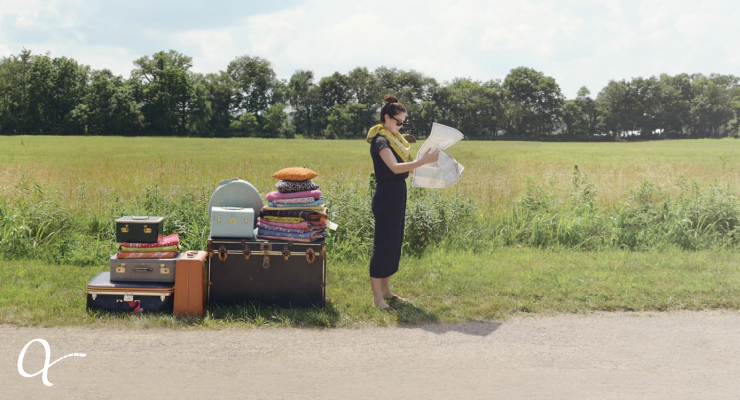
You know when a friend from far away comes to visit? How excited you get to see them again? Well, that is how I feel about the Anchal Road Show that is coming to my town in a few weeks. Anchal is not a person, but it is a story I have followed from early on, and watching the Anchal Project grow over the years has made me feel attached to it in an emotional way. I suppose because it is one of those things that I dreamed of doing someday. Of starting something that matters, that helps others in a substantial way in the way it does.
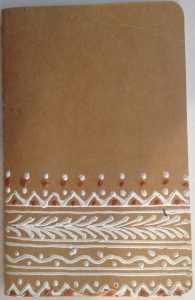
My Anchal moleskin notebook, circa 2009
I clearly remember my first Anchal encounter at the annual Rhode Island School of Design Alumni holiday sale which I go to every year. It is an amazing sale filled with art, inspiration and creativity from the Alumni of the top art school in our country, and where I always find my favorite gifts to give. (If you ever get the chance to go, go! It is a really special event.) I remember coming across a table that year where they were selling tiny hand painted moleskin notebooks from India as a pilot for the Anchal project. Inside the notebook I bought was a piece of paper with the description of the project, and I was instantly captivated. It was not just a pretty gift to give, it had a deeper meaning and purpose, and those are my favorite types of gifts to give.
Anchal founders Colleen Clines and Devon Miller met as graduate students at RISD studying landscape architecture. You might wonder how landscape architecture turned into textile design, but they shared a belief that design could change lives, and after traveling to India in 2009, they put that idea to practice. What they’ve said about the seminar in which they met is that it…….
“challenged us to think more globally about the role of the designer, ultimately leading us to broaden our title to include social entrepreneur, instigator, collaborator and facilitator. For Anchal, quilt-making is the medium through which we instigate, collaborate, and facilitate economic and personal transformation for the commercial sex workers involved in the project. “-anchalproject.org
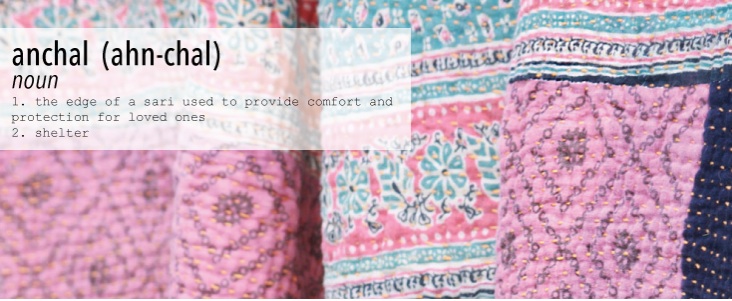
Over the years as the Anchal Project has grown as the women’s lives it touches in India have been transformed. The Anchal artisans are women with little education who come from the margins of society there, the slums, prostitution or the lower caste, many of them are mothers trying to support their families. The decision of these women to enroll in the Anchal program shows their desire for a better future for both themselves and their children. I continue to be inspired by the Anchal Project, and by watching it thrive and impact real, and meaningful change in the lives of the women taking part.
This summer Anchal is taking the show on the road, literally, with the Anchal Road Show that travels to six cities across the USA in Pop-Up shows introducing communities to Anchal and the artists’ stories. This is where my excitement for their visit comes in, as they return to the city where it all began, Providence, Rhode Island, for a Pop-Up show next week. There is something about that now tattered tiny little moleskin notebook that has become somewhat symbolic to me. Like the homecoming of that old friend from your hometown who set off and made it big. I can not wait to see the creations in person and to continue to support this amazing organization. It is truly a story of change-makers in action. Don’t worry if you missed the Road Show, you can still find their beautiful wares at the online store!
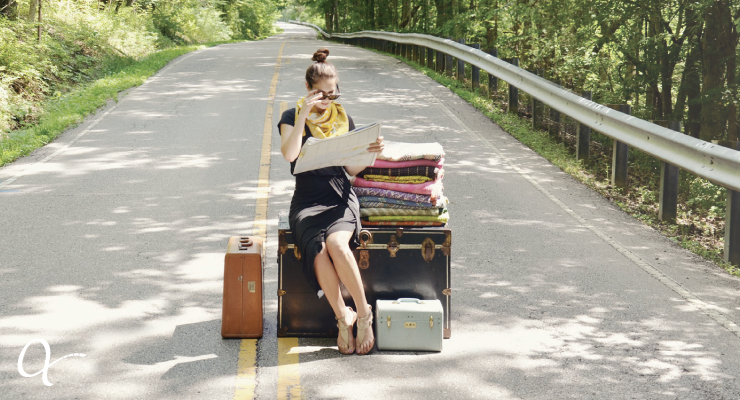
Images courtesy of Anchal Project.
This is an original post written for World Moms Blog by Elizabeth Atalay of Documama.

Elizabeth Atalay is a Digital Media Producer, Managing Editor at World Moms Network, and a Social Media Manager. She was a 2015 United Nations Foundation Social Good Fellow, and traveled to Ethiopia as an International Reporting Project New Media Fellow to report on newborn health in 2014. On her personal blog, Documama.org, she uses digital media as a new medium for her background as a documentarian. After having worked on Feature Films and Television series for FOX, NBC, MGM, Columbia Pictures, Warner Brothers, 20th Century Fox, and Castle Rock Pictures, she studied documentary filmmaking and anthropology earning a Masters degree in Media Studies from The New School in New York. Since becoming a Digital Media Producer she has worked on social media campaigns for non-profits such as Save The Children, WaterAid, ONE.org, UNICEF, United Nations Foundation, Edesia, World Pulse, American Heart Association, and The Gates Foundation. Her writing has also been featured on ONE.org, Johnson & Johnson’s BabyCenter.com, EnoughProject.org, GaviAlliance.org, and Worldmomsnetwork.com. Elizabeth has traveled to 70 countries around the world, most recently to Haiti with Artisan Business Network to visit artisans in partnership with Macy’s Heart of Haiti line, which provides sustainable income to Haitian artisans. Elizabeth lives in New England with her husband and four children.
More Posts

by Jennifer Burden | Aug 5, 2014 | 2014, Awareness, Education, Humanitarian, Older Children, Save The Children, Social Good, Social Media, World Moms Blog, World Voice, Younger Children
World Moms Blog is thrilled to be taking part in Save the Children‘s #FindTheWords campaign. The campaign raises awareness over 30 days with 30 words to emphasize that every child needs early education to thrive. The community of mothers that form World Moms Blog are committed to improving not just the lives of our own children, but of all children around the world.
Just by helping us spread the word by sharing on social media you will be entered to win a $100.00 gift card!
CREATE
The inspiration word we were given by Save the Children for this post was “create.”
We believe in creating the world we want to live in, here, at World Moms Blog. When I was looking to find a one-stop-place to read about mothers in different cultures and countries back in 2010, I couldn’t find what I was looking for. So on a whim, I decided to create the site I wanted to follow, just for fun.
In turn, the web site led me to new corners of the globe for social good and to meet my fellow World Moms, raised awareness for global health programs for women and children, created various international journalistic opportunities and fellowships for our contributors, and connected many very different women whom, otherwise, may have never connected, but are so glad they did!
Today, World Moms Blog writes from over twenty different countries spanning the globe, yet, we’ve found that mothers from such diverse places all want the same things for their children: health, peace, education, and security. We all want to see our children thrive and grow to their full potential.
There is an incredible sense of pride in creating something, whether you are a child creating a “masterpiece” or a mom creating the family financial plan. In creating World Moms Blog, I have had the opportunity to see many of our contributors run wild with their passions across our pages and witness our editors build our behind-the-scenes in managing over 60 volunteer contributors. That’s creation gone wild, and I love it!
With the help of the women who were part of writing and/or later embraced our mission statement, our site has blossommed into a tight-knit, albeit, world-wide community where the contributors and readers alike are able to broaden their worlds and connect over continents…all through the conduit of motherhood.
The word create inspires all we stand for at World Moms Blog. Whether it is to create an opportunity for yourself or for others to thrive globally, to create the life you want to lead, or the world you want to live in.
And we admire the work of Save The Children in creating a safe, healthy space for the children who need it most. Kids are at our heartstrings! Here are some amazing facts about the challenges children face around the globe:
- The first years of life are critical in children’s development, shaping cognitive, social and language skills, as well as lifelong approaches to learning. Evidence shows that 85 percent of brain growth occurs in the first five years of life.
- By age three, children from low-income homes hear on average 30 million fewer words than their peers, putting them 18 months cognitively behind his or her peers when they start school.
- 65% of young kids in need have little or no access to books. More than two-thirds of poverty-stricken households do not possess a single book developmentally appropriate for a child under five.
- Parents who talk less with their children in an engaging and supportive way have kids who are less likely to develop their full intellectual potential than kids who hear a significant amount of child-directed speech.
- Around the world, if all students in low-income countries acquire basic reading skills, 171 million people could be lifted out of poverty.
Help create the future we want for children with Save the Children’s #FindTheWords. Early education creates an environment for young minds to flourish all over the world.
Just by helping us spread the word by sharing on social media you will be entered to win a $100.00 gift card, here are the rules:
To enter share our post via twitter or Facebook or Snap a picture anywhere you see the word “Create” out in the world (or what it means to you) then post it to Facebook, Twitter, or Instagram.
To officially participate, your contributions must be tagged with the proper hashtags
#FindTheWords
#Create
and don’t forget to tag @WorldMomsBlog so we know you are in the running to win!
(The more people who share our posts the better chance we have of winning an interview with actress Jennifer Garner! So what are you waiting for!?)
a Rafflecopter giveaway
This is an original post to World Moms Blog by founder, Jennifer Burden.
Jennifer Burden is the Founder and CEO of World Moms Network, an award winning website on global motherhood, culture, human rights and social good. World Moms Network writes from over 30 countries, has over 70 contributors and was listed by Forbes as one of the “Best 100 Websites for Women”, named a “must read” by The New York Times, and was recommended by The Times of India.
She was also invited to Uganda to view UNICEF’s family health programs with Shot@Life and was previously named a “Global Influencer Fellow” and “Social Media Fellow” by the UN Foundation. Jennifer was invited to the White House twice, including as a nominated "Changemaker" for the State of the World Women Summit. She also participated in the One Campaign’s first AYA Summit on the topic of women and girl empowerment and organized and spoke on an international panel at the World Bank in Washington, DC on the importance of a universal education for all girls. Her writing has been featured by Baby Center, Huffington Post, ONE.org, the UN Foundation’s Shot@Life, and The Gates Foundation’s “Impatient Optimists.” She is currently a candidate in Columbia University's School of International and Public Affairs in the Executive Masters of Public Affairs program, where she hopes to further her study of global policies affecting women and girls.
Jennifer can be found on Twitter @JenniferBurden.
More Posts - Website
Follow Me:

by Elizabeth Atalay | Jul 29, 2014 | 2014, Africa, Ethiopia, Humanitarian, Inspirational, ONE, Social Good, World Moms Blog, World Voice
Twenty years ago Cherry had completed her university degree in business, but was still unemployed. Driving with her family one night past the prostitutes on the streets of Addis Ababa she and her family sparked a discussion that left her wondering about what separated her life from theirs. The street women who flashed them as they passed stayed in Cherry’s mind. She was an educated woman who could not find a job, how were these women supposed to find decent jobs if she couldn’t? She began going out at night to speak with the girls on the street and formed relationships that then became the foundation of “Women At Risk”, an NGO providing rehabilitation and job skills training to provide the women with alternate opportunities.
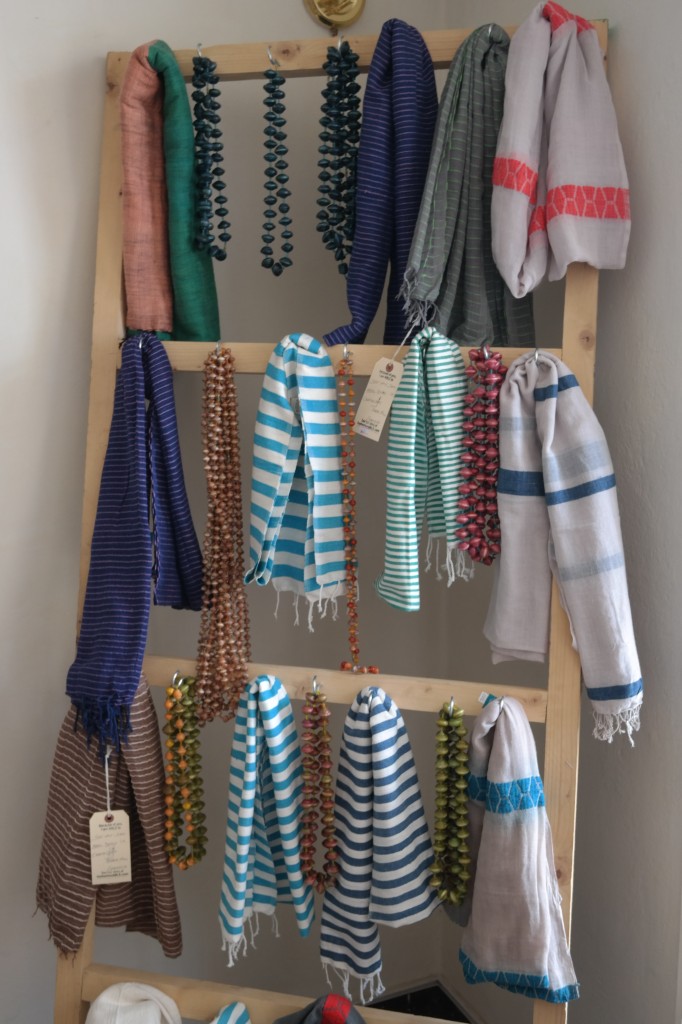
Today “Women At Risk” partners with Ellilta Products where the gorgeous FashionAble scarves that Nicole Melancon and I first heard of through the ONE Campaign are made. We knew if we had the opportunity while in Ethiopia on our International Reporting Project #EthiopiaNewborns New Media Fellowship trip we would love to visit the facility ourselves. Eden Genet Melke, Ellilta’s Business Development Manager was gracious enough to welcome us to the headquarters, show us around, and share the story of how it all began. Forty to forty-six women a year now go through the program of six months of rehabilitation followed by six months of job training. The program has had a 96% rehabilitation rate of women being able to leave behind their life on the streets and create a new future for themselves, and their children.
Cotton has been grown as a crop in Ethiopia as far back as Queen Sheba, and the history of rich textiles are woven into Ethiopian heritage. Initially the women in the program, most of whom are single mothers, were hesitant to learn weaving. In Ethiopia weaving has traditionally been a man’s trade. Most Ethiopian men in the southern region know how to weave, and the women customarily have done the spinning, but once the women saw their finished products with their names on them, (each scarf comes with a name tag signed by the woman who made it) their sense of pride in what they were able to create emerged.
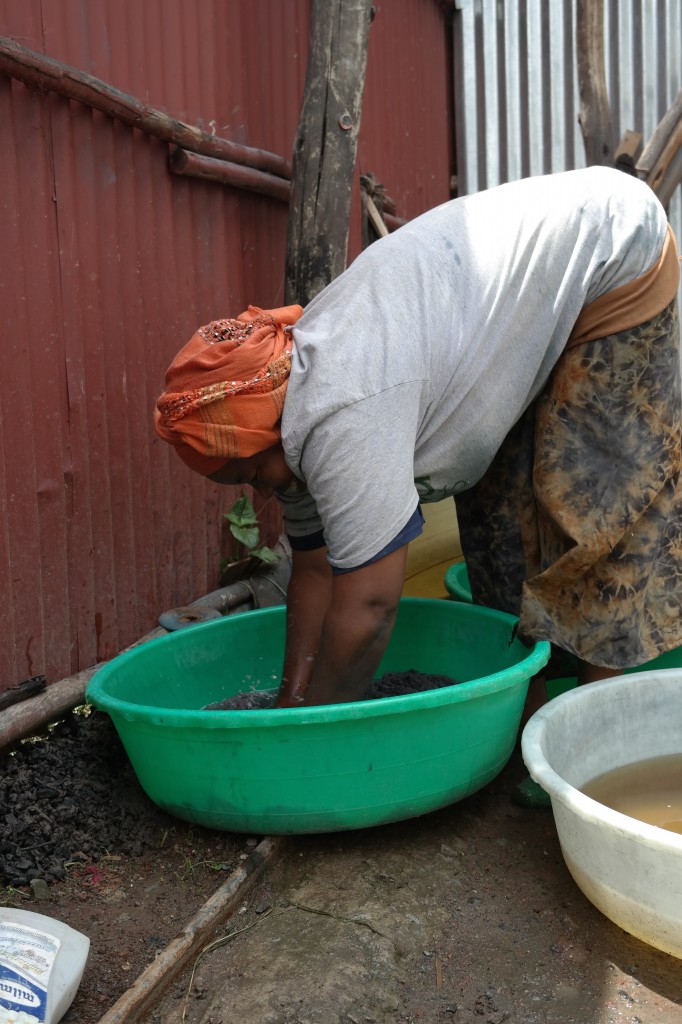
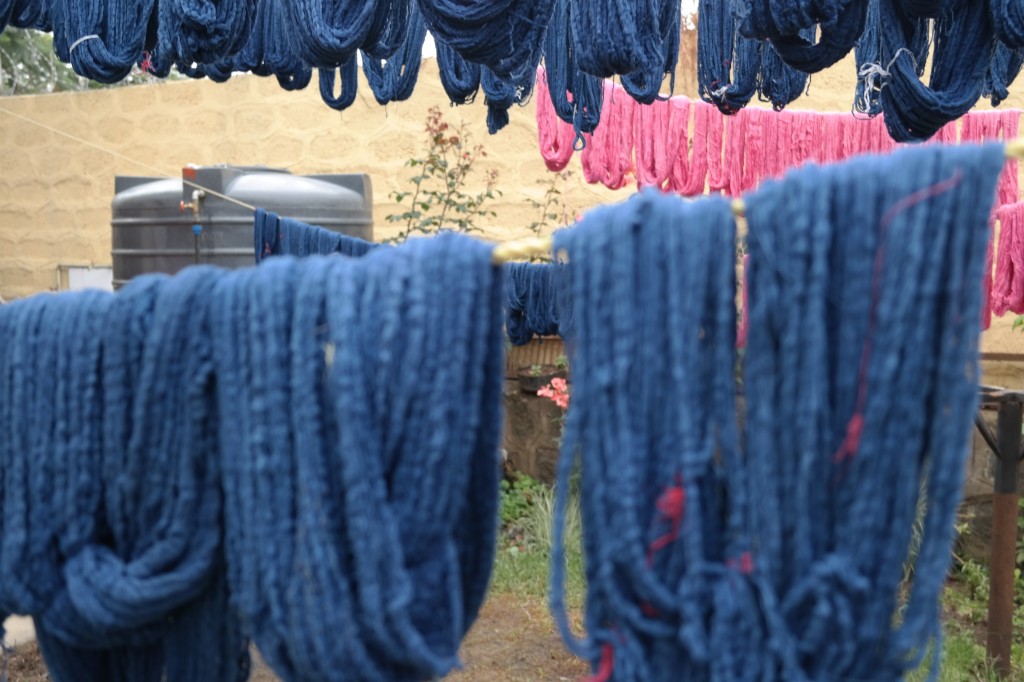
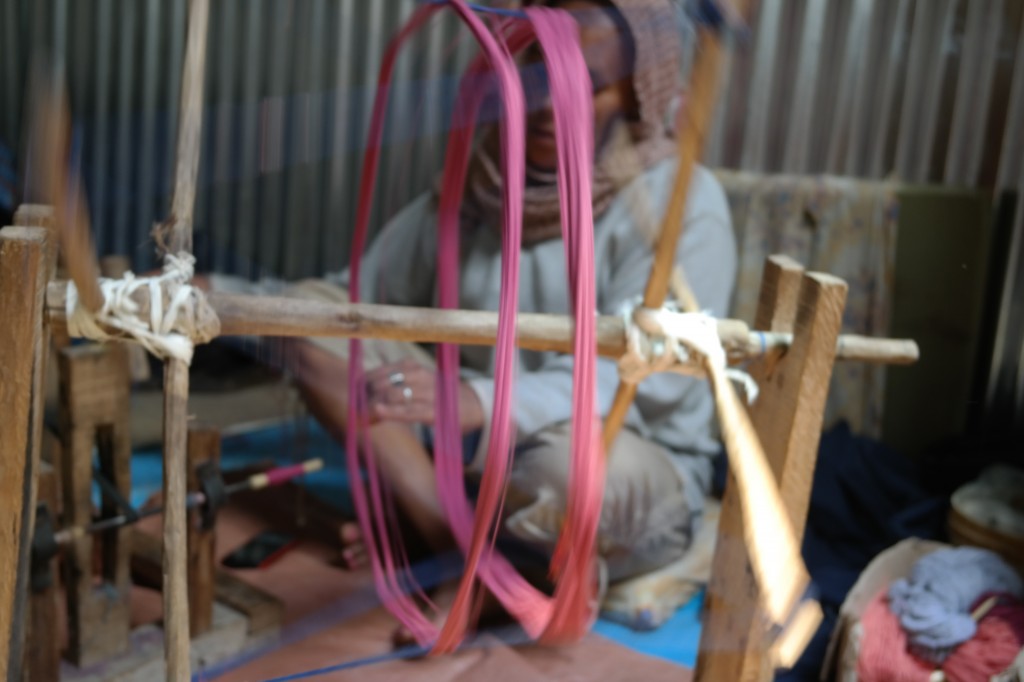
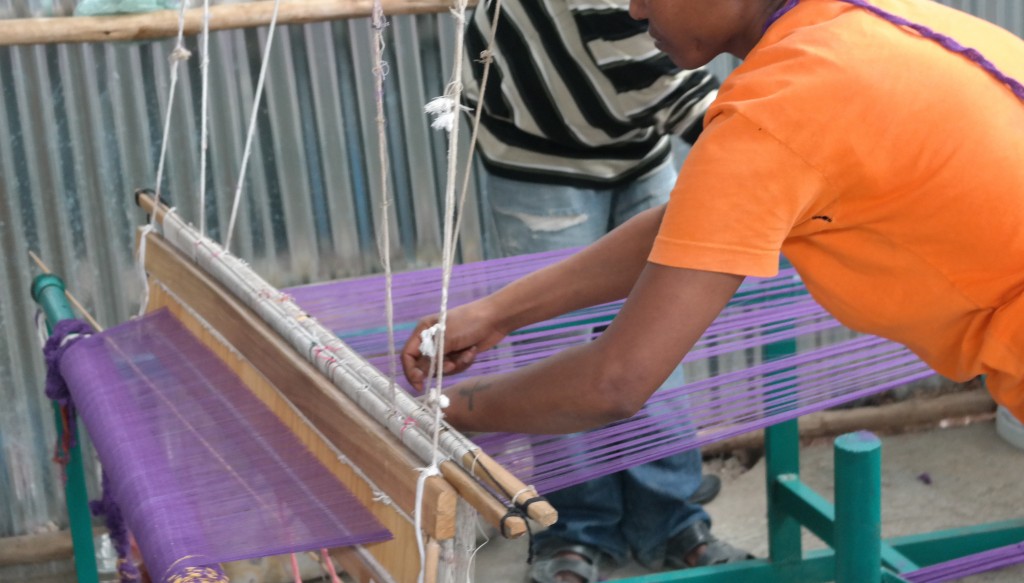
Here is how the process of transformation takes place
Raw Cotton
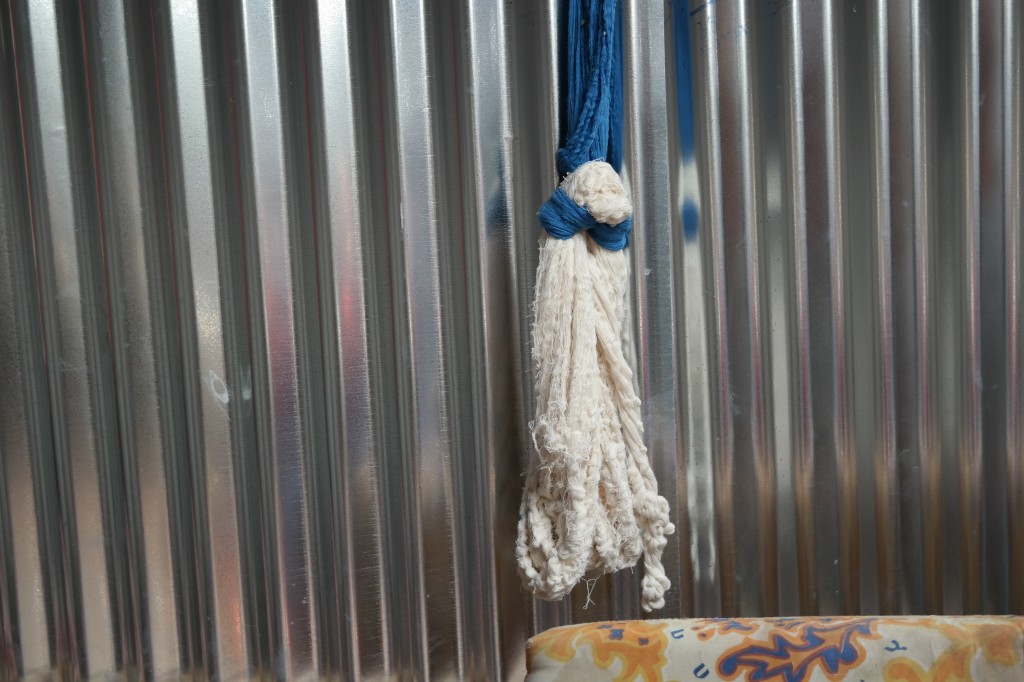
Colorful Dye
Dried In The Sun
Spun
Then Woven Into the Beautiful Creations They Become
This is an original post written by Elizabeth Atalay of Documama for World Moms Blog
Elizabeth Atalay and Nicole Melancon were in Ethiopia with The International Reporting Project #EthiopiaNewborns New Media Fellowship reporting on newborn health.
Elizabeth Atalay is a Digital Media Producer, Managing Editor at World Moms Network, and a Social Media Manager. She was a 2015 United Nations Foundation Social Good Fellow, and traveled to Ethiopia as an International Reporting Project New Media Fellow to report on newborn health in 2014. On her personal blog, Documama.org, she uses digital media as a new medium for her background as a documentarian. After having worked on Feature Films and Television series for FOX, NBC, MGM, Columbia Pictures, Warner Brothers, 20th Century Fox, and Castle Rock Pictures, she studied documentary filmmaking and anthropology earning a Masters degree in Media Studies from The New School in New York. Since becoming a Digital Media Producer she has worked on social media campaigns for non-profits such as Save The Children, WaterAid, ONE.org, UNICEF, United Nations Foundation, Edesia, World Pulse, American Heart Association, and The Gates Foundation. Her writing has also been featured on ONE.org, Johnson & Johnson’s BabyCenter.com, EnoughProject.org, GaviAlliance.org, and Worldmomsnetwork.com. Elizabeth has traveled to 70 countries around the world, most recently to Haiti with Artisan Business Network to visit artisans in partnership with Macy’s Heart of Haiti line, which provides sustainable income to Haitian artisans. Elizabeth lives in New England with her husband and four children.
More Posts

by Cindy Levin | Jul 1, 2014 | 2014, Economy, World Bank, World Interviews, World Voice
What is the World Bank and what does it do? If you ask an average American, you’ll likely get a blank stare or a wild guess. “Is it like when we played Monopoly as kids and one person got to hand out all the money?” quipped Mackenzie Astin on Vox Populi Radio recently when host Sean Astin tried to explain it to him. “It’s probably where all the countries keep their money,” said my 8-year-old to her sister. Whatever the answer, you’ll usually not hear “they fight poverty” as a first guess, but that’s exactly the key to what an everyday person should know about the World Bank.
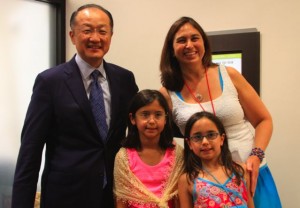
While attending the 2014 RESULTS International Conference in June, my daughters and I had a chance to meet World Bank President Dr. Jim Yong Kim moments before he took the stage for an interview in front of hundreds of RESULTS volunteer activists who work every day to end poverty. While we awaited his arrival, I had time to reflect on the role of this man and the World Bank on what kind of world my kids will inherit from my generation.
The World Bank is a United Nations financial institution that provides loans to developing countries. Yet it’s not a bank in the ordinary sense. It’s a partnership that exists to reduce poverty and support development of impoverished nations. Imagine that…a bank with a mission to fight poverty! It provides low-interest loans, interest-free credits, and grants to developing countries to fund programs like education, health, agriculture, and environmental resource management. Where does the money come from? Donor countries, banks, multilateral institutions, and private sector investors all contribute to this vital source of financial and technical assistance to developing countries around the world.
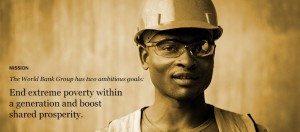
Dr. Kim’s audience cheered wildly that day, holding signs saying “We love the World Bank” because they knew he was going to re-assert the World Bank’s mission end extreme poverty by the year 2030. In fact, the World Bank has set two goals for the world to achieve in that time:
1. End extreme poverty by decreasing the percentage of people living on less than $1.25 a day to no more than 3%
2. Promote shared prosperity by fostering the income growth of the bottom 40% for every country
Wow. That’s only 14 years from now. In 2030, my 10-year-old will be 26 years old. Is it possible that in their adulthood, my children could live in a world without extreme poverty? Will they actually have to explain to their children what it was like when millions of people struggled to live on less than $1.25 a day because that kind of suffering won’t be found on the news?
Dr. Kim spoke of his belief that we should focus on the moral imperative to end poverty and shoot for big goals even before we precisely know how to get there. He said our attitude should be “balancing between moral reasoning and the humility that we may not have everything together…but going for it anyway because it’s the right thing to do.” Helping to save lives and educate children is a goal in itself. Plus, evidence for economic benefit of poverty elimination has now caught up with the ethics. For instance, 24% of economic growth is due to better health outcomes. We also now have evidence to show that education is not just nice to have…it’s necessary for growth. So, we should not be afraid to set the incredible goal and then work backward and say, “To achieve our goal, what kind of organization do we need to be to meet that?”
Is Dr. Kim an idealist? Yes, I do think so, but he’s an idealist in the very best way. He has a grand vision of what is possible coupled with a practical leadership style revealed in his insistence on “results based financing.” He wants the World Bank to focus on impact on the ground rather than getting money. When we can report incredible results like a neo-natal mortality drop in Argentina of 74%, donors witness what is possible and invest more.
The path Dr. Kim describes toward the end of extreme poverty is in no way easy. For one thing, it requires confronting the status quo and our assumptions about what works. We need to ask tough questions of organizations providing services, like, “Are you where the poor people are? Are your clinics convenient for you or for the people in poverty who you serve?” The World Bank has a critical role to measure and release regular data about poverty using sophisticated techniques so that we can make great decisions, inspire more funding, and get great results.
In summary, he concluded for us,
“We are not a hard-hearted organization just focused on increased GDP. We are dedicated to ending poverty and making sure that everyone participates.”
All in all, I feel extremely lucky. I feel lucky that I had a chance to meet a man of such vision. I feel lucky that as an advocate for global health and education in this era, I – personally – have a role in bringing about the end of extreme poverty. But most of all, I feel very hopeful and fortunate that if we work together with leaders like Dr. Kim, my daughters will see the end of extreme poverty within their lifetimes and millions more mothers will see their babies grow to be as strong and healthy as mine.
This is an original post written by Cindy Levin for World Moms Blog.
Cynthia Changyit Levin is a mother, advocate, speaker, and author of the upcoming book “From Changing Diapers to Changing the World: Why Moms Make Great Advocates and How to Get Started.” A rare breed of non-partisan activist who works across a variety of issues, she coaches volunteers of all ages to build productive relationships with members of Congress. She advocated side-by-side with her two children from their toddler to teen years and crafted a new approach to advocacy based upon her strengths as a mother. Cynthia’s writing and work have appeared in The New York Times, The Financial Times, the Washington Post, and many other national and regional publications. She received the 2021 Cameron Duncan Media Award from RESULTS Educational Fund for her citizen journalism on poverty issues. When she’s not changing the world, Cynthia is usually curled up reading sci-fi/fantasy novels or comic books in which someone else is saving the world.
More Posts - Website
Follow Me: