by Nancy Sumari | May 28, 2014 | 2014, Africa, Awareness, Home, Humanitarian, Nancy Sumari, Social Equality, World Moms Blog, World Motherhood, World Voice
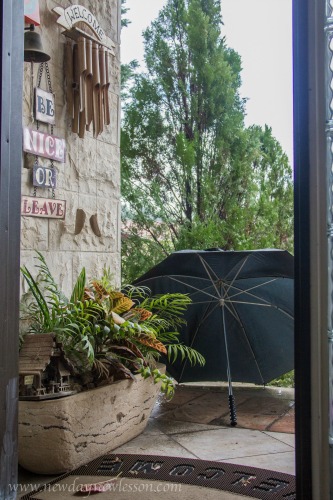
I was recently asked to be a part of the upcoming UNHCR World Refugee Day in my country. I was asked to put literally myself in the shoes of those individuals who have been forced out of their homes and countries, due primarily to conflicts. I was then invited to contribute my thoughts and feelings through a document that would be shared at a gathering on World Refugee Day.
As a mother, I feel that our primal instinct is to protect and nurture, but protection and nurturing that is coupled with nesting. To many of us, a nest may initially bring a picture of “a little bird and a couple of eggs” to mind but in my opinion, a nest brings to mind home. It means having a center, a base, headquarters, in short somewhere to come back to.
That got me thinking. What does this four-letter word, HOME, really mean? To some, not much, because for them it’s something easily taken for granted. To others, it’s a base. A place where you shower, change, nap and get back out there. But, for a lot of people, it’s a residence, it’s family, it’s dignity, it’s freedom. Most importantly, it’s where the heart is. I probably can’t even count the amount of times that I’ve walked in and out of my home, the amount of time I’ve spent time in my home just hiding away from the world in a safe and comforting haven. A lot of those times, I have not really sat and looked around to soak it in and really see what it all means, and certainly not for me, but for my family, until now.
The thought of the loss of this base, this center, a center that helps us be centered, truly breaks my heart. So here I am, thinking about the 5 million people in Tanzania who are currently refugees without ‘A Home’. My heart breaks to think about what that means for the 48% of refugees who are children. I am empathizing with them but also in awe of them all. In awe of their strength. In awe of their resilience.
I wish for a day when every person in this world will have a physical home to house the home each of us carries with us in our hearts.
What does home mean for you?
This is an original post by Nancy Sumari from Tanzania. You can find more of her writing at Mama Zuri.
Photo Credit to Susie Newday.

by World Moms Blog | May 20, 2014 | 2014, Awareness, Girls, Government, Human Rights, Humanitarian, International, Social Good, Social Media, World Moms Blog
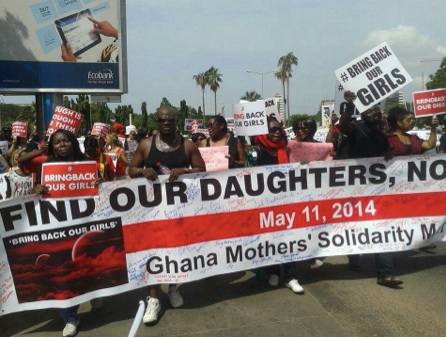
As a mother, it is really hard to see other mothers go through certain challenges. I think it’s in me to be supportive in whichever way that I can when there is something I can do about a situation….like the hundreds of Nigerian schoolgirls who have been kidnapped; I marched to show my support on Mother’s Day.
Every mother’s dream is to see her children have the best in life, which includes education. A famous quote by renowned Ghanaian educationist Dr James Kwegir-Aggrey is:
“if you educate a man you educate an individual, but if you educate a woman you educate a whole nation”
This describes the power of educating young girls. It is every girl’s right and boys too to have an education but when these dreams are shattered it becomes a concern to all. Everyone knows the power of education, and it is evident that when a child is educated, he or she is set on the path to greatness.
‘Education is the most powerful weapon which you can use to change the world’- Nelson Mandela.
Taking these girls away from school is like taking them away from their paths to greatness. We hope and pray that they are returned safely to their families. This is why mothers of Ghana joined the campaign to #BringBackOurGirls on this past Mother’s Day in Accra. It was a solidarity march to present a petition to the Nigerian high commissioner in Ghana organised by Yasmeen. A mother herself, she is a songstress with a golden voice and a concerned citizen of our continent Africa. You can listen to her here .
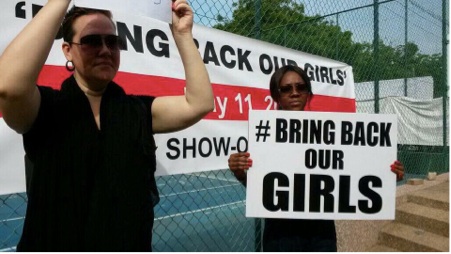
Mother’s Day is no fun if you know that another mother is grieving over her lost child. This was a great initiative by a group who care to march in solidarity in support of the kidnapped Nigerian school girls of Chibok. I saw the post on twitter and immediately wanted to be a part of this great cause. Thank you Yasmin for organising this!
It was an experience for both the young and the old as the children and babies were not left out. There were placards for everyone with ‘Bring Back Our Girls’ boldly inscribed on them. The media was present to cover the event, and the police were also there to ensure the safety of all who came for the walk.
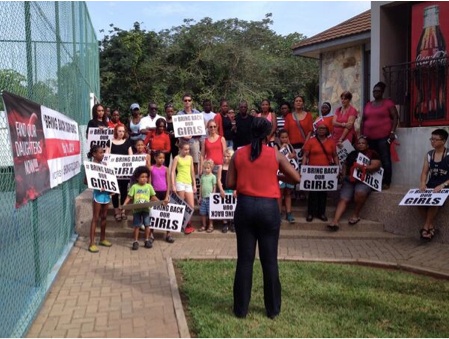
Almost everyone who came wore black and red to signify solemnity. Signatures were also appended on a banner which was later presented to the high commissioner. The walk was through some parts of the capital city of Ghana to the Nigerian High commissioner’s residence. It was such a solemn march and the support was so immense. As mothers everywhere are celebrated this month, let us not forget the ones who are heartbroken over their missing girls.
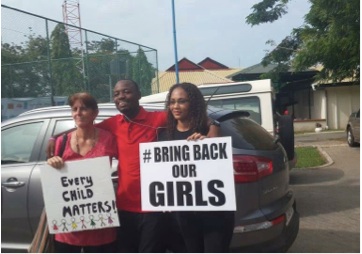
My heart aches each time I think of these girls or see a post about #BringBackOurGirls. We will not relent but continue to pray for the safety of the girls, their families and especially their mothers!
This is an original post written by Adwoa Gyimah of Ghana for World Moms Blog. Photo credits: Adwoa Gyimah
What more can we do to #BringBackOurGirls !?
World Moms Blog is an award winning website which writes from over 30 countries on the topics of motherhood, culture, human rights and social good. Over 70 international contributors share their stories from around the globe, bonded by the common thread of motherhood and wanting a better world for their children.
World Moms Blog was listed by Forbes Woman as one of the "Best 100 Websites for Women 2012 & 2013" and also called a "must read" by the NY Times Motherlode in 2013. Our Senior Editor in India, Purnima Ramakrishnan, was awarded the BlogHer International Activist Award in 2013.
More Posts

by Elizabeth Atalay | May 13, 2014 | 2014, Economy, Education, Environment, Ethiopia, Girls, Government, Health, Human Rights, Humanitarian, International, Maternal Health, Natural Disaster, Poverty, Social Good, Vaccines, World Moms Blog
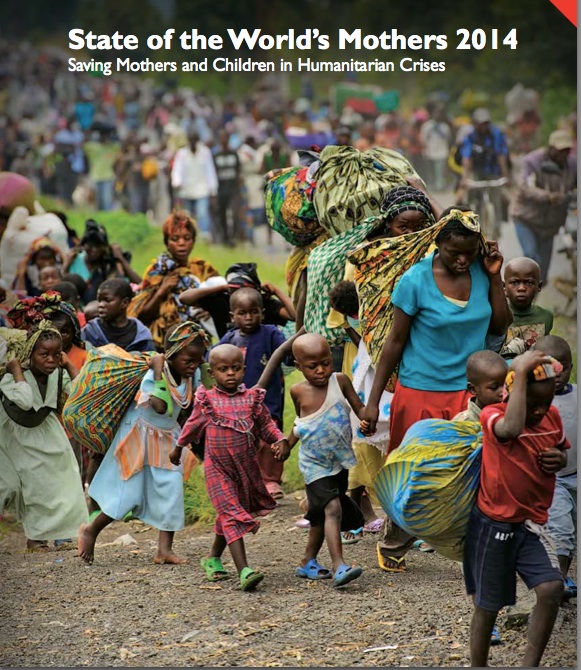
State of the Worlds Mothers Report Cover Photo By Phil Moore
The 15th annual State of the World’s Mothers Report was released last week by Save The Children, just in time for Mother’s Day, and World Moms Blog was there at the launch. The focus of the 2014 report is on saving mothers in humanitarian crisis, and the launch of the report in New York City was co-hosted by the Permanent Mission of the Philippines to the United Nations. In his welcome address to the room Permanent Representative H.E. Mr. Libran Cabactulan of the UN Mission of the Philippines acknowledged from first hand experience, that women and children suffer the most in crisis situations.
The report notes that worldwide women and children are up to 14 times more likely than men to die in disaster. In fact it is no surprise that also according to the report more than half of all maternal and child deaths world-wide take place in countries suffering conflict or natural disasters. As Werner Obermeyer, Deputy to the Executive Director of the WHO office to the UN stated, It is not the armed component in conflicts we are worried about, it’s those who are suffering from the armed component.
The purpose of the annual report is to further the mission of Save The Children in protecting the worlds most vulnerable mothers and children. The State of the World’s Mothers report does so by highlighting where we are failing, what effective solutions need to be put in place, and recommended policy changes towards progress. Despite the fact that 80% of the countries are not on target for achieving MDG 4 and 5, maternal and child health goals, the extreme progress seen in other countries previously failing, tells us that it is possible.
Ethiopia for example has reduced its risk of maternal death more than any other African country, by nearly two-thirds. H.E. Mr. Tekeda Alemu of Ethiopia stated that the progress there was due to a well crafted policy based on the participation of people on the local level. 48,000 health extension workers were fanned out throughout the country to mobilize women volunteers in what they called the Women’s Development Army to reach remote villages. Afghanistan has also cut maternal death rates by 60-70 percent, moving up 32 places on the Mothers’ Index Rankings of the best and worst countries in which to give birth. This proves that the combined investment of minds and funding works. If these countries with terrible track records have been able to make such significant improvements, there is no reason we can not see this type of progress universally with proper programs and support.
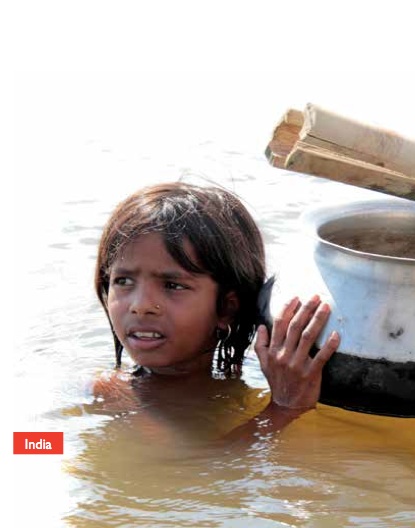
Photo Credit: Save The Children
Climate change is the wild card that threatens even the countries that have made the most progress in maternal and child health. Climate related disasters and extreme weather are factors that can cause severe set backs in development.
The recommendations of the report call for a collaboration between governments, donor countries, international organizations, private sector and civil society to take responsibility, and each do their part to ensure mothers, and children in crisis situations have the best chance to survive, and thrive. Here is what we need to do:
1. Ensure that every mother and newborn living in crisis has access to high quality health care
2. Invest in women and girls and ensure their protection
3. Build longer term resilience to minimize the damaging effects of crises on health.
4. Design emergency interventions with a longer term view and the specific needs of mothers and newborns in mind.
5. Ensure political engagement and adequate financing, coordination and research around maternal and newborn health in crisis settings.
Save The children’s 15th annual State of the Worlds Mothers report comes at a pivotal moment in history, when humanitarian crises have focused a spotlight like never before on the needs of mothers and children who are struggling to survive. With record numbers of people displaced by war and conflict and increasingly severe natural disasters causing unspeakable destruction, it is clear we must do more to help the worlds poorest and most vulnerable families. We must give mothers the support they need to keep their children safe and healthy, even in the darkest times. -Carolyn Miles, President and CEO of Save The Children USA
You can read the State of the Worlds Mothers report in full here. See where your country falls on the Mothers’ Index Rankings here.
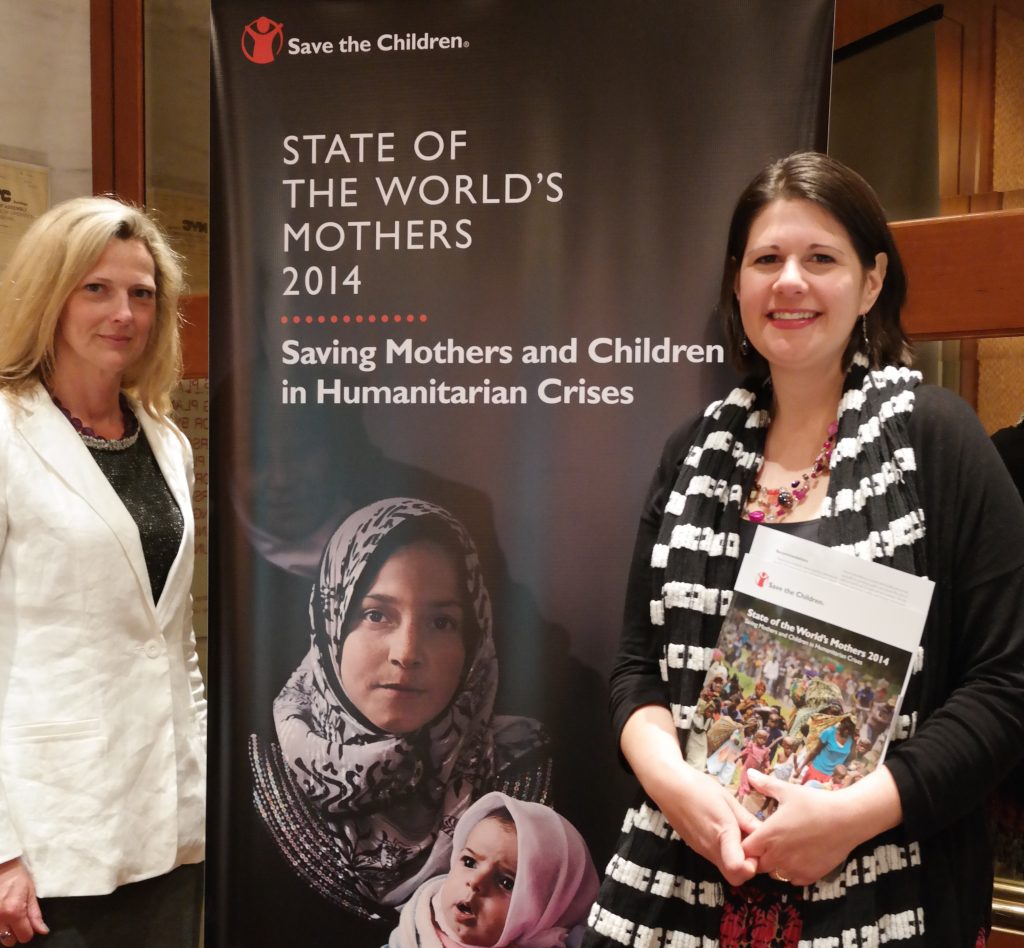
World Moms Blog Founder Jennifer Burden and Senior Editor Elizabeth Atalay at the State of the Worlds Mothers report launch in NYC.
This is an original post written for World Moms Blog by Elizabeth Atalay of Documama.

Elizabeth Atalay is a Digital Media Producer, Managing Editor at World Moms Network, and a Social Media Manager. She was a 2015 United Nations Foundation Social Good Fellow, and traveled to Ethiopia as an International Reporting Project New Media Fellow to report on newborn health in 2014. On her personal blog, Documama.org, she uses digital media as a new medium for her background as a documentarian. After having worked on Feature Films and Television series for FOX, NBC, MGM, Columbia Pictures, Warner Brothers, 20th Century Fox, and Castle Rock Pictures, she studied documentary filmmaking and anthropology earning a Masters degree in Media Studies from The New School in New York. Since becoming a Digital Media Producer she has worked on social media campaigns for non-profits such as Save The Children, WaterAid, ONE.org, UNICEF, United Nations Foundation, Edesia, World Pulse, American Heart Association, and The Gates Foundation. Her writing has also been featured on ONE.org, Johnson & Johnson’s BabyCenter.com, EnoughProject.org, GaviAlliance.org, and Worldmomsnetwork.com. Elizabeth has traveled to 70 countries around the world, most recently to Haiti with Artisan Business Network to visit artisans in partnership with Macy’s Heart of Haiti line, which provides sustainable income to Haitian artisans. Elizabeth lives in New England with her husband and four children.
More Posts

by World Moms Blog | May 10, 2014 | 2014, Education, Girls, Government, Human Rights, Humanitarian, International, Nigeria, School, Social Equality, Social Good, Social Media, Women's Rights, World Moms Blog
Abducted. Scared. Abused.
Sold.
That’s the likely fate 276 girls are facing, taken from their schools in the remote reaches of north-eastern Nigeria by the terrorist group Boko Haram. It’s been over three weeks since this started. We don’t what’s happening to them and we all fear the worst.
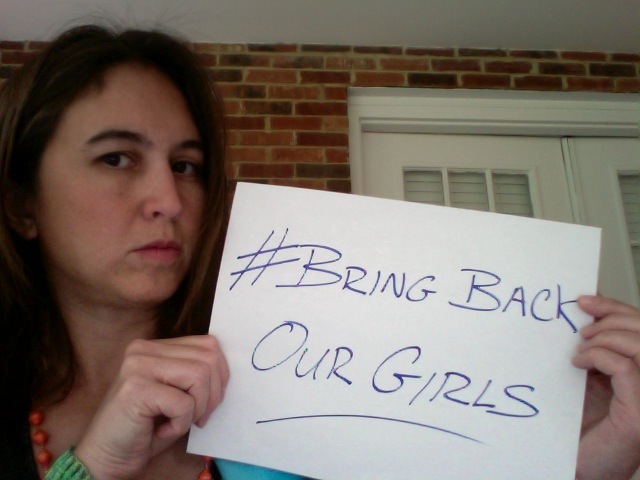
We’re sickened. We’re outraged. We also have no idea what to do. So, we’re doing what Americans tend to do. We’re taking selfies of ourselves with the #BringBackOurGirls hashtag. We’re tweeting. We’re posting facebook rants. In the lack of anything else to do, we’re signing online petitions by the thousands to make the world pay attention.
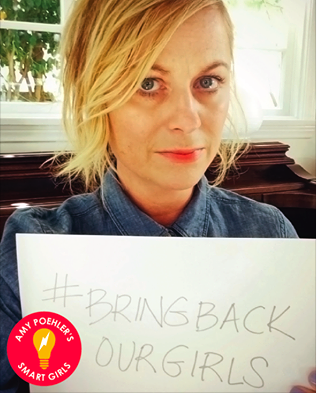
I’m not saying this these are bad actions to take. No! I signed the petition myself. I tweeted #BringBackOurGirls. I liked and shared Amy Poehler’s Smart Girl posts on facebook to help focus the national conversation on them. I was thrilled to hear that the U.S. is sending support and I believe social media was a part of that. But after I did those things, I was still sickened. Still outraged. I still didn’t know what to do.
And then I thought of this girl.
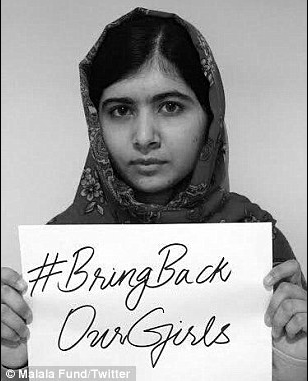
Malala Yousafzai. A Pakistani girl shot in the head by the Taliban at the age of 15 who still fights daily for girls’ education knows a little something about this issue, don’t you think? She has said, “The extremists are afraid of books and pens, the power of education frightens them. They are afraid of women.”
Then, let those men be afraid of me. I am even more dangerous than a schoolgirl with a pen. I’m an educated mother with a laptop. And I’m not just coming after them. I’m coming after their whole oppressive way of life.
The welfare of the kidnapped girls rests in someone else’s hands in the short term, but I advocate against poverty and injustice with an eye for the long term. While we wait and we pray for these girls, shouldn’t we be using this anger and anguish to secure a future for all girls coming after them?
If all children were in school as a normal matter of course, then schools with girls would cease to be obvious targets. That fundamental paradigm shift would be more effective than sending a SEAL Team in to get the girls (even though that is what I dearly want to happen right now) because educated and empowered girls become mothers who raise enlightened sons.
Here’s another Malala quote:
“Our men think earning money and ordering around others is where power lies. They don’t think power is in the hands of the woman who takes care of everyone all day long, and gives birth to their children.” But the men are wrong. Indeed, the hand that rocks the cradle rules the world.
So, what concrete actions can we – as Americans – take right now to hasten this reality? We can start by demanding that our U.S. Representatives pass the Education for All Act (H.R. 2780), which specifically calls out victims of human trafficking as some of the most vulnerable children to help. We can also call on them to sign U.S. Representative Jan Schakowksy’s letter to the Obama administration to fund $250 million over 2 years to the Global Partnership for Education, which aims to raise $3.5 billion from donor governments at a pledging conference this June. With $3.5 billion invested by donors, the Global Partnership can secure an additional $16 billion from developing country governments. By 2018, that investment can support quality education for 29 million children, largely in fragile and conflict-affected states.
As badly as we need the #BringBackOurGirls social media awareness today for the 276 girls we keep vigil for, these two steps are even more needed in the long run to help millions of other girls at risk now and in the future.
So, after you’ve tweeted and posted your selfie on facebook, do not stop there. Click on these links to contact your U.S. Representative about the Education for All Act and the Global Parntership for Education. Tell them that girls are showing incredible courage just to go to school, and the U.S. should support them. Educating all girls and boys will create a world where kidnapping and selling students is not acceptable in any culture on the planet.
This is an original Post for World Moms Blog by Post by Cindy Changyit Levin who writes the Anti-Poverty Mom blog and is volunteer advocate for RESULTS, Shot@Life and the ONE Campaign. She can also be found on twitter @ccylevin.
Are you ready to take action?
World Moms Blog is an award winning website which writes from over 30 countries on the topics of motherhood, culture, human rights and social good. Over 70 international contributors share their stories from around the globe, bonded by the common thread of motherhood and wanting a better world for their children.
World Moms Blog was listed by Forbes Woman as one of the "Best 100 Websites for Women 2012 & 2013" and also called a "must read" by the NY Times Motherlode in 2013. Our Senior Editor in India, Purnima Ramakrishnan, was awarded the BlogHer International Activist Award in 2013.
More Posts
by Jill | May 7, 2014 | 2014, Africa, Bilingual, Multicultural, Philanthropy, World Moms Blog, World Motherhood
Bilingual people are lucky. Not just in all of the usual brain-expanding ways, but because they have options.
Sometimes, English just doesn’t cut it, and I wish I could effortlessly sort through my mental rolodex for a more helpful way to express myself. Code-switching, or flipping back and forth between languages in a single sentence or conversation, is something common to bilingual people, big and small.
My bilingual four-year-old just did it about five times in the last two minutes:
These are my favorite chausseurs.
I can danse très bien avec these.
Mon ami à l’école doesn’t like them.
Je veux…ummm…I want le marqueur to make le dessin!
You don’t even have to be truly bilingual to reap the benefits. Jacomine, from Multilingual Living, gives this example: “When I talk with an [Arabic speaker] in the Netherlands, we might both use Dutch and I might sometimes use some Arabic words in order to identify myself as a person who knows some Arabic, even though my Arabic is very poor. Code-switching is a powerful tool for identification.”
That’s more my style, because while I wish I was a “balanced bilingual,” it will never be so. I can function in French and Spanish, but I think and dream in English. Unfortunately, I’m stereotypically American in my relative monolingualism. However, after three years in Congo, there are several French phrases I appreciate for their descriptive power. I will share three of them, but with the disclaimer that I may have invented my own understandings in the midst of my adult-language-learner’s fog. I also acquired all of my French in Africa, not France. Apologies, and please feel free to laugh.
#1: On est là.
This phrase sort-of-literally means “we are here.” I hear it a lot around Kinshasa, usually from people who want you to be extra aware of their presence and help. I like it because it feels more subtle than “at your service,” but still demands a certain degree of recognition. It seems like a way to point out that you are offering time, skills or attention that deserves appreciation. I’ve been thinking about this a lot after reading The Confidence Gap last week. Women of the world: on est la!
#2: Ça va un peu.
Sometimes you just aren’t okay, and it’s fine to say so. I say, “Ça va?”, about fifty times a day. The conversation often goes like this:
Jill: Ça va?
Other person: Ça va un peu… (“I’m a little okay…”)
Jill: Ohh? Pourquoi?
Other person: (long story about worries, illness or other trouble)
When I ask someone if they are okay in English, the response 99% of the time is, “I’m fine”. In French, although I sometimes I dread the explanation, I believe in the opportunity to truly express yourself. I find that I’ve been embracing emotional honesty more often au français.
#3: Bon courage!
This is an important one. I can’t think of a way to tell someone in English with equal sincerity and brevity to “take heart,” “be brave,” and “have godspeed” all at the same time. This simple phrase gets the job done neatly and concisely. People have said bon courage to me at some of my most tender moments; when my child was hospitalized, when I was facing a tough decision or when I felt tired and sad. Somehow, the phrase bon courage never seems trite.
I always think it would be the perfect thing to say to a woman in labor – somehow expressing, “You can do this, but you have to do it yourself. No one can help you, but you will be okay. Have courage.” All that in just two perfect words.
Some things just sound better in French.
What do you think? Can you think of any phrases in languages other than English that use less words to express so much more?
This is an original post written for World Moms Blog by Jill Humphrey. You can find Jill blogging with Sarah Sensamaust at Mama Congo.
Photo credits to the author.
by Elizabeth Atalay | Apr 29, 2014 | 2014, Health, Humanitarian, International, Social Good, Vaccines, World Moms Blog, World Voice
This week of April 24th through April 30th as we recognize World Immunization Week, the world is entering an exciting new phase. The upcoming expansion of vaccine programs will build on the momentum gained to this point against the most lethal killers of children in the world. Vaccine preventable diseases. According to GAVI Alliance 440 million children have been vaccinated since the year 2,000, saving around six million lives.
We now have a “historical opportunity to go even further and secure a healthy future for a generation of vaccinated children in developing countries, a generation that hold the keys to their countries’ futures.”- Dagfinn Høybråten, Chair of the GAVI Alliance
Each year this week serves to remind communities of the importance of vaccines and to spread the word that #VaccinesWork. Immunization has proven to be one of the best returns on investments in world health, yet one in five children will still die before their fifth birthday due to a vaccine preventable disease. According to GAVI Alliance there are still over 22 million kids who have little or no access to the vaccines that could save their lives. For those of us with access to vaccines the World Health Organization is promoting the campaign tag line to “Immunize for a healthy future – Know. Check. Protect.” By making sure that you and your family are up to date on all vaccines, everyone is given the best chance for a healthy future.
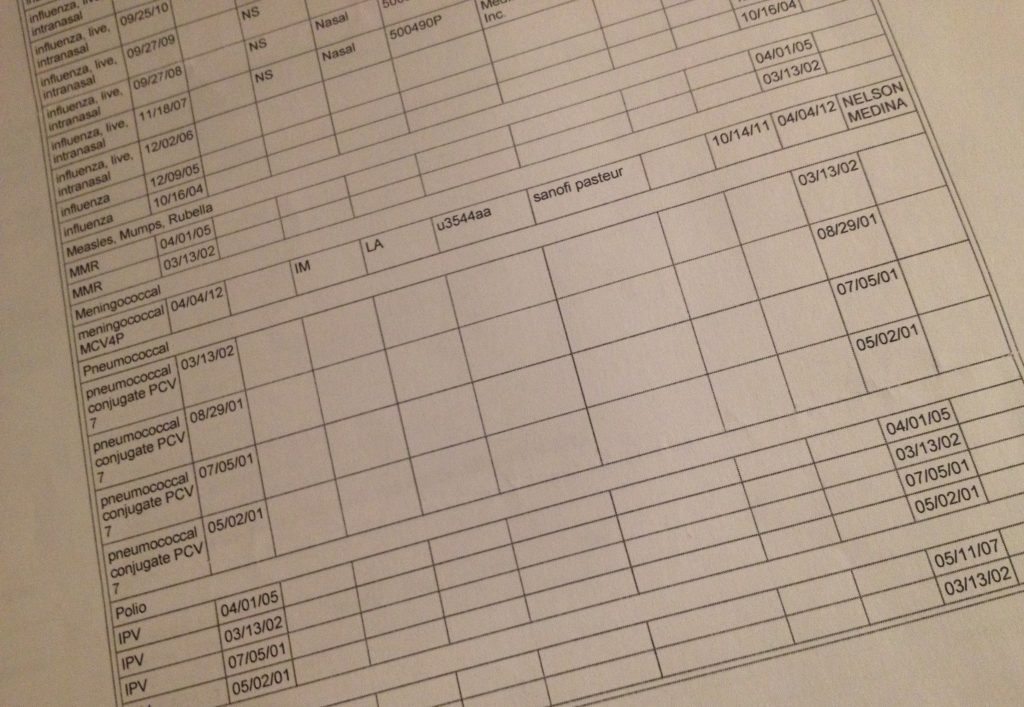
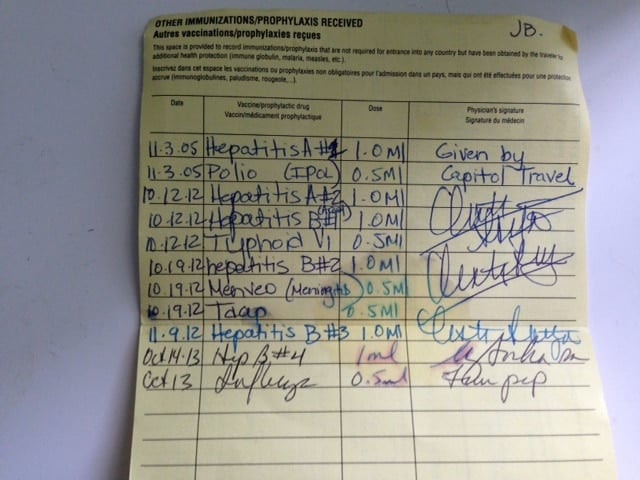
Vaccine cards have been around for a long time to help families stay on track. These days new methods and technologies are being put into play like the new mobile phone app by the WHO, or the bracelet reminders for the babies to wear in South America being developed by Alma Sana. No matter what the method used, keeping track of immunization schedules is an important part of ensuring good health.
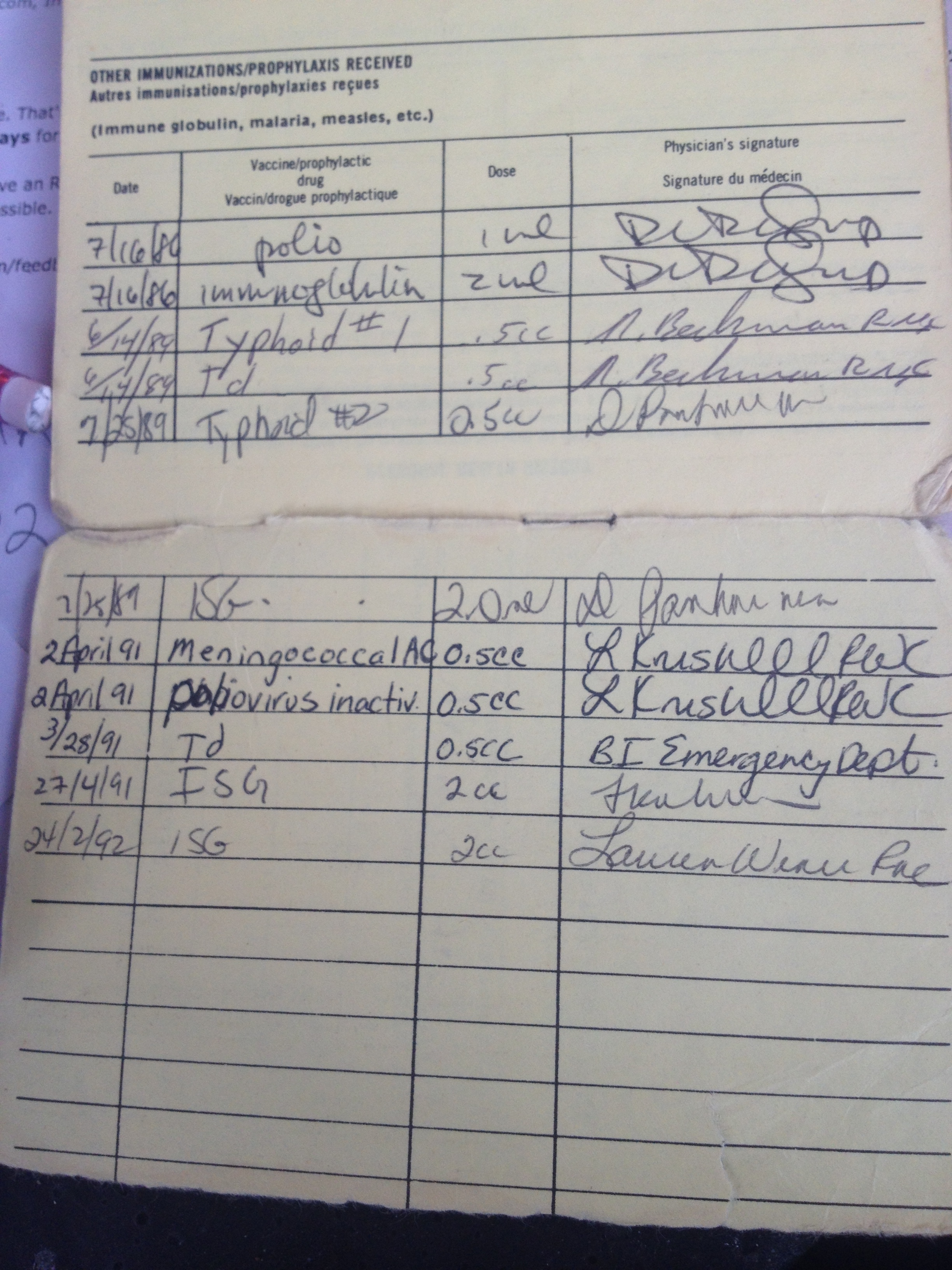
To highlight the importance of global vaccines the GAVI Alliance has shared a photo gallery of vaccine cards from around the world, so we decided to share some of our World Moms Vaccine Cards here for you too. We would love to see yours! If there is one thing we are here at World Moms Blog, it’s well vaccinated! Share your vaccine card with us by Tweeting to #VaccinesWork #RUuptodate #WorldVaxCards, and check out the story of immunisation cards around the world hosted on the BBC.
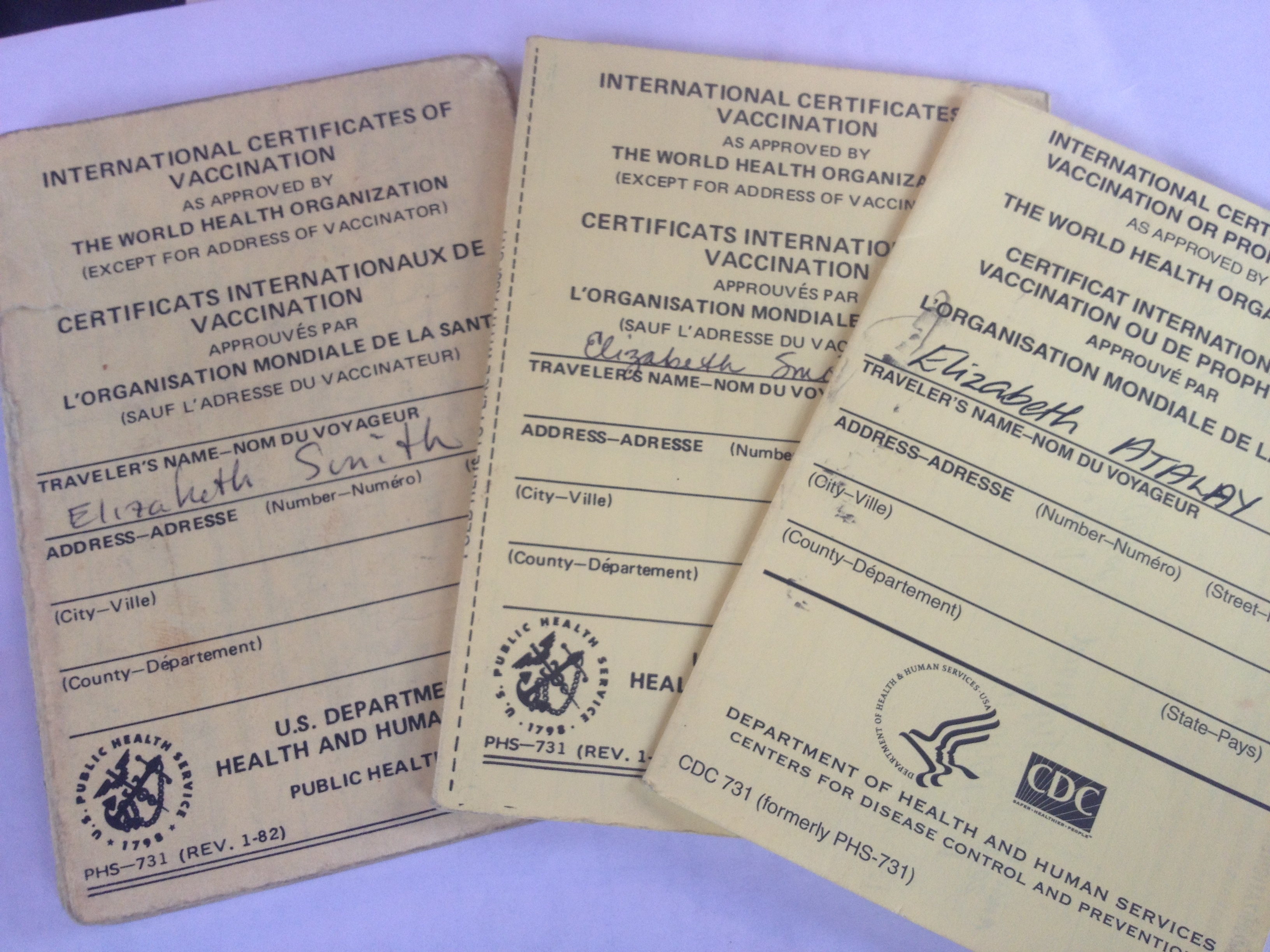
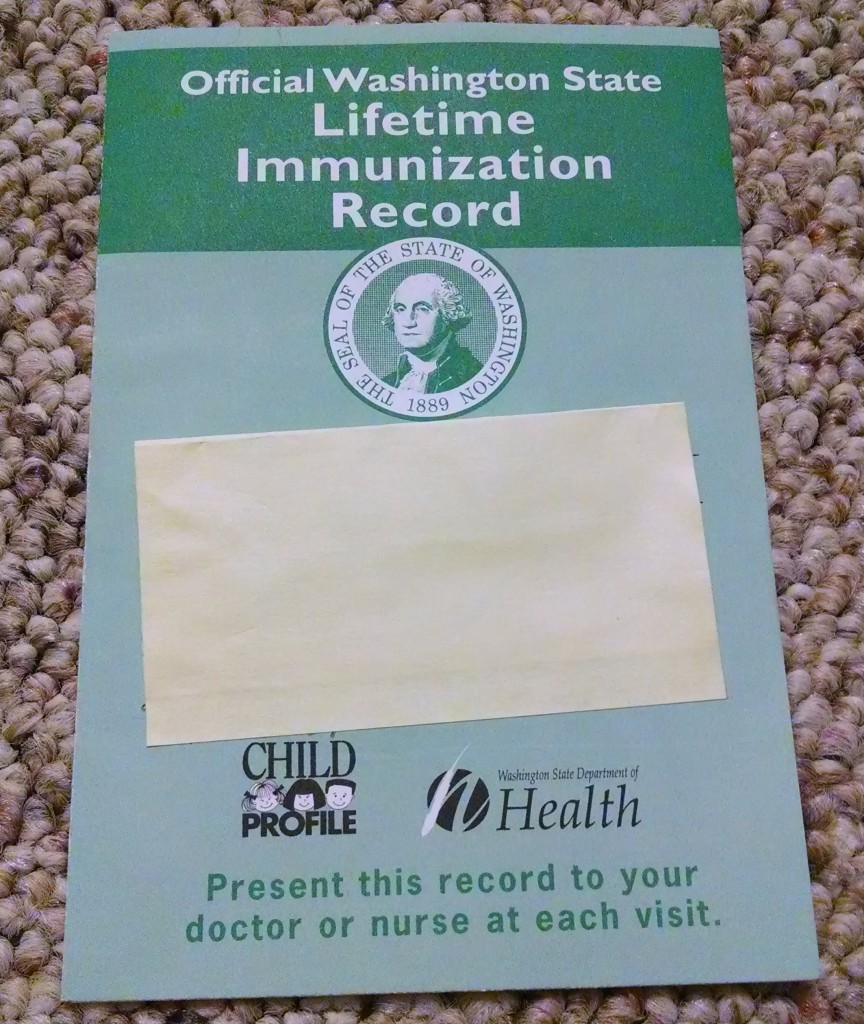
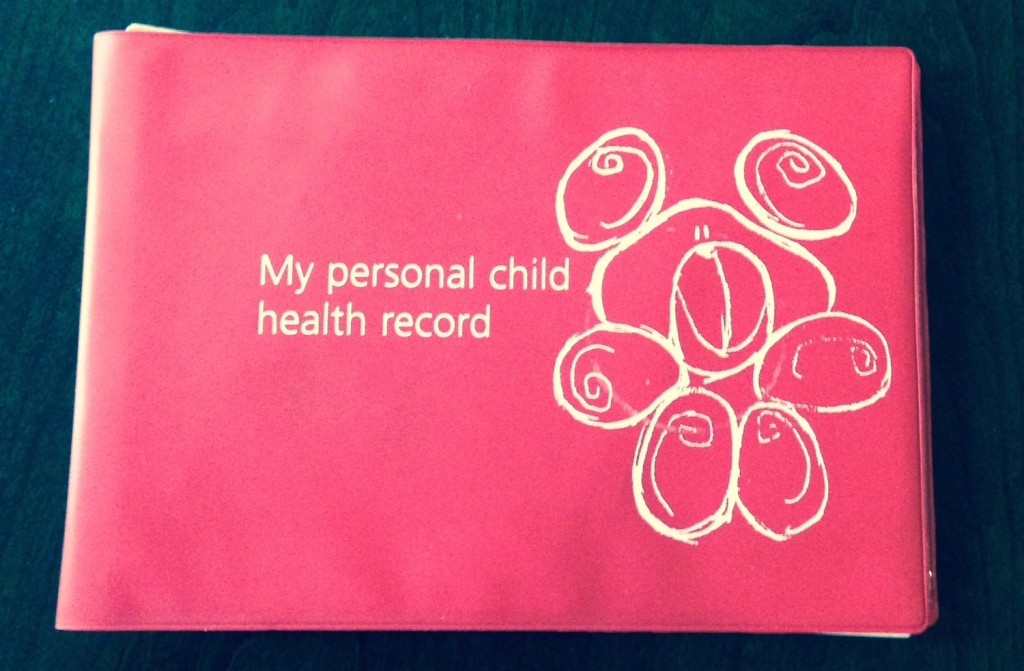
Do you have a vaccination card for you or your children? If you’d like to share it just tweet or post it to #VaccinesWork #RUuptodate #WorldVaxCards
This is an original post written for World Moms Blog by Elizabeth Atalay of Documama.org.
Elizabeth Atalay is a Digital Media Producer, Managing Editor at World Moms Network, and a Social Media Manager. She was a 2015 United Nations Foundation Social Good Fellow, and traveled to Ethiopia as an International Reporting Project New Media Fellow to report on newborn health in 2014. On her personal blog, Documama.org, she uses digital media as a new medium for her background as a documentarian. After having worked on Feature Films and Television series for FOX, NBC, MGM, Columbia Pictures, Warner Brothers, 20th Century Fox, and Castle Rock Pictures, she studied documentary filmmaking and anthropology earning a Masters degree in Media Studies from The New School in New York. Since becoming a Digital Media Producer she has worked on social media campaigns for non-profits such as Save The Children, WaterAid, ONE.org, UNICEF, United Nations Foundation, Edesia, World Pulse, American Heart Association, and The Gates Foundation. Her writing has also been featured on ONE.org, Johnson & Johnson’s BabyCenter.com, EnoughProject.org, GaviAlliance.org, and Worldmomsnetwork.com. Elizabeth has traveled to 70 countries around the world, most recently to Haiti with Artisan Business Network to visit artisans in partnership with Macy’s Heart of Haiti line, which provides sustainable income to Haitian artisans. Elizabeth lives in New England with her husband and four children.
More Posts