by Alison Fraser | Dec 2, 2013 | 2013, Africa, AIDS, Canada, Education, Girls, Human Rights, Humanitarian, Humanity, Inspirational, International, Kids, Life Lesson, ONE, Philanthropy, Poverty, Preschool, School, Social Good, Spirituality, Women's Rights, World Moms Blog, World Voice
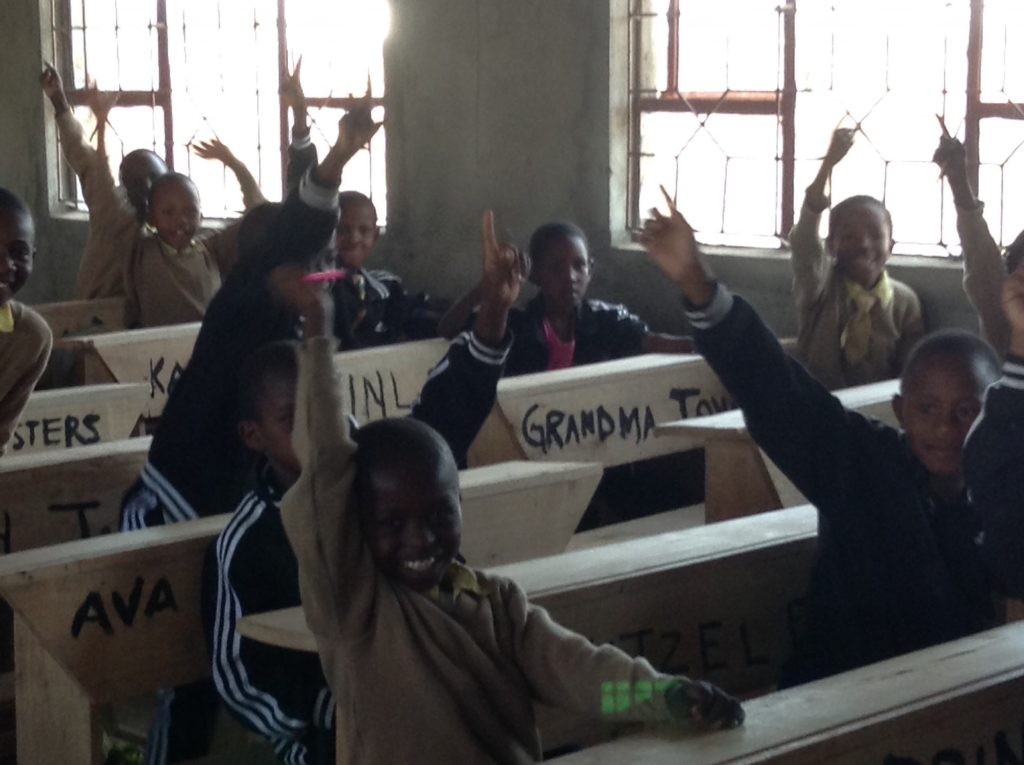
Photo by Alison Fraser
Anne Frank once said “No one has ever become poor by giving”. What a beautiful thought to keep in mind as we celebrate Giving Tuesday on December 3rd of this year. The act of giving can do wonders for a person’s spirit, soul and general well-being. Whether you give time, financial support, a lending hand, a listening ear or encouraging words, the act of giving is unique in that it often benefits the giver as much, or even more, than the receiver. This is something that I can attest to now more than ever before.
A few weeks ago, I visited Tanzania. I run a small Canadian Not for Profit Organization that works to fund the educational needs of women and children in and around Arusha. This was my first trip to Tanzania and the first time to meet all of the wonderful families that are involved in my organization. Helping these families has always made me feel good. I always felt like it was an equal partnership where I would provide financial assistance through fundraising in Canada and the Tanzanian women and children would allow me a glimpse into their life from afar. However, what I realized from spending ten days with these amazing people is that the partnership really isn’t equal at all. In fact, I truly believe that what I have received from these incredibly strong, spiritual, kind, compassionate and caring families is much more than what I have given them.
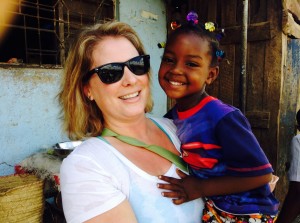
The author with a student in Tanzania.
Let me explain how the power of giving has changed my life. I donate countless hours of time to help those in the Mom2Mom Africa organization. Why? It makes me happy.
It fulfills me in ways that I can’t explain. I feel a sense of purpose, like I am making a difference, albeit very small, but nonetheless, a difference in the world. My charity work completes me and makes me feel like a whole person. I can’t explain why…it just does. But, the ten days that I spent in Tanzania last month, visiting families and spending time at the schools has changed my life forever. I have never experienced anything so powerful in all of my life. Yes, I gave up family time to spend in Tanzania and I gave up quite a bit financially to pay for the trip. But, NOTHING could prepare me for what I was given in return. My life has been changed by simply spending time with these families over the course of my time in Africa. They breathed fresh air and a new life into me by just being themselves. Their sense of community, their compassion towards one another, and their love of life despite many struggles has inspired me in ways that I still have yet to process and understand. The power of giving has never been more apparent to me. It can change lives. It has changed mine.
Today, on Giving Tuesday, I am begging you to give of yourself. Whether it be time, a lending hand or financial assistance…give.
Give to someone who may need your help, whether it be across the ocean or right in your backyard. What you will get back in return will outweigh what you have given. I can promise you that. Giving of oneself has the power to change the world in so many ways. It is reciprocal. What you put into giving, will come back to you in abundance.
That is the power of giving. Giving changes all lives involved. As Anne Frank also said, “How wonderful it is that nobody need wait a single moment before starting to improve the world”. So give. Change the world. You can do it. What may seem like a small act of giving can mean a world of difference to someone else.
On this Giving Tuesday, consider helping a family in Tanzania by purchasing a personalized desk for our schools, school uniforms, or school textbooks. You will bring a smile to the face of a child in Tanzania. And that, I guarantee, will bring a smile to your face, as well! Happy Giving Tuesday!
How do you plan to give back this Giving Tuesday?
This is an original post for World Moms Blog Written by Alison Fraser.
Alison Fraser is the mother of three young girls ranging in age from 5 to 9 years old. She lives with her family in Cambridge, Ontario, Canada. Alison works as an Environmental Toxicologist with a human environment consulting company and is an active member of the Society of Environmental Toxicology and Chemistry (SETAC). She is also the founder and director of the Canadian Not for Profit Organization, Mom2Mom Africa, which serves to fund the school fees of children and young women in rural Tanzania. Recently recognized and awarded a "Women of Waterloo Region" award, Alison is very involved in charitable events within her community including Christmas Toy and School Backpack Drives for the local foodbank.
More Posts - Website
Follow Me:


by Elizabeth Atalay | Nov 26, 2013 | 2013, Africa, AIDS, Health, ONE, World Events, World Moms Blog
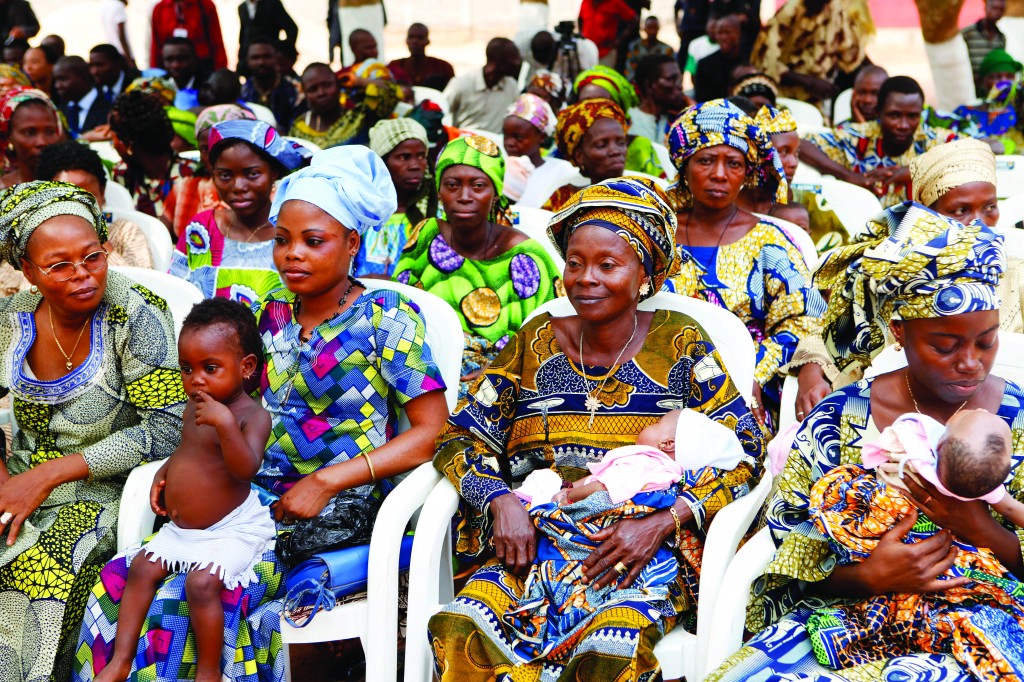
A community meeting of HIV-positive women who have benefitted from prevention of mother-to-child transmission (PMTCT) services and health counselors in Dangbo, Benin. Through the expanding availability of these services, it is now possible to imagine a generation of children being born free from HIV.- photo credit The Global Fund
Optimistic news was released today in the annual accountability report on AIDS by ONE. The highlight is that the sweeping statement “AIDS in Africa” has now become obsolete. African countries are shown in this new report to have made such widely varied progress in the fight against AIDS that the generalization of the continent as a whole no longer makes sense. At this point there are 16 countries in Sub-Saharan Africa that have reached the tipping point of being at the beginning of the end of AIDS. At the same time, other countries are still far behind in the struggle against the disease.
On the 25th World AIDS Day marked on December 1st of 2013, ONE’s new report on the global AIDS fight shows we are closing in on the tipping point.
According to ONE’s 2013 analysis: If current rates of acceleration continue, we could achieve the beginning of the end of AIDS – when the number of people newly added to treatment surpasses the number newly infected with HIV by 2015
Ironically, the AIDS fight has lost some political momentum because of its many successes. Because it is no longer perceived as a global health emergency, but rather a chronic and manageable disease, the fight has lost some of its political momentum. Along with the financial commitment, political leadership at the national and local levels has proved to be essential in driving real gains across the continent.
The three key targets outlined in the report where world leaders should focus significant attention in order to make headway against the disease are:
- The virtual elimination of mother-to-child transmission of HIV by 2015
- Access to treatment for 15 million HIV-positive individuals by 2015
- The drastic reduction of new adult and adolescent HIV infections, to approximately 1.1 million or fewer annually, by 2015.
The data in the assessment breaks down the progress of nine African countries and where they stand in meeting the 2015 goals:
leading the Way: Ghana, Malawi and Zambia are great examples of how international donors, national governments and key civil society leaders can work together to achieve accelerated progress in the fight against AIDS. Zambia and Malawi entered the decade with two of the world’s most widespread, crippling AIDS epidemics. Today, they – along with Ghana – are the world’s leaders in ending the epidemic, having made swift and steady progress over the last few years. All three countries have committed significant national resources for health, have reached and surpassed the tipping point at the country level, and are making even further headway towards the control and defeat of the disease.
ones to Watch: South Africa, Tanzania and Uganda have shown real dynamism but erratic progress as they face massive disease burdens, shifting political landscapes and unique, country-specific challenges. These countries have made significant strides in recent years, but their progress has been slower than in the leading countries. South Africa and Tanzania hit the tipping point for the beginning of the end of AIDS for the first time just last year, and Uganda – with an AIDS ratio of 1.1 – is close to the tipping point but has yet to reach it. Given unsteady progress against the AIDS epidemic in recent years, how these countries move forward in the next 1–2 years will be crucial.
Urgent Progress needed: Cameroon, Nigeria and Togo have not made enough progress, having often been hampered by a lack of political will or competing political priorities, insufficient financial commitments, inefficient delivery systems and a lack of specific attention to prevention. Togo, in particular, had reached the AIDS tipping point in 2010 but has slipped back since. Meanwhile, progress towards the beginning of the end of AIDS has been largely stagnant in Nigeria and Cameroon, albeit with dramatic year-to-year fluctuations in the AIDS ratio. These countries, and others like them, must show a serious acceleration of efforts to achieve the beginning of the end of AIDS by 2015.
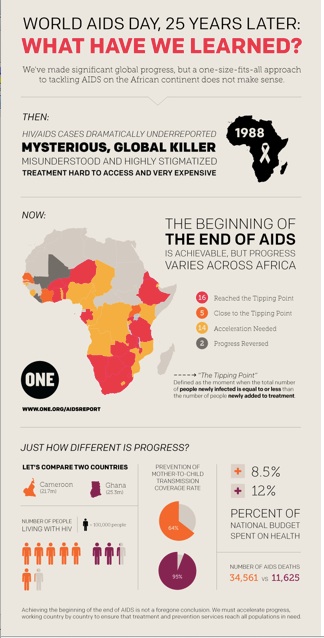
Despite the overall positive progress made in the fight against AIDS the momentum needs to continue to win. Prevention of new infections is key, transparency in reporting, political involvement, targeted resources, and keeping the AIDS issue in the forefront of the global agenda are all critical to the success of this campaign.
This is a big week for the AIDS community, with a hugely successful (RED) auction this past Saturday night, the 25thWorld AIDS Day, and the Global Fund replenishment. The (RED) auction on Saturday raised $13 million which was matched by Bill and Melinda Gates for a total $26 million for the Global Fund. Let’s keep the momentum going!
To learn more you can read the full report
here.
About ONE
Co-founded by Bono, ONE is a campaigning and advocacy organization of more than three million people taking action to end extreme poverty and preventable disease… because the facts show extreme poverty has already been cut in half and can be virtually eradicated by 2030.
ONE does not ask for your money, but for your voice.
Find out more at ONE.org
This is an original World Moms Blog post written by Elizabeth Atalay of www.documama.org. All information comes from The Beginning of The End? Tracking Global Commitments On AIDS Volume 2 ONE Data Report.
- A community meeting of HIV-positive women who have benefitted from prevention of mother-to-child transmission (PMTCT) services and health counselors in Dangbo, Benin. Through the expanding availability of these services, it is now possible to imagine a generation of children being born free from HIV.- photo courtesy of ONE.org

Elizabeth Atalay is a Digital Media Producer, Managing Editor at World Moms Network, and a Social Media Manager. She was a 2015 United Nations Foundation Social Good Fellow, and traveled to Ethiopia as an International Reporting Project New Media Fellow to report on newborn health in 2014. On her personal blog, Documama.org, she uses digital media as a new medium for her background as a documentarian. After having worked on Feature Films and Television series for FOX, NBC, MGM, Columbia Pictures, Warner Brothers, 20th Century Fox, and Castle Rock Pictures, she studied documentary filmmaking and anthropology earning a Masters degree in Media Studies from The New School in New York. Since becoming a Digital Media Producer she has worked on social media campaigns for non-profits such as Save The Children, WaterAid, ONE.org, UNICEF, United Nations Foundation, Edesia, World Pulse, American Heart Association, and The Gates Foundation. Her writing has also been featured on ONE.org, Johnson & Johnson’s BabyCenter.com, EnoughProject.org, GaviAlliance.org, and Worldmomsnetwork.com. Elizabeth has traveled to 70 countries around the world, most recently to Haiti with Artisan Business Network to visit artisans in partnership with Macy’s Heart of Haiti line, which provides sustainable income to Haitian artisans. Elizabeth lives in New England with her husband and four children.
More Posts

by Martine de Luna (Philippines) | Nov 14, 2013 | 2013, Cultural Differences, Humanitarian, Humanity, Natural Disaster, Philippines, World Events, World Motherhood
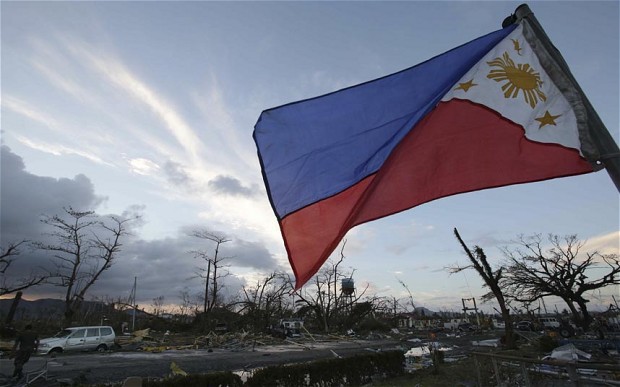 There are just no words these days to describe what has happened to my beautiful country. I write this from the capital of Manila, which was spared the catastrophic effects of the world’s strongest recorded typhoon, Haiyan, which befell our country last November 8.
The most affected regions are in the Southern region, the Visayas. These islands comprise some of our top tourist destinations, and are home to some of the world’s most beautiful beach landscapes, including the famous Boracay island, Bohol, and Palawan, where we have several world heritage churches and protected coral reefs.
Today, we don’t know what will come of these cities, which have all been ravaged by nature’s cruelest storm to date.
Watching CNN is both helpful and heartbreaking. Helpful, because it keeps us attuned to what’s going on; heartbreaking, because the images they show slowly wear away at the human heart. Daily — sometimes by the hour — we receive more news about the worsening situations in the Southern Philippines.
Our country is in shock. I know it would be easy for some to blame our government, too, and not that I am a hundred percent in agreement with the way things are run, but I also believe our President and officials of the affected cities are in shock, too. The finger-pointing and guilt-tripping on social media disgusts me, to the point that I’ve sometimes stayed off for hours, just to filter out the negativism. (more…)
Martine is a work-at-home Mom and passionate blogger. A former expat kid, she has a soft spot for international efforts, like WMB. While she's not blogging, she's busy making words awesome for her clients, who avail of her marketing writing, website writing, and blog consulting services. Martine now resides in busy, sunny Manila, the Philippines, with her husband, Ton, and toddler son, Vito Sebastian. You can find her blogging at DaintyMom.com.
More Posts

by Sisters From Another Mister | Nov 12, 2013 | 2013, Humanitarian, Shot@Life, Social Good, Vaccines, World Moms Blog
The next twitter party will take place today Tuesday, November 12th
from 1-2pm EST, and later in the day,
another one at 9-10pm EST to accommodate time zones on MDG4!
The hashtag is #Moms4MDGs,
and we encourage all moms around the world to join in the discussion!
This month’s topic is child survival!

There are many bright spots in my life for which I am very thankful and writing for World Moms Blog is definitely a highlight. The lovely Jennifer being a close friend is another. World Moms Blog, a group of writers spread across the globe – are near and dear to me and thanks to Jenn, I was asked to be a Champion for Shot@Life which brought another group of ladies into my life that have blessed me beyond measure.
Hang on a second … here we go … an impromptu gathering on the streets of NYC!

Social Good Summit NYC
I would go anywhere in the world with these ladies!
And just what can all this goodness get together and do?
We can use our voices for change, we can use our voices for good, and together we can make a difference. Thanks to shot@life I step out of my comfort zone from time to time, earlier this year I interviewed a radio personality – on air. Yes – LIVE! For their Get a Shot/Give a shot campaign with Walgreens. Then at the Social Good Summit – I spoke on stage, well, I possibly shook more than I spoke … baby steps indeed compared to the hugeness of acts of others, but I am feeling my way, trying to make a mark in the world, and hoping to teach my children that we have a responsibility to those less fortunate along the way.
November 12th is World Pneumonia Day, I have had pneumonia twice in the last year and a half. It was not pretty. I was told that the lungs are our grief organ, so perhaps while I wanted everyone to believe on the outside that I was doing just fine, my body called my bluff. But here in the US, I had breathing treatments, steroids, medical attention and the option to have the vaccine the minute my body was ready for it. Elsewhere in the world, under different circumstances – my future may have hung in the balance.
Did you know that …
Pneumonia is the #1 killer of children under age 5 worldwide. 99% of all childhood deaths from pneumonia occur in the developing world.
Pneumonia is solvable Pneumonia is one of the most solvable problems in global health. We have the safe, effective and affordable tools necessary to help prevent children from contracting pneumonia and to treat those suffering with this illness. We can win the fight To advance progress, we must continue to scale up interventions that we know will save children’s lives, including continued access to vaccines, proper antibiotic treatment, improved sanitation, as well as the promotion of practices such as breastfeeding, frequent hand washing, care seeking, and the use of clean cookstoves to reduce indoor air pollution.
shot@life and The UN Foundation have opened my eyes to the plight of so many worldwide. I hope that you can join us and use your voice … there are children the world over counting on you.
Mark your calendars … make a difference!

P.S. Never been to a twitter party before? Go to www.tweetchat.com and put in the hashtag: “#Moms4MDGs during the party times. From there you can retweet and tweet and the hashtag will automatically be added to your tweets. And, from there you can also view all of the party tweets!
This is an original post to World Moms Blog by contributor Nicole M. whose writing can also be found at SistersFromAnotherMister
Sisters From Another Mister ...
A blog born from the love of 'sisters' around the world who come together to lift eachother up no matter where they are on their life journey.
Meet Nicole, a transplanted British born, South African raised, and American made Mom of two girls living on the sunny shores of South Florida, USA. A writer of stories, an avid picture taker and a keeper of shiny memories.
Sharing the travels of a home school journey that takes place around the globe - because 'the world truly is our classroom'. Throw in infertility, adoption, separation, impending divorce (it has its own Doom and Gloom category on the blog) and a much needed added side of European humor is what keeps it all together on the days when it could quite clearly simply fall apart! This segues nicely into Finding a Mister for a Sister for continued amusement.
When not obsessing over the perils of dating as an old person, saving the world thro organisations such as being an ambassador for shot@life, supporting GirlUP, The UN Foundation, ONE.org and being a member of the Global Team of 200 for social good keeps life in the balance.
Be sure to visit, because 'even tho we may not have been sisters at the start, we are sisters from the heart.'
http://www.sistersfromanothermister.com/
https://www.facebook.com/SistersFromAnotherMister
https://twitter.com/thesistershood
http://pinterest.com/thesistershood/
Global Team of 200 #socialgoodmoms
Champion for Shot@Life and The United Nations Foundation
More Posts - Website
Follow Me:


by Elizabeth Atalay | Nov 6, 2013 | 2013, Africa, Education, Social Good, World Moms Blog, World Voice, Younger Children
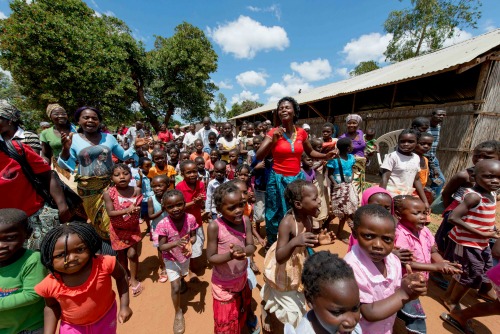
Singing and dancing is the order of the day as this procession of Save the Children preschool graduates, teachers and community members in Mozambique’s Gaza Province makes its way across the school ground to the nearby primary school, where the little graduates will be studying next year. Photo credit: Pei Ketron for Save the Children. October 2013.
In a newly published preschool programs are described as a promising policy option for improving the school readiness and later success of poor and disadvantaged children in rural Africa.
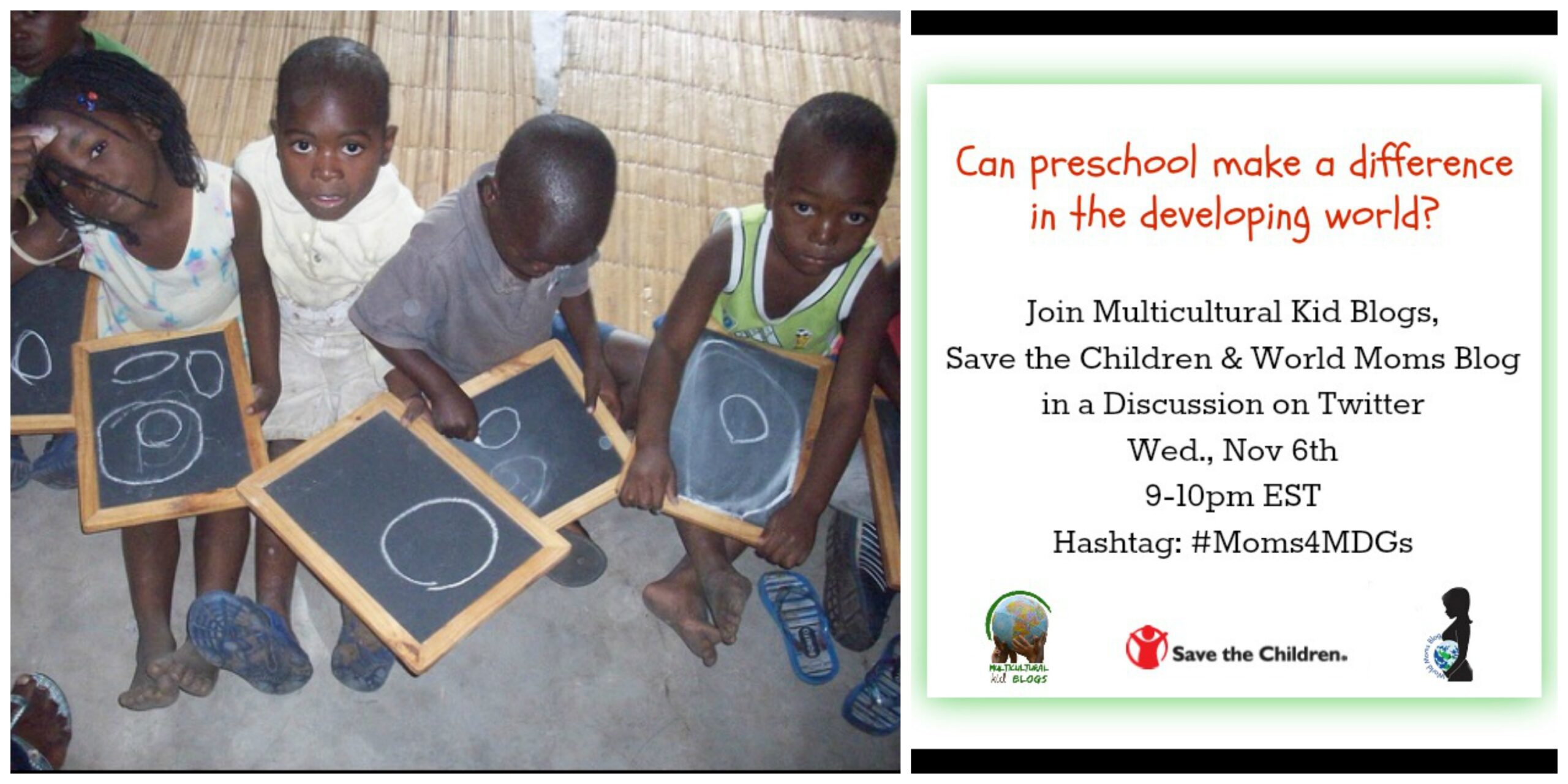
Tonight at 9pm EST World Moms Blog will join Save The Children and Multicultural Kid Blogs at #Moms4MDGs to discuss the importance of early education, and as a specific example, the success of the Save The Children preschool program in Mozambique. Ajla Grozdanic of Save The Children recently returned from a site visit to Mozambique and the early education programs there. She shared her insight in an interview with World Moms Blog as a lead up to tonights Twitter party:
World Moms Blog: In a Chicken & Egg sense, are early education programs only able to be initiated in areas where some basic infrastructure is already in place, i.e. access to clean water, healthcare & nutrition, or are they catalysts for communities to begin to pull out of extreme poverty?
AG: We are able to initiate education programs in communities at any level. In other words, having a basic infrastructure in place is not a pre-requisite for education programs, which can range from in-home daycare to in-school programs.
In fact, early childhood education can bring catalytic change for communities. Early childhood development centers and programs provide an opportunity to reach young children with basic services like healthcare and nutrition, which can be more difficult to deliver if we depended on parents to seek out these services on their own. Early childhood development centers also facilitate community mobilization, bringing parents and other community members together for projects, such as digging wells or cleaning stagnant water that hosts malaria.
Young children naturally learn from and imitate what’s in their environment–good or bad. For this reason, educating young children is key and it fosters the kinds of attitudes and behavior that can improve community well-being over the long term, such as developing good hygiene and healthy eating habits and sharing this knowledge with siblings and neighborhood children.
WMB: Could you explain a bit why Mozambique was a good fit for this program? What is the success rate for other similar early education programs Save the Children runs in other countries?
AG: Mozambique had very low coverage for preschool or early childhood development programs, so the need and demand was high. It’s also important to note that the local communities demonstrated an openness and eagerness to engage in these issues. Communities saw the potential and agreed to invest in their young children. Once they saw the results, which were very good, the word spread and the demand grew.
The World Bank Study, which is the first such evaluation of early childhood development programs in Africa, showed that children in rural Mozambique, who attended Save the Children’s preschool programs, were 24 percent more likely to enroll in primary school and were significantly better equipped to learn than children not covered by the program. While we haven’t had the funding to conduct similar studies in other countries where we offer such programs, our own results monitoring shows a similar success rate across the board.
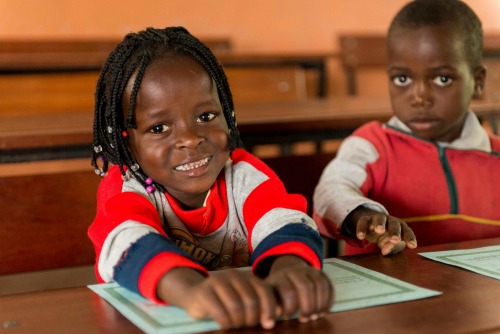
Save the Children preschool graduate, Vania, 5, from the Gaza Province in Mozambique, joined by a future classmate, gets a taste of what it will be like to sit at a real desk when she enters primary school next year. Preschoolers in her village are used to sitting on mats on the floor and were excited to sit in ‘big-kid’ chairs and desks at the nearby primary school. Photo credit: Pei Ketron for Save the Children. October 2013.
WMB: Do you see the benefits in terms of kids who have had these early intervention programs staying in school longer, and particularly for girls, marrying later or are these programs too new to tell yet?
AG: Children enrolled in preschool have a greater chance of going to school, going to school at the right age, and staying in school longer. They have higher graduation rates and are less likely to drop out of school or end up imprisoned. What’s more, staying in school is a mechanism to protect girls from early marriage. While it’s still too early to prove long-term benefits of preschool, such as that it results in girls marrying later in life, we hope to conduct such longitudinal studies in the future.
WMB: Are the children given meals through the program as an incentive for parents to send them or are the community members generally open and willing participants?
AG: It is usually not sustainable to provide meals to all children who are enrolled in preschool. Taking this into account, in most communities preschool lasts for half the school day so children can come home for meals. In some communities, parents might pool their resources in order to provide meals at preschools. In addition, preschools provide an opportunity to educate parents on how to improve nutrition for their child.
The willingness of parents to enroll their children in preschool varies from parent to parent and from community to community. Oftentimes, we’ll have a group of early adopters who are eager to enroll their children and whose success, in turn, inspires a wave of other parents–who prefer a stand-back, wait-and-see approach–to sign up their little ones.
WMB: Had you been to Mozambique before?
AG: No, this was my first time.
WMB: What is the best way people reading could support the Save the Children preschool programs in the developing world?
AG: Your readers could become a sponsor to support early childhood programs in developing countries. They could also advocate to the U.S. government to include preschool and early childhood development in its international aid programs. To learn more, visit www.savethechildren.org.
WMB: How have the mothers responded to these programs? (ie. gives them the opportunity to go to work or tend to smaller children)
AG: We encourage the participation of both mothers and fathers in their children’s education. Sending their children to preschool allows parents to tend to their daily chores, work in the field or otherwise provide for their family while knowing that their children are in good hands and are learning, to boot. In traditional societies, where childcare falls on women, preschools certainly offer an opportunity for women to engage in more productive labor and earn an additional income for their family. And we know from experience that when women earn more income for their families, they tend to invested in their children.
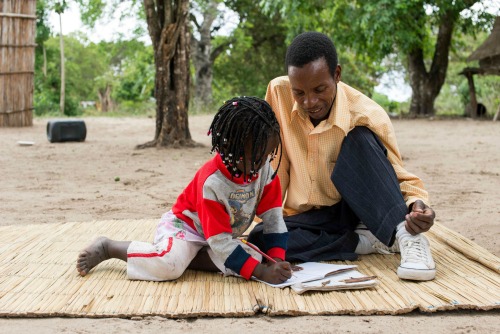
Vania, 5, practices the alphabet and counting every day with her father, Armando, who is a teacher at his daughter’s preschool, which is supported by Save the Children. Photo credit: Pei Ketron for Save the Children. October 2013.
This is an original interview and post for World Moms Blog.
Elizabeth Atalay is a Digital Media Producer, Managing Editor at World Moms Network, and a Social Media Manager. She was a 2015 United Nations Foundation Social Good Fellow, and traveled to Ethiopia as an International Reporting Project New Media Fellow to report on newborn health in 2014. On her personal blog, Documama.org, she uses digital media as a new medium for her background as a documentarian. After having worked on Feature Films and Television series for FOX, NBC, MGM, Columbia Pictures, Warner Brothers, 20th Century Fox, and Castle Rock Pictures, she studied documentary filmmaking and anthropology earning a Masters degree in Media Studies from The New School in New York. Since becoming a Digital Media Producer she has worked on social media campaigns for non-profits such as Save The Children, WaterAid, ONE.org, UNICEF, United Nations Foundation, Edesia, World Pulse, American Heart Association, and The Gates Foundation. Her writing has also been featured on ONE.org, Johnson & Johnson’s BabyCenter.com, EnoughProject.org, GaviAlliance.org, and Worldmomsnetwork.com. Elizabeth has traveled to 70 countries around the world, most recently to Haiti with Artisan Business Network to visit artisans in partnership with Macy’s Heart of Haiti line, which provides sustainable income to Haitian artisans. Elizabeth lives in New England with her husband and four children.
More Posts
by Elizabeth Atalay | Nov 5, 2013 | 2013, Childhood, Education, Social Good, World Voice, Younger Children
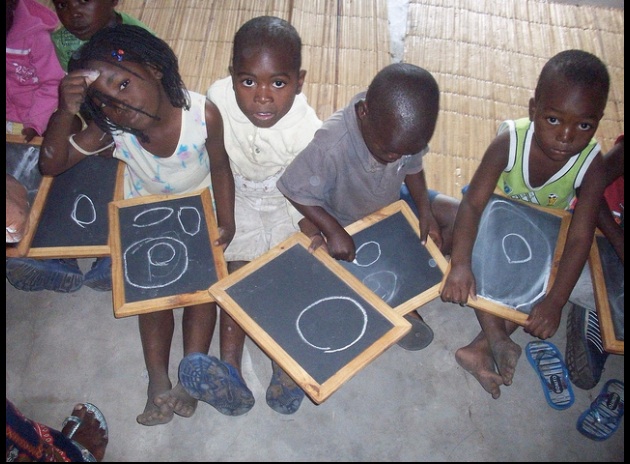
Photo Credit Save The Children
Where I live it is a given that most parents will send their kids to pre-school, some as young as two years old. It is common belief that early education builds a strong foundation for future learning, and we take for granted that our kids will go on to higher education. In other areas of the world where food security, clean water, sanitation and extreme poverty are primary concerns, education can be a luxury. In some cases in these areas it is not uncommon for an older child to begin formal primary education for the first time creating classrooms of mixed ages.
Back in 2008, a $1 million donation from the 2007 Idol Gives Back television special, helped to build escolinhas or preschool centers targeting orphans and vulnerable children for Save the Children‘s program in Mozambique. Since then the program has reached about 5,000 three to six year olds and their families, and it continues to run with the help of trained volunteers from rural communities.
Children in developing countries, like Mozambique, who attend early childhood development programs are more likely to enroll in school and enter school at the right age. This is important because children who are over-age for their grade level are more likely to drop out, so early childhood development programs actually increase the chances that children will stay in school longer.
Due to the success of the preschool centers Save The Children was able to continue to find funding, and recently the progress seen in the area caught the eye of the Government of Mozambique, resulting in the implementation of similar early childhood education programs throughout the country.
A new World Bank evaluation shows early childhood programs help children thrive and learn more in rural Africa. The recently released , is good news for children and families in Africa.-Save The Children
In a country where most inhabitants live in rural interior areas that are prone to “hungry seasons” of flooding or drought, kids enrolled in early childhood development centers benefit from access to health care and interventional care such as deworming, malaria prevention, nutritional support or social welfare.
Investment in early childhood development can provide the greatest return, and the results from these Early Learning Centers are proof. It is important to reach kids before it is too late, before they have dropped out of school, or grown up without reaching their full potential. Development aid and countries have the opportunity to make a lasting difference in health outcomes, economic productivity, and educational opportunities by investing more human and financial resources into early childhood development programs.
To find out more about early education and Save The Children’s program in Mozambique join us tomorrow night, Wednesday November 6th from 9-10pm EST for a #Moms4MDGs twitter party with Save the Children, Multicultural Kids Blogs and World Moms Blog! Hope you can make it!
This is an original post written by Elizabeth Atalay of Documama for World Moms Blog.
Elizabeth Atalay is a Digital Media Producer, Managing Editor at World Moms Network, and a Social Media Manager. She was a 2015 United Nations Foundation Social Good Fellow, and traveled to Ethiopia as an International Reporting Project New Media Fellow to report on newborn health in 2014. On her personal blog, Documama.org, she uses digital media as a new medium for her background as a documentarian. After having worked on Feature Films and Television series for FOX, NBC, MGM, Columbia Pictures, Warner Brothers, 20th Century Fox, and Castle Rock Pictures, she studied documentary filmmaking and anthropology earning a Masters degree in Media Studies from The New School in New York. Since becoming a Digital Media Producer she has worked on social media campaigns for non-profits such as Save The Children, WaterAid, ONE.org, UNICEF, United Nations Foundation, Edesia, World Pulse, American Heart Association, and The Gates Foundation. Her writing has also been featured on ONE.org, Johnson & Johnson’s BabyCenter.com, EnoughProject.org, GaviAlliance.org, and Worldmomsnetwork.com. Elizabeth has traveled to 70 countries around the world, most recently to Haiti with Artisan Business Network to visit artisans in partnership with Macy’s Heart of Haiti line, which provides sustainable income to Haitian artisans. Elizabeth lives in New England with her husband and four children.
More Posts