by Tinne from Tantrums and Tomatoes | Jul 15, 2013 | Belgium, Education, Government, Health, Special Needs, Tantrum and Tomatoes, Uncategorized
 It is a running gag that we Belgians like to make things complicated. This shows itself best in the Moloch which calls itself ‘Government’.
Government – like all of its kind – has a thing for paperwork. It starts even before you are born, when your mother and father are requested to fill in form after form to guarantee your basic rights and to prove that yes you are about to enter the world.
And it goes on and on and on. Papers which need to be filled out announcing your actual birth, your name, gender, weight, etc… Then when you are a few weeks old, your mother will receive an order to have you weighed, measured and to have a friendly chat with a childcare specialist about how you – little pooping nugget – are doing. (Don’t get me wrong, I greatly appreciate this service: these checkups – and accompanying vaccinations – are free of charge, and they often aid in detecting health issues really early.)
When you enter school the whole administrative shebang is transferred to another institution, which will now not only monitor your growth, weight gain and fine motor skills but also your learning process and general scholastic development. And, of course, there is paper work to be filled out…
So this is how I found myself filling out a five–page questionnaire on a rainy night in May in preparation of our eldest’s first annual checkup. Most questions were simple and straightforward : “Do either of the parents wear glasses?” (Yes, both), “Any hereditary diseases, mental illnesses,…” (None), “Primary language spoken at home?” (Dutch), “Any serious illnesses as an baby/infant?” (No).
But there was one question which gave made me pause : “Was either of the parents treated for a learning disability as a child/adult? If yes, please specify which one.”
Well, yes, actually. I was.
When I was about seven or eight years old I was diagnosed with the type of Attention Deficit Disorder, now called ADHD–I. Later they threw in some dyscalculia for good measure. While I never took any medication, I did receive treatment well into my teenage years.
Those were very difficult times, mainly because when I was diagnosed, the whole ADHD–spectrum was relatively unknown. Most people – teachers, close family members and other – scoffed when ADHD or ADD was mentioned.
Many called it an imaginary condition and would tell me that I was making things up, that I was just “not that bright”, “plain stupid”, “not trying hard enough” or – my personal favourite – “a lazy good for nothing pest, who would never get a degree and whose only career option was cleaning toilets”.
I vividly remember how my mother and I were asked to come to the principal’s office one day during my first year of high school, so we could discuss my poor results and lack of attention during class. We arrived carrying a thick file full of test results, reports, statements,… only for the principal to refuse even to look at the file and tell my mother that “it was about time that she accepted her daughter was not as intelligent as she was and that she should not waste peoples time by insisting I remained in a normal classroom.”
Needless to say, my mom was a wee bit pissed off and the discussion which followed can best be described as a fight between a lion with anger issues and a crazy, rabid baboon on steroids.
It got better when I changed schools the next year. It got better when I got older, because I got a better view on the what, the why and the how. It got better because I developed coping skills. It got better because the therapy actually worked and somehow my brain got whipped into some kind of shape. As we now know there is no “curing” ADHD. I still get distracted easily and rely on noise cancellation headphones or classical music to get me through a bad day.
After filling in the questionnaire I catch myself looking at my children all too often, and playing the “What if” – song in my head.
Because what if – along with the sensitive skin (sorry about that one, by the way, kids) and the shape of their eyes – I gave my kids those parts of me. What if, they, too, will have to fight a lifelong battle?
I know times are different. We are lucky to live in a part of the world where education is a basic right, not a privilege and not something for which we – women – have to fight. I know there is a better understanding, new developments in treatment and more acceptance regarding learning disabilities as opposed to when I was a kid. I know – think, hope, … I will probably be more prepared in dealing with one or both of my children being diagnosed with a learning disability than my own mother, who was basically left in the middle of the jungle with a broken compass as her only tool to help her fight a way out, if only because I’m aware of the fact that this situation may arise and have lived it, am in still living it, coping with it.
But still…
What if… ?
How are people dealing with the whole learning disability spectrum in your neck of the woods? If you are a “former special needs child turned adult” how would you deal with this situation?
This is an original post for World Moms Blog by Tinne of Tantrums and Tomatoes.
Photo credit to the author.
Born in Belgium on the fourth of July in a time before the invention of the smart phone Tinne is a working mother of two adorably mischievous little girls, the wife of her high school sweetheart and the owner of a black cat called Atilla.
Since she likes to cook her blog is mainly devoted to food and because she is Belgian she has an absurd sense of humour and is frequently snarky. When she is not devoting all her attention to the internet, she likes to read, write and eat chocolate. Her greatest nemesis is laundry.
More Posts - Website
Follow Me:


by Mamma Simona (South Africa) | Jul 10, 2013 | Divorce, Friendship, Husband, International, Living Abroad, Marriage, Moving, Relationships, South Africa, Uncategorized, World Motherhood
 On 15 May I wrote a post about searching for an old boyfriend, which caused a few of my awesome fellow WMB moms to don their detective hats. They helped me find two possible addresses for the man I was looking for. After much soul-searching, I eventually decided to send a letter to each address. Just over two weeks ago, I printed the letters, added a copy of my blog post (as well as a copy of the last poem he’d sent me) to each envelope and invested 25 rand in postage fees. I was told that the letters would take approximately 14 days to reach America.
To be perfectly honest, I didn’t really expect a reply. Imagine my surprise when exactly 2 weeks after mailing my letters, I found an email in my inbox from “my” Campbell T Fisher Jr (aka Toby)! (more…)
Mamma Simona was born in Rome (Italy) but has lived in Cape Town (South Africa) since she was 8 years old. She studied French at school but says she’s forgotten most of it! She speaks Italian, English and Afrikaans. Even though Italian is the first language she learned, she considers English her "home" language as it's the language she's most comfortable in. She is happily married and the proud mother of 2 terrific teenagers! She also shares her home with 2 cats and 2 dogs ... all rescues.
Mamma Simona has worked in such diverse fields as Childcare, Tourism, Library Services, Optometry, Sales and Admin! (With stints of SAHM in-between). She’s really looking forward to the day she can give up her current Admin job and devote herself entirely to blogging and (eventually) being a full-time grandmother!
More Posts - Website
Follow Me:

by Mama B (Saudi Arabia) | Jul 3, 2013 | 2013, Politics, Religion, Saudi Arabia, Transportation, Travel, Uncategorized, Women's Rights, World Motherhood
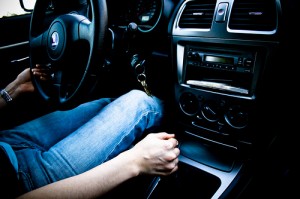 We always talk about “first world problems,” and, I, most of the time, complain about women not being able to drive in Saudi Arabia in the “first world problem” sense. “My driver is late!” or “It’s too hot in the car. I wish he’d switch on the AC before I get in” or “Why does it take so long for my driver to answer his phone!”
It’s easy for me to forget that for the majority of women in Saudi, it is very much a paralyzing issue. As I was leaving Saudi last week, I was in the airport lounge, and one of the women working there was having a private conversation on her mobile which got progressively louder. She kept saying, “Swear he’s ok! Why can’t I talk to him?”
After she hung up she said to me, “My son has had an accident!” I asked if he was ok. She told me she didn’t know and that someone at the scene had called her and told her about it, but they wouldn’t give him the phone and wouldn’t give her details. I asked why she didn’t just go to him, and she told me she couldn’t.
“Surely your supervisor wouldn’t have a problem with you leaving early to go there!” I said.
“I don’t have any way of getting there!”, she said. “My son is usually my driver. I don’t have brothers, and I’m divorced.”
And that’s the simple truth. Her son was on a street somewhere, in God knows what state ,and she was stuck at work. She eventually took a cab and declined the offer to use my car.
I always dread talking about women driving in Saudi because it’s been talked to death, and there’s nothing to discuss, really, since the fact that women should be allowed to drive is such an obvious one. It’s like discussing if women should be allowed to work… or walk even. Not driving means different things to different people. To me, it’s something I don’t think about on a day-to-day basis, unless we have a driver crisis. But even then, I rely on my mother’s, sister’s or brother’s driver to get me where I need to go, and I have never been stranded at home or elsewhere because of it. I forget that this is not the case for everyone.
Yes, some of my friends can’t do lunches on certain days because of the driver issues (lack of reliable ones or lack of ones all together), so when their husbands work they have to stay home. While many, many Saudi families have a driver working for them, not all of them do. And honestly, who cares if I can’t get to my family visit on time or to the shops before they close, when this mother couldn’t get to her son, who I pray was not badly injured in this accident.
And if, God forbid, he was badly injured, or worse, and he is her only “mahram” (male guardian), then she effectively has to put her life on hold till he gets better. And if it’s not a “getting better” situation, then she is stuck. Driving will be only one of her problems.
We do have taxis, which are generally decent, but many women don’t like to use them or the men in their lives don’t like them to. Which is all fine and dandy if these men are willing to be their wives’ personal chauffeurs, but if they refuse, then the women are stuck. But they do sometimes say “no,” and their wives, sisters, daughters comply. I have never really asked my husband how he would feel about me riding a taxi, since there never was a need to before, but I know that even if he didn’t want me to ride one, for what ever reason, he would never tell me I couldn’t.
Work has already begun on the metro system in Riyadh, and I am assuming that it will have a similar set up to Dubai, where there is a women’s tram. (Although in Dubai it is optional to go on that tram.) It will be interesting to see what we end up with, but is public transportation the answer to this problem? No.
Women being allowed to drive is a change that has to happen. It’s going to happen. I can guarantee that, but when? And the assumption that this is a governmental decision is totally wrong as the government is doing what the majority of the population wants.
When the subject of women driving is raised, it is always surprising how many people are against it. Women included. When they decided to introduce girls’ schools, the community also spoke out against it and were fearful and pessimistic. But the government just made the change, and the people got used to it. Now more than half the college graduates in Saudi are women! So, I hope we just rip the band-aid off.
And maybe the people will come around eventually and want this change, but how long do we want to wait? So many changes have come into our country, culture and environment that people are afraid to open up anymore, but there will be no progress without it.
Maybe I am wrong though. Maybe the views have changed, but the loudest voices are still of those who are against this. In Saudi the moderate voice is the one that talks at home among friends but doesn’t really rock the boat. The extreme views tend to be loud and very well organised.
A little side note to mention is there is no law against women driving. But there is a law against driving without a license, and women can’t get their licenses in Saudi.
It should just be done! Just as the 30 women were elected into the shours counsil by royal decree one morning, this change can happen too. It would, by no means, be mandatory, and whoever doesn’t want to drive, doesn’t have to. But for the women who are paralyzed, stuck and unable to get to their sons when they are hurt, a key to a car is not much to ask.
Do you agree with me that sometimes making unpopular decisions that will better your country is ok? Or is the government’s duty? Or do you think what the people want is more important?
This is an original post to World Moms Blog by Mama B from Saudi Arabia. She can be found writing at her blog, Ya Maamaa.
Photo credit to hhdoan who holds a Creative Commons Attribution license.

Mama B’s a young mother of four beautiful children who leave her speechless in both, good ways and bad. She has been married for 9 years and has lived in London twice in her life. The first time was before marriage (for 4 years) and then again after marriage and kid number 2 (for almost 2 years). She is settled now in Riyadh, Saudi Arabia (or as settled as one can be while renovating a house).
Mama B loves writing and has been doing it since she could pick up a crayon. Then, for reasons beyond her comprehension, she did not study to become a writer, but instead took graphic design courses. Mama B writes about the challenges of raising children in this world, as it is, who are happy, confident, self reliant and productive without driving them (or herself) insane in the process.
Mama B also sheds some light on the life of Saudi, Muslim children but does not claim to be the voice of all mothers or children in Saudi. Just her little "tribe." She has a huge, beautiful, loving family of brothers and sisters that make her feel like she wants to give her kids a huge, loving family of brothers and sisters, but then is snapped out of it by one of her three monkeys screaming “Ya Maamaa” (Ya being the arabic word for ‘hey’). You can find Mama B writing at her blog, Ya Maamaa . She's also on Twitter @YaMaamaa.
More Posts

by Kristyn Zalota | Jun 25, 2013 | 2013, Birthing, Clean Birth Kits, Health, Maternal Health, Philanthropy, Social Good, Uncategorized, World Moms Blog

Photo By Kristyn Zalota
Nine months ago, I received the first donation to CleanBirth.org, my project to make birth safer in Laos. It was fittingly given on the playground after school by a fellow mom.
I say fittingly, because I have spent much of the past 7 years of motherhood pushing swings and spotting my monkeys on bars. It is also fitting because the bulk of the three hundred donors who followed that first donation are fellow frequenters of playgrounds. The support from moms, dads, and grand parents totals almost $20,000 in just 9 months!
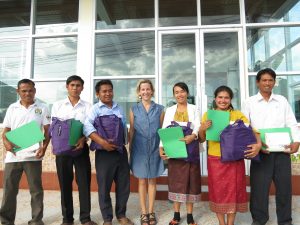
Kristyn with OVA Staff and Nurses in Laos
So how does a playground aficionado add safe birth advocacy to her daily life?
Here’s my 3-step plan for changing the world in the way only you can:
1. Find your passion. My kids are 4 and 7 today, but when they were younger full-time, stay-at-home motherhood was tough for me. I wanted to be with them and I also wanted to travel and work. By way of a compromise, I volunteered on projects in Costa Rica, Nicaragua, Thailand, Cambodia and Uganda. Sometimes the kids came with me – we lived in Thailand and Cambodia for a year – and other shorter trips they stayed at home with their dad and grandparents. My experiences as a volunteering mother transformed my long-standing interest in women’s empowerment into a passion for global maternal health.
Once I realized that I wanted to advocate for women and make birth safer, I became a mama on a mission.
2. Find a do-able project. So, how can I be at pick-up by 1pm everyday *and* make birth safer in Laos? I started with a manageable project. CleanBirth.org provides Clean Birth Kits (an absorbent sheet, medicated soap, a sterile blade, cord clamp, picture instructions) and birth education to women in one province of Laos. Studies show that kits prevent infection in both mothers and babies.
To ensure that the project is locally driven and sustainable, I have partnered with two organizations. The first partner is Our Village Association (OVA), a Lao non-profit with 10 years of experience working with local villagers. Together with OVA, CleanBirth.org trains local nurses in the use and distribution of Clean Birth Kits. OVA continuously monitors the nurses, tracks the use of the kits and reports back to me via email.
The second organization that I teamed up with, AYZH, manufactures high-quality Clean Birth Kits in India and mails them directly to OVA in Laos. Since the kits are shipped directly, I do not need to be on the ground to ensure quality-control or resupply.
I travel to Laos twice per year to see everything for myself. In the US, I spend all of my kid-free hours raising funds and awareness – and loving every minute of it!
3. Find help. None of this would be possible without the support of my family: my husband, mother-in-law and parents. Having the people closest to you believe in your cause is so important, especially if you are working 30 hours per week and not getting paid.
I have also asked for help from maternal health experts and volunteers. By going to the experts, to those already doing the work, I have been able to capitalize on best practices. Volunteers can be invaluable. When someone competently takes on a task, no matter how small, it enables me to move onto another to-do item.
I can honestly say that I am living my dream life. I still hit the playground every afternoon — after 4 hours of working to promote safe birth. When I travel to Laos, I pack in more in 2 weeks than I could have imagined in my pre-kids wanderings. No time to waste, I’ve got kids at home missing their mama.
If you are reading this and thinking: “I have a passion for _____ but I don’t know where to start,” I urge you to just start. Find a small first project. Make time each day to work on it. Get advice from others who are doing similar work. Ask for help.
If your goal is to help others, you will find support from many places, often you just need to ask. I have been overwhelmed by the unexpected generosity and support of friends and perfect strangers.
So use your passion, get out there and change the world in the way only you can!
What’s Your Passion?
This is an original post written for World Moms Blog by Kristyn Zalota.
____________________________________________________________
Kristyn brings her years of experience as an entrepreneur and serial volunteer to CleanBirth.org. She holds a MA, has run small businesses in Russia and the US, and has volunteered in Nicaragua, Costa Rica, Thailand, Cambodia, Laos and Uganda on projects related to women’s empowerment. After having children, Kristyn became an advocate for mothers in the US, as a doula and Lamaze educator, and abroad, as the Founder of CleanBirth.org. She is honored to provide nurses in Laos with the supplies, funding and training they need to lower maternal and infant mortality rates in their villages.
Kristyn brings her years of experience as an entrepreneur and serial volunteer to CleanBirth.org. She holds a MA, has run small businesses in Russia and the US, and has volunteered in Nicaragua, Costa Rica, Thailand, Cambodia, Laos and Uganda on projects related to women’s empowerment.
After having children, Kristyn became an advocate for mothers in the US, as a doula and Lamaze educator, and abroad, as the Founder of CleanBirth.org. She is honored to provide nurses in Laos with the supplies, funding and training they need to lower maternal and infant mortality rates in their villages.
More Posts

by Mama Mzungu (Kenya) | Jun 19, 2013 | Casting a Wider Net, Cultural Differences, Grandparent, Interviews, Life Balance, Motherhood, Parenting, Social Good, Traditions, Uncategorized, World Motherhood, World Voice
Our “Casting a Wider Net” series features mothers around the world whose voices have typically been excluded from the blogosphere, due to lack of access to the internet, low literacy or poverty. This feature aims to include their important and distinct perspectives with interviews and occasional video clips.
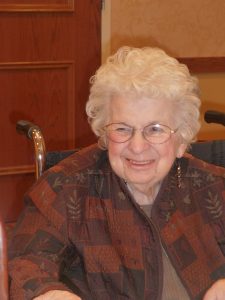
My grandmother, even at 91, never ceases to amaze me. She has fought back from accidents and illness, car wrecks and strokes, with unexpected strength and optimism, probably from a deep drive to feel fully engaged in the world. When my grandfather, the love of her life, widowed her over 30 years ago, she saw past her grief to discover new joys, taking up folk dancing and beginning a new career as a pre-school teacher. Today, her hands shake, the result of essential tremors, but that was beside the point when she decided to take up pottery – a unquestionably physical art form – in her 8th decade of life. Her brightly colored ceramic creations fill her small apartment and she makes gifts of them for her 5 grandchildren and growing brood of “greats.”
But it’s not just her zest that draws you in. She’s warm, the kind of woman it’s easy to open up to, a good listener and curious question-asker. It’s probably this quality, along with her undeniably sweet demeanor, that has kept her in companionship since my grandfather passed. And it’s this quality that made me want to turn the tables and ask her questions. (more…)
Originally from Chicago, Kim has dabbled in world travel through her 20s and is finally realizing her dream of living and working in Western Kenya with her husband and two small boys, Caleb and Emmet. She writes about tension of looking at what the family left in the US and feeling like they live a relatively simple life, and then looking at their neighbors and feeling embarrassed by their riches. She writes about clumsily navigating the inevitable cultural differences and learning every day that we share more than we don’t. Come visit her at Mama Mzungu.
More Posts - Website
Follow Me:

by Nicole Melancon (USA) | Jun 18, 2013 | 2013, India, Social Good, Third Eye Mom, Uncategorized, World Voice
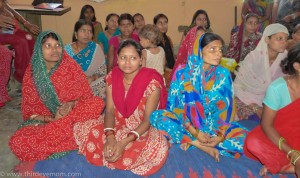
A pregnant mothers group at one of the slums served by Save the Children. Photo By Nicole Melancon
At the end of May I had the honor of traveling to India along with Jennifer James, founder of Mom Bloggers for Social Good, a global coalition of mom bloggers who use our voice through blogging and social media to spread awareness, education and support to the various NGOs around the world that are making a difference.
The purpose of our trip to India was to meet face to face with some of our partner NGOs and see firsthand some of the issues we cover as part of Mom Bloggers for Social Good: Maternal and newborn health, food and water poverty, sanitation issues, and education for women and girls.
Although this was not my first time to India (I had visited India a few years ago as a tourist) it was my first time going in a much different role: As a social good blogger and advocate. Seeing India in a different framework was utterly life changing.
India is perhaps one of the most fascinating places I’ve ever been and with its enormous population, and sensational culture comes issues that are often overwhelming to comprehend. Most people are aware of the huge inequities and poverty strangling India. Although India has seen rapid economic growth over the last decade, the gap between rich and poor has become even wider and more profound. As migrant families leave their villages in rural India and come to the big cities in search for a better life, the growth of urban slums, many in deplorable conditions, continues at unmanageable rates. In just Delhi alone, there are thousands of them. And as almost half a million migrants come to Delhi alone each year, many of them end up populating the already over-crowded urban slums that can be found all throughout the city, even alongside some of Delhi’s most expensive neighborhoods.
Our mission in India was to visit the heart of Delhi’s slums to see the issues firsthand and meet with our partner NGOs who are on the ground and making a difference in people’s lives.
It was not an easy trip. The weather was scorching hot with highs nearing 120 degrees Fahrenheit and visiting an urban slum in itself is heartbreaking and shocking. Although I’ve experienced poverty many times before in my travels I wasn’t prepared for the enormous magnitude of desperation that I found in India.
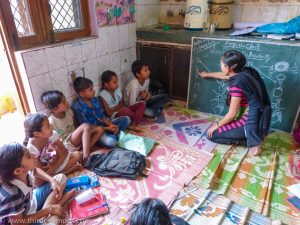
Girls learning at Pratham. Photo by Nicole Melancon
The highlight of our entire trip happened on our first day. We met with a small Indian non-profit organization called Protsahan. Founded by young Indian social entrepreneur Sonal Kapoor, Protsahan, uses a unique approach to teaching and inspiring young, underprivileged girls who come from some of the most tragic circumstances possible. All are poor, and many have been abused and have little opportunity to get an education or a way out of the poverty they were born into. Protsahan, which means “encouragement” uses the arts as a means to inspire, teach and motivate the girls to learn and strive for a brighter future. It was a heartwarming experience meeting Sonal and the girls that were striving to succeed and climb out of poverty. I left wishing we could stay longer. The love and tenderness of Sonal for the girls was overwhelming and made me realize that anyone can make a difference in the world and impact the lives of others.
Our second day was spent visiting another education-focused NGO called Pratham, which is the largest NGO working in India to provide quality education to the country’s millions of underprivileged children. We visited a Hub Center supporting 150 children that was located in a slum in Trilokpuri, East Delhi. The program model was slightly different from Protsahan as the classes were co-ed and also were offered for a minimal, yet affordable fee. Classes began at preschool age and continued on to more advanced English as well as vocational courses. What makes Pratham so unique is its approach to working with the government to create change.
Our final day was spent visiting two big NGOs, Save the Children and WaterAid, where we were able to do two field visits to different urban slums to see their work. In the morning , we visited some of Save the Children’s projects within the Okhla Industrial Area that hosts garment factories, home to over thousands of families living in unauthorized slums. Save the Children provides a variety of services to the slum such as a mobile health van where people can receive basic health care services, medication, and prenatal and newborn health check-ups which is extremely important in cutting maternal and newborn mortality rates. We also attended one of the weekly meetings for pregnant mothers where they are taught the skills needed to ensure their children’s survival.
We ended our day with WaterAid, an NGO that works all over the world to provide safe drinking water and sanitation services.
Ironically, we visited an unauthorized slum built right outside the lush, grand American Embassy.
Unauthorized slums are by far the most devastating places to live. Many do not have running water or sewer systems, which significantly threatens the health and livelihood of the people. At the Vivekanansa slum, we toured one of WaterAid’s Community Toilet Compounds (CTC) which provides safe, clean toilets to the hundreds of families that live in the community. WaterAid operates 78 CTCs all over Delhi as well as CTCs throughout India. The importance of having a CTC cannot be understated. Not only does it provide dignity, it also helps stop serious diseases which kills many children each year.
I left India feeling intense emotions. There were so many enormous issues that at times it was completely overwhelming. Yet, meeting some of the NGOS and people on the ground who are saving lives and making the world a better place, sometimes one person at a time, inspired hope that change can be made.
This is an original World Moms Blog post written by Nicole Melancon of ThirdEyeMom .
Have you been to India, or experienced the juxtaposition of these types of extremes?

Third Eye Mom is a stay-at-home mom living in Minneapolis, Minnesota with her two children Max (6) and Sophia (4). Her children keep her continually busy and she is constantly amazed by the imagination, energy and joy of life that they possess! A world wanderer at heart, she has also been fortunate to have visited over 30 countries by either traveling, working, studying or volunteering and she continues to keep on the traveling path.
A graduate of French and International Relations from the University of Wisconsin Madison, where she met her husband Paul, she has always been a Midwest gal living in Minnesota, Wisconsin and Chicago. This adventurous mom loves to be outside doing anything athletic (hiking, running, biking, skiing, snowshoeing or simply enjoying nature), to travel and volunteer abroad, to write, and to spend time with her beloved family and friends.
Her latest venture involves her dream to raise enough money on her own to build and open a brand-new school in rural Nepal, and to teach her children to live compassionately, open-minded lives that understand different cultures and the importance of giving back to those in need. Third Eye Mom believes strongly in the value of making a difference in the world, no matter how small it may be. If there is a will, there is a way, and that anything is possible (as long as you set your heart and mind to it!).
Visit her on her blog, Thirdeyemom, where she writes about her travels and experiences in other lands!
More Posts