Today – Tuesday, March 8 – people all over the world will be celebrating International Women’s Day (IWD). IWD events across the globe include marches, rallies, sporting events, art expositions, and festivals with live musical and dance performances. IWD is a national holiday in more than two dozen countries; in some countries, only the women get the day off from work. If you use Google, you might even notice that the Google Doodle honors the occasion.
But what is International Women’s Day really all about?
This year, the theme for International Women’s Day is gender parity. The United Nations observance on March 8 is focused on building momentum for the global roadmap for implementation by 2030 of the new Sustainable Development Goals (SDGs), especially goal number five -Achieve gender equality and empower all women and girls- and number 4 –Ensure inclusive and quality education for all and promote lifelong learning. t their implementation by 2030.
The UN’s IWD theme “Planet 50-50 by 2030: Step It Up for Gender Equality” will also focus on new commitments under UN Women’s Step It Up initiative, which asks governments to make national commitments that will close the gender equality gap – from laws and policies to national action plans and adequate investment. So far, 91 governments have made specific national commitments. You can read them here.
Everyone – men and women – can pledge to take a concrete step to help achieve gender parity more quickly – whether to help women and girls achieve their ambitions, call for gender-balanced leadership, respect and value difference, develop more inclusive and flexible cultures or root out workplace bias. Each of us can be a leader within our own spheres of influence and commit to take pragmatic action to accelerate gender parity.
Meet Sophie Walker: A World Mom Who is Taking Action on Gender Parity
Sophie Walker was working as a journalist and a diversity campaigner when, last March, a friend asked if she would be interested in helping to set up a new political party. In the run-up to Britain’s 2015 General Election, many voters were frustrated by what they saw as a lack of inclusion and understanding from the other political parties when it came to equal rights and opportunities for women. A group of them came together, spread the word to more, who spread the word across the country – and The Women’s Equality Party was born. Sophie was elected as leader by the new party’s steering committee in July and the party now has 70 local branches across England, Wales and Scotland, and 45,000 members and registered supporters. The Women’s Equality Party (WE) is a non-partisan political party that welcomes members from right across the political spectrum to campaign for equal representation, equal pay, an end to violence against women, equal education, equal parenting and equal representation in the media. Sophie is now standing as WE’s candidate for London Mayor.
“I want to make London the first gender-equal city in the world, where the 4 million women who live here can do the jobs they want to do and walk the streets in safety. London needs a Mayor with some imagination!” – Sophie Walker
Ways That You Can Take Action on International Women’s Day 2016
Join the conversation for International Women’s Day, #IWD2016! Main hashtags: #IWD2016 (#DíadelaMujer, #Journéedelafemme); #Planet5050; (And check out the automatic emoji on Twitter when tweeting with the hashtag #IWD2016!)
Change your Facebook and Twitter cover image with the banners available from UN Women in English, Spanish and French (under “General”) here.
Bring your IWD event to a global audience. If you organize or participate in a local International Women’s Day event, share your images and messages on the UN Women Facebook Event page.
Jennifer Prestholdt is a lawyer and the Deputy Director of The Advocates for Human Rights, a volunteer-based human rights organization that works locally, nationally and internationally. Her work in human rights takes her around the world, but she spends most of her time in Minneapolis, MN, where she lives with her children (two sons and one daughter), her husband, an elderly cat and a dwarf hamster.
As Jennifer’s kids are now all in school (1st, 4th and 6th grades), she is finally finding more time to do the things that she used to love to do, especially running, writing and knitting. Jennifer loves to travel and has had the dubious distinction of having been accidentally locked in a bathroom on five continents so far. Australia and Antarctica await!
In January 2011, Jennifer made a New Year’s Resolution to start writing about her experiences in order to share with her children the lessons learned from 15 years of work in human rights. The result is her personal blog, The Human Rights Warrior. The name comes from her son Simon, who was extremely disappointed to learn that his mother is a lawyer, not a warrior.
Next to me in the coffee shop, an elderly lady loudly complains to everyone who cares to listen. How poignant it is, this refugees’ crisis. How she doesn’t understand how nothing can be done to help all those poor people. How entire families are torn for life. How her hair had cost 80 euros. Seventyninepointfive full euros. Scandalous, don’t you think so, miss?
I try to escape her glaring eyes. I’d like to escape and take all of them with me, those refugees. To a world without expensive hairdressers. To a world where their devastating pictures don’t need to travel around social media. To a world where a simple I’m on the run is enough to offer help.
I’m not sure where this world is. It doesn’t seem to be ours. Ours is full of rich self-preservation. I have worked hard for my wealth. I will not share it. I do not wish to be bothered with the misery of others.
Well, I’m more than less disgusted by those I’s.
And still, there I am, blogging about my petty worries. About the difficulties my kids face at their expensive private school. About depression, because my perfect life is not perfect enough. About baking homemade cookies. All the while, somewhere else, another mother has to choose between her own drowning or that of her child. Knowing she doesn’t have a choice, in the end. It will probably be both anyway.
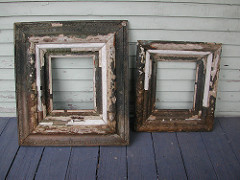
More than ever, my world has two realities. One reality is manageable, the other is immense. The manageable reality is my reference, a framework to enable me to keep functioning. It enables me to get up at a quarter past seven to cut some pieces of imported mango for my precious children. To sigh when looking at overflowing laundry baskets. To nag about an energy-devouring meeting that took longer than expected. It’s the framework that’s keeping me whole. The Frame World.
The other part is bigger and endlessly more complex. It’s the angry, overarching Dome World. In this world I’m the naive, fleet-footed creature that is called out to fight the Great Evil that is hiding in the Dome, where no escape is possible. It’s the theme of many heroic stories, like I love to read them. Lord of the Flee.
The reality of the Dome World today is raw and ruthless. We can try to change the picture of the drowned toddler in an icon, giving him wings and balloons, but it’s too late. It’s too late for all those children who didn’t wash up at the feet of a photographer. We’ve let them down.
There is no escape from this Dome World. You can only bang on the glass wall and try to hide in your own Frame World. But the Frame of those fleeing families has been reduced to firewood. Without a frame they’re adrift. More than literally.
Later today, I will find out once again where I can contribute to help.
Later today. Again, I’m disgusted. Later today, because I’ve promised homemade pizza to my children.
After all, my Frame World is still there.
How do you deal with the discrepancy between your own private life and the tragedies around it? Does your Frame World help keeping you sane or is it rather keeping you from acting?
This is an original post to World Moms Blog by K10K @ The Penguin and The Panther. Photo credit: Bart Everson. This picture has a creative commons attribution license.
If you ask her about her daytime job, Katinka will tell you all about the challenge of studying the fate of radioactive substances in the deep subsurface. Her most demanding and rewarding job however is raising four kids together with five other parents, each with their own quirks, wishes and (dis)abilities. As parenting and especially co-parenting involves a lot of letting go, she finds herself singing the theme song to Frozen over and over again, even when the kids are not even there...
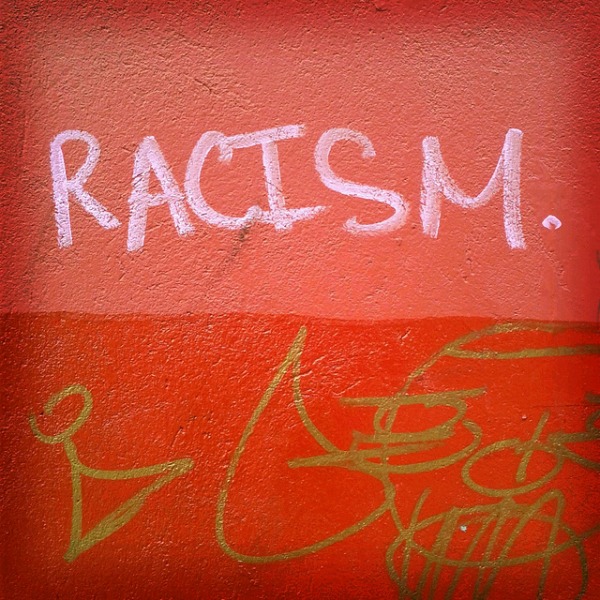
I used to think that racism didn’t exist any more.
Growing up in the Caribbean, in a cultural mishmash of a class, I learned about the slave trade and the underground railroad as part of history. Our teacher read to us about Harriet Tubman. We saw videos of Martin Luther King Jr.’s famous speech. We learned about Rosa Parks.
Carol from If By Yes has lived in four different Canadian provinces as well as the Caribbean. Now she lives in Vancouver, working a full time job at a vet clinic, training dogs on the side, and raising her son and daughter to be good citizens of the world.
Carol is known for wearing inside-out underwear, microwaving yoghurt, killing house plants, over-thinking the mundane, and pointing out grammatical errors in "Twilight". When not trying to wrestle her son down for a nap, Carol loves to read and write.
Carol can also be found on her blog, If By Yes, and on Twitter @IfByYesTweets
A life coach (LC) once told me it is important to be selfish sometimes. She had to explain what she meant because for as long as I could remember, the word ‘selfish’ was synonymous with not caring about anyone other than yourself. Well, LC was one of the sweetest people I have met, yet she did not strike me as one who would accept being pushed around, or would accept becoming a doormat. Usually, really sweet people are considered people on whom you can ‘get over’, right?
When I had this conversation with her I was already mother to by firstborn. However, I did not come to really contemplate the meaning of being selfish while being a mother, until after having my second child.
What LC was conveying to me is that although I am a mother, I am a person. Separate from all the titles I gather in life I have myself and I have to take care of self. You’ve probably heard it or read it somewhere…’If you don’t take care of yourself, you can’t take care of anyone else’. I have heard people reference it to when an aircraft loses oxygen and you are to put an oxygen mask on yourself before helping someone else, even your own child, put on her mask. Still, the word ‘selfish’ isn’t used here, even though it may be more concise and cost less to print. I do understand why: it just doesn’t sound good.
Nonetheless, being selfish (to an extent) is necessary for sanity, self-esteem, creativity, and a dynamic life.
I don’t know about other mothers, but I tend to analyze a lot. It used to be that before I left the house (children and husband in it), I would think of all I could do to make sure everything for the kids was where it was supposed to be so my husband could easily find it. It was as if the time I was going to be away had to be excused in my own mind, and that I was negatively selfish for not being there to care for them myself. I know this is absurd because we are both their parents and my husband hasn’t indicated, in any way, that he thinks or feels any of the things I am explaining here.
I realized I was hindering my own self from taking a break. From clocking out from my Stay At Home career. From taking care of me. From figuring out how to take care of me beyond taking a shower and maybe putting on some make up.
So about a month and a half ago my husband and I had a conversation. We acknowledged that we both feel the difference in our lives from how it was pre two small children and a teenager, to post two small children and a teenager. We agreed that we both need time to be ourselves individually and together. At the end of that conversation it was decided that I was going to begin taking scheduled ‘Me Time’.
The first time I had no clue what to do with myself. I was happy to leave the house and go do something. I didn’t want to waste my time. I didn’t want to do something as mundane as go window-shopping or take a nap in my car…like I have done a few times in the past. Then I realized I could do anything I wanted and I would be doing it by myself!
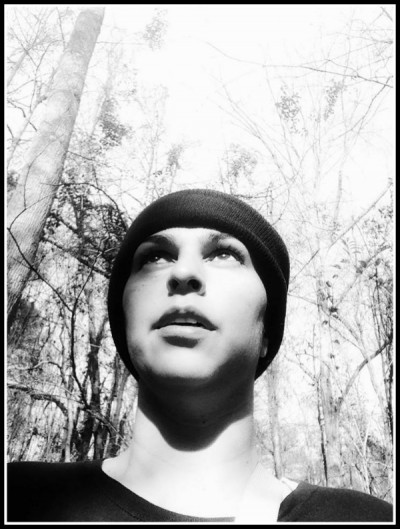
When I returned home I felt energized and didn’t feel like I needed to clock out again for a while. The second time I felt kind of guilty, leaving everyone again, so as it was already hard to schedule something with holiday travel, I just let that one go. Today was my third scheduled Me Time and I knew exactly what I was going to do. I was going to take my selfish self to the forest and hike! Yes, I was going to take a hike!
My hike was phenomenal. It was something I needed more than I thought. I wished for my husband and my children to be with me. I kept envisioning them there, but I knew I needed to be by myself. I needed to not worry about what they might need… if they are hungry, thirsty, or need a diaper change. Or if the 15-month old had eaten a crayon or is putting his finger in his mouth and maybe is now interested in sticking it in an electrical socket.
That’s the thing, you know? Being a Stay at Home Parent means that as long as your children are awake, you have to be aware while you’re cooking or cleaning, or doing whatever else you may need to do, Additionally, you have to be present for the myriad learning moments young humans have. I personally think that is tiring. I feel like I am wrong for feeling this way. That, as a parent, but more so as a mother, I should want to be with my children all the time and I should only get a tiny bit tired just as any human would from being awake and doing regular things.
To continue, my hike was what I needed. I focused on thinking of nothing. I took deep breaths as I walked briskly onward in the chilly air. Every time I thought to meditate I would first repeat a prayer I know, and then somehow ended up seeing Purnima Ramakrishnan’s face as if she was leading a meditation session. It was so strange and SO funny! Then I kept thinking about how I should have asked if there are wild animals to be concerned about on the trails. Black bears and cougars would have to just let me have my Me Time, you know?
After the hike I watched a R-rated movie (The Big Short) and ate a cookie.
I got home to two little babes wanting to be tickled and wanting to use me as an obstacle they had to demolish. It was a lot of fun and I knew I was better for them since I went and had some time with my own self.
Do you take time to do things on your own? Do you ever feel like you could be better for your children? When you do take time away, are there specific things you do that bring you back to center? What do you think about the word ‘selfish’?
This is an original post to World Moms Blog by Sophia. You can find her blogging at Think Say Be and on twitter @ThinkSayBeSNJ.
I am a mom amongst some other titles life has fortunately given me. I love photography & the reward of someone being really happy about a photo I took of her/him. I work, I study, I try to pay attention to life. I like writing. I don't understand many things...especially why humans treat each other & other living & inanimate things so vilely sometimes. I like to be an idealist, but when most fails, I do my best to not be a pessimist: Life itself is entirely too beautiful, amazing & inspiring to forget that it is!
(Photo: European Commission DG ECHO/Flickr/Creative Commons)
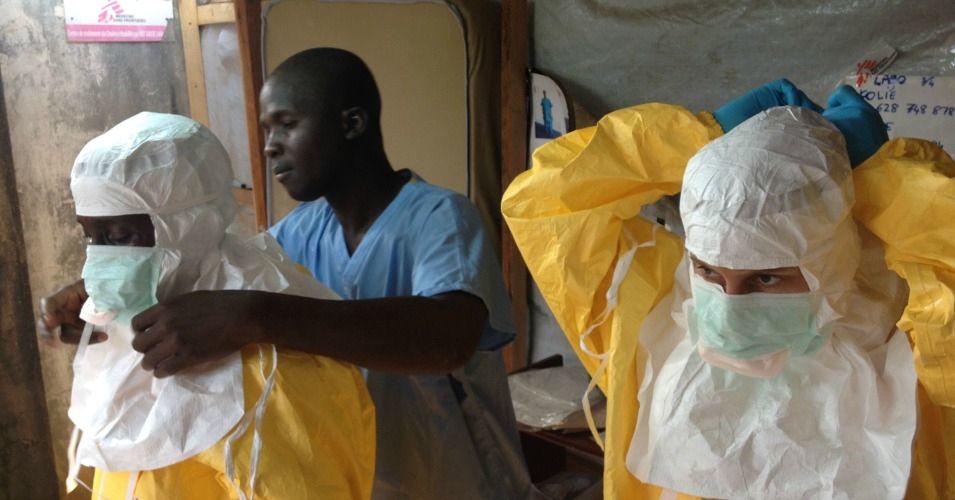
The World Health Organization declared the Ebola outbreak in West Africa officially over this past week. The Ebola epidemic that swept through Guinea, Liberia, Sierra Leone, and into Nigeria last year highlighted the importance of rapid response, and strong health infrastructure. Credited for halting the spread of the virus more widely in Nigeria was the Polio tracking system and stations already put in place by GAVI (Global Vaccine Alliance). Unlike the surrounding countries, Nigeria was able to use that already existing health care network and alert system to quickly track down possible exposures. Also highlighted by the outbreak was the importance of nutrition in preventing disease to begin with. Well-nourished children have much stronger immune systems than malnourished children, and are more resilient to bounce back when they do get sick. Sustainable Development Goal number two is zero hunger, a global priority since WHO estimates that malnutrition is the underlying cause in half of child deaths world wide.
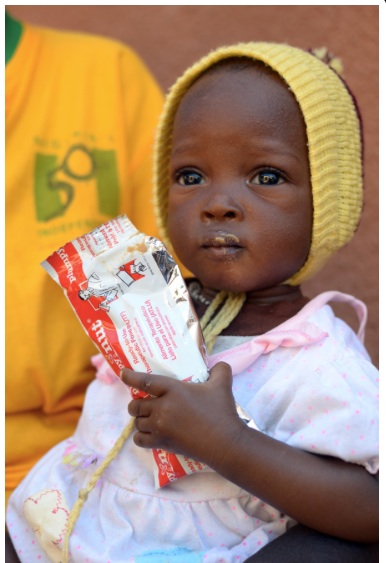
I knew that malnutrition made immune systems vulnerable, but working with a local non-profit specializing in the treatment and prevention of child malnutrition on a global level has given me new insight into just how critical proper nutrition is for the individual, and the world as a whole. You might be surprised to learn that the second largest producer in the world of a nutritionally fortified peanut paste used to treat malnutrition called Plumpy’Nut is located in the smallest state in the USA. Edesia is a non-profit that partners with organizations on the ground such as World Food Program, UNICEF and USAID to offer treatment and malnutrition prevention solutions to those who need it most. Countries such as Sierra Leone and Liberia had been receiving shipments of Edesia’s products long before the Ebola outbreak, where malnutrition was already an issue for many children before the virus hit. In the countries of Liberia, Guinea, and Sierra Leone the compounded crisis of child malnutrition was both a contributing factor, and then a cruel aftereffect of the Ebola epidemic.
Rhode Island infectious disease specialist Dr. Tim Flanigan, who traveled to Liberia in August of 2014 stated that
“More people were dying from malnutrition and other medical illnesses than from Ebola.” even at the height of the outbreak. “ So many infectious diseases are intertwined with malnutrition to begin with.”
The communities impacted the hardest were already fragile when the virus hit.
Dr. Flanigan explained, that the countries impacted by Ebola were some of the poorest countries on the continent. After years of civil wars, the destruction of the infrastructure had already made it a challenge for people to get enough to eat. Hunger, malnutrition, and starvation were already common realities in these vulnerable populations. All efforts and resources available then went to tackle Ebola when it hit, leaving any of the already challenged social services in place, like school meals or vaccine clinics, to flounder. When 20-day quarantines of people in homes with no running water, or electricity, (meaning no refrigeration for food), were instituted in some households, malnutrition rates were bound to soar.
Children are often the most vulnerable population in crisis scenarios, they are at much higher risk of disease when malnourished, even if they escape succumbing to any number of viral threats malnutrition puts them at risk of never growing to their full potential. The products produced in Rhode Island at Edesia, such as Plumpy’Nut and Plumpy’Sup, can literally save the lives of these children. In just 6 weeks on average a child suffering from Severe Acute Malnutrition, or SAM, can get back to their full healthy weight when treated with Plumpy’Nut. Last year Edesia reached nearly a million children. The United Nations Food and Agriculture Organization estimate is that nearly 795 million people (out of the 7.3 billion world population), so 1 in 9 people, suffered from malnutrition during 2014-2016. The goal at Edesia is to reach as many children as possible to help them thrive, and that means being prepared to react when the need arises. One of the essential building blocks to good health is proper nutrition, and a healthy community is a more resilient community. We saw how effective it was in the case of Nigeria and the Polio network to have systems in place when disaster strikes. The investment in global nutrition not only can help to prevent future outbreaks of disease, but ensure that all children have the opportunity to grow into healthy, productive adults.
What are some of the other lessons that this outbreak Highlighted?
This is an original post written for World Moms Blog by Elizabeth Atalay who also writes at documama and is the Digital and Social Media Specialist at Edesia.
Elizabeth Atalay is a Digital Media Producer, Managing Editor at World Moms Network, and a Social Media Manager. She was a 2015 United Nations Foundation Social Good Fellow, and traveled to Ethiopia as an International Reporting Project New Media Fellow to report on newborn health in 2014. On her personal blog, Documama.org, she uses digital media as a new medium for her background as a documentarian. After having worked on Feature Films and Television series for FOX, NBC, MGM, Columbia Pictures, Warner Brothers, 20th Century Fox, and Castle Rock Pictures, she studied documentary filmmaking and anthropology earning a Masters degree in Media Studies from The New School in New York. Since becoming a Digital Media Producer she has worked on social media campaigns for non-profits such as Save The Children, WaterAid, ONE.org, UNICEF, United Nations Foundation, Edesia, World Pulse, American Heart Association, and The Gates Foundation. Her writing has also been featured on ONE.org, Johnson & Johnson’s BabyCenter.com, EnoughProject.org, GaviAlliance.org, and Worldmomsnetwork.com. Elizabeth has traveled to 70 countries around the world, most recently to Haiti with Artisan Business Network to visit artisans in partnership with Macy’s Heart of Haiti line, which provides sustainable income to Haitian artisans. Elizabeth lives in New England with her husband and four children.
In the age of cellphones and social media, it’s very easy to disconnect from people without realizing you’re doing so. How many of us create walls subconsciously, especially if it concerns people of different nationalities we don’t usually associate with?
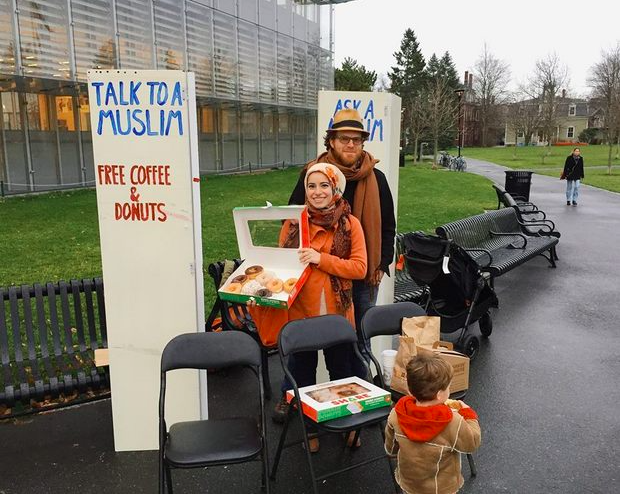
I was struck by a story of a woman who decided to set up a stand outside of a library in Cambridge, MA. Inspired by a story her husband saw on NPR titled “Ask an Iraqi”, Mona Haydar thought that it was important for her to establish a connection with those who may not know what’s it’s like to be a Muslim, especially a Muslim woman living in the United States.
For Haydar, setting up a stand titled “Talk To A Muslim” was a way for her to dispel any preconceived notions or stereotypes so many have of foreigners, especially of Muslim women.
With so many crises affecting different nationalities, in light of events happening in Syria, Haydar’s goal of creating a physical stand and waiting for people to approach her was a bold move since she had no clue how it would be received. What was surprising and hopeful was that people did stop by and spoke with Haydar, and that was a start. She was quite surprised to see how people did respond to her stand and while the reception was initially uncertain, it was enough for her to think about setting up the stand again.
In the current climate regarding people of cultures we aren’t familiar with, not willing to find out about them says more about us than them. There shouldn’t be a division of “them” and “us”, but unfortunately, there is.
How many times have we been guilty of giving in to fear of the unknown instead of taking a step back and dispelling the stereotypes we have learned about other cultures?
As someone who has had to answer questions about my nationality or religion over the years, the initial offense I felt has made me rethink of how people perceive me. Over the years, I have been mistakenly identified as either Korean or Japanese, rarely a Filipina. In addition, since I’m married to a Jewish man, I have been asked whether I’m a convert or adopted due to my Jewish maiden name, and to which I answer “no” to both. Answering these questions over the years, my frustration over being categorized primarily due to my physical appearance has made me realize that it’s not because of ignorance, but lack of communication. Asking questions and conversing about each other’s cultures would go a long way than being presumptuous about other people’s lives.
After reading about Haydar and seeing the NPR segment titled “Ask An Iraqi”, it made me wonder if we should put ourselves in Haydar’s shoes. Should we have to set up a stand in order to be understood or be compassionate towards others? Have we become so desensitized by our own prejudices that we have no room for being tolerant? I would hope not. Haydar’s stand may just be one form of starting conversations regarding one’s culture, but I think it’s an idea worth exploring. We might just realize that we may not look alike, but we all share the same intrinsic values of goodness towards humanity.
Read the original article regarding this post Here.
How do you think we can nurture better cross-cultural understanding?
This is an original post written by World Moms Blog Contributor Tes Silverman of The Pinay Perspective
World Moms Blog is an award winning website which writes from over 30 countries on the topics of motherhood, culture, human rights and social good. Over 70 international contributors share their stories from around the globe, bonded by the common thread of motherhood and wanting a better world for their children.
World Moms Blog was listed by Forbes Woman as one of the "Best 100 Websites for Women 2012 & 2013" and also called a "must read" by the NY Times Motherlode in 2013. Our Senior Editor in India, Purnima Ramakrishnan, was awarded the BlogHer International Activist Award in 2013.


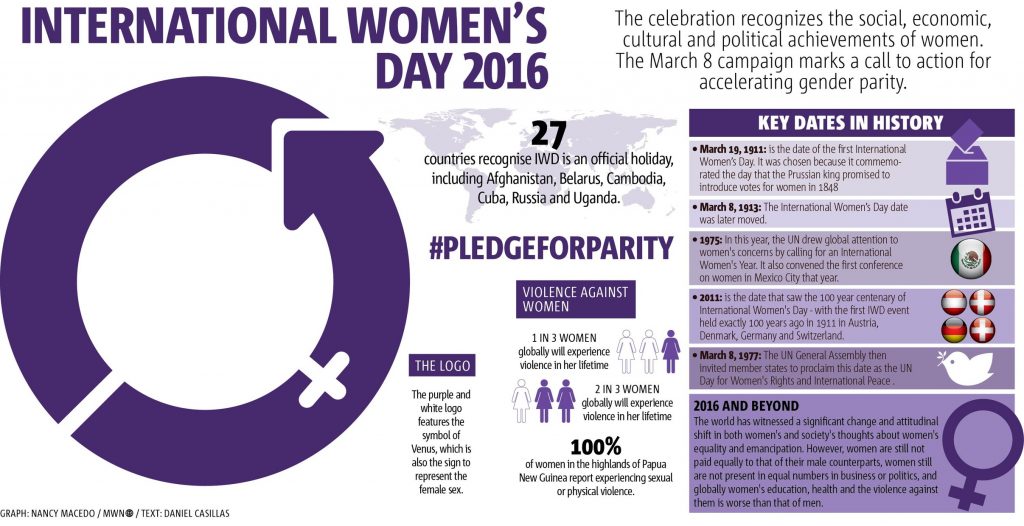 Today – Tuesday, March 8 – people all over the world will be celebrating International Women’s Day (IWD). IWD events across the globe include marches, rallies, sporting events, art expositions, and festivals with live musical and dance performances. IWD is a national holiday in more than two dozen countries; in some countries, only the women get the day off from work. If you use Google, you might even notice that the Google Doodle honors the occasion.
 The UN’s IWD theme “Planet 50-50 by 2030: Step It Up for Gender Equality” will also focus on new commitments under UN Women’s Step It Up initiative, which asks governments to make national commitments that will close the gender equality gap – from laws and policies to national action plans and adequate investment. So far, 91 governments have made specific national commitments. You can read them here.

 Next to me in the coffee shop, an elderly lady loudly complains to everyone who cares to listen. How poignant it is, this refugees’ crisis. How she doesn’t understand how nothing can be done to help all those poor people. How entire families are torn for life. How her hair had cost 80 euros. Seventyninepointfive full euros. Scandalous, don’t you think so, miss?