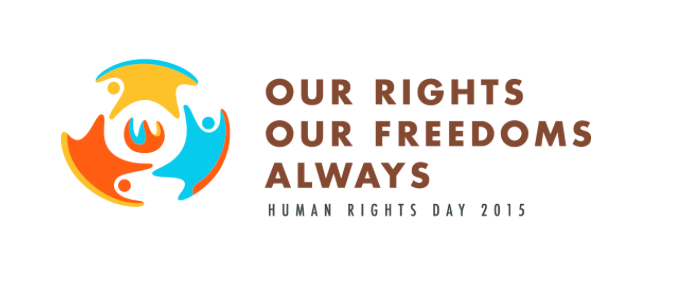
This year’s Human Rights Day is devoted to the launch of a year-long campaign for the 50th anniversary of the two International Covenants on Human Rights: the International Covenant on Economic, Social and Cultural Rights and the International Covenant on Civil and Political Rights, which were adopted by the United Nations General Assembly on 16 December 1966.
The “Our Rights. Our Freedoms. Always.” 50th anniversary campaign will highlight the theme of rights and freedoms — freedom of speech, freedom of worship, freedom from want, and freedom from fear — which underpin the International Bill of Human Rights are as relevant today as they were when the Covenants were adopted 50 years ago.
We have a tradition at World Moms Blog of celebrating Human Rights Day by sharing ideas for simple yet meaningful ways that families can learn about the rights and responsibilities that we all share as human beings.
For more ideas, check out our past Human Rights Day posts:
1. Learn about the Universal Declaration of Human Rights. Download an illustrated version of the UDHR on the UN website here. You can also find a simplified version of the UDHR here.
2. Join the UNICEF Kid Power Team and work together to help end global malnutrition. Globally, one in four children is malnourished, about 159 million children worldwide. 50 million children suffer from acute malnutrition resulting in about one million children dying each year. And 16 million children suffer from the most life-threatening form of malnutrition, severe acute malnutrition (SAM), which can require specialized feeding care such as treatment with Ready-to-Use Therapeutic Food (RUTF) packets.
Families can join the UNICEF Kid Power Team by purchasing a UNICEF Kid Power Band—available at Target—and downloading the free companion UNICEF Kid Power App. Kids go on missions to learn about new cultures and earn points by getting active. Points unlock funding from partners, parents and fans, and funds are used by UNICEF to deliver lifesaving packets of therapeutic food to real, severely malnourished children around the world. In the pilot project earlier this year, more than 11,300 kids in Boston, Dallas and New York joined the UNICEF Kid Power Team and took enough steps to walk around the world more than 23 times. These kids earned enough Kid Power Points to unlock 188,850 therapeutic food packets, enough to save the lives of 1,259 children.
3. Stand up for the rights of girls everywhere. Girl UP, the United Nations Foundation’s adolescent girl campaign, engages girls to take action. Girl UP’s current advocacy priority is improving access to quality education for girls worldwide, especially those in vulnerable settings. Worldwide, 140 million children are not in school – more than half are girls. Learn more about the impact of education of girls on society here. Learn about ways you can advocate (no matter your age) here.
4. Sing your own song! Amandla! is a song that was a sung by Black South Africans during apartheid to give them strength. Amandla is a Zulu and Xhosa word meaning “power”. It was also the name of a documentary about the role of music in apartheid South Africa that won multiple awards at Sundance in 2003. The chorus is:
We will fight for the right to be free
We will build our own society
And we will sing, we will sing
We will sing our own song
The band UB40, which strongly advocated against apartheid in the 1980s, did a popular cover of the song Amandla!
Amnesty International created a full lesson plan around the song. Check out the full lesson, which encourages kids to sing along with the song. Take out specific words and have your kids fill in the blanks. Kids have such a great sense of justice that their words may surprise you! Then have your kids draw the images that the song evokes and present their art projects to others.
(Fun fact: Amandla Stenberg, who played Rue in The Hunger Games, was named for the word and its meaning.)
5. Play Rights of the Child Pictionary. Based on the game Pictionary, each child sketches his or her interpretation of one article of the Convention on the Rights of the Child. When all are done, you can take turns examining the sketch and guessing the article it represents. For this and other ideas for teaching children’s rights through art, click here.
6. Play Human Rights Musical Chairs. This lesson developed by The Advocates for Human Rights is game similar to musical chairs, with a writing and/or drawing twist. Select magazine and newspaper images that you feel effectively demonstrate a particular article of one of the 30 articles of the UDHR. For example, if the picture shows a scene where a group of children, boys and girls, are happy and walking with backpacks on their way to school, you could discuss Article 26 the “Right to Education” and Article 2 “Freedom from Discrimination” as both girls and boys are attending school.
Tape one image onto each chair along with one sheet of paper. Select music to indicate the starting and stopping of the writing. Tell the kids that they can write about whatever the image makes them think of. When the music starts, have the kids write the beginning of the story based on the image. After a few minutes, stop the music and have them move to the next image. Start the music and have them write the middle of the story based on that image. Encourage them to follow the storyline already in progress but allow them to get creative. Stop the music and have them move to the third image and write the ending. For more ideas, check out The Advocates for Human Rights’ resources for educators.
7. Learn more about famous and not-so-famous human rights heroes. There are many great biographies of famous activists (I Am Malala is one you may enjoy) but there are also many other inspiring peace and social justice activists to learn about. Better World Heroes is an informational website which includes the biographies of 1000 heroes who have fought to build a better world.
The Giraffe Heroes project tells the stories of “Giraffe Heroes” – people who stick their necks out for the common good.
8. Read Dr. Seuss’ The Sneetches as part of an anti-racism, anti-bullying activity. Teaching Tolerance has developed a great simulation activity. The simulation exercise can help children understand the emotional impact of unfair practices. The follow-up activity on discrimination helps ensure that students understand that the goal is to change those practices, not the characteristics that make us different from one another. Check out all of Teaching Tolerance’s resources here.
9. Take a test together. The Representation Project has developed two quizzes to examine how mainstream media shapes our beliefs and practices about women and girls, as well as what it means to be a man. For families with preteens and teens who are interested starting a conversation about this issue, the Representation Project’s family resources can be found here.
#TheRepTest is a media literacy tool, sparking conversation about overall representation in film, television, and video games and encouraging more diversity in the entertainment industry.
The #BeyondTheMask quiz lets you grade male characters as role models.
10. Have a conversation with your family about what it means to be “free and equal”. Watch this video with your kids and discuss their reactions.
What else does it mean to be “free and equal”? the United Nations recently launched a new campaign called “Free & Equal” for lesbian, gay, bisexual and transgender equality. There are fact sheets, information about a film series, and much more on the Free & Equal website. You can even check out the very first Bollywood video for gay rights. The UN is asking that you share if you believe everyone should be welcomed into their family’s hearts, regardless of their sexual orientation.
The 2015 “Faces” video from the Free & Equal campaign celebrates the contributions that millions of lesbian, gay, bisexual, transgender and intersex people make to families and local communities around the world. The cast features “real people” (not actors), filmed in their workplaces and homes — among them, a firefighter, a police officer, a teacher, an electrician, a doctor and a volunteer, as well as prominent straight ally and UN Secretary-General Ban Ki-moon. Can you see past the label?
If you are not sure how to talk to your kids about LGBT issues, check out these Human Rights Campaign resources that provide the language and information needed to discuss lesbian, gay, bisexual and transgender people and issues in an age appropriate way with children and youth.
I hope you and your families have a great Human Rights Day 2015! If you have other ideas for human rights activities, please share them with us!
What are your ideas?
This is an original post for World Moms Blog by Jennifer Prestholdt who also writes at HumanRightsWarrior.com.
Jennifer Prestholdt is a lawyer and the Deputy Director of The Advocates for Human Rights, a volunteer-based human rights organization that works locally, nationally and internationally. Her work in human rights takes her around the world, but she spends most of her time in Minneapolis, MN, where she lives with her children (two sons and one daughter), her husband, an elderly cat and a dwarf hamster.
As Jennifer’s kids are now all in school (1st, 4th and 6th grades), she is finally finding more time to do the things that she used to love to do, especially running, writing and knitting. Jennifer loves to travel and has had the dubious distinction of having been accidentally locked in a bathroom on five continents so far. Australia and Antarctica await!
In January 2011, Jennifer made a New Year’s Resolution to start writing about her experiences in order to share with her children the lessons learned from 15 years of work in human rights. The result is her personal blog, The Human Rights Warrior. The name comes from her son Simon, who was extremely disappointed to learn that his mother is a lawyer, not a warrior.
Sometime ago, I opened my email and saw this subject line in my inbox: “Mompreneur. Worst word ever.” At first it made me kind of irritated, and I almost moved that email to the trash without reading it. Then I actually read it. I wanted to see who and why would say that a word that describes a business woman who wears way more hats than anybody else, should be so shameful for using that word. At that point in my life I was very proud of using this word to describe myself, and I was curious, because maybe, just maybe, I was missing something. (more…)
Ewa was born, and raised in Poland. She graduated University with a master's degree in Mass-Media Education. This daring mom hitchhiked from Berlin, Germany through Switzerland and France to Barcelona, Spain and back again!
She left Poland to become an Au Pair in California and looked after twins of gay parents for almost 2 years. There, she met her future husband through Couch Surfing, an international non-profit network that connects travelers with locals.
Today she enjoys her life one picture at a time. She runs a photography business in sunny California and document her daughters life one picture at a time.
You can find this artistic mom on her blog, Ewa Samples Photography, on Twitter @EwaSamples or on Facebook!
What would you take with you if had to leave at a moment’s notice? Other than the clothes on my back and possibly some photos of my family, there would be nothing else that I would carry with me. For those fleeing dangerous situations, as in the case of Syrian refugees, so much emphasis is placed on the welfare of men and children, but what about the needs of women, especially when it involves their hygiene?
In Essex, England, three women are making a difference in the lives of Syrian women with regard to this issue. Helen McDonald, Megan Saliu and Helen Pudney founded SOS Calais, or Supporting Our Sisters in Calais. Together they organized drives to collect sanitary pads and had them delivered to the one of the biggest refugee camps in Calais, France where women make up 10% of the population. Donating food, water and personal products are just as necessary, but for women, menstrual products are crucial.
For most women, menstrual products are easily accessible, but for women who have been displaced due to crisis situations, access is virtually impossible.
In addition to access, there is the question of safety for these women. The women McDonald, Saliu and Pudney encountered in Calais were in their twenties and outnumbered by men in the same camp. These women are forced to look out for themselves to avoid harassment due to minimal or no security or support for them otherwise. Providing these women with products specifically for them gives them a sense of inclusion and empowerment.
For someone like me who has experienced moments of embarrassment or horror for not having sanitary pads when I’ve needed them, it’s quite disconcerting to know that these women are forced to find alternative means to take care of their needs, especially with menstrual products. It is an unfortunate byproduct of being torn from one’s home or country as a result of war or oppression and it is unrealistic to think that women and children are less affected than men.
Women in these environments become targets as a way to weaken their resolve in achieving independence and have to rely on others for help or do without. With the crowdfunding page created by McDonald, Saliu and Pudney, they intend to raise awareness of how crucial it is to provide these women with their needs. It is up to us, and the rest of the world, to step up and ensure that everyone, especially women in crisis environments, get their needs met. It’s the least we can do for them and future generations.
What other basic needs would you have if you had to flee on short notice?
This is an original guest post written by Tes Silverman for World Moms Blog.
Tes Silverman was born in the Manila, Philippines and has been a New Yorker for more than 30 years. Moving from the Philippines to New York opened the doors to the possibility of a life of writing and travel. Before starting a family, she traveled to Iceland, Portugal, Brussels, and France, all the while writing about the people she met through her adventures. After starting a family, she became a freelance writer for publications such as Newsday’s Parents & Children and various local newspapers. Four years ago, she created her blog, The Pinay Perspective. PinayPerspective.com is designed to provide women of all ages and nationalities the space to discuss the similarities and differences on how we view life and the world around us. As a result of her blog, she has written for BlogHer.com and been invited to attend and blog about the Social Good Summit and Mom+Social Good. Currently residing in Huntington, NY with her husband, sixteen year-old daughter and nine year-old Morkie, she continues to write stories of women and children who make an impact in their communities and provide them a place to vocalize their passions.
World Moms Blog is an award winning website which writes from over 30 countries on the topics of motherhood, culture, human rights and social good. Over 70 international contributors share their stories from around the globe, bonded by the common thread of motherhood and wanting a better world for their children.
World Moms Blog was listed by Forbes Woman as one of the "Best 100 Websites for Women 2012 & 2013" and also called a "must read" by the NY Times Motherlode in 2013. Our Senior Editor in India, Purnima Ramakrishnan, was awarded the BlogHer International Activist Award in 2013.
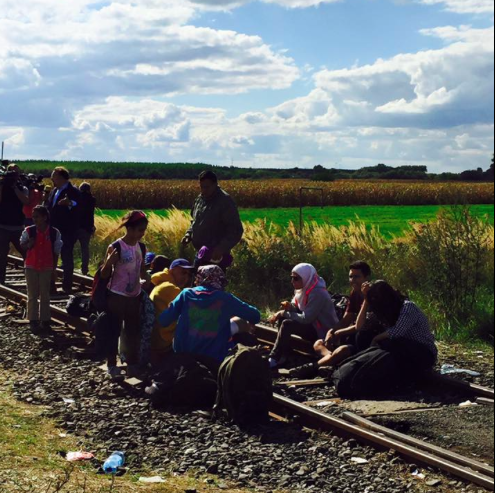
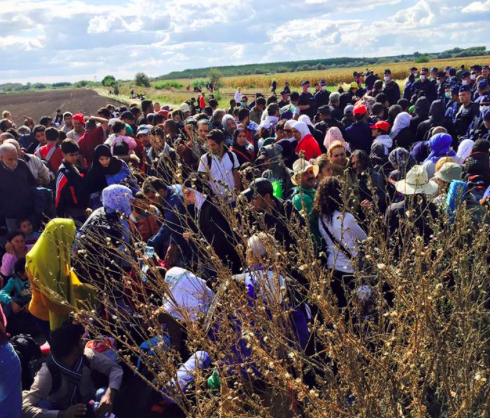
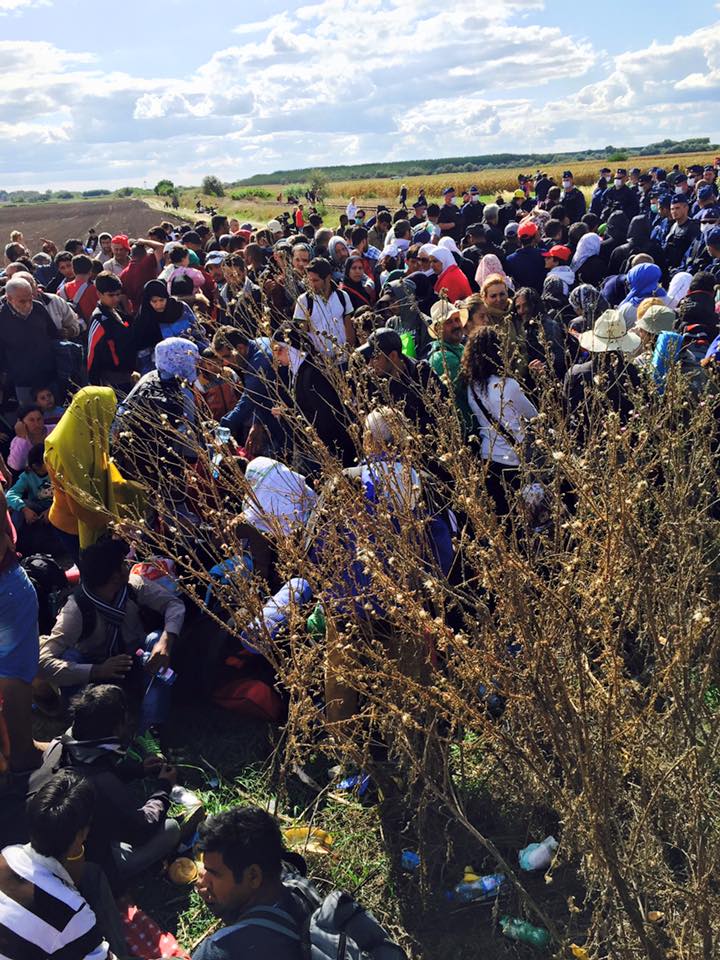
In a time where one’s ethnicity is being questioned or disregarded, as evidenced by the treatment of Syrian refugees, I thought it timely as one of the topics at the recent Social Good Summit.
I’ve attended the Social Good Summit three times, and each time, I came away wanting to be involved more than I ever had before. The topics ranged from human rights to AIDS activism and most importantly this year, the 17 Sustainable Development Goals that are being discussed and implemented by 2030. One of the speakers, United Nations High Commissioner for Refugees, António Guterres, spoke about the importance of being involved at a time of intolerance. The topic was titled “Refugees: The Route to Resettlement” and the panelists outlined what must be done to resolve this issue.
For UNHCR Guterres, it wasn’t just Syrian refugees that need to be addressed as he states, “let’s not forget that 86% of refugees are in the developing world”. It’s become almost “normal” to hear about refugees from Syria looking to resettle, but that’s where the problem lies. Developed countries like the US and Europe should be taking in more refugees, but whether it’s a matter of logistics or fear of being replaced, it has affected the plight of Syrians. Currently, there are more than 4 million Syrian refugees displaced globally and while U.S. Secretary of State John Kerry announced this September that the United States would accept 200,000 refugees, that is a fraction of those who are currently displaced. For Guterres, it’s not enough that we open our doors wide; he believes that the international community must do more and time is of the essence if these issues are to be resolved. These “refugees” should not be shunned but embraced because “diversity is a richness, not a problem”.
Another panelist who made an impassioned plea to find some solutions for this issue was UNCHR Ambassador of Goodwill Ger Duany. Duany was a former child soldier, one of the Lost Boys of Sudan, until he fled to the United States in 1994. For Duany, being a former refugee makes him a great barometer for what could be the future of refugees. When he became a political prisoner, he turned his life around and has become an example of what one can accomplish given the chance.
What is becoming dangerous at this time and affects the future of anyone looking for asylum are the economic ramifications that result from helping them resettle. In addition to economic instability, there is a pattern of xenophobia that is being experienced in Lebanon, Jordan and currently, Europe. Xenophobia is an unfortunate byproduct of the unknown, but it should not shape or affect how we treat others, especially those who are in danger.
It is necessary that as a society, we remember that so many of us came from places where we were forced to leave our homes, families and lives. It is vital to remember that without “refugees” our society would not have the richness of cultures that we have today.
It is disconcerting that a “refugee” , whose primary goal is to find a safe haven for themselves and their families, has evoked negative responses from those who feel threatened by their presence.
Photo Credit: Jennifer Lovallo
As someone whose parents came to this country to escape martial law in the Philippines, it is heartbreaking to see photos and read of the plight of these refugees, seeking asylum and freedom from their suffering. As a wife and mother of a teen, I can only imagine how I would be if I were ever in the same situation. My family was lucky to have escaped from a dictatorship, but I also know that it could have gone quite differently.
While the Social Good Summit has come and gone, there is more work to do if we are to solve the refugee crisis at hand. The SDG’s and conversations are great starting points, but concrete actions are needed to ensure that refugees are not ignored or forgotten. It is my hope that the implementation of the proposed Sustainable Development Goals will propel actions to resolve this crisis.
Does your own family have a history that includes a refugee tale?
This is an original post written for World Moms Blog by guest contributor Tes Silverman of www.pinayperspective.com
Tes Silverman was born in the Manila, Philippines and has been a New Yorker for more than 30 years. Moving from the Philippines to New York opened the doors to the possibility of a life of writing and travel. Before starting a family, she traveled to Iceland, Portugal, Brussels, and France, all the while writing about the people she met through her adventures. After starting a family, she became a freelance writer for publications such as Newsday’s Parents & Children and various local newspapers. Four years ago, she created her blog, The Pinay Perspective. PinayPerspective.com is designed to provide women of all ages and nationalities the space to discuss the similarities and differences on how we view life and the world around us. As a result of her blog, she has written for BlogHer.com and been invited to attend and blog about the Social Good Summit and Mom+Social Good. Currently residing in Huntington, NY with her husband, sixteen year-old daughter and nine year-old Morkie, she continues to write stories of women and children who make an impact in their communities and provide them a place to vocalize their passions.
World Moms Blog is an award winning website which writes from over 30 countries on the topics of motherhood, culture, human rights and social good. Over 70 international contributors share their stories from around the globe, bonded by the common thread of motherhood and wanting a better world for their children.
World Moms Blog was listed by Forbes Woman as one of the "Best 100 Websites for Women 2012 & 2013" and also called a "must read" by the NY Times Motherlode in 2013. Our Senior Editor in India, Purnima Ramakrishnan, was awarded the BlogHer International Activist Award in 2013.
My husband doesn’t like babies. That’s a problem, because in Canada, men are expected to share parenting duties. Women expect help from their husband when a baby is born, and I wasn’t any different. (more…)
Carol from If By Yes has lived in four different Canadian provinces as well as the Caribbean. Now she lives in Vancouver, working a full time job at a vet clinic, training dogs on the side, and raising her son and daughter to be good citizens of the world.
Carol is known for wearing inside-out underwear, microwaving yoghurt, killing house plants, over-thinking the mundane, and pointing out grammatical errors in "Twilight". When not trying to wrestle her son down for a nap, Carol loves to read and write.
Carol can also be found on her blog, If By Yes, and on Twitter @IfByYesTweets
“My grandmother told me that a woman is like the neck and the man is the head,” my student said. “Important but supportive.” The rest of the students in my class on “Global Women Writers” nodded their head in agreement. None of the students is from the same country—in fact, their nationalities pretty much span the globe—but apparently they’d all been given similar sorts of instructions. One girl had been told that she should plan on being an accountant because it would be easy to quit when she got married; another girl said that her mother worried that her brains were going to be threatening to her potential husband.
The list of readings is longer than what I have listed here—we will go to India, New Zealand, Egypt, Nigeria, and the UAE before the term is over—but the students have already noticed a pattern. No matter where we are in time and space, we find variations on the same theme: lack of access. Lack of access to money, education, safety, autonomy—the particulars may change, but always the obstacles seem rooted in the material reality of being female, and how the category of “woman” has been valued (or devalued) through the course of human history.
Sor Juana joined a convent so that she could pursue her studies instead of being forced into marriage and motherhood; Jane Eyre famously declared that women “feel just as men feel; they need exercise for their faculties and a field for their efforts as much as their brothers do; they suffer from too rigid a restraint … precisely as men would suffer; and it is narrow-minded in their more privileged fellow-creatures to say that they ought to confine themselves to making puddings and knitting stockings…”
“I love Jane,” exclaimed one student when we read that passage in the novel. “It’s like she’s speaking to me!” When students respond to ideas in the course, I am always delighted, but in this instance, I had to pause.
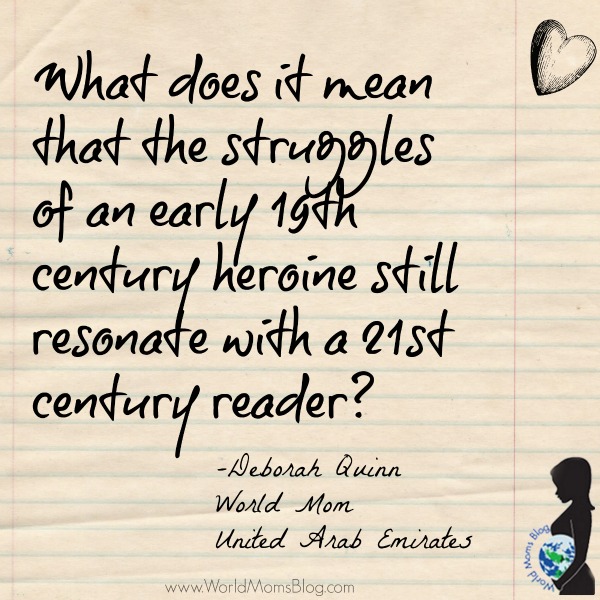
What does it mean that the struggles of an early 19th century heroine still resonate with a 21st century reader? I know, of course, that men struggle with feeling limited in their choices—as I remind my students, “gender” is something everyone has (although I’ve noticed that when students talk about “gender roles” they mostly talk about women). All the same, however, wouldn’t you have thought that by 2015, we would laugh at the attitudes Jane complains about because they seem so old-fashioned? Instead we experience a flash of recognition that in Jane’s world, as in our own, society insists on placing boundaries around women’s lives.
When I proposed teaching this course, a colleague asked why I had to specify “women.” She wondered why I didn’t just teach a course called “The Global Novel” or something like that. It’s a reasonable question, I suppose, but I think the answer connects, in a way, to why the United Nations decided, two years ago, to declare 11 October the International Day of the Girl: “Empowerment of and investment in girls are key in breaking the cycle of discrimination and violence and in promoting and protecting the full and effective enjoyment of their human rights.” (Click here to see how World Moms Blog celebrated this day.)
Don’t get me wrong – I am the mother of two boys (and no daughters) and while I know that my sons face gender-related struggles, I also know (because I was once a girl, and am now verging on “crone”) that men have not been as systematically pushed to the margins of history. It’s why we have “Secretary Day,” in the U.S., rather than “CEO Day.” We create formal occasions to notice those who would otherwise be silenced, overlooked.
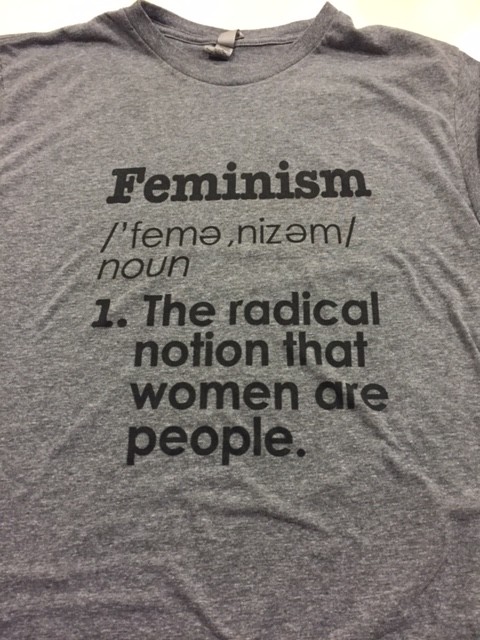
I teach “Global Women’s Writing” because we live in a world where “woman” gets all too easily pushed out of the picture. Ironically, I teach the course in hopes that one day I won’t need to. Perhaps my students–our children–will inherit a world where we don’t need “International Day of the Girl” or a course in “women” writers. Do you think we’ll ever get there?
This post is original to the World Moms’ Blog. Deborah Quinn occasionally blogs at mannahattamamma.com and writes a regular column for The National, the English-language paper of the UAE. Her most recent column can be found here.
After twenty-plus years in Manhattan, Deborah Quinn and her family moved to Abu Dhabi (in the United Arab Emirates), where she spends a great deal of time driving her sons back and forth to soccer practice. She writes about travel, politics, feminism, education, and the absurdities of living in a place where temperatures regularly go above 110F.
Deborah can also be found on her blog, Mannahattamamma.

 Each year on December 10, people all around the world celebrate Human Rights Day.


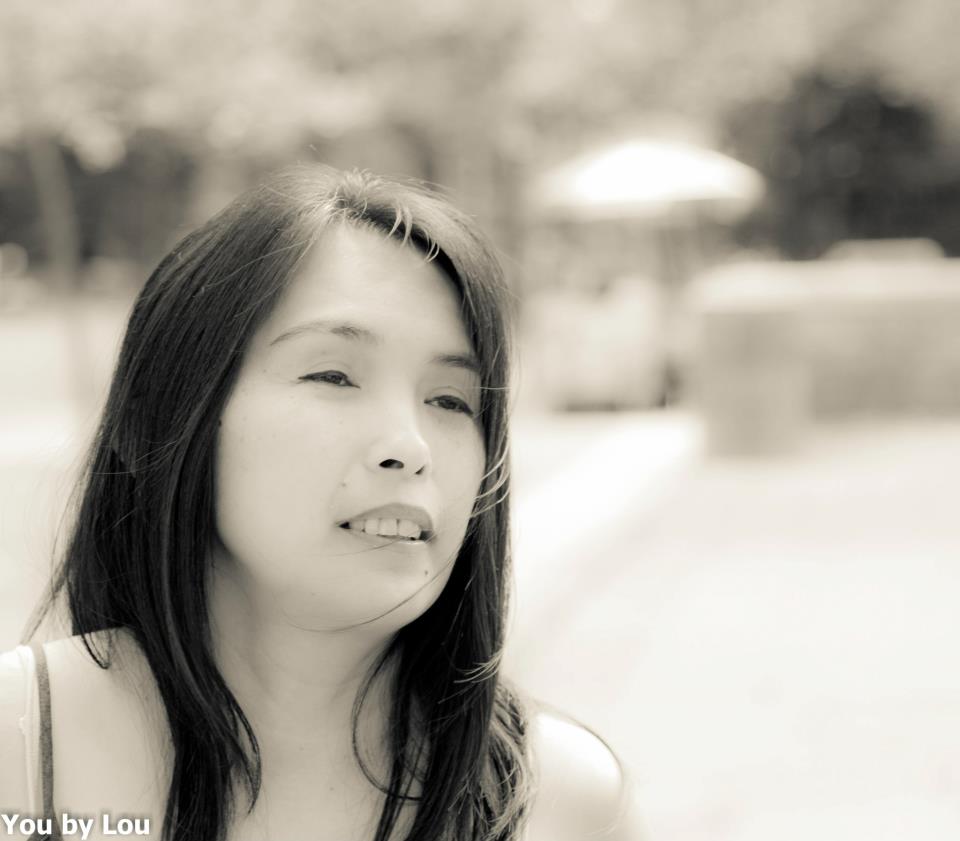 Tes Silverman was born in the Manila, Philippines and has been a New Yorker for more than 30 years. Moving from the Philippines to New York opened the doors to the possibility of a life of writing and travel. Before starting a family, she traveled to Iceland, Portugal, Brussels, and France, all the while writing about the people she met through her adventures. After starting a family, she became a freelance writer for publications such as Newsday’s Parents & Children and various local newspapers. Four years ago, she created her blog,