by World Moms Blog | May 7, 2015 | 2015, Awareness, Being Thankful, Birthing, Casting a Wider Net, Clean Birth Kits, Education, Global Citizenship, Health, Helping, Human Rights, International, Life, Life Lesson, Loss of Child, Maternal Health, Motherhood, Newborn Health, ONE, Pregnancy, Priorities, Responsibility, Tragedy, Transportation, Womanhood, Women's Rights, Working Mother, World Mom Feature, World Motherhood
 Every mother has the right to access the care they need during pregnancy and childbirth – care that can identify, prevent, and manage complications should they arise. But failure to meet these needs results in the loss of 800 mothers every day, even though up to 98% of these deaths are preventable.
Every Mother Counts is working to provide solutions that can make pregnancy and childbirth safer. We know that with the right care at the right time, it IS possible that every mother could have the chance to survive and thrive.
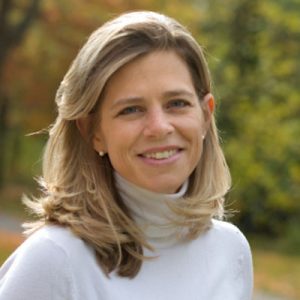
Recently, World Moms Blog sat down with Executive Director of Every Mother Counts, Erin Thornton, to talk about how she got involved with the organization and what drives her to work so hard for maternal health.
World Moms Blog: Erin, you’re the mother of three young girls and you live in the metro-Boston area yet you are the executive director of Every Mother Counts, a New York-based non-profit working in five locations around the world. How did you get involved?
Erin Thornton: My involvement with Every Mother Counts grew out of a 10-day trip to Africa with my former organization, ONE. We had invited Christy Turlington Burns along and she and I got chatting about maternal health. Maternal health was not an issue ONE focused on and I was really drawn to what Christy was telling me about.
WMB: What about maternal health drew you in?
ET: Well, Christy had just completed the film, “No Woman, No Cry” a documentary about maternal health challenges that impact the lives of millions of girls and women around the world. During our trip through five African countries, Christy and I spent a lot of time comparing notes on what was needed to move the maternal health agenda forward. Through all my time at ONE, I realized how interlinked so many poverty challenges are to maternal health—that if moms are kept alive, we can better keep kids alive, better give them an education and clean water, etc. Yet still no one was really talking about it.
WMB: What prompted you to leave behind a long career with ONE and join Christy in her pursuit of spreading maternal health awareness as she built this new non-profit?
ET: I had been with ONE since 2002, when I became the first hire in the US for ONE’s predecessor organization, DATA. By 2010, ONE had grown to 120 people in four different global offices. I had two young girls and I was starting to think about making a change. The more Christy and I talked about the need for an “awareness campaign” for maternal health, the more I realized I wanted to be a part of it too, so six-months later, I formally signed on to help her build the organization.
WMB: In just a few days (May 10), we celebrate Mother’s Day here in the US, can you share with World Moms something about what makes you a passionate believer in Every Mother Counts?
ET: Physiologically, every woman goes through pregnancy the same way and faces the same chances of developing a complication. The difference in how they fare mainly comes down to whether they have access to good health care- or not. Helping more moms enjoy a safe pregnancy and delivery may sound like an overwhelming challenge but we really CAN make a difference. EMC has identified three target areas to focus our support on: 1. transport, 2. education and training for healthcare providers, and 3. supplies for clinics–including birth kits, solar suitcases and lighting. And we’re seeing that these seemingly simple things are making a big difference.
This Mother’s Day, Every Mother Counts is celebrating #WhatIsPossible for every mother.
Every mother has the right to access the care they need during pregnancy and childbirth – care that can identify, prevent, and manage complications should they arise. But failure to meet these needs results in the loss of 800 mothers every day, even though up to 98% of these deaths are preventable.
Every Mother Counts is working to provide solutions that can make pregnancy and childbirth safer. We know that with the right care at the right time, it IS possible that every mother could have the chance to survive and thrive.
So this Mother’s Day, as we look at the future of maternal health, we ask ourselves #WhatIsPossible? And the answer is, a lot.
With your help, Every Mother Counts has already impacted thousands of lives by improving access to critical maternal health care for vulnerable mothers.
During the month of May, we invite you to spread the good news about by sharing this .
This is an original interview with Erin Thornton posted by World Moms Blog Managing Editor, Kyla P’an.
The image used in this post is from the Every Mother Counts website and is used here with permission.
World Moms Blog is an award winning website which writes from over 30 countries on the topics of motherhood, culture, human rights and social good. Over 70 international contributors share their stories from around the globe, bonded by the common thread of motherhood and wanting a better world for their children.
World Moms Blog was listed by Forbes Woman as one of the "Best 100 Websites for Women 2012 & 2013" and also called a "must read" by the NY Times Motherlode in 2013. Our Senior Editor in India, Purnima Ramakrishnan, was awarded the BlogHer International Activist Award in 2013.
More Posts
by Purnima Ramakrishnan | May 5, 2015 | 2015, Global Citizenship, Helping, Humanitarian, India, International, Natural Disaster, Nepal, United Nations, World Moms Blog, World Voice
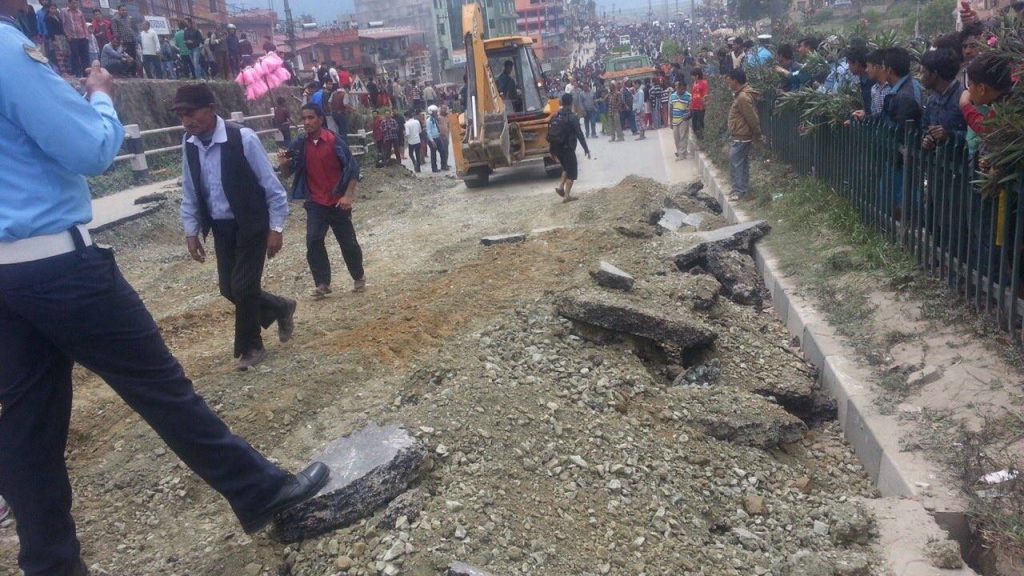
As an Indian, writing about the #NepalEarthquake today, I have to share a few interesting facts about the Indo-Nepal relationship. An Indian National does not need a VISA to travel to Nepal, and an Indian National does not need even a passport to enter Nepal.
An Indian National only needs some sort of ID card on him to show that he is in an Indian National. And then he is free to come and go.
That is the level of friendship, comradeship, and mutual trust and confidence the countries have on each other. It is just like traveling to another state within India.
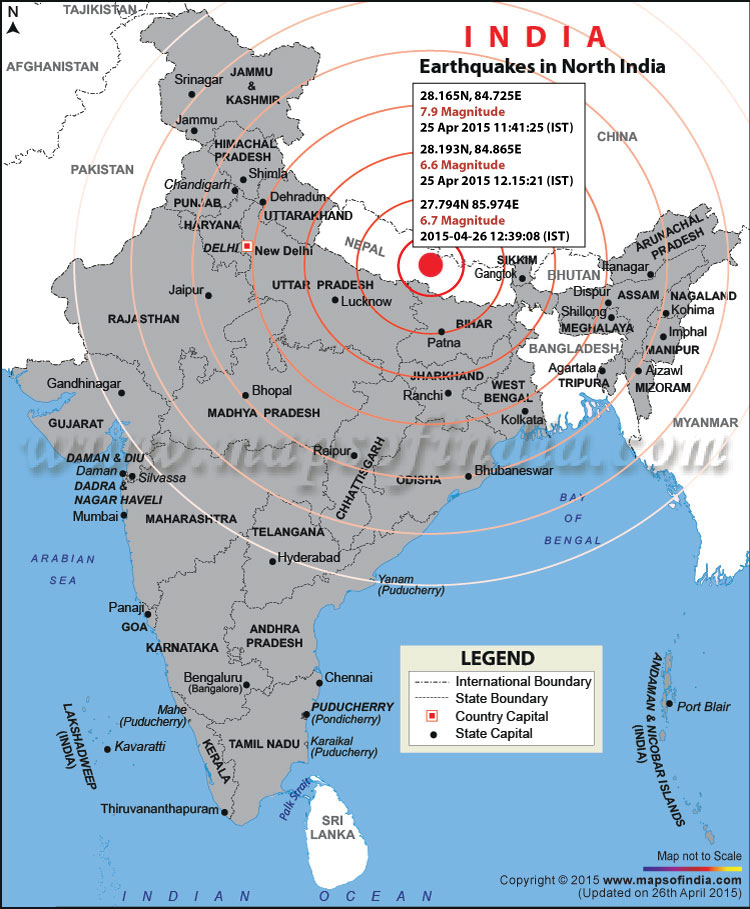
location-map-of-earthquake-on-25-april-2015-in-entire-india
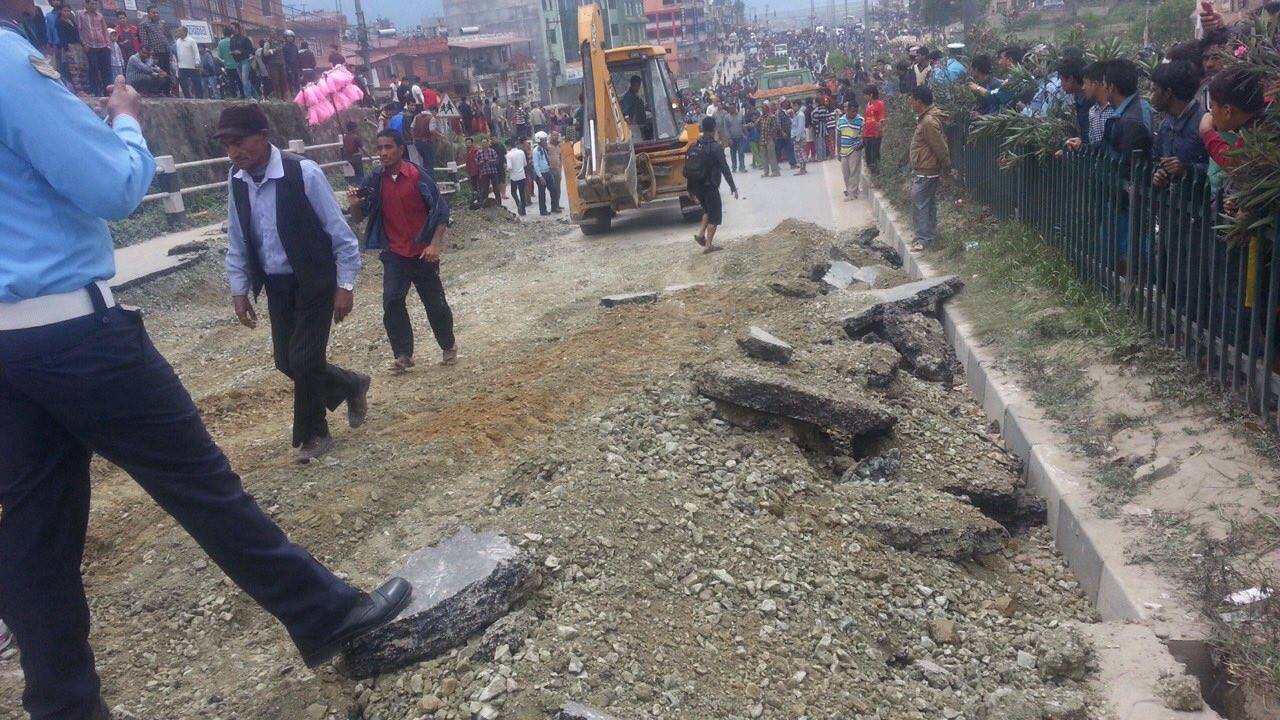
It was a great shock to hear about the earthquake on Saturday April 25th. On this date, Nepal was hit by earthquake of a 7.8 magnitude that has killed over 7000 people. The death toll is unfortunately estimated to increase up to 10,000 as rescue efforts span out to remote regions of the epicentre. Nepal has experienced over 50+ aftershocks of 4.5 magnitudes or higher after the initial earthquake.
The injured are in need of desperate medical attention. Countless have lost their homes and are on streets in need of food, water, and medical supplies.
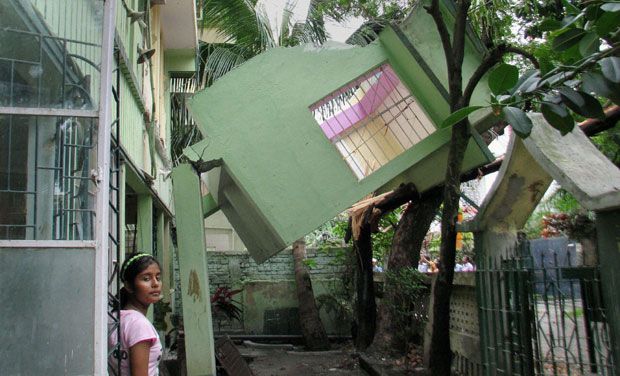
Buildings collapsed in Siliguri, North India
I was traveling in North India when I learned about the #NepalEarthquake. Some parts of Delhi, Lucknow, Bihar (all in India) felt the tremors and aftershocks. At least 60 people were killed in North India and more than 100 injured during this period. I frantically checked for all my friends in North India and Nepal. I even got a call from my friend and fellow World Mom, The Human Rights Warrior, Jennifer Prestholdt to help contact the school in Nepal that her organization works closely with. Major telecom provider #Airtel had made all calls free from India to Nepal. You can read her story about when she finally got the news she was hoping for, and when she read the text message “All our SPCS family r safe,” from Anoop Poudel, headmaster at the Sankhu-Palubari Community School (SPCS) in Nepal.
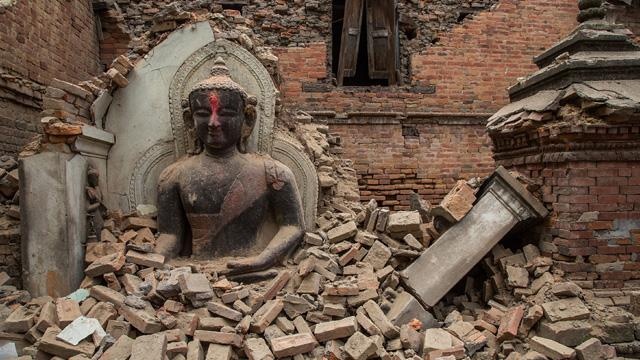
Aftermath and rubble
Indian government’s Operation Maitri (meaning friendship) aptly called so, has started helping within 15 minutes of the earthquake.
Organizations like Save the Children, Red Cross, UNICEF, WFP and Care are on the ground with supplies and volunteers. These organizations have teams on the ground and are the most capable in immediate rescue and relief work.
1. Save the Children
Save the Children is an international charity that has been in Nepal since 1976. In fact, when the earthquake hit, there were nearly 500 of their aid workers, mostly Nepalese, on the ground who were already doing work in the area. This was a great help when there were difficulties with the airport at first, according to Carolyn Miles, President and CEO of Save the Children. Also, 10% of funds are going to preparations for future disasters. You can donate to their Nepal Earthquake Children’s Relief Fund.
2. Red Cross
The Red Cross has committed an initial $300,000 of aid as well as 19,000 non-food relief kits. You can donate to the Red Cross Nepal Earthquake Relief Fund.
3. Global Giving
Online fund-raising platform Global Giving is running a project to raise $1,000,000 for disaster relief in Nepal and has raised over $570,000 so far.
To make a donation, visit Global Giving here. If you have a U.S. cell phone, you can text GIVE NEPAL to 80088 to make a $10 donation.
4. Friends Service Council Nepal
FSCN is a Nepalese NGO with over 20 years of experience in supporting disaster relief efforts for disasters in Nepal. If you want to give directly to a local charity, get in contact and a volunteer will explain how best to transfer money to them.
5. Oxfam
Oxfam, which works in more than 90 countries, has already dispatched technical experts from the U.K. to Nepal.
To make your donation to Oxfam’s relief effort, go here.
6. Goonj
Goonj is an Indian relief agency with 11 offices and more than 300 employees. Currently, Goonj is readying two trucks of relief material to transfer to Nepal, with more urgent supplies going by air. For more information about how to donate, visit their website.
Additionally, you could also consider donating at the following links/websites.
Sarvodaya USA: Which is a Madison, WI based non-profit organization. They have done some good work in Nepal and Sri Lanka. They now have volunteers helping in relief work.
UNICEF
World Food Program
Care
Global Outreach Doctors
There are local organizations that are on ground taking care of the survivors and injured. If you wish to make contributions to these organizations, please visit their website below.
Nepal ko Yuwa
And you could contribute too, in other ways, by sending your prayers, thoughts of love, unity and world brotherhood to all of them affected there, the survivors and the long passed souls. Let us pray for some peace.
This is an original post from our World Mom and Senior Editor in India, Purnima Ramakrishnan.
Her contributions to World Moms Blog can be found here. She also rambles at The Alchemist’s Blog.
Photo credit to Krish Dulal Creative Commons, Deccan Chronicle, Maps of India, European pressphoto Agency.
Article has been written with inputs from author’s friend having close ties with relatives on field in Nepal, Time.com and local Indian TV News channels.

by Maureen | Apr 30, 2015 | 2015, Being Thankful, Cultural Differences, Divorce, Education, Family, Gratefulness, Humanity, Identity, Indonesia, Inspirational, Kids, Life Lesson, Motherhood, Parenting, Poverty, Responsibility, Responsibility, Scoops of Joy, Single Mother, Transportation, Travel, Vacationing, Working Mother, World Motherhood, Younger Children
 When it was time for my son to start school, I knew I wanted him to go to private school and thankfully, he was accepted into one of the international schools near our house.
Private school has its pluses and unfortunately its negatives too.
My son’s classmates are from the upper-middle class, those whose spring breaks were spent going to Japan or Hong Kong to visit Disney Land. The same kids who also have their own iPads and the latest cell phones.
I realized this might cause a challenge for us—with me being a single mom, who had just recently returned to the corporate world—but I try not to let their different lifestyles make my son feel that he’s different.
So that’s why, on Easter weekend, I took him on a mini-getaway to my new job.
We did not take a taxi to get to my office, which is in a hotel. Instead, we rode the train like I do daily. I wanted to show him this is what his mother has to do to get to and from work. He got to see views that he won’t see from inside a nice air conditioned taxi or private car.
He loved staying in the hotel, just like most kids do, so we had a blast. But on our way home Sunday afternoon, the train was full. Not as full as it normally would be on a week day, still, we had to stand. We were leaning against the wall that separates the engine and the passengers. With the train swaying, it didn’t take long before my son told me he wished he could sit down.
Part of my mama bear instinct wanted to give him a seat but part of my tough love was to allow him to feel and experience how not everyone is blessed with a comfortable life.
I hope by showing him what I have to go through on a daily basis it will help him realize that I am working hard, that as the sole bread winner, I am providing for him. Yes, his father pays for school but outside of that, he is my responsibility and I’m doing my best to take care of him.
Yes, I told him I would love to be able to take him to Disney Land someday but for now, we have other priorities. Bills to pay, medicines to get for my parents, uniforms to alter, the list goes on.
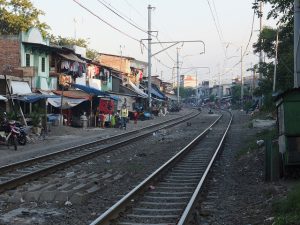
Through our short train ride, my son was exposed to life “outside the fence”. What he saw through the windows of the train: makeshift shacks, houses built only inches away from the train tracks, kids playing soccer barefooted with garbage piling up around them. Hard life. The other side of glamorous Jakarta living.
We discuss this. He asked me why these people are living in such poor conditions. My heart ached having to explain that some people are not as fortunate as we are and that poverty is real.
We have a house to live in, a roof over our heads, while others came to the big city to chase their dreams and never made it. That’s why it is important for him to get his education so he can make a living for himself, one that hopefully he will love. I told him it is easy to look up and want what other people have but we need to be in the now, to be grateful for what we already have. To remember that there are those who need our help, who are struggling just to eat.
My wish is for my son to understand this, to grow up being grateful for what we have and to have a heart that is kind and willing to help others.
How do you explain poverty to your children?
This is an original post to World Moms Blog from our writer and single-mom to one in Jakarta, Tatter Scoops.
The image used in this post is attributed to Hideki Yoshida. It carries a Flickr Creative Commons attribution license.

by Melanie Oda (Japan) | Apr 17, 2015 | 2015, Awareness, Cooking, Cultural Differences, Culture, Domesticity, Expat Life, Eye on Culture, Family, Food, Health, Home, Identity, International, Japan, Life, Life Balance, Living Abroad, Maternal Health, Me-Time, Motherhood, Multicultural, SAHM, Social Equality, Stress, Time, Traditions, Womanhood, World Motherhood
 I start my morning here in Japan the same way every day: by cleaning out the drain trap.
Not very pretty, I suppose, but I’ve learned the hard way that it needs to be done frequently and well. The drain traps here in Japan are metal mesh to prevent food from going down the drain. They get gross very quickly.
I’m pretty sure I started out my days when I lived in the US with a cup of coffee, which seems quite glamorous by comparison!
In spite of our gains in education or employment opportunities over the last century, much of our time as women gets taken up by mundane household tasks like this. Women all around the world are doing the same kind of things: laundry, food preparation, cleaning, child care, though in very different ways.
It makes me curious. How much of your time gets spent on “daily chores?” What kinds of things do you need to do every day? Do you do them alone, or do you have help?
Perhaps it is a boring topic, but for comparison I thought I would share a little bit of what housework is like here in Japan.
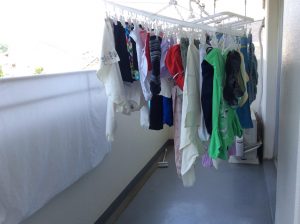
Laundry gets done daily in most families. We have washing machines, but most people don’t have dryers. In a country with cold winters, humid summers, and a rainy season, keeping up with the laundry feels like a daily battle! When the weather is not cooperative, laundry gets hung from curtain rails or any other overhang that can be found indoors. We have to bob and weave our way around the house. Imagine that Catherine Zeta Jones movie, but with laundry instead of lasers.
I do the shopping most days as well. This is quite common here in the greater Tokyo area, where storage space is limited and many people do not have cars to allow buying in bulk. Milk is sold by the liter; laundry detergent in 500ml bottles. The biggest shopping challenge is buying rice, which comes in 5 or 10kg bags.
I need to dust and vacuum every day. This is much more often than we did in the US growing up. I’m not sure why Japan is so dusty. Could it be the tatami floors? The single pane windows? The small living space? And more important than why, how can I make this dust accumulation stop?
Japanese cuisine seems to be gaining in popularity around the world. Many Japanese people eat a full meal in the morning (though this is slowly changing,) as well as at lunch and dinner. Japanese bento are also getting a lot of attention on the Internet for being nutritious as well as visually appealing. Overwhelmingly, the cooking is done by women. (Personally, since my children’s lunch is provided by the school, most days I cook twice.)
Like most families here, we have a gas stove-top, a rice cooker, and a microwave combined with an electric oven for cooking. My mother-in-law has a separate gas burner that can be placed on the table for doing things like sukiyaki or okonomiyaki, foods that are consumed as soon as they are cooked by the family from the same dish. My children are still a bit too small for me to attempt this at home.
I think many of us around the world are doing these same things, but the nitty-gritty of how we get it done and how often we do it are different. I can’t help but wonder what housework says about the values of the culture.
In the US, for example, many families take pride in a well-decorated home. In Japan that is much less important. (Perhaps because many women are spending all that time dusting and dodging laundry….)
What kinds of things are included in your daily duties? How do you feel about doing them?
This is an original post to World Moms Blog from our writer in Japan and mother of two, Melanie Oda.
The image used in this post is attributed to the author.
If you ask Melanie Oda where she is from, she will answer "Georgia." (Unless you ask her in Japanese. Then she will say "America.") It sounds nice, and it's a one-word answer, which is what most people expect. The truth is more complex. She moved around several small towns in the south growing up. Such is life when your father is a Southern Baptist preacher of the hellfire and brimstone variety.
She came to Japan in 2000 as an assistant language teacher, and has never managed to leave. She currently resides in Yokohama, on the outskirts of Tokyo (but please don't tell anyone she described it that way! Citizens of Yokohama have a lot of pride). No one is more surprised to find her here, married to a Japanese man and with two bilingual children (aged four and seven), than herself. And possibly her mother.
You can read more about her misadventures in Asia on her blog, HamakkoMommy.
More Posts

by Aisha Yesufu | Apr 14, 2015 | 2015, Africa, Awareness, Education, Girl Child, Girls, Global Citizenship, Government, Grief, Human Rights, Humanitarian, International, News, Nigeria, World Moms Blog, World Voice
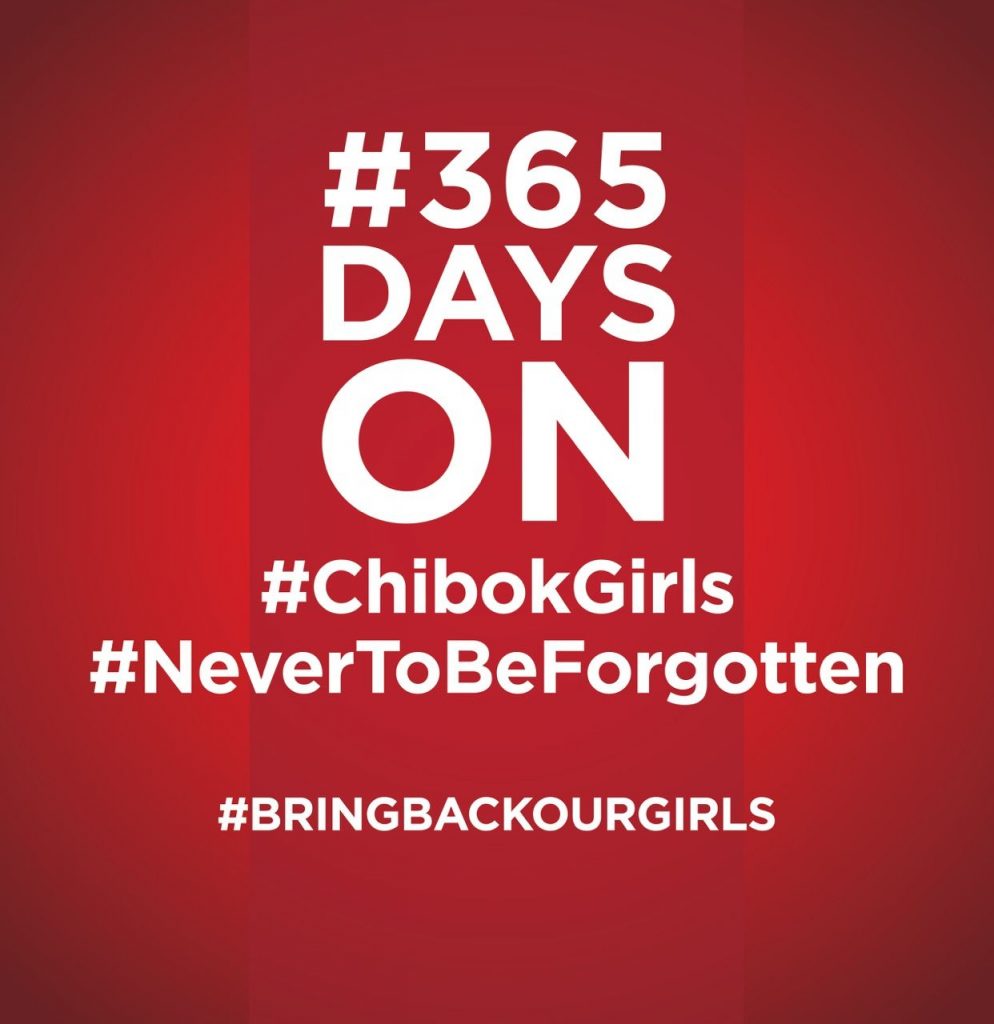
365DaysOn the Chibok Girls are never to be forgotten.
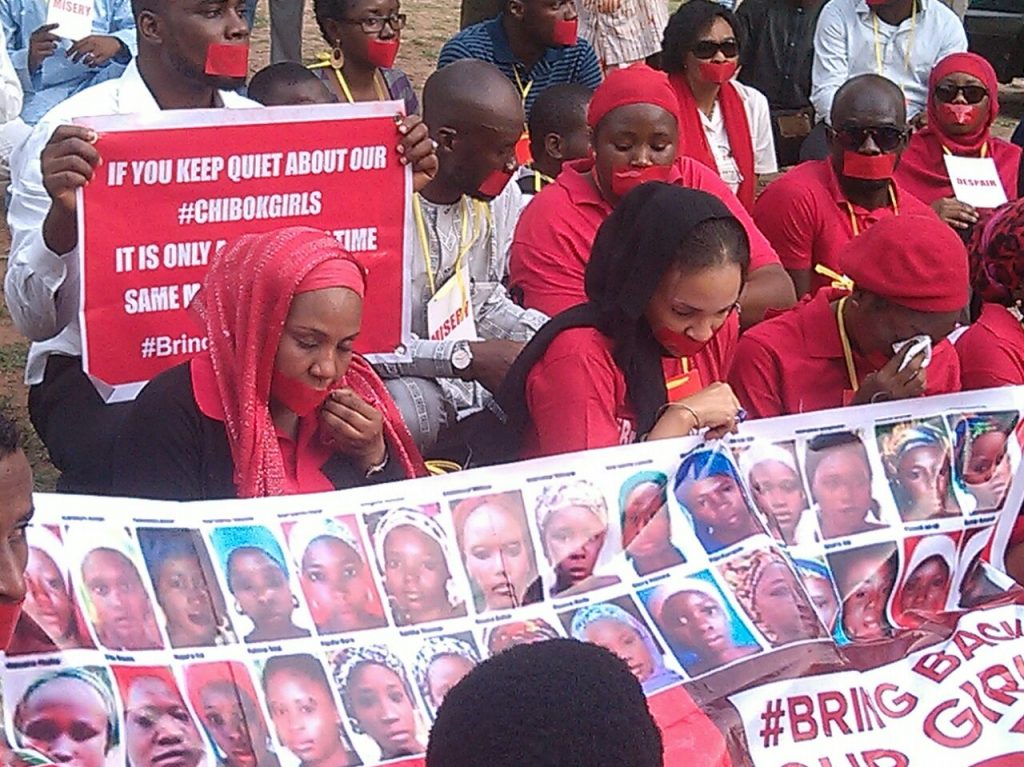
It is 365 days today that the Chibok Girls were abducted. Exactly one year ago on 14th April 2014 276 Chibok School Girls were abducted from their school. I just cannot believe the fact that we actually allowed it to get to one year without the rescue of our #chibokGirls. How could we allow innocent children be taken away by terrorist group and do nothing. The #ChibokGirls ought not to have been taken in the first place. They were supposed to be protected to enjoy their Childhood and their innocence. We failed to protect them and also failed in the next best thing which would have been their immediate rescue. How can we live with ourselves? How do we live with our consciences? How do we face ourselves in the mirror knowing fully well that we abandoned 219 #ChibokGirls and left them with the terrorists.
What is the crime of #ChibokGirls? Is it because she is Nigerian? Is it because she is poor? Or is it because she dared to be educated? #ChibokGirls against all odds dared to be educated and on April 14th 2014 they paid for daring. A group of armed terrorists entered their school and abducted 276 of them from their school in Chibok. 57 of them escaped on their own and there are still 219 of them still with the abductors for a year today, and not a single one has been rescued. The armed terrorists group known as Boko Haram, literarily meaning that western education is forbidden, have vowed to get schools closed down and seem to be succeeding. For some children in the North Eastern States of Nigeria education has become truly forbidden as schools in some parts have been closed for over a year.
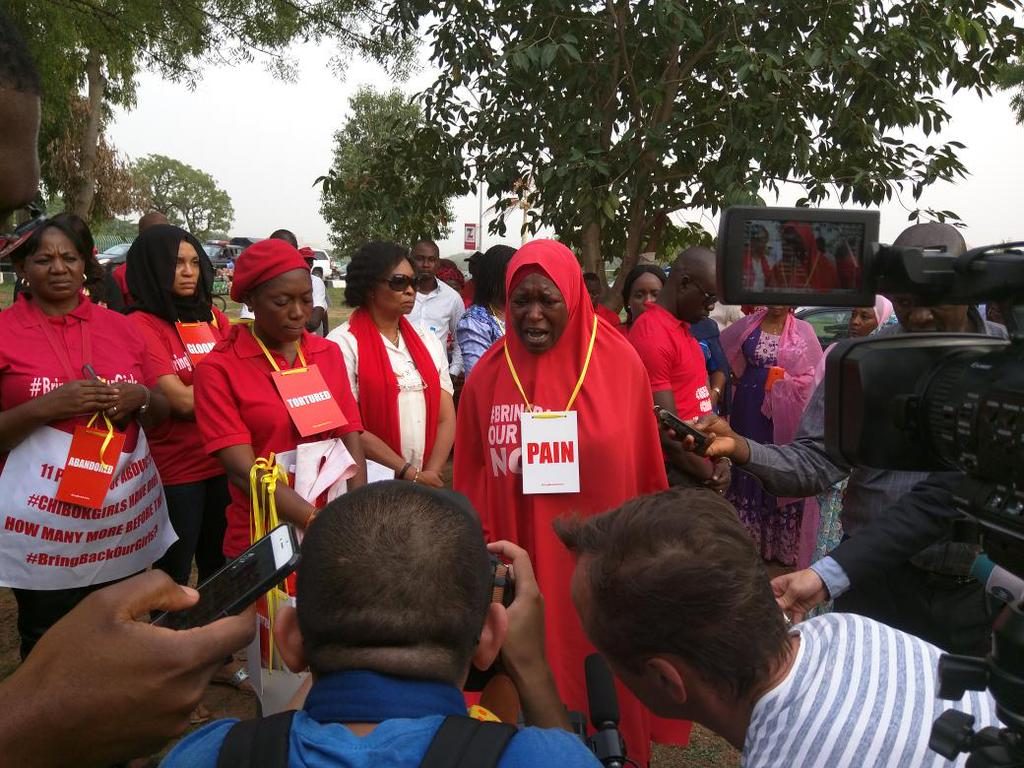
The #ChibokGirls were writing their Final year examination after which those who passed would be able to secure admission into University. A beacon of hope for their families. Schools had been closed down in neighbouring towns and a lot of parents sent their children to be able to complete their secondary school education in Chibok.
There had been series of attacks within some neighbouring villages and yet the #ChibokGirls went to school. Even those who were not boarders went to stay in school because there was electricity there and they wanted to have a place to read for their exams. Sheer determination to get an education which they knew would be their key to breaking the shackles of poverty. For the #ChibokGirl education meant everything. It was the path that could lead to an end to the vicious cycle of poverty. Like one of the #ChibokMothers said to us when we invited them to one of the Sit Outs we had, said her daughter had promised to go to school to get an education and wipe away her tears. The mother asked us; “If my daughter is in the hands of terrorist how she will wipe away my tears?
For most of these parents their children are everything, including a future source of livelihood. What makes the #ChibokGirls issue so saddening is that a lot of children, especially the Girl-Child from the region of Nigeria they come from, hardly ever go to school. They are the most educationally disadvantaged and it takes a lot to get them to school, especially the girls.
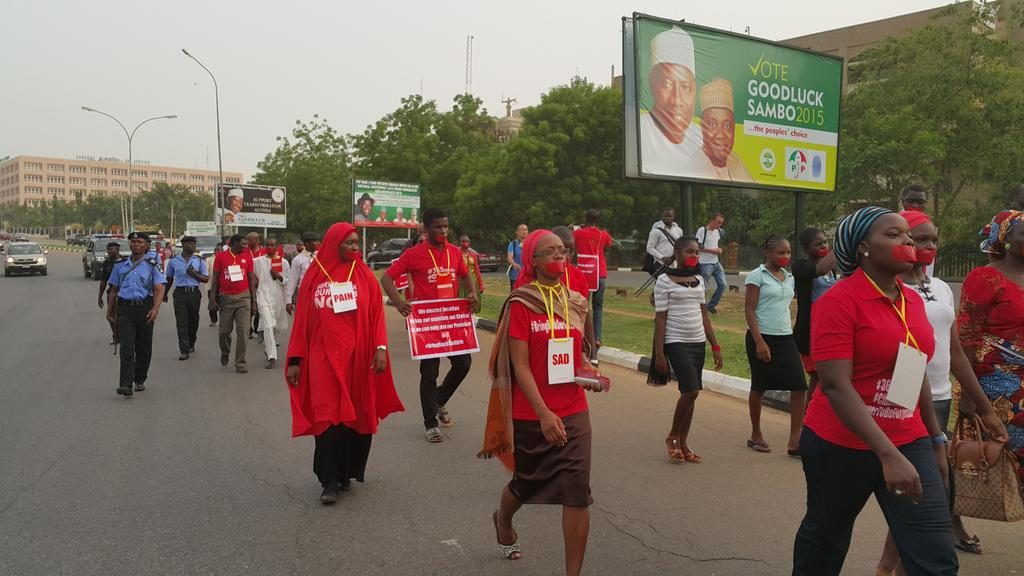
One of the #ChibokFathers put it this way: ‘The government fines us if we do not send our children to school. Now that our children have been abducted while in school who will fine the government?’ A #ChibokFather wept at the Unity Fountain in Abuja where we have the daily Sit Out to demand for the rescue of our #ChibokGirls when he told us the story of how his daughter was driven home because she had not paid 300 Naira (Less than 2 Dollars) for testimonial. He struggled for days to get the 300 Naira and when he was able to, he took her back to the school only for her to be abducted the very next day. I ask again! What is the crime of the #ChibokGirl? Is it because she is Nigerian? Is it because she is poor or is it because she dared to be educated?
If these are crimes many of us would be guilty. I grew up poor in an environment where education was not seen as important.
I went to school in the morning without breakfast and came back home without expecting lunch.By the time I was aged 11, I had no friends to play with because they were all married off. I was taunted and ridiculed and what kept me going was the thought that if I am able to get an education I would one day be able to ride a car and escape the life of poverty I was born into. At the age of 24 when I got married my friends were grandparents, and by the time I turned 40 they had become great grand parents.
Anytime I think of the fact that if I was taken when I was writing my exams my parents would have been unable to speak out for me because poverty had rendered them voiceless, and if nobody else stood for me where would I be today? Probably dead! With that in mind I can never give up on the #ChibokGirls because to give up on them is to give up on the who I was 24 years ago.
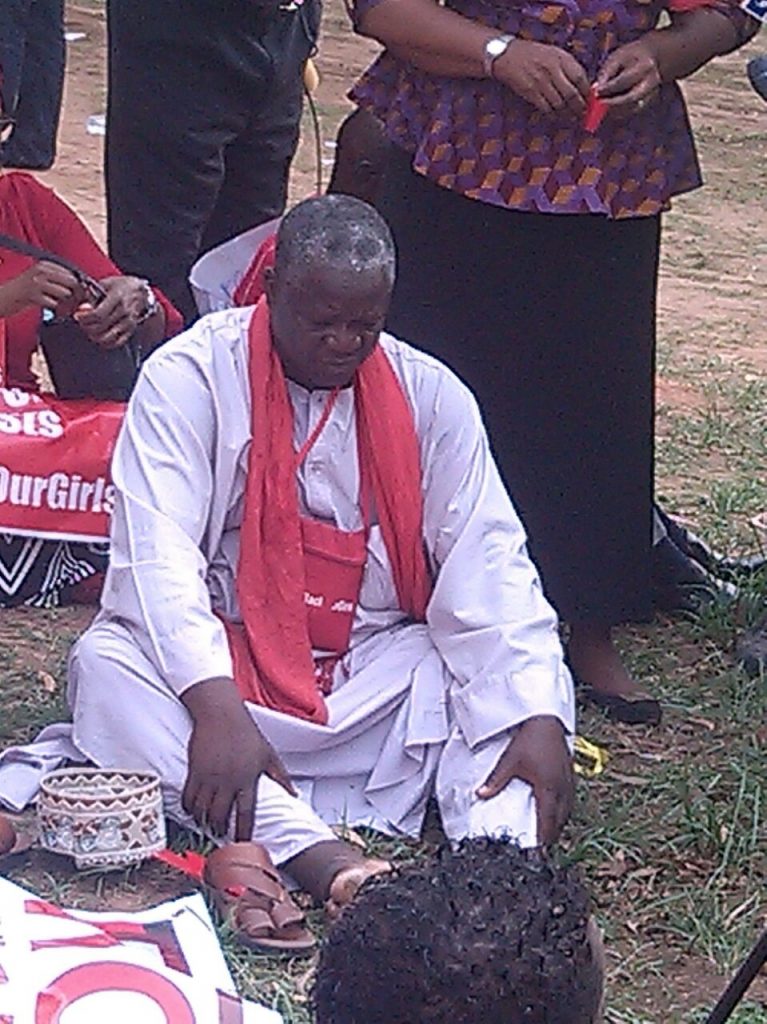
The #ChibokGirls with all the disadvantage they were born with decided that they would dare to take themselves out of the station that they were born into, and for daring to dream have been with abductors for a year. The world seems to have turned its back on the #ChibokGirls. The world seems to move on after the initial flurry of activity with the world saying #BringBackOur Girls. It was glamorous for people to hold the banner and say #BringBackOurGirls in the early days. People have moved on with their lives but for the #ChibokGirls and their families there is no moving on, not for a second for 365 days. Today it is exactly one year. My daughter has volunteered to be a #ChibokGirl Ambassador who would stand for the voiceless #ChibokGirls here in Abuja, and make demands that the government rescues the #ChibokGirls. This is what she had to say:
I see my parents every day and I feel guilty because 219 school girls haven’t seen their parents for one whole year. They live in fear of not knowing what is going to happen next whether they would live to see the next second, the next minute, the next hour, the next day. They have lost all hope especially in their country.
I feel sad that I live in a country, where 219 girls would be abducted and kept in captivity for 365 days and yet nothing is done, yet no attempt is made to rescue them, and everyone just moves on as if nothing ever happened. Why? They are kept in the hands of monsters that go around killing people and think they are practicing Islam, but Islam is a religion of peace not violence.
What if it were I that was abducted will everyone just move on and forget about me.
Bring Back Our Girls Now And Alive.
As long as the #ChibokGirls are left with abductors we have failed the children of the world especially the Girl-Child whom we tell is important and that she should dare to dream. Action, they say, speaks louder than words. The Girl-Child knows that it is all a lie because she can see the #ChibokGirls who dared and what happened to them.
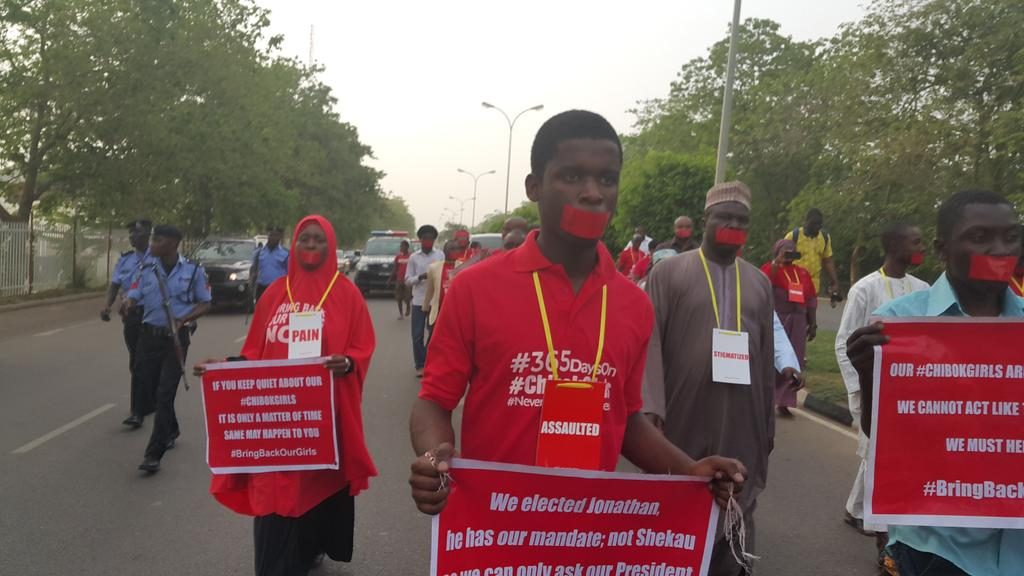
By failing to rescue the #ChibokGirls we have failed children all over the world. We have allowed terror be what they go to school expecting could happen to them, and this is not how it should be.
Due to what has happened to the #ChibokGirls and many others in that region a lot of parents are refusing to send their children to school where they are still open, and some are saying they would not send their children even when schools are opened. No parents should be made to choose between sending a child to school or their safety.
Work needs to be done to ensure that parents do send their children to school, lest the terrorist will have succeeded with their ideology of western education being forbidden. We must remember injustice to one is injustice to all. Terrorist attack to one is terrorist attack to all. Terror attack to anyone anywhere in the world is terrorist attack to everyone everywhere in the world.
This is an original post written for World Moms Blog by Aisha Yesufu in Nigeria. All images provided by Aisha Yesufu.

by Alison Fraser | Apr 6, 2015 | Africa, Canada, Global Citizenship, Gratefulness, Humanitarian, Humanity, Inspirational, International, ONE, Philanthropy, Poverty, Social Good, Tanzania, Uncategorized, Women's Rights
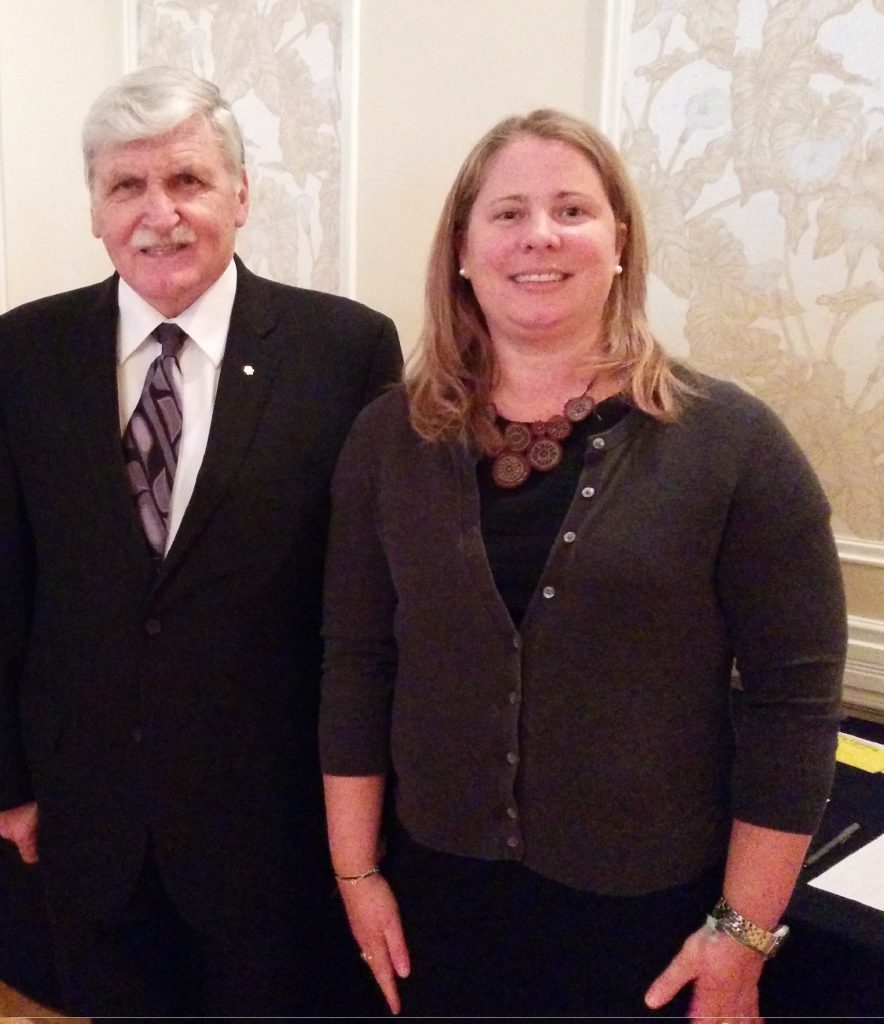
The author Alison Fraser pictured here with General Romeo Dallaire
I have written before on the trials and tribulations that go hand in hand with running a not for profit organization or charity. As we all know, negative words can have a huge impact on how we view ourselves and our work.
What I now realize, is that I have completely underestimated the power of kind words.
Let me explain…
Last month, I had the incredible opportunity to meet General Romeo Dallaire at a local charity event. General Dallaire is a highly respected Canadian general. He braved the Rwandan genocide of 1994, essentially remaining to help when most everyone else left Rwanda, and the world turned a blind eye to the extreme brutality taking place in the African country. As the guest of honour at the event, he spoke of the global injustices plaguing our world and causing, what he refers to, as global rage. We see this rage daily as the stories make headlines. According to General Dallaire, two of the main sources of this rage are our failures with respect to the: (1) empowerment of women and (2) education of children. I felt so uplifted to hear that the work we at Mom2Mom Africa are doing addresses two of the most important social injustices identified by someone as worldly and experienced as General Dallaire.
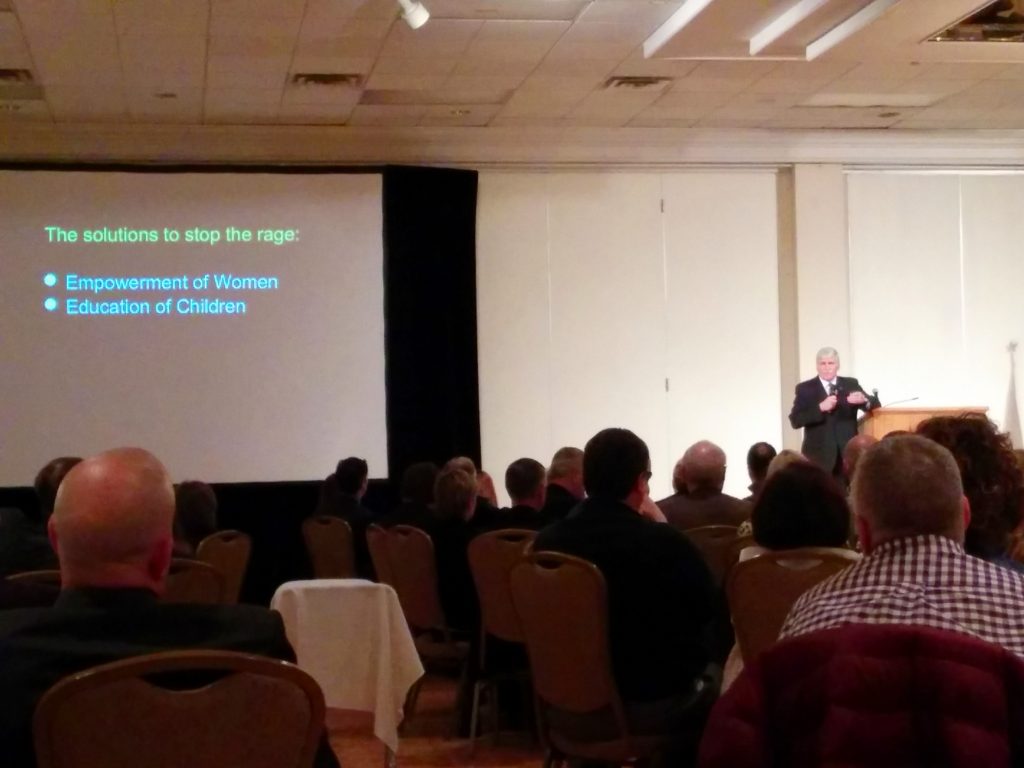
I raced to introduce myself to him after he spoke, and we chatted briefly about my work in Tanzania. I was so nervous but he put me right at ease. He was so humble and kind. And, at the end, he turned to me and said;
“young lady, keep doing what you are doing. It is the work of small, grassroots organizations like yours that will change the world”.
I could have cried right there on the spot; not out of sadness but instead out of pure joy. This man, who had inspired me in so many ways, just washed away all of my insecurities and doubts, with only a few words.
As the Buddha once said..
“Words have the power to both destroy and heal. When words are both true and kind, they can change our world”.
How great it is when someone, who is such an inspiration and role model, takes the time to encourage others, no matter how small their impact is on the world. Imagine what would happen if this was common practice? What if we built each other up instead of tearing each other down? What if we collaborated and focussed on common goals? Imagine what would be accomplished if we all spent more time being kind and supportive, especially those in positions of power. I am not sure if General Dallaire will ever know just how much his kind words meant to me. He gave me the strength to keep moving forward, to keep tackling and overcoming the obstacles that so many of us face. I will be forever grateful to this man, and I can only hope that others, who are in positions of influence, will follow General Dallaire’s lead. I am so proud of my fellow Canadian!
This is an original post written for World Moms Blog by Alison Fraser of Mom2Mom Africa
Do you remember kind words from another that may have inspired you in your life?
Alison Fraser is the mother of three young girls ranging in age from 5 to 9 years old. She lives with her family in Cambridge, Ontario, Canada. Alison works as an Environmental Toxicologist with a human environment consulting company and is an active member of the Society of Environmental Toxicology and Chemistry (SETAC). She is also the founder and director of the Canadian Not for Profit Organization, Mom2Mom Africa, which serves to fund the school fees of children and young women in rural Tanzania. Recently recognized and awarded a "Women of Waterloo Region" award, Alison is very involved in charitable events within her community including Christmas Toy and School Backpack Drives for the local foodbank.
More Posts - Website
Follow Me: