by Elizabeth Atalay | Mar 8, 2014 | 2014, International, Womanhood, Women's Rights, World Events, World Moms Blog
I know what you are thinking, and you are right, Everyday is International Women’s Day for us here at World Moms Blog, isn’t it? However, today, on March 8th, International Women’s Day is celebrated by many countries around the world, so our global moms are joining Oxfam America in honoring the women who have inspired us in our communities or in our lives!
Today’s Saturday Sidebar question is:
Is there a women leader who is helping to strengthen her community by whom you are inspired?
Here are the women who have inspired some of our World Moms …………..
Karen Van Der Zwet in New Zealand: was inspired by Mother Theresa, the legendary Catholic missionary and Nobel Peace Prize winner who was known for her selfless work with the poor.
Jennifer Burden, USA Wrote: I am inspired by a young college woman, Vivian Onano. We met on twitter, and she never ceases to amaze me of her commitment to the people of Kenya, where she is from and her advocacy for women and girls worldwide with the ONE Campaign and the Half the Sky Movement. Most recently, she interviewed Bono at a ONE Campaign event. Need I say more? This soon-to-be graduate is a woman to watch!!!
Kristyn Zalota in Nicaragua says: Aung San Suu Kyi, who is a Burmese opposition politician and chairperson of the National League for Democracy (NLD) in Burma who had been previously on house arrest during the 1990 general elections. She was released in 2010, becoming one of the world’s most prominent political prisoners.
Suu Kyi received the Rafto Prize and the Sakharov Prize for Freedom of Thought in 1990 and the Nobel Peace Prize in 1991.” The list of her awards is long, including the Presidential Medal of Freedom, the highest civilan honor in the United States. She plans to run for President of Myanmar in 2015. — Wikipedia.
Alison Fraser of Canada wrote a post about her inspiration, Eleanor Roosevelt, for International Day of the Girl Child on World Moms Blog.
“Where, after all, do universal human rights begin? In small places, close to home – so close and so small that they cannot be seen on any maps of the world. Yet they are the world of the individual person; the neighborhood he lives in; the school or college he attends; the factory, farm, or office where he works. Such are the places where every man, woman, and child seeks equal justice, equal opportunity, equal dignity without discrimination. Unless these rights have meaning there, they have little meaning anywhere. Without concerted citizen action to uphold them close to home, we shall look in vain for progress in the larger world.” – Eleanor Roosevelt
Purnima Ramakrishnan in India Wrote: There are two women whom I really admire. One is World Moms Blog’s very own Jennifer Burden. She started out our community as a blog. And now, look, with about 60+ moms from 25+ countries, there is no stopping this wonderful conglomerate of World Mothers united in their spirit to do the best for their own children and to all the children all over the world!
From India, I admire Mother Teresa. Though not originally from India, this short lady with beautiful compassion within her worked for the downtrodden all over our country. Making Kolkatta her home in India, she said that the best gift we could give to others is our love and compassion because God never stops giving this to HIS children.
These two wonderful women, one from my own community of Kolkatta, India (now no more, she passed away) and the other from my own world community, who is trying to make the world smaller and smaller in unifying this amazing gender of women by love and compassion are, both, women I admire today on International Women’s Day.
Elizabeth Atalay in the USA says: I was recently inspired by Angela Maiers who brought her program #Choose2Matter to our local high school where she showed kids how they can have an impact on others lives and encouraged them to make the world a better place.
Eva Fannon,USA wrote: Melinda Gates. As a World Moms Blog representative at the #GatesSocial for International Mother’s Day yesterday, I learned so much about the different areas of focus for the Bill and Melinda Gates Foundation today. Amazing!
Tinne De Beckker in Belgium wrote: Marie Popelin, first woman – in Belgium – to obtain a law degree. Isala Van Diest, first female doctor. We’ve come a long way – and have a long way to go – when it comes to education for women/girls. Let’s not forget the pioneers!
You can join Oxfam in honoring a woman who has inspired you in your life and help raise awareness about women’s efforts to change the world. Do you have a story of a woman to share? Post it on the Oxfam site and read some of the inspiring ones already collected there. Together, we can change the world!
This post was compiled by World Moms Blog editor of World Voice (human rights and social good), Elizabeth Atalay of “Documama” in the USA.
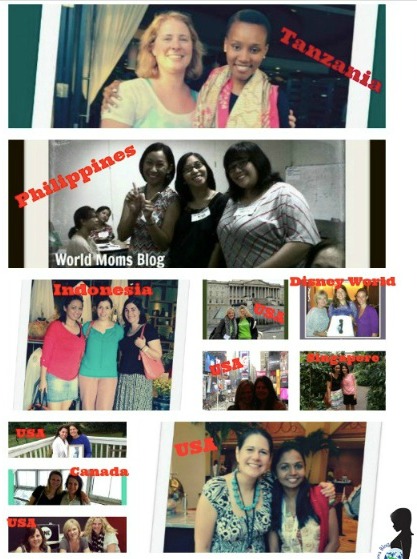
Photo credit to World Moms Blog of some of our 2013 contributor meet ups around the world!

Elizabeth Atalay is a Digital Media Producer, Managing Editor at World Moms Network, and a Social Media Manager. She was a 2015 United Nations Foundation Social Good Fellow, and traveled to Ethiopia as an International Reporting Project New Media Fellow to report on newborn health in 2014. On her personal blog, Documama.org, she uses digital media as a new medium for her background as a documentarian. After having worked on Feature Films and Television series for FOX, NBC, MGM, Columbia Pictures, Warner Brothers, 20th Century Fox, and Castle Rock Pictures, she studied documentary filmmaking and anthropology earning a Masters degree in Media Studies from The New School in New York. Since becoming a Digital Media Producer she has worked on social media campaigns for non-profits such as Save The Children, WaterAid, ONE.org, UNICEF, United Nations Foundation, Edesia, World Pulse, American Heart Association, and The Gates Foundation. Her writing has also been featured on ONE.org, Johnson & Johnson’s BabyCenter.com, EnoughProject.org, GaviAlliance.org, and Worldmomsnetwork.com. Elizabeth has traveled to 70 countries around the world, most recently to Haiti with Artisan Business Network to visit artisans in partnership with Macy’s Heart of Haiti line, which provides sustainable income to Haitian artisans. Elizabeth lives in New England with her husband and four children.
More Posts

by Kyla P'an (Portugal) | Mar 4, 2014 | 2014, Awareness, Being Thankful, Education, Human Rights, Humanity, Inspirational, Interviews, Kids, Life Lesson, Motherhood, Older Children, Social Good, Social Media, Technology, USA, Womanhood, World Voice, Younger Children
 SPARK = Successful, Positive, Authentic, Resilient, Kids
The moment you sit down with Christine Guthery, a funny transformation takes place, you find yourself swelling with optimism, self-confidence and personal-potential. It’s a gift Christine has, she simultaneously exudes these attributes and brings them out in others. She’s passionate about what she does and her enthusiasm has a way of igniting passion in others.
Christine is a lawyer by training but as the mother of three children (now ages 16, 9 and 7), she has discovered that her real calling is as a community activist and SPARK Kindness is community activism at its finest.
SPARK is the offshoot of a coalition called Parents against Bullying and Cyber-Bullying, which Christine founded in 2010, and its sister organization, the Metro-west [Boston] Anti-Bullying Coalition (ABC). The need for an anti-bullying coalition arose from a wide-spread, cyber-bullying incident at a local middle school, which impacted more than 90 students and their families in 2010.
Ironically, though neither Christine nor anyone in her family has ever been a victim of bullying, Christine is on a mission to prevent it. “Bullying is a social justice issue,” Christine says. “in order to rise above it, you have to be resilient, empowered, self-confident. I’m a lawyer by training and this idea of building resiliency inspires me. Everyone deserves to be treated with dignity and respect. That’s my cause.”
“The definition of ‘bully’ used to be pretty straightforward. It was a label once reserved for kids, who were considered outliers or playground thugs, the type of kids who committed physical acts on their victims. But times have changed. Now it’s not just the kids who are insecure or outcast that are doing the bullying, rather it’s also the popular kids, both boys and girls, who are trying to reach the top of their social/athletic/academic pyramid that can be the perpetrators,” Christine says.
“Not too long ago,” Christine continues, “a slanderous note passed around at school could impact a whole class of students or even a school community but when the kids went home at the end of the day, they left the incident at school. Now, with the Internet and smart phones, [and thanks to social media sites like Facebook, MySpace and Instagram,] bullying incidents can enter the cyber-sphere and quickly go viral. Kids have no way of leaving an incident behind them,” explains Christine. “In fact, these days, a great deal of bullying occurs during out-of-school-time.”
Christine believes that genocide and ethnic-cleansing—such as the ones that have occurred in Darfur, South Sudan and Nazi Germany—is “bullying taken to extreme measures.” And it’s really this mindset, this deep desire to eradicate the cause at it’s root, that has given rise to SPARK Kindness. The evolution came in 2012, when Christine realized that just talking about bullying wasn’t making progress.
“For two years [2010 & 2011] I had been focusing on bullying and trying to understand it better,” she says, “but then I realized, what if we shifted the conversation away from the outcome (bullying) and toward the prevention (nurturing kindness and resiliency)? What if our efforts were proactive rather than reactive?”
She compares this shift in mindset with the approach of Western medicine, where the focus is on addressing the illness, not on maintaining and promoting wellness. “I was finding that just talking about bullying was disempowering,” Christine reflects. “When I focused on the positives of resilience, kindness and courage, I felt empowered. It was exactly like the emotion of ‘elevation’ or self-transcendence that psychologist, Jonathan Haidt, described in his 2012 TED talk,” she says. “In other words, when you witness someone doing something positive or altruistic, it inspires you to do something positive or altruistic. This is where SPARK Kindness came from, how can we build the community we want rather than just address the ills we want to avoid?”
The answer:
teach children not just about kindness and emotional self-awareness early on but how to be resilient and seek support when they are feeling insecure or are suffering. SPARK Kindness, ignite positive change in your community.
 To find out ways to SPARK Kindness in your own community, click the logo above or visit http://www.sparkkindness.org/.
This post summarizes an interview between SPARK Kindness founder, Christine Guthery and World Moms Blog Managing Editor, Kyla P’an. This is a World Moms Blog exclusive interview.
Kyla was born in suburban Philadelphia but spent most of her time growing up in New England. She took her first big, solo-trip at age 14, when she traveled to visit a friend on a small Greek island. Since then, travels have included: three months on the European rails, three years studying and working in Japan, and nine months taking the slow route back from Japan to the US when she was done. In addition to her work as Managing Editor of World Moms Network, Kyla is a freelance writer, copy editor, recovering triathlete and occasional blogger. Until recently, she and her husband resided outside of Boston, Massachusetts, where they were raising two spunky kids, two frisky cats, a snail, a fish and a snake. They now live outside of Lisbon, Portugal with two spunky teens and three frisky cats. You can read more about Kyla’s outlook on the world and parenting on her personal blogs, Growing Muses And Muses Where We Go
More Posts - Website
Follow Me:


by Elizabeth Atalay | Feb 18, 2014 | 2014, Environment, International, Millennium Development Goals, Social Good, Uncategorized, United Nations, Water, World Moms Blog, World Voice

In 2000, 189 nations made a promise to free people from extreme poverty and multiple deprivations. This pledge turned into the eight Millennium Development Goals, and was written as the Millennium Goal Declaration .- United Nations Development Programme
The goal of MDG #7 is to ensure environmental sustainability. This month we are thrilled to continue our #Moms4MDG campaign by joining forces with Esquel Foundation in Brazil.
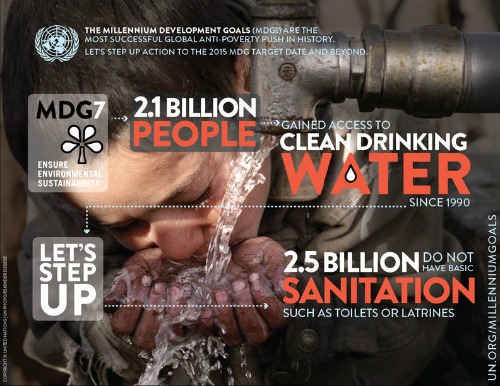
The goals of Millennium Development Goal # 7 are:
- Make sustainable development part of the policies and programs of governments and reverse the loss of environmental resources.
- Reduce and slow down biodiversity loss.
- By 2015 half the proportion of the population without sustainable access to safe drinking water and basic sanitation.
- By 2020, achieve a significant improvement in the lives of at least 100 million people who live in slums.
To tackle MDG # 7 we have partnered with The Esquel Foundation:
The Esquel Group (EG) is a private non-profit organization founded in 1984 and dedicated to stalwart citizenship as the common element in sustainable democracy and sustainable economic development. It is a member of the Grupo Esquel network with associate entities in Argentina, Brazil, Ecuador, Honduras and Uruguay. Its focus is strongly—though not exclusively—Latin American. It receives its support from contracted work and from donations from private, public and multilateral sources.Through seminars, presentations and training programs EG promotes national policies as well as grassroots initiatives dedicated to social inclusion and sustainable development. It fosters inquiry and action towards self governance and greater citizen engagement in public life, particularly at the local level. EG organizes a periodic policy seminar in Washington DC and conducts training on social entrepreneurship for community development, with particular focus on practices for strengthening the structure and functions of civil society networks, deliberative democracy and conflict management skills.- www.esquel.org
Meet us over at the Esquel Group blog today to read the guest post by World Moms Blog contributor Andrea Steiner! You can read her full post, here:
We will be co-hosting our#Moms4MDGs Twitter Party with Esquel Foundation, Girls Globe, and Multicultural Kid Blogs tomorrow, February 19th from 1-2pm EST to talk environment, so please join us!

P.S. Never been to a twitter party before? Go to www.tweetchat.com and put in the hashtag: “#Moms4MDGs during the party times. From there you can retweet and tweet, and the hashtag will automatically be added to your tweets. You can view all of the other party tweets at that hashtag as well!
This is an original post to World Moms Blog by World Voice Editor, Elizabeth Atalay of Documama in Rhode Island, USA.
Elizabeth Atalay is a Digital Media Producer, Managing Editor at World Moms Network, and a Social Media Manager. She was a 2015 United Nations Foundation Social Good Fellow, and traveled to Ethiopia as an International Reporting Project New Media Fellow to report on newborn health in 2014. On her personal blog, Documama.org, she uses digital media as a new medium for her background as a documentarian. After having worked on Feature Films and Television series for FOX, NBC, MGM, Columbia Pictures, Warner Brothers, 20th Century Fox, and Castle Rock Pictures, she studied documentary filmmaking and anthropology earning a Masters degree in Media Studies from The New School in New York. Since becoming a Digital Media Producer she has worked on social media campaigns for non-profits such as Save The Children, WaterAid, ONE.org, UNICEF, United Nations Foundation, Edesia, World Pulse, American Heart Association, and The Gates Foundation. Her writing has also been featured on ONE.org, Johnson & Johnson’s BabyCenter.com, EnoughProject.org, GaviAlliance.org, and Worldmomsnetwork.com. Elizabeth has traveled to 70 countries around the world, most recently to Haiti with Artisan Business Network to visit artisans in partnership with Macy’s Heart of Haiti line, which provides sustainable income to Haitian artisans. Elizabeth lives in New England with her husband and four children.
More Posts

by Tinne from Tantrums and Tomatoes | Jan 27, 2014 | 2014, Being Thankful, Belgium, Communication, Health, Life Balance, Life Lesson, Motherhood, Pregnancy, Relationships, Stress, Tantrum and Tomatoes, Women's Rights, Working Mother, World Motherhood
If you Google bullying, there is a whole plethora of websites to choose from. Most of them deal with how to prevent your kid from bullying, how to react when your kid is bullied/being a bully, how to talk to your child about bullying.
But what if it is you—a fully grown adult—who are being bullied and there is really nothing you can do about it because the bully is also an adult…and your boss? And you cannot afford to lose your job.
Here is the situation: years ago I worked for a small, family owned business (You will understand why I do not name any names). I can best describe my boss as the Belgian cousin of Miranda Priestly, the Devil-boss who wore Prada. Believe me she had her down pat. From the sneering “that’s all,” the calls outside work hours, the berating because I could not divine her thoughts and causing her to suffer the indignity of having to actually tell me what was expected, the pout…
Oh yeah, they were related all right.
After little more than a six months, I was actively looking for another job. And then, a week before I planned to resign and tell her to go do something to herself, I found out I was pregnant. And the game and the world as a whole changed completely.
We had just started building our house, there was no way my husband’s salary would cover all the bills and finding a job while you are pregnant is not easy.
So I stayed on. But it was obvious right from the start that they did not like the idea of having a young mother as employee.
Since I was competent at my job they had no reason to fire me outright and because Belgian legislation is rather protective towards pregnant women in the workplace, it became almost impossible to fire me when I handed over the medical bill announcing my pregnancy.
And so the bullying started.
Little things at first. Saddling me with a huge amount of work half an hour before I was due to clock out. Making a mess of the client contact database, insisting it was my fault, even though there was actual proof that it wasn’t.
But when they noticed that I was relatively unaffected things got BAD. In capitals.
While the company was closed for the summer holidays I got a letter detailing every little thing that I had done wrong after I announced I was pregnant. And I really mean everything, like putting one (1!) sheet of paper for an invoice the wrong way up in the printer causing them the loss of a whole eurocent in paper because I had to reprint the page. After that it got even worse than you can imagine. Belittling me in front of clients, calls at all hours, at all times, screaming, yelling, throwing. One day I came into the office to find that my boss had emptied my trashcan all over my desk. Fun times… I can tell you.
You must wonder how I dealt with the situation. Well, I hate to disappoint you, but I did not deal with it.
No, that is wrong. I did deal with it, but not in the way you might imagine. I did nothing.
I showed up for work, I let them scream, I let them yell, I let them belittle me, when they called at 6am on a Sunday I answered the phone and made no complaint. Nothing. When I arrived at the office I did my job. Business as usual.
This was my defense strategy. I did my job and because I continued to do it well, they never had an excuse for firing me.
Yes, I could have filed a complaint for harassment and started a legal procedure. I even started collecting evidence in case I should one day be forced to do so. Chances are very good I would have won, since the evidence was pretty rock solid. Yet, this was never really my intention. I was 29 at the time and legal procedures in Belgium can take a looooooooooooooooooong time. Dragging my employer to court would take ages, it would cost a lot of money and it is the kind of thing which haunts you forever. I still had my way to make in the world, my career was just beginning. A court case was likely to follow me around for my whole life and I did not wish to bring this kind of baggage with me.
I collected—and still keep—the evidence just in case.
In retrospect, I should have gone to my doctor, explained the situation and asked him to declare me unfit for work. But I did not do that. As soon as it was legally possible I resigned and the happy dance I did on my last day of work might have come straight out of a Broadway musical. I never looked back.
Has this situation ever happened to you? What did/would you do?
This is an original post to World Moms Blog from our writer in Belium, Tinne of Tantrum and Tomatoes.
The image used in this post is credited to Elizabeth Atalay.
Born in Belgium on the fourth of July in a time before the invention of the smart phone Tinne is a working mother of two adorably mischievous little girls, the wife of her high school sweetheart and the owner of a black cat called Atilla.
Since she likes to cook her blog is mainly devoted to food and because she is Belgian she has an absurd sense of humour and is frequently snarky. When she is not devoting all her attention to the internet, she likes to read, write and eat chocolate. Her greatest nemesis is laundry.
More Posts - Website
Follow Me:


by Jill | Jan 15, 2014 | 2014, Africa, Being Thankful, Cultural Differences, Expat Life, Family, Food, Living Abroad, Motherhood, Poverty, World Motherhood
It used to be so easy.
A $30 box of Rice Krispies was worth writing home about. Sewing pillowcases from pagne fabric was so exciting that I had to Skype my friend in Virginia. Our morning oatmeal topped with cheap passion fruit was worthy of photographic documentation.

I couldn’t stop collecting stories from the new people who suddenly surrounded me. I clearly remember walking to my neighbor’s house one night thinking excitedly, “I am walking…in Africa!” and wondering if I should write a poem.
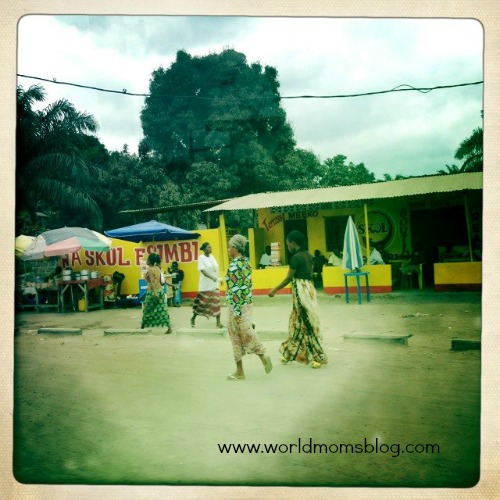
Now, everything about my life seems either too complex to describe, or just not worth it. A few weeks ago I tried to write a fluff piece about the blue tins of Nivea lotion that are ubiquitous around Kinshasa and before I knew it, I was going on about globalization. Other things, I just forget to mention. I don’t notice anymore that it’s weird to pay $40 for laundry detergent, soak your veggies in filtered water and vinegar, stop your car conversation briefly to say “pas aujourd’hui” to a seven-year-old beggar, or pop a live worm out of a person’s skin. These events are ticked off neatly in the daily rhythm of life. I don’t honor them with the thought I once did.
When I sit down to write about my life in Kinshasa, my mind is blank. Sometimes I tell myself that this sudden block is self-preservation. After almost three years, the compounding effects of this city are just too much. In order to function as a nurse and a teacher and a mother and a friend and wife, I can’t stop and ponder every injustice; whether it’s my righteous indignation at the price of the imported fruits I can very well afford to buy, or the story my gardener tells me about the three pregnant teenagers he and his wife feed every day, sometimes giving up their own portion of dinner to do so.
At other moments, I pardon myself by remembering that my lack of enthusiasm is the natural progression of time and familiarity. The honeymoon period with Africa has passed and now I’m just living life. No wonder I don’t hold my pillowcases in rapt reverence anymore. They’re just my red and white pillowcases, getting a little grimy and thin with age. The sellers of trinkets tap at my car windows and I greet those that I know with an open window and a few words and ignore the others. It’s not dramatic, it’s the way to the grocery store.
Then there are the times I berate myself. I’ve become comfortable in my pretty bubble. I let it happen. I cancel French lessons to go to kickboxing class. I allow my housekeeper to buy fruits and veggies for me instead of trekking down the hill to the market and doing it myself. I haven’t learned Lingala. I’ve never seen where the woman who helps me raise my children lives. I’m ridiculous for not being able to write about the Congo. I’m not satisfied with rice and beans and spend hundreds of dollars on imported food that sometimes goes bad before it’s eaten. I don’t listen enough and complain too much. Just another expat.
My parents came to visit Kinshasa just after Christmas – their first time. I felt sad that I couldn’t seem to muster excitement for showing them “our life in Africa.” I couldn’t seem to tap into that newcomer’s elation and share it with them. I hardly took any photos (usually an obsession) and was uninspired by the shots I did snap. My suggestions for food, sights, and experiences were halfhearted. I couldn’t figure out what to do. Even in retrospect, I can’t figure out what I could have done to give them a more authentic experience of my home – which I consider to be wonderful in so many ways. Trying to provide a planned glimpse into my contradictory life proved impossible.
Congo is often described as a country of vicious contradictions: a land bursting at the seams with diamonds, coltan, and fertile dirt yet home to some of the poorest people on earth. NGO workers throw up their hands in frustration and spit nails about failed projects over too many drinks at night. Many of my Congolese friends struggle with the creeping knowledge that they’ve always truly believed it will get better, and it never has. No one I’ve asked has any great ideas. Everyone is just doing the best they can.
I’m not sure what to do with the reality of the Congo I know, so I do the very best I can. Sometimes, that means that I throw myself into the stories of those around me, asking questions I know will lead to heartbreaking tales. Sometimes I read Celebrity Baby Blog instead of Congo Siasa. Sometimes I eat beans and rice. Sometimes I complain loudly about the price of my cereal and buy the box anyway. Sometimes I talk incessantly about the number of mothers and babies who die in this country every day to people who I know are not interested. Sometimes I hear my daughter speaking Lingala and smile proudly.
Sometimes I fret that when I no longer live in Kinshasa, all I will want to do is live in Kinshasa.

What things about your life are too complicated to talk about or even ponder?
This is an original post written for World Moms Blog by Jill Humphrey. You can find Jill blogging with Sarah Sensamaust at Mama Congo.
Photo credits to the author.

by Jennifer Prestholdt (USA) | Dec 10, 2013 | Education, Family, Human Rights, International, United Nations

Every December 10, people around the world celebrate Human Rights Day. The date was chosen to honor the United NationsGeneral Assembly‘s adoption on 10 December 1948 of the Universal Declaration of Human Rights (UDHR), the first global statement of international human rights principles.
As we have done on World Moms Blog before (see 10 Things to Do With Your Kids on Human Rights Day), we’re sharing some ideas for simple yet meaningful ways for your family to celebrate the rights and responsibilities that we all share as human beings.
1. Make a World Wishes Dove with your family. Cut feathers from white paper or colored construction paper. Have everyone in the family decorate and write their wish for the world on a feather. Cut out the body of a dove or other bird and glue all the feathers on it. Once decorated, your bird will be a beautiful and hopeful expression of your family’s hopes for our world.
2. Play a game that helps kids understand human rights. Blind Trust (from ABC – Teaching Human Rights): In pairs, have one child blindfold the other and have the sighted member of the pair lead the “blind” one about for a few minutes. Make sure the leading child is not abusing the power to lead, since the idea is to nurture trust, not to destroy it. The “leader” of the pair should try to provide as wide a variety of experiences as possible, such as having the “blind” partner feel things with his or her feet or fingers, leading with vocal directions or even playing a game. After a few minutes have the children reverse the roles and repeat the process so that the “leader” is now the led, and the “blind” partner is now the sighted one.
Once the activity is over, allow the children to talk about what happened. Discuss how they felt – not just as “blind” partners but their feelings of responsibility as “leaders” too. This can lead not only to a greater awareness of what life is like for people with sight (or hearing) disabilities, but to a discussion of the importance of trust in the whole community. This can lead in turn to a discussion of world society, how it works and how it can fail to work too. (teaches about Universal Declaration of Human Rights article 28; Convention on the Rights of the Child articles 3, 23)
3. Learn about how children live in other countries. For example, you can learn what kinds of food children in East Africa grow and eat from the Lessons from Africa resource created by the British non-governmental organization Send A Cow (also check out their website www.cowforce.com). You can download the powerpoint about typical East African food. You can also print out some of the recipes for things like chapatis and pepper soup to make and try for yourself.
4. Find out what kids and teens can do to help stop child labor. The ILO’s Youth in Action against Child Labour campaign has ideas, information, videos and other resources to help young people take action to end child labor.
5. Play Human Rights Twister to teach about cooperation, respect and inclusion. Make a “Twister” game in which kids spell out key human rights words using their feet and hands. Draw a grid with 6 columns and 5 rows with marker on a large piece of cloth (like an old sheet) or plastic (like a plastic tablecloth). You can also use chalk to draw it on the ground. Write the following letters in the grid:
(blank) W X Y Z(blank)
Q R S T U V
K L M N O P
E F G H I J
(blank space)A B C D(blank)
Ask the children to name some rights and list them on a large piece of paper or whiteboard. Underline a key word in each right from this list of rights in one word:
Dignity Education Equality Food Freedom Home Love (from parents) Name
Nationality Opinion Participation (in decisions that affect us) Play Protection Religion
When you have listed at least 3 or 4 rights, have the children spell out the key word in the human right from the list by placing their hands and feet on the appropriate letters of the “Twister” game. When 1 child’s hands and feet are in place and the word is not yet completed, ask another child to join in to complete the word. If the hand or foot of another child already covers a letter, the player just has to touch the child that is on that letter. When a letter is too far to reach, invite another child to join in. (This activity and dozens of others to teach about human rights values and peaceful conflict resolution are available for free download in the Canadian organization Equitas‘ Play It Fair Toolkit. )
6. Make toys and play games that children play in other countries.
Many kids throughout the world live in poverty and don’t have money to buy toys and games. They make their own toys out of recycled materials that they find. Your kids can try making a football (soccer ball) out of recycled plastic bags or a toy car made from a plastic bottle.
http://vimeo.com/39763894
You can also make and play the Sudanese game “Dala” (the Cow Herder Game). In many parts of the world, games mimic everyday life; this game mimics the Sudanese practice of bull herding. Sudanese people play it on the ground, using sticks to make the lines and pebbles or seeds as “bulls”.
7. Ask the question “What Does a Child Need?” Have your child lie down on a large piece of paper and trace their outline on the paper. Ask your child(ren) to name this paper child. Discuss and decide on the mental, physical, spiritual and character qualities they want this ideal child to have as an adult (e.g. good health, sense of humour, kindness) and write these qualities inside the outline. They might also make symbols on or around the child to represent these ideal qualities (e.g. books to represent education). Talk about what human and material resources the child will need to achieve these qualities (e.g. if the child is to be healthy, it will need food and health care); write them down on the paper outside of the outline. You can also read a simplified version of the Convention on the Rights of the Child (available in English, French, Spanish, Russian, German, etc.) When children hear an article that guarantees a child each of the needs they have listed, they can write the number of the articles next to that item. Circle any needs identified but not covered by the Convention.

8. Read some books with strong female characters. Non-discrimination and equality are key concepts in international human rights law. Yet girls and women are generally not been portrayed as equals to boys and men in literature. A Mighty Girl has compiled several great lists of girl-empowering books, including Top Read Aloud Books Starring Mighty Girls, Top 100 Mighty Girl Picture Books, Top Graphic Novels Starring Mighty Girls, and Top Mighty Girl Books & Films on Women’s History.
9. Get creative and enter your work in a contest with a human rights theme. Local, regional or international contests are powerful activities for getting youth involved and learning about human rights. Take action by entering some of the contests listed here on the Youth For Human Rights website. (You can also learn more on the website about their educational programs, projects, awareness campaigns and human rights outreach campaigns.)
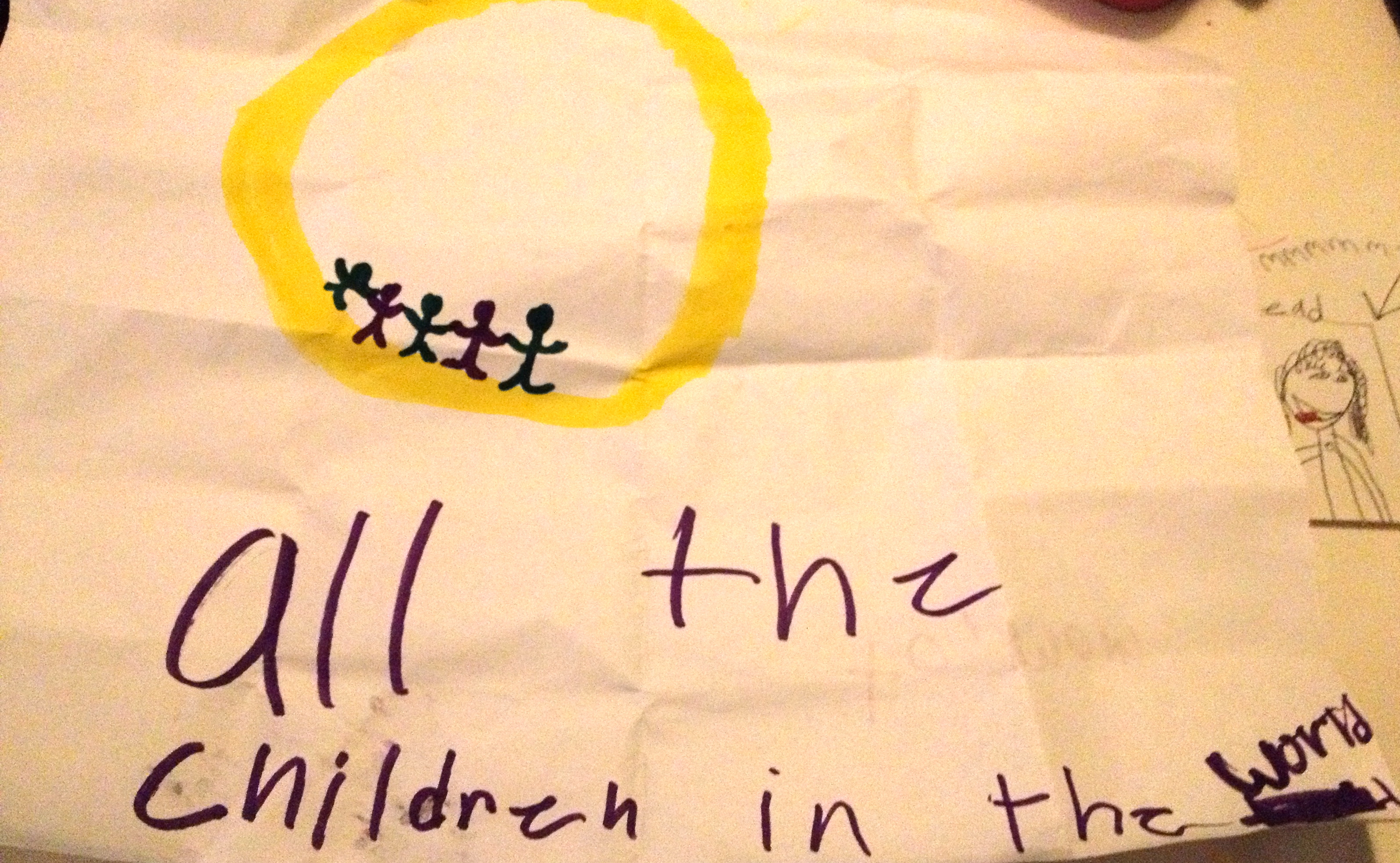
10. Make a Human Rights Day card. You can give the card to a friend or member of your family. Or you can make multiple cards to decorate your house. My eight year old daughter (that’s her self-portrait in the background) made this card for all the children of the world.
ADDITIONAL RESOURCES: You’re on your way to a great Human Rights Day! If you are a classroom teacher or homeschooling your kids (or if you just want to dig deeper), you can find tons more ideas through the following resources:
United Nations Cyber Schoolbus – human rights activities and information about the United Nations’ work
ABC – Teaching Human Rights – practical activities in English, French, Russian, Arabic, Chinese, and Spanish from the UN Office of the High Commissioner for Human Rights
The Advocates for Human Rights’ Discover Human Rights Institute – human rights education lesson plans and curriculum
Human Rights Here and Now – human rights lesson plans and resources
Raising Children With Roots, Rights and Responsibilities – activities for preschool and young elementary children
Do you plan to mark Human Rights Day with your kids?
This is an original post written for World Moms Blog by Jennifer prestholdt.

Jennifer Prestholdt is a lawyer and the Deputy Director of The Advocates for Human Rights, a volunteer-based human rights organization that works locally, nationally and internationally. Her work in human rights takes her around the world, but she spends most of her time in Minneapolis, MN, where she lives with her children (two sons and one daughter), her husband, an elderly cat and a dwarf hamster.
As Jennifer’s kids are now all in school (1st, 4th and 6th grades), she is finally finding more time to do the things that she used to love to do, especially running, writing and knitting. Jennifer loves to travel and has had the dubious distinction of having been accidentally locked in a bathroom on five continents so far. Australia and Antarctica await!
In January 2011, Jennifer made a New Year’s Resolution to start writing about her experiences in order to share with her children the lessons learned from 15 years of work in human rights. The result is her personal blog, The Human Rights Warrior. The name comes from her son Simon, who was extremely disappointed to learn that his mother is a lawyer, not a warrior.
You can find her on her blog The Human Rights Warrior or on Twitter @Jprestholdt.
More Posts