by Mamma Simona (South Africa) | Dec 9, 2013 | 2013, Africa, Cultural Differences, Death and Dying, Human Rights, Humanity, Inspirational, Politics, World Events
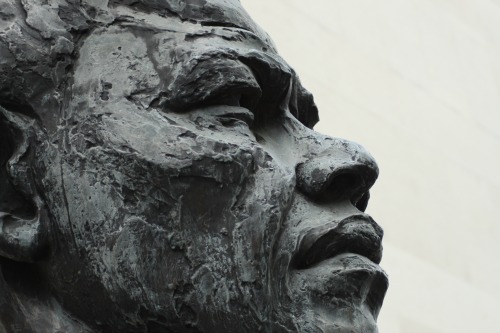
On December 5th, I woke up to the news that Nelson Rolihlahla Mandela, affectionately known as Madiba, had passed away after being “on his deathbed” for several months.
In the short time since his death, (not to mention during his many years of service to his country and world), so much has already been written and said about this great man that the only thing I can add is my personal story.
My parents, sister and I emigrated to South Africa from Italy in 1977. Back then, television and radio were heavily censored and through the media, we were taught that Nelson Mandela and the ANC (African National Congress) were “terrorists” who planted bombs and killed innocents.
Our lives were good and we didn’t question the segregation in government schools. My husband (whose family also emigrated from Italy a few years before mine) went to a private school where people of all religions and colors were happily accepted, as long as they could afford the fees.
In my opinion, Apartheid was never as rigorously enforced in Cape Town as it was elsewhere in the country. Be that as it may, most of us grew up blissfully unaware of human rights abuses and the like.
Fast forward to the 1990’s and most “white” people feared the worst. In fact, there were so many people leaving the country that a common saying was; “Will the last person to leave South Africa please switch off the lights?”
In my humble opinion it was Nelson Mandela, more than anyone else, who allowed South Africa to transition as smoothly as it did. The civil war which everyone feared just didn’t happen. Madiba revealed himself to be a man who was the polar opposite of whom many of us thought him to be (a “terrorist”). He earned everyone’s respect and admiration. He was a really great leader who never forgot where he came from. By that I mean that he never let “power” go to his head. He remained humble and approachable, and spread a message of peace and reconciliation. Mandela’s compassion and love for his fellow man are traits we’d all do well to emulate.
Sadly, the Presidents who have come after Nelson Mandela have betrayed his legacy. Madiba wanted everyone to have a better life. Sadly, things in this country have gone from bad to worse since Madiba stepped down. The most tragic part of all is that it is the very poor, “previously disadvantaged”, people who Madiba sought to empower who are worse off now than ever.
I feel I need to leave the last word to Dr. John Demartini, who wrote this in tribute to the great Nelson Mandela: ” From passive to activist and from prisoner to President one man became a legend in his lifetime though stationed in simplicity and limited in residence he moved the world. Nearly a century of living, but ultimately millenniums of presence, Nelson was contributive through the very core of his essence. It is time to reflect on his great accomplishments and revere his message. Let us all dig deeper into our own nature and find grace and poise since this one man’s direction was the purpose of freedom and presence not race. “
What one quality did you most admire in Nelson Mandela? How can use that quality in yourself to help make the world a better place?
R.I.P. Nelson Rolihlahla Mandela (1918 – 2013)
This is an original post for World Moms Blog by Mamma Simona from Cape Town, South Africa. She shares her home with a husband, 2 kids, 2 cats and 2 dogs.
Photo Credit To: Paul Simpson : Flickr Creative Commons
This photo has a creative commons attribution license.
Mamma Simona was born in Rome (Italy) but has lived in Cape Town (South Africa) since she was 8 years old. She studied French at school but says she’s forgotten most of it! She speaks Italian, English and Afrikaans. Even though Italian is the first language she learned, she considers English her "home" language as it's the language she's most comfortable in. She is happily married and the proud mother of 2 terrific teenagers! She also shares her home with 2 cats and 2 dogs ... all rescues.
Mamma Simona has worked in such diverse fields as Childcare, Tourism, Library Services, Optometry, Sales and Admin! (With stints of SAHM in-between). She’s really looking forward to the day she can give up her current Admin job and devote herself entirely to blogging and (eventually) being a full-time grandmother!
More Posts - Website
Follow Me:


by Katinka | Dec 5, 2013 | 2013, Adoption, Adoptive Parents, Being Thankful, Belgium, Childhood, Cultural Differences, Culture, Education, Eye on Culture, Family, International, Kids, Life Lesson, Motherhood, Multicultural, Netherlands, Parenting, Penguin and Panther, Politics, Siblings, Traditions, Turkey, United Nations, World Events, World Motherhood, Younger Children
 As an adoptive mother of an Ethiopian Panther, I’ve grown an extra pair of antennas when it comes to racism.
Truly, a lot of really nice people distinguish my daughter from other children, based on her color. Even if it is meant to defend her, like calling me disgusting for letting her carry the groceries, it basically still is hidden racism. Should I tell her that people believe she shouldn’t be helping me out because it reminds them of slavery while her white brother is allowed to do the same chores? I’d rather have people call me names than let them wreck my daughter’s self esteem.
However, as I’m writing this, there is a HUGE racism debate going on in Belgium and even worse in The Netherlands, where it all started. And despite my racism antennas, I just can’t fully agree with the racism-yellers this time. Not even if they yell all the way from some United Nations office.
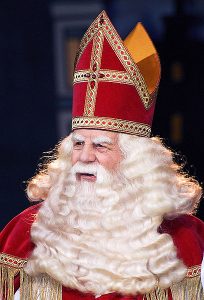
The debate is all about the ancestor of Santa Claus: Sinterklaas. You can read here about how Santa Claus evolved from our Sinterklaas, or Saint Nicholas, who is actually believed to be Turkish, who resides in Spain, has a white horse called Bad-Wheater-Today (Belgium) or Amerigo (The Netherlands), and celebrates his December birthday by coming over to our countries and surprising children with presents.
In the Netherlands he comes over on the evening of December 5th. Later that night, he comes to Belgium and delivers toys and sweets to be found in the children’s shoes on the morning of the 6th. It’s really a children’s celebration, full of magic and anticipation. You will bump into him just about everywhere during November.
Now, because Sinterklaas is getting old and forgetful, and has a lot of work to do within 24 hours, he has helpers. These helpers are all black, and hence all called ‘Black Peter’ (Zwarte Piet).
And that’s where all the accusative fingers point.
Indeed, this tradition can be seen as offensive. I, for a fact, believe it is partly based on a slavery and stereotype-loaded past, and a lot of people agree with me. Black Peter has long been depicted as a bit slow, barbaric (kidnapping and hitting the naughty children), dressed in clownish clothes, with stout lips and being submissive to his white boss.
Of course I agree this is an awful, insulting picture to brainwash our children with during the big Sinterklaas-Awaiting-Month-of -November. I also agree an outsider would be shocked, when he meets Sinterklaas and his Black Peters for the first time, especially if oblivious to the folklore. And I honestly understand and feel the offense people take.
For me personally, Sinterklaas has me cringing with bittersweetness ever since I found out about his racist taint. I’m not even particularly fond of the Sinterklaas tradition anymore.
However, I also don’t agree that we are teaching our children racism, nor paying ode to slavery by honoring this tradition every year. Not any more, that is.
Since the 1990’s, we have a children’s holiday special on TV portraying the real story. Children are elegantly taught Black Peter is black – and not brown/colored/african – because he came down the chimney. No more, no less. Nobody really tries to explain why his clothes didn’t get black during his journey down the chimney.
It is just part of the mystery, just like Bad-Wheater-Today walking on rooftops or Sinterklaas having this enormous book in which the good and bad behavior of every single child is listed. It doesn’t make sense, but children buy it anyway.
In this TV-special, Sinterklaas is depicted as a bit senile. In fact his Black Peters are now the smart ones, all with different names according to their function or character. A bit like the Smurfs, and everyone likes the Smurfs, right?
For the past 20+ years, this special comes on every November. Along the way, children started to grow more afraid of this very strict and grumpy old man than of his joyous, candy throwing helpers. The Black Peters became the true friends of our children. And every Belgian child you ask about Black Peter’s color now, will patiently tell you the chimney-story.
To me, this shows our tradition is evolving from, I admit, a racist past, towards a new story. Just like it evolved into Santa Claus overseas—who, by the way, appears to imprison a whole lot of innocent, little people in a Siberia-like, harsh environment without paying them for their round-the-clock labor.
Therefore, I trust society may even evolve towards a tradition of White Peters in a few more years or decades. After all, with more and more houses being built without huge chimneys, we will sooner or later find out that Peter’s color is fading, won’t we?
I’m hoping that by the time this post runs, all the petitions –pro and con–the social media frenzy, any UN investigations and any public manifestations, will be over and done with. I truly hope no-one got hurt along the way, and that both camps have reached a certain level of understanding towards each other by the time Saint Nicholas wants to celebrate his birthday.
Because, you know, my children are already expecting Sinterklaas to send one of his Peters down our chimney on the 6th of December. Especially my very dark daughter is impatiently awaiting. I’d hate to disappoint her if he decided not to come this year, because he’s afraid to be called a racist. She would definitely not understand, mainly because she doesn’t see any resemblance between Black Peter and herself.
I’m confident Sinterklaas will make it, though. We are both alike, Sinterklaas and me. We’re already used to people calling us racist slave handlers. And we both know better than that.
Did you know about Santa Claus’s European past? How would you feel if he had black helpers instead of elves?
This is an original post to World Moms Blog by K10K from The Penguin and The Panther.
The picture in this post is credited to Sinterklaas Himself, who published it on Wikipedia, while undercover as Gaby Kooiman, under GNU Free Documentation License.
If you ask her about her daytime job, Katinka will tell you all about the challenge of studying the fate of radioactive substances in the deep subsurface. Her most demanding and rewarding job however is raising four kids together with five other parents, each with their own quirks, wishes and (dis)abilities. As parenting and especially co-parenting involves a lot of letting go, she finds herself singing the theme song to Frozen over and over again, even when the kids are not even there...
More Posts

by Alison Fraser | Dec 2, 2013 | 2013, Africa, AIDS, Canada, Education, Girls, Human Rights, Humanitarian, Humanity, Inspirational, International, Kids, Life Lesson, ONE, Philanthropy, Poverty, Preschool, School, Social Good, Spirituality, Women's Rights, World Moms Blog, World Voice
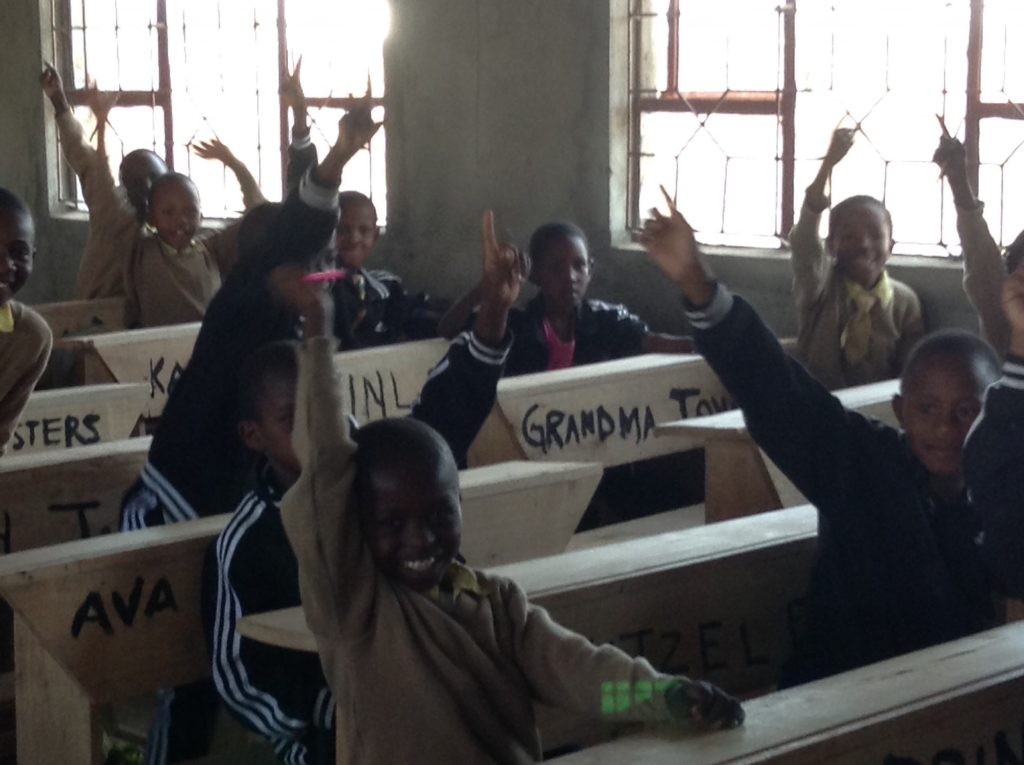
Photo by Alison Fraser
Anne Frank once said “No one has ever become poor by giving”. What a beautiful thought to keep in mind as we celebrate Giving Tuesday on December 3rd of this year. The act of giving can do wonders for a person’s spirit, soul and general well-being. Whether you give time, financial support, a lending hand, a listening ear or encouraging words, the act of giving is unique in that it often benefits the giver as much, or even more, than the receiver. This is something that I can attest to now more than ever before.
A few weeks ago, I visited Tanzania. I run a small Canadian Not for Profit Organization that works to fund the educational needs of women and children in and around Arusha. This was my first trip to Tanzania and the first time to meet all of the wonderful families that are involved in my organization. Helping these families has always made me feel good. I always felt like it was an equal partnership where I would provide financial assistance through fundraising in Canada and the Tanzanian women and children would allow me a glimpse into their life from afar. However, what I realized from spending ten days with these amazing people is that the partnership really isn’t equal at all. In fact, I truly believe that what I have received from these incredibly strong, spiritual, kind, compassionate and caring families is much more than what I have given them.
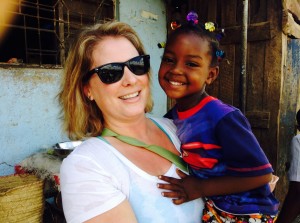
The author with a student in Tanzania.
Let me explain how the power of giving has changed my life. I donate countless hours of time to help those in the Mom2Mom Africa organization. Why? It makes me happy.
It fulfills me in ways that I can’t explain. I feel a sense of purpose, like I am making a difference, albeit very small, but nonetheless, a difference in the world. My charity work completes me and makes me feel like a whole person. I can’t explain why…it just does. But, the ten days that I spent in Tanzania last month, visiting families and spending time at the schools has changed my life forever. I have never experienced anything so powerful in all of my life. Yes, I gave up family time to spend in Tanzania and I gave up quite a bit financially to pay for the trip. But, NOTHING could prepare me for what I was given in return. My life has been changed by simply spending time with these families over the course of my time in Africa. They breathed fresh air and a new life into me by just being themselves. Their sense of community, their compassion towards one another, and their love of life despite many struggles has inspired me in ways that I still have yet to process and understand. The power of giving has never been more apparent to me. It can change lives. It has changed mine.
Today, on Giving Tuesday, I am begging you to give of yourself. Whether it be time, a lending hand or financial assistance…give.
Give to someone who may need your help, whether it be across the ocean or right in your backyard. What you will get back in return will outweigh what you have given. I can promise you that. Giving of oneself has the power to change the world in so many ways. It is reciprocal. What you put into giving, will come back to you in abundance.
That is the power of giving. Giving changes all lives involved. As Anne Frank also said, “How wonderful it is that nobody need wait a single moment before starting to improve the world”. So give. Change the world. You can do it. What may seem like a small act of giving can mean a world of difference to someone else.
On this Giving Tuesday, consider helping a family in Tanzania by purchasing a personalized desk for our schools, school uniforms, or school textbooks. You will bring a smile to the face of a child in Tanzania. And that, I guarantee, will bring a smile to your face, as well! Happy Giving Tuesday!
How do you plan to give back this Giving Tuesday?
This is an original post for World Moms Blog Written by Alison Fraser.
Alison Fraser is the mother of three young girls ranging in age from 5 to 9 years old. She lives with her family in Cambridge, Ontario, Canada. Alison works as an Environmental Toxicologist with a human environment consulting company and is an active member of the Society of Environmental Toxicology and Chemistry (SETAC). She is also the founder and director of the Canadian Not for Profit Organization, Mom2Mom Africa, which serves to fund the school fees of children and young women in rural Tanzania. Recently recognized and awarded a "Women of Waterloo Region" award, Alison is very involved in charitable events within her community including Christmas Toy and School Backpack Drives for the local foodbank.
More Posts - Website
Follow Me:


by World Moms Blog | Nov 25, 2013 | 2013, Body Image, Child Care, Childhood, Communication, Cultural Differences, Education, Eye on Culture, Family, Guest Post, Kids, Language, Life Balance, Motherhood, Parenting, Preschool, Relationships, School, Sex, Sexuality, Traditions, Uncategorized, Women's Rights, World Events, World Interviews, World Mom Feature, World Moms Blog, World Motherhood, Younger Children
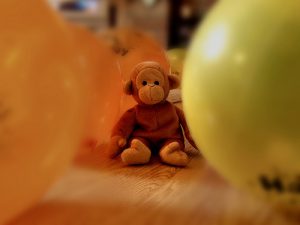 My neighbours in the Netherlands just had a baby and have proudly decorated their window with pink balloons and a garland saying: ”Hooray, a girl!”
This would probably be shocking to a new category of Swedish parents, who refuse to reveal the sex of their baby to family and friends as well as to daycare staff. The baby is given a gender-neutral name, and will be dressed in anything but pink and light-blue.
Why? The parents don’t want their child to be subjected to society’s division of human beings into male and female, claiming that the stereotypes linked to it limit the child’s freedom.
While this remains rather rare, there is a rapidly increasing number of preschools in Sweden where gender equality is the main ideological and educational basis.
In these schools, the staff strives to treat girls and boys equally in all respects. They don’t hide the fact that both sexes exist, but don’t make a point of it and won’t encourage the children to play and behave in a way that is typical for their sex. They won’t call them girls and boys, but refer to them as ”friends” or ”children”.
Conveniently enough, a new pronoun is making its way into the Swedish language: ”hen”, meaning both ”he” and ”she” (”han” and ”hon” in Swedish). When the practice of using ”he” for both sexes in law texts was changed to the more cumbersome ”he or she”, texts became difficult to read and people started looking for other solutions.
The idea of ”hen” comes from the Finnish language (although Finnish is completely different from Swedish; its closest relative among European languages is Hungarian), which uses the pronoun ”hän” for both sexes. Apart from being used in texts to increase readability, the Swedish pronoun ”hen” is now used by advocates of gender neutrality.
The new pronoun and gender-neutral preschools are hot topics in Sweden right now. An increasing number of people like and make use of them, but a big part of the population is very critical towards them.
Sweden is one of the leading countries when it comes to gender equality. Thanks to the important work that has been done in this regard, women and men now basically have the same opportunities in all areas of life.
When gender equality turns into gender neutrality, however, are we still going in the right direction? Isn’t there a risk that gender-neutral treatment introduces another type of prejudice? When girls behave in a traditionally girly way, and boys behave in a traditionally boyish manner, will this be happily accepted or will they feel that their behaviour is wrong? Will there be a new ideal of tough girls and soft boys, as some critics fear?
How will children develop when their parents actively try to conceal what sex they are? Will they think that it’s bad to be a boy or a girl? Will they revolt against their upbringing and shower their own daughters with princess stuff, and their sons with cars and toy guns? Or will these children simply be freer and more unprejudiced than those who grow up in more traditional families, and contribute to a positive change in society?
Time will show.
What are you thoughts on this modern, Swedish approach to gender equality?
Kristina was born in Hamburg, Germany, but moved to Sweden at the age of 8 (her mother is German, her father Swedish). She studied French and linguistics and works as a translator. At the moment she lives in the Netherlands with her French husband and their two daughters, aged 17 months and 4 years. Kristina is interested in psychology and right now particularly focuses on child and family psychology. Working three days a week and being a full-time mom the remaining days, she doesn’t find as much time to read, write and practice yoga and music as she would like, but appreciates her early mornings in trains. There is nothing like contemplating an awakening landscape from a train with a cup of hot chocolate.
The image used in this post is credited to Jonathan Stonehouse. It holds a Flickr Creative Commons attribution license.
World Moms Blog is an award winning website which writes from over 30 countries on the topics of motherhood, culture, human rights and social good. Over 70 international contributors share their stories from around the globe, bonded by the common thread of motherhood and wanting a better world for their children.
World Moms Blog was listed by Forbes Woman as one of the "Best 100 Websites for Women 2012 & 2013" and also called a "must read" by the NY Times Motherlode in 2013. Our Senior Editor in India, Purnima Ramakrishnan, was awarded the BlogHer International Activist Award in 2013.
More Posts

by Nancy Sumari | Oct 23, 2013 | 2013, Husband, Relationships, Social Good, Social Media, Travel, United Nations, USA, World Events, World Motherhood
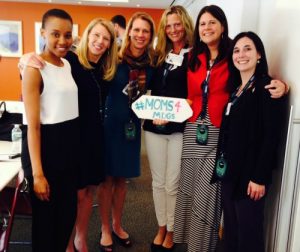 Nothing about my New York trip was what I thought it would have been. ‘Accompanying my significant other’ was the answer I gave to the lady at the visa section.
Neither she nor I had any idea what NY – “the city where dreams are made of” – had in store. Okay, maybe I am being a bit dramatic, but the vacation I thought I was to going have, was about to have a new prefix: work. It was to become a “work-cation.”
Before leaving for the Big Apple, I reached out to any available World Moms in the area on facebook, and almost instantly I had my first set of meetings with the WMB founder, Jennifer Burden. (more…)

by Jennifer Burden | Oct 18, 2013 | 2013, Education, Family, Health, Home, Human Rights, Humanitarian, Inspirational, Kids, Natural Disaster, Philanthropy, USA, World Events, World Motherhood
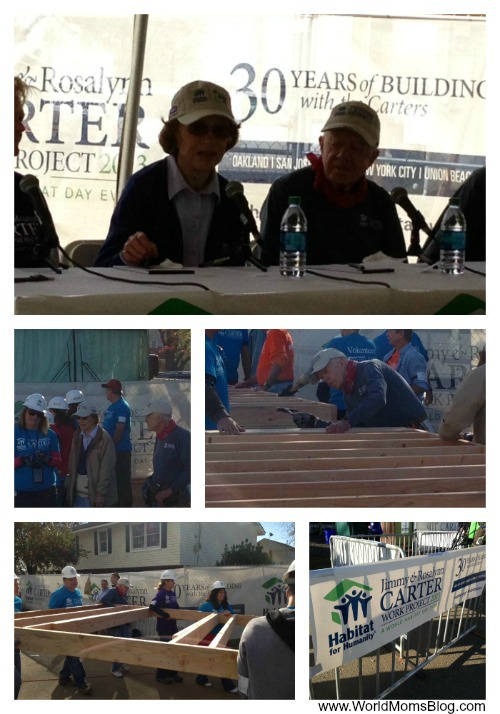
When it comes to helping people outside the United States, Former President Jimmy Carter says, “We don’t distinguish.”
In celebration of this week’s World Habitat Day, Carter said last Saturday, “We think the folks [we build housing for] in other countries are just as good and needy as the folks in America.”
The message that President Jimmy Carter and First Lady Rossalyn Carter brought to Union Beach, NJ, a town that was hit by Hurricane Sandy almost one year ago, was one of hope, for the people there and the people all around the world.
The Carters have spent over 3 decades giving a hand up to families in need of affordable shelter through Habitat for Humanity, a Christian non-profit that builds housing for the people who need it most. And, by the looks of it, they are not stopping. Last week, on the Habitat for Humanity work site in Union Beach, NJ, the President and First Lady, in their work clothes, helped build house framing for over 2 hours. (They are for real, guys.) This was the tail end of the Carter work project this year that went around the United States and ended in New Jersey.
The local branch of Habitat for Humanity in Monmouth County, New Jersey, USA, has completed 40 homes since Super Storm Sandy hit in October of last year. Eighty percent of their service area was affected by the storm from the town of Aberdeen to the town of Ocean.
First Lady Rossalyn Carter stated, “This [worksite] was a special one for us. Super storm Sandy hit, and we’ve been worried about you all ever since.”

Mr. Lamberson is interviewed by the Press on the Carter’s worksite. That’s his home in the background being rebuilt after Super Storm Sandy damaged it almost one year ago.
The Carters have proved themselves tireless champions of human justice.
“We find that Habitat home owners were hopeless and have never known success. They’ve been promised outside help that never arrived, but Habitat is not that way. Local people decide what kind of houses to build, where and which families. Lots of the homeowners become transformed.” — President Carter.
The Former President also explained that the houses in Union Beach were being raised by 8 feet to withstand any future super storms. He said, “Places have to be prepared for the next natural disaster.”
The Habitat model is not a 100% hand out. Homeowners pay the full cost of the house, and they must put in at least 100 hours of work. However, in most cases, their mortgage is 0% interest.
And the organization requests their volunteers fundraise or pay to help, as well as, dedicate their woman and man hours.
Former First Lady Rossalyn Carter explained that education can be greatly effected when children do not have a home, and she referred to a family in Seattle, Washington, USA who were living in their automobile. After they moved into their Habitat home, their son became top of his class just months after moving into their Habitat home.
The Former First Lady described another mother who previously cringed to answer her door to her substandard housing because it was often the police saying that her sons were in trouble. Her sons were never home. After Habitat arrived and built them a new house, her sons returned home with their friends because they were proud of where they lived and were staying out of trouble.
These are the types of examples that keep the Carters going and using their celebrity to further the cause for adequate housing.
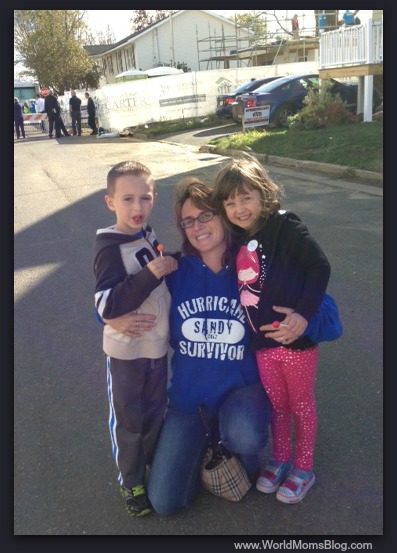
“Hurricane Sandy Survivor” — Kelly is a mom of twins whose home was flooded in Super Storm Sandy last year. Her family is still displaced and waiting for work on their home to be finished almost one year later (not a Habitat home). She came by with her kids to catch a glimpse of the Carters on Saturday.
“When we go to South Africa, South Korea, the Philippines, Europe, Hungary , and 3 times in Mexico, people are the same wherever we go.” — Former First Lady Rossalyn Carter
Exactly.
This is an original post to World Moms Blog by Founder, Jennifer Burden in NJ, USA. Jennifer is no stranger to Habitat for Humanity. As a junior at Villanova University, she spent a week building an adobe-style house in New Mexico, USA for a low-income family through the organization.
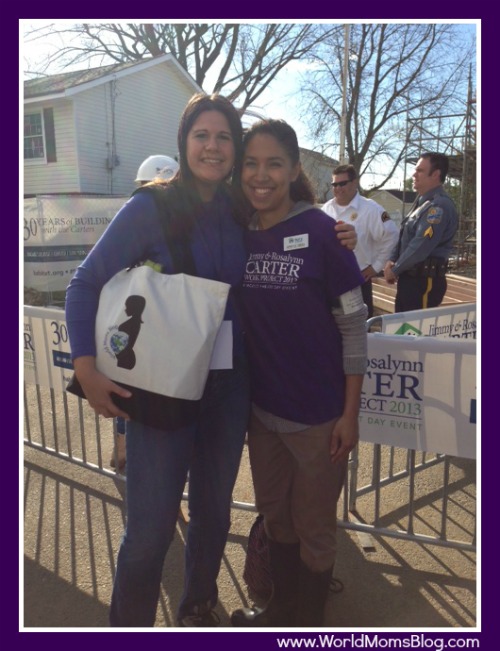
Jennifer Burden of World Moms Blog with Jennifer Sneed of Habitat for Humanity in Monmouth County, NJ at the Carter worksite in Union Beach, NJ on October 12, 2013.
Photo credits to the author.

Jennifer Burden is the Founder and CEO of World Moms Network, an award winning website on global motherhood, culture, human rights and social good. World Moms Network writes from over 30 countries, has over 70 contributors and was listed by Forbes as one of the “Best 100 Websites for Women”, named a “must read” by The New York Times, and was recommended by The Times of India.
She was also invited to Uganda to view UNICEF’s family health programs with Shot@Life and was previously named a “Global Influencer Fellow” and “Social Media Fellow” by the UN Foundation. Jennifer was invited to the White House twice, including as a nominated "Changemaker" for the State of the World Women Summit. She also participated in the One Campaign’s first AYA Summit on the topic of women and girl empowerment and organized and spoke on an international panel at the World Bank in Washington, DC on the importance of a universal education for all girls. Her writing has been featured by Baby Center, Huffington Post, ONE.org, the UN Foundation’s Shot@Life, and The Gates Foundation’s “Impatient Optimists.” She is currently a candidate in Columbia University's School of International and Public Affairs in the Executive Masters of Public Affairs program, where she hopes to further her study of global policies affecting women and girls.
Jennifer can be found on Twitter @JenniferBurden.
More Posts - Website
Follow Me: