by Tara Bergman (USA) | Apr 11, 2014 | 2014, Being Thankful, Communication, Health, Humanity, Inspirational, Life Lesson, Maternal Health, Tara B., USA, World Motherhood
 I was mentally sabotaging my morning run before the day even started. I laid in bed the night before thinking about how I was getting to sleep too late after eating too much junk when I knew I was coming down with a cold. I had not set myself up for success and felt guilty. I tried to tell myself if I was that beat tomorrow, I would skip it. I woke up in the middle of the night twice for other reasons but couldn’t help but think of how I tired I would feel come morning.
As I prepped the kids for school and got through breakfast with way too much coffee, I told myself how I was not well-hydrated and would be dragging. Should I even go? I kept moving but my inner voice whispered that I could just walk today if I felt overwhelmed. That voice said, “Listen to your body. If you don’t feel up to it, don’t do it.” Then a competing inner voice mocked, “But it’s your own fault for not feeling up to it, so go suffer through it.” I carried on.
When I got to the trail, I saw flashing lights up ahead. I almost stopped, thinking I should not run that way. However, I pushed on telling myself to see what the lights were about before bailing. They were just for a parked maintenance vehicle being unloaded, so I jogged on.
I was sluggish the whole time. I felt slow, heavy and bummed about not taking better care of myself. Still, I kept going. I told myself I would cut it short if it felt like too much, but then I knew the negative self-talk would grow. My knee was a little achy, and my spirits were low. Nonetheless, I kept putting one foot in front of the other and tried to lose myself in some music.
Then I spotted a young woman I often see on the trail. She is gorgeous with long hair, bright eyes, and slim body. She usually takes long walks, and we exchange waves and smiles as I go past. Today as we crossed paths, she was jogging. She stopped and told me in a panting voice that I had inspired her to stop walking and start running the trail. I congratulated her on her efforts, and we both went on our ways. All of a sudden, I was lighter. I ran without issue. I didn’t think of my knee, my weight or my tiredness. I just ran and finished up the run on a high note.
Her simple compliment made such a difference on my perspective. This beautiful woman told me I had kicked her butt into gear. I had fallen into the trap of cutting myself down mentally while assuming this other gal had it all together. How could she not?
But we all have stuff. We all have the stories we tell ourselves.
I’m an upbeat person who usually focuses on the good, but like everybody, I have days (like today) when I focus on the bad. The fact that this gal stepped out of her comfort zone both to run and to tell me, a stranger, that I had inspired her to do so snapped my head back on straight. Her gesture reminded me of a few things that I know to be true:
1) Just getting out and taking each step counts, even if it’s not your best performance. Looking back, I placed so many obstacles in my own path for this run, but I pushed past each one. Not my best run, but I still did it. That is worth something.
2) There is always going to be someone achieving in an area that you are not. Someone will always be smarter, thinner, happier, healthier, wealthier, etc. It’s okay to admire or be inspired by that someone, but do not judge yourself harshly by that someone. Measure yourself against yourself.
3) Everybody has challenges and doubts going on. Everybody. We’re human. We’re not perfect.
4) It never hurts to tell someone, even a passerby, something nice. You may just change their whole day. You may just change their whole life. Kind words are that powerful.
My trail acquaintance probably has no idea how much her words impacted my day. When I see her next time, I’ll tell her. Plus, I feel prompted to tell someone else how they inspired me. I have been meaning for some time to tell a certain person how they unknowingly helped me to make a life change for the better. I haven’t done so yet, despite ample opportunity, because I don’t want to seem too familiar to an acquaintance. However, today has taught me that hearing you changed someone for the better is never too familiar.
Have you received an unexpected compliment that changed your day? Is there someone who has unknowingly inspired you to try something new, and have you told them?
This is an original post to World Moms Blog by Tara B. of Washington (State), USA.
Photo credit to the author.
Tara is a native Pennsylvanian who moved to the Seattle area in 1998 (sight unseen) with her husband to start their grand life adventure together. Despite the difficult fact that their family is a plane ride away, the couple fell in love with the Pacific Northwest and have put down roots. They have 2 super charged little boys and recently moved out of the Seattle suburbs further east into the country, trading in a Starbucks on every corner for coyotes in the backyard. Tara loves the outdoors (hiking, biking, camping). And, when her family isn't out in nature, they are hunkered down at home with friends, sharing a meal, playing games, and generally having fun. She loves being a stay-at-home mom and sharing her experiences on World Moms Network!
More Posts

by Kyla P'an (Portugal) | Mar 24, 2014 | 2014, Awareness, Being Thankful, Childhood, Education, Eye on Culture, Family, Feminism, Inspirational, Language, Life Lesson, Parenting, Preschool, Relationships, USA, Womanhood, Women's Rights, World Mom Feature, World Moms Blog, World Motherhood, Younger Children
 From almost the moment our daughter came onto the scene eight years ago, we knew she had a strong personality. She was one of those incredibly alert and determined babies; the type you could tell was processing her surroundings and trying to figure out what to do about them.
While many babies and toddlers her age were delighted to be pushed in a swing, my daughter would have nothing to do with swings until she was old enough to figure out what made them go. She had no desire to be the passive recipient of being pushed, instead she wanted to be in control; she wanted to conquer it. She took the same approach with toys, puzzles and games. She was an early walker, a determined eater, and an all-around intense little thing.
My husband and I frequently got comments like: “boy, you’ve got your hands full with that one,” or “she’s going to keep you on your toes.”
As our daughter grew, by far her favorite activities involved sorting, organizing and problem solving. I have one vivid memory of her toddler music class, when she was just two years old. About three-quarters of the way through the class, the teacher put out a basket of instruments for the children to choose from and play along with. Our daughter, who was particularly fond of the little plastic eggs filled with beans—which she called shake-a’s—was determined to collect as many of them as possible. Driven by this singular motive, she went around the room delivering alternate instruments to fellow toddlers and parents alike. Anytime she encountered an individual who already had a shake-a, she’d attempt to persuade them with an alternate instrument in exchange until she had gathered a significant cache.
During these displays of self-assured behavior and go-get-‘em spirit, I often found myself shrinking into the background, hoping other parents wouldn’t fault me for having such a pushy, precocious child. At this particular music class, however, a parent approached me afterwards and commended me for having such a “strong child with clear leadership potential.” With her few words of encouragement, this parent liberated me from my deep mommy guilt about having a child with drive.
I was in constant conflict because, even though I am a child of the 70’s—a time when many of our mothers here in the US were breaking down stereotypes and entering the workforce en masse—I was raised by my father, who came from an old-world upbringing and had old-fashioned views of how boys and girls should behave.
I am reluctant to admit that, rather than celebrating my daughter’s inherent leadership qualities, I labeled her as “bossy” and occasionally even criticized her for being too demonstrative.
Bossy, a word inferring that someone is behaving “boss-like,” should be a compliment heralding someone’s leadership skills but ironically, instead it criticizes her for it. It’s a label reserved primarily for girls. You rarely hear it applied to boys. A little girl on the playground, organizing kids into teams and assigning them roles will quickly be knocked down a few rungs by calling her “bossy,” whereas a little boy taking the same actions might be respected and followed.
I’m ashamed to admit, even I supported this stereotype. I was concerned my daughter was too confident interacting with adults, leading activities and organizing groups. I was concerned she wasn’t “girly” enough, lacked empathy and a gentle, nurturing-side. As a modern, liberated and independent woman myself, I still didn’t want her peers to ostracize her or put her down.
Why was I struggling between nurturing and diminishing my daughter’s inner boss? Why was I uncomfortable with her being a leader, or overly-confident or intensely goal oriented? What could I do to help raise this new generation of girl-leaders?
Two weeks ago I got some reassuring answers. They were in the Wall Street Journal, on a full-page, front-of-section article titled, “Don’t Call Us Bossy.” And the women giving the encouragement were the Chief Operating Officer of Facebook, Sheryl Sandberg, and the Chief Executive Officer of Girl Scouts, USA, Anna Maria Chavez.
Sandberg and Chavez’s goal is to redirect our thinking about the way girls lead. To relabel our vocabulary about girls’ take-charge behavior. Instead of bossy behavior, recognize it as executive leadership potential, like CBS television anchor, Norah O’Donnell does. Instead of discouraging ambitious goals, support girls to recognize their inherent ability to achieve whatever goal they set out for.
I think the world would be a very different—and frankly far more pleasant—place to live in if there were more “bossy” women in charge.
Let’s take a stand to have more female bosses in the workplace; Here’s to raising our girls to be the leaders they are capable of being, not the followers our lexicon makes them feel they are supposed to be!
Did anyone ever call you “bossy” growing up? Do you see these qualities in your own child? How do you feel about assertive and confident girls?
For ways to encourage leadership in girls, visit LeanIn.org and BanBossy two of the movements supported by Sheryl Sandberg, Ana Maria Chavez and Girl Scouts, USA.
This is an original post to World Moms Blog from our managing editor and mother of two, Kyla P’an.
The image used in this post is credited to Pat Moore. It holds a Flickr Creative Commons attribution license.
Kyla was born in suburban Philadelphia but spent most of her time growing up in New England. She took her first big, solo-trip at age 14, when she traveled to visit a friend on a small Greek island. Since then, travels have included: three months on the European rails, three years studying and working in Japan, and nine months taking the slow route back from Japan to the US when she was done. In addition to her work as Managing Editor of World Moms Network, Kyla is a freelance writer, copy editor, recovering triathlete and occasional blogger. Until recently, she and her husband resided outside of Boston, Massachusetts, where they were raising two spunky kids, two frisky cats, a snail, a fish and a snake. They now live outside of Lisbon, Portugal with two spunky teens and three frisky cats. You can read more about Kyla’s outlook on the world and parenting on her personal blogs, Growing Muses And Muses Where We Go
More Posts - Website
Follow Me:


by Ewa Samples | Mar 21, 2014 | 2014, Being Thankful, Child Care, Childhood, Family, Girls, Home, Inspirational, Kids, Life Balance, Life Lesson, Me-Time, Motherhood, Music, Parenting, Polish Mom Photographer, Teenagers, USA, Working Mother, World Motherhood, Younger Children
 All parents agree, once their first child came into their lives, everything changed. Our life routine changed, some of our friends changed, our clean house no longer stayed clean, the term “empty laundry basket” became an abstract thing, our plans for the future changed…even some of our dreams. We no longer sleep, we no longer eat, we no longer have the time to take care of ourselves as much as we wish. Eating at a dining table is a privilege, at least in my house, because most of my meals are consumed on the run, and my kids are not even in school yet!
I go to mom’s groups, family gatherings, coffee with friends, and I hear the same thing over, and over again: “It will all pass faster than you expect, and you’ll become free again.” No more dirty diapers, no more wiping floors and ceilings after each meal, no more sleepless nights, no more this, and no more that…
And I’m thinking, is it really all that bad…having young children around? Is it really that hard? Yes, it is hard, but it will become harder. Sleepless nights, because the baby is hungry, or because she needs a new diaper will change to sleepless nights because my daughters are out on a date, or on a road trip across the country, and I’m left with all the visions in my head about what may go wrong out there. (more…)
Ewa was born, and raised in Poland. She graduated University with a master's degree in Mass-Media Education. This daring mom hitchhiked from Berlin, Germany through Switzerland and France to Barcelona, Spain and back again!
She left Poland to become an Au Pair in California and looked after twins of gay parents for almost 2 years. There, she met her future husband through Couch Surfing, an international non-profit network that connects travelers with locals.
Today she enjoys her life one picture at a time. She runs a photography business in sunny California and document her daughters life one picture at a time.
You can find this artistic mom on her blog, Ewa Samples Photography, on Twitter @EwaSamples or on Facebook!
More Posts - Website
Follow Me:


by Kyla P'an (Portugal) | Mar 4, 2014 | 2014, Awareness, Being Thankful, Education, Human Rights, Humanity, Inspirational, Interviews, Kids, Life Lesson, Motherhood, Older Children, Social Good, Social Media, Technology, USA, Womanhood, World Voice, Younger Children
 SPARK = Successful, Positive, Authentic, Resilient, Kids
The moment you sit down with Christine Guthery, a funny transformation takes place, you find yourself swelling with optimism, self-confidence and personal-potential. It’s a gift Christine has, she simultaneously exudes these attributes and brings them out in others. She’s passionate about what she does and her enthusiasm has a way of igniting passion in others.
Christine is a lawyer by training but as the mother of three children (now ages 16, 9 and 7), she has discovered that her real calling is as a community activist and SPARK Kindness is community activism at its finest.
SPARK is the offshoot of a coalition called Parents against Bullying and Cyber-Bullying, which Christine founded in 2010, and its sister organization, the Metro-west [Boston] Anti-Bullying Coalition (ABC). The need for an anti-bullying coalition arose from a wide-spread, cyber-bullying incident at a local middle school, which impacted more than 90 students and their families in 2010.
Ironically, though neither Christine nor anyone in her family has ever been a victim of bullying, Christine is on a mission to prevent it. “Bullying is a social justice issue,” Christine says. “in order to rise above it, you have to be resilient, empowered, self-confident. I’m a lawyer by training and this idea of building resiliency inspires me. Everyone deserves to be treated with dignity and respect. That’s my cause.”
“The definition of ‘bully’ used to be pretty straightforward. It was a label once reserved for kids, who were considered outliers or playground thugs, the type of kids who committed physical acts on their victims. But times have changed. Now it’s not just the kids who are insecure or outcast that are doing the bullying, rather it’s also the popular kids, both boys and girls, who are trying to reach the top of their social/athletic/academic pyramid that can be the perpetrators,” Christine says.
“Not too long ago,” Christine continues, “a slanderous note passed around at school could impact a whole class of students or even a school community but when the kids went home at the end of the day, they left the incident at school. Now, with the Internet and smart phones, [and thanks to social media sites like Facebook, MySpace and Instagram,] bullying incidents can enter the cyber-sphere and quickly go viral. Kids have no way of leaving an incident behind them,” explains Christine. “In fact, these days, a great deal of bullying occurs during out-of-school-time.”
Christine believes that genocide and ethnic-cleansing—such as the ones that have occurred in Darfur, South Sudan and Nazi Germany—is “bullying taken to extreme measures.” And it’s really this mindset, this deep desire to eradicate the cause at it’s root, that has given rise to SPARK Kindness. The evolution came in 2012, when Christine realized that just talking about bullying wasn’t making progress.
“For two years [2010 & 2011] I had been focusing on bullying and trying to understand it better,” she says, “but then I realized, what if we shifted the conversation away from the outcome (bullying) and toward the prevention (nurturing kindness and resiliency)? What if our efforts were proactive rather than reactive?”
She compares this shift in mindset with the approach of Western medicine, where the focus is on addressing the illness, not on maintaining and promoting wellness. “I was finding that just talking about bullying was disempowering,” Christine reflects. “When I focused on the positives of resilience, kindness and courage, I felt empowered. It was exactly like the emotion of ‘elevation’ or self-transcendence that psychologist, Jonathan Haidt, described in his 2012 TED talk,” she says. “In other words, when you witness someone doing something positive or altruistic, it inspires you to do something positive or altruistic. This is where SPARK Kindness came from, how can we build the community we want rather than just address the ills we want to avoid?”
The answer:
teach children not just about kindness and emotional self-awareness early on but how to be resilient and seek support when they are feeling insecure or are suffering. SPARK Kindness, ignite positive change in your community.
 To find out ways to SPARK Kindness in your own community, click the logo above or visit http://www.sparkkindness.org/.
This post summarizes an interview between SPARK Kindness founder, Christine Guthery and World Moms Blog Managing Editor, Kyla P’an. This is a World Moms Blog exclusive interview.
Kyla was born in suburban Philadelphia but spent most of her time growing up in New England. She took her first big, solo-trip at age 14, when she traveled to visit a friend on a small Greek island. Since then, travels have included: three months on the European rails, three years studying and working in Japan, and nine months taking the slow route back from Japan to the US when she was done. In addition to her work as Managing Editor of World Moms Network, Kyla is a freelance writer, copy editor, recovering triathlete and occasional blogger. Until recently, she and her husband resided outside of Boston, Massachusetts, where they were raising two spunky kids, two frisky cats, a snail, a fish and a snake. They now live outside of Lisbon, Portugal with two spunky teens and three frisky cats. You can read more about Kyla’s outlook on the world and parenting on her personal blogs, Growing Muses And Muses Where We Go
More Posts - Website
Follow Me:

by Olga Mecking | Feb 3, 2014 | 2014, Awareness, Being Thankful, Bilingual, Culture, Education, Expat Life, Humanitarian, Inspirational, Language, Life Lesson, Living Abroad, Millennium Development Goals, Motherhood, Moving, Netherlands, Philanthropy, Shot@Life, Social Good, Stress, World Motherhood
 Until a friend of mine had a terrible tragic accident in the Himalaya mountains that left her in a coma, I had never donated to a charity. We collected some money at our wedding to give to her husband, and my mom also donated some money to a charity that takes care of her, but that was it.
Since moving to another country and having children, I have been looking for ways to help others. I want to donate to more charities. I am just looking for the right one.
It isn’t easy. I have heard of many charities that have turned out to be scams or which just took people’s money and ran.
My situation is especially difficult because I live in a foreign country and do not know about the charities here. Though my Dutch is fluent, I still have trouble communicating in this language sometimes. In the Netherlands, many people go house-to-house collecting money for charities.
I think it is interesting to find out about charities that way because they’re often ones I’ve never heard of before. They are often small scale actions rather than big ones. But I think the mistake they’re making is the following one: before I contribute, I’d like to find out more about the organization, whether my friends have heard of it, whether there is something about them that raises red flags.
I think I might even agree to donate money if they were willing to leave a business card or something I could find them by. Instead, they want me to make a monthly commitment. Again, because I do not know them, I am not so keen on giving them my credit card number.
At the same time, my heart breaks for all the little children going through invasive treatments; who are terminally ill; who look like little ghosts because they have lost so much weight from all their chemo; for all the sick people who can’t get the treatment they need; or for children who are not so fortunate as mine; or moms in poorer countries, who have to travel for many days if they want to give birth in a hospital.
I really want to help. Since I became a mom and later a World Moms Blog contributor, I have been made aware of needs and dreams that can’t be fulfilled because of the bad conditions all around the world.
But the fact is that finding the right charity isn’t easy. I mostly say no to these door-to-door people. I do it with a heavy heart. I just want to make sure that I am really helping people in need, and not wasting my money.
Luckily, while looking for a charity to donate to, there is a lot I can do:
- In my circle of friends alone, there have been situations where help was needed, including domestic violence and pregnancy problems.
- I am considering taking the Shot@Life pledge and becoming a Champion.
- I can learn as much as I can about actions such as #MDG’s and participate in our Twitter Parties.
- I can find local communities, organizations, charities and brands.
- Many of my friends are absolutely talented people and use their talents to collect money for a good cause, and I can help them spread the word and participate.
I know this sounds like nothing, and I am not telling this to show off how good of a person I am. It is just to show that even though it sounds like nothing, we all can make a difference. I am still very new at this social good cause. I still have a lot to learn. Already I have asked my fellow World Moms Blog contributors for help choosing a charity I can actually trust and they have come up with great charities.
I need to do more. I want to do more. I will do more.
Do you have a charity or cause worth supporting? Tell us about it and help spread the word
This is an original post to World Moms Blog from Olga Mecking in The Netherlands.
The image used in this post is credited to Images Money. It holds a Flickr Creative Commons attribution license.
Olga is a Polish woman living in the Netherlands with her German husband. She is a multilingual expat mom to three trilingual children (even though, theoretically, only one is trilingual since she's old enough to speak). She loves being an expat, exploring new cultures, learning languages, cooking and raising her children. Occasionally, Olga gives trainings in intercultural communication and works as a translator. Otherwise, you can find her sharing her experiences on her blog, The European Mama. Also take a while to visit her Facebook page .
More Posts - Website
Follow Me:
by Ecoziva (Brazil) | Jan 20, 2014 | 2014, Being Thankful, Brazil, Childhood, Education, Family, Inspirational, Kids, Life Lesson, Maternal Health, Motherhood, Parenting, Relationships, Womanhood, Working Mother, World Motherhood
 You know how someone can tell you something that you already knew but in just such a way that finally something “clicks” inside you?
That is what I felt when I read Argentinean psychotherapist, Laura Gutman’s, work recently. Laura Gutman’s books are best-sellers in several Spanish speaking nations, where she is known for promoting conscious mothering.
Three of her books have been translated into Portuguese, of which one has also been published in English. I had heard so many good reviews of this particular one (Maternity, coming to face with our own shadow) that I bought it as a Christmas gift for a friend, who is planning on getting pregnant soon. For another friend, I bought a second one, whose title seemed interesting – it could be roughly translated as The power of maternal discourse.
I confess that – after three kids (including a baby), having read tons of parenting books and with restricted time for reading anything unrelated to work – I didn’t plan on tackling either anytime soon. I didn’t really think there would be anything new. However, when I picked up The power of maternal discourse I couldn’t stop. And immediately after I finished I read Maternity...
Yes, a lot of it was not new to me and some parts I did not fully agree with. Yet, overall the way she said it (and all of the case studies she used as examples) made such a difference that it produced somewhat of a revolution in my life, especially in three areas: my relationship with my mother, my relationship with myself and my relationship with my children. In this part I would like to talk about how it affected my relationship with my mother.
For starters, my relationship with my mother wasn’t exactly affected in a positive way, at least not in practice. In fact, we had a huge fight right after I read the book which ended up in us not spending Christmas together. Yet, although unpleasant, it was necessary as we both said things that had been kept inside for years.
One of the main arguments of The power… is that our own personal story is mostly constructed by what the dominant adult in our childhood (usually our mother) said, which is not necessarily accurate or entirely true. Thus, Gutman states, the unsaid truths are often what hold us back, producing our so-called “shadow”.
For those of you unfamiliar with the concept of shadow, it would be our unfaced “dark side”, a side we try to suppress or deny, often at high cost. Additionally, as other authors have argued, we must try to understand, accept and learn from our shadow, and one way to do that would be by trying to reconstruct and examine our true life story.
The power… is not an optimistic book. In fact, from her decades as a therapist, the author believes most people’s lives have been tainted by some sort of childhood abuse. Of course her definition of abuse is ample, yet the examples she brings are quite distressing.
I guess what resonated most with me were her writings on “childish mothers”. More specifically, how many mothers – despite providing adequate physical care for their children and apparently being present – are often emotionally absent and overly self-involved, which results in the child carrying out the mother’s role in many situations. Then, when this child becomes a mother (or a father) the unresolved child within them will make them act childish and emotionally unavailable with their own child(ren) and so on.
Although her ideas were not exactly new, as I said, for some reason many things finally clicked. When adults we all know are parents are flawed and we might even understand and forgive these flaws, yet in practice these flaws may still be hard to deal with. Although we may rationally believe that our mother/father did the best they could to raise us, with the tools and knowledge they had at that moment in their lives – the hurt child in us might still dominate our emotions in practice.
In my case, many things I carried around as being my “fault” were really my mother’s responsibility, and that was surprisingly hard to admit and accept.
On the other hand, Gutman encourages us to step into the adult we are now and make our own choices by understanding and accepting the truth about our past. And hopefully engaging in a better relationship with ourselves and with our own children, which is what I am trying to do now!
And you? How have you dealt with issues related to your own parents? How has resolving (or not) these issues helped you in your relationship with your children?
This is an original post to World Moms Blog from our writer in Brazil and mother of three, EcoZiva.
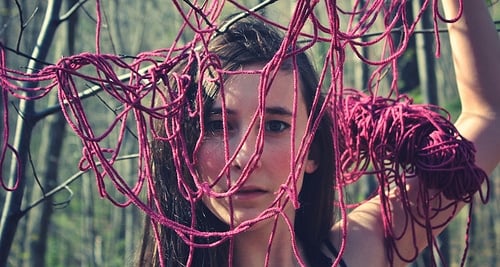
The image used in this post is credited to photographer martinak15. It holds a Flickr Creative Commons attribution license.
Eco, from the greek oikos means home; Ziva has many meanings and roots, including Hebrew (brilliance, light), Slovenian (goddess of life) and Sanskrit (blessing). In Brazil, where EcoZiva has lived for most of her life, giving birth is often termed “giving the light”; thus, she thought, a mother is “home to light” during the nine months of pregnancy, and so the penname EcoZiva came to be for World Moms Blog.
Born in the USA in a multi-ethnic extended family, EcoZiva is married and the mother of two boys (aged 12 and three) and a five-year-old girl and a three yearboy. She is trained as a biologist and presently an university researcher/professor, but also a volunteer at the local environmental movement.
More Posts