by Ibtisam Alwardi | Aug 6, 2015 | 2015, Motherhood, World Moms Blog, World Motherhood
As a child, I’ve always loved being around younger children. I’d take care of them and moms in my family where always happy to leave their children with me to babysit.
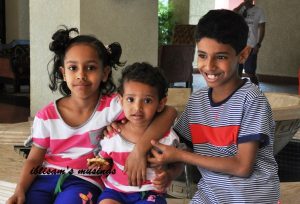 As I studied to become a speech and language therapist, my love for children continued. I had this great empathy for them and I wanted to specialize in pediatrics in order to work closely with them, and so I did.
As I had my three children, the love just increased, but also the stress that comes with it. The stress that you don’t feel with other children when you have a stress-free young life. The stress that you manage to control when you work with other children at work, but it can easily appear the moment you enter your home.
This is the dangerous part of parenthood. It is when you are too stressed that you tend to take it out on the little ones, the most vulnerable ones, the children.
I admit I lost my temper hundreds of times, I failed them another hundreds of times, I wasn’t the pleasant mom always. I would go to bed at night feeling guilty for whatever happened on different occasions and for whatever went wrong.
Life teaches us, and as we strive to be better people, we also tend to accept that we are allowed to make mistakes, even as adults. I didn’t realize that, as a mom initially. I believed I have to be perfect. I couldn’t understand how you can be so good and competent with other children, while you keep losing yourself with your own children.
Things do change with learning.
I learned to stop blaming myself, and realized that it is fine to make mistakes. I believe that the more I remember myself within my hectic life, the more I become a better person and hence a better mom. It can only be possible by managing myself well. It can be through realizing that, as mothers when we do tend to lose ourselves into our daily routine we forget who we are, what makes us happy and what cheers us up. We lose our hobbies, we forget to indulge ourselves in what brings us joy. We stop reading, going out with friends, going to the gym, laughing, getting a pretty haircut, having a cup of hot chocolate while thinking of nothing.
That time spent for me as a person, lets me to resume my mom role happier, more content and I can give more and more. Life is about giving and receiving.
We do not eat our hearts for what we did, but we learn to forgive ourselves, work on improving ourselves and giving ourselves some quality time in order to be able to give to others part of our beautiful self.
This is an original post from our #WorldMom, Ibtisam from Oman for World Moms Blog.
Picture Credit to the author.
You can find more of her wonderful perspective on her blog: ibtisammusings.com.
Ibtisam (at Ibtisam's musings) is an Omani Mom of three, living in the capital city of Oman ,Muscat.
After working for ten years as a speech and language therapist in a public hospital, she finally had the courage to resign and start her own business. She had a dream of owning a place where she can integrate fun, play and 'books', thus the iPlay Smart centre (@iplaysmart) was born.
Currently she is focusing on raising awareness through social media about parenting, childhood, language acquisition. She started raising awareness on (the importance of reading) and (sexual harassment) targeting school-aged children.
Ibtisam enjoys writing, both in Arabic and English, reading and working closely with children.
She plans to write children books (in Arabic) one day.
Contact Ibtisam at ibtisamblogging(at)gmail.com.
More Posts - Website
Follow Me:


by Ana Gaby | Jul 30, 2015 | 2015, Being Thankful, Childhood, Communication, Family, Grandparent, Kids, Life, Memories, Motherhood, Parenting, Relationships, Respect, USA, World Motherhood, Younger Children
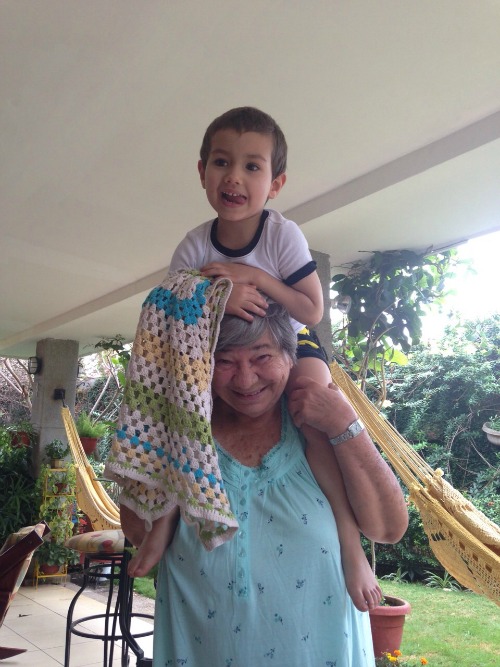
I still have vivid memories of my great-aunt seeding and peeling off the skin of grapes for me to eat. I enjoy thinking about the times my mom dropped me off at another great-aunt’s home and how we would walk to a store and she would buy me my favorite chocolates from the candy counter. I remember my paternal grandmother teaching me to make home made flour tortillas and the love and care she put into making dozens of freshly made tortillas every morning for her family to have for breakfast. My maternal grandmother has always been willing to remove whatever accessory she’s wearing and immediately gift it to you if you just mention that it’s pretty.
I grew up surrounded by women who generously gave all of themselves to their children and grandchildren and I pray I can be at least a little bit like them.
(more…)
Ana Gaby is a Mexican by birth and soul, American by heart and passport and Indonesian by Residence Permit. After living, studying and working overseas, she met the love of her life and endeavored in the adventure of a lifetime: country-hopping every three years for her husband’s job. When she's not chasing her two little boys around she volunteers at several associations doing charity work in Indonesia and documents their adventures and misadventures in South East Asia at Stumble Abroad.
More Posts

by Nadege Nicoll | Jul 14, 2015 | 2015, Boys, Caring, Childhood, Communication, Family, Kids, Life Lesson, Motherhood, Nadege Nicoll, Parenting, World Motherhood, Younger Children
Sometimes, being kind hearted can bite you in the butt, you know. I’m not advocating to not be kind. But just be aware that sometimes, you get more than the satisfaction of having helped a cause. You get a nagging child who won’t let you be until you surrender. (more…)
Nadege Nicoll was born in France but now lives permanently in New Jersey with her family. She stopped working in the corporate world to raise her three children and multiple pets, thus secretly gathering material for her books. She writes humorous fictions for kids aged 8 to 12. She published her first chapter book, “Living with Grown-Ups: Raising Parents” in March 2013. Her second volume in the series just came out in October 2013. “Living with Grown-Ups: Duties and Responsibilities” Both books take an amusing look at parents’ inconsistent behaviors, seen from the perspective of kids. Nadege hopes that with her work, children will embrace reading and adults will re-discover the children side of parenthood. Nadege has a few more volumes ready to print, so watch this space…
More Posts - Website
Follow Me:


by Mannahattamamma (UAE) | Jul 2, 2015 | 2015, Childhood, Feminism, Global Citizenship, Government, Health, Human Rights, International, Motherhood, Newborn Health, Poverty, Save The Children, UAE, USA, World Motherhood
Save The Children
There are some causes that are tricky to rally people around: not everyone wants to ban fur coats, for instance; not everyone thinks that restaurants should post calorie counts on their menus. There are other causes, though, that seem pretty much no-brainers: access to clean water, for instance. Is anyone really going to say “yeah, dirty water, I’m a big fan!” Or saving children. Is anyone really going to say (publicly, anyway) that it’s not a good idea to save children?
Even if we all agree that children should be saved, however, we know that all over the world there are children who need saving, in places where governments and infrastructure don’t seem capable of doing what needs to be done. That’s where organizations like Save the Children step in: they help stitch together the services that can help families survive and give governments a much needed hand.
Save the Children came out with its annual “State of the World’s Mothers” list, which uses five metrics to determine where it’s good to be a mother (and a child). The metrics – maternal health, children’s well-being, educational status (of mothers), economic status, and political status— are combined to give an overall score, which determines where a country falls on the list. Of 179 countries, there are the usual suspects at the bottom of the list—countries where war, natural disasters, and poverty combine in a perfect storm of catastrophe: places like Haiti, or Sudan, or Pakistan.
But there are surprises, too, like the fact that the United States doesn’t even crack the top twenty. Nope, the good ol’ US of A pulls in at 33.
Thirty-third in the world, for a country whose overall wealth and education trumps pretty much everywhere else. The US was beaten by, among others, Slovenia, Belarus, Croatia, and the Czech Republic, as well as all those Scandinavian countries that consistently outperform everyone else when it comes to quality of life issues.
You know what most of these places have that the US does not? A significantly higher percentage of women in government. I suppose a statistician would say that fact is not causal but correlative, and I’m sure that some people would insist that just having women in government won’t automatically make things better for women and children (and thus society), but maybe we should try, and then see what happens?
I live at the moment in Abu Dhabi, in the United Arab Emirates, another wealthy country that doesn’t crack the top twenty on this list. I suppose that for many Westerners, it might seem impossible any Middle Eastern country would score well on a list having to do with women’s lives, but the statistics on this list might help defuse those stereotypes. According to this index, 17.5% of seats in UAE government organizations are held by women, compared to 19.5% in the US; in terms of lifetime risk of maternal death, it is better to be a woman in the UAE: 1 in 5800 versus 1 in 1800 in the US. Women in the US average about 16 years of schooling, women in the UAE about 13; and women in the US tend to be wealthier than women in the UAE (53K for the US, 38K for the UAE).
The Save the Children list doesn’t index maternity leave policy, but that offers another interesting point of comparison.
Women in the UAE only receive 45 days of maternity leave, which isn’t enough, obviously, as any woman who has given birth understands. Women in the US get twelve weeks of maternity leave (although I had to call it “disability” leave in order to ensure that I got the requisite number of days). Twelve weeks, that is, of unpaid leave. John Oliver brilliantly skewered this policy on Mother’s Day, pointing out that the United States aligns with Papua, New Guinea, as the only two countries in the world with no paid parental leave policy. In the UAE, if a woman has a medical certificate that attests to her need for more time at home, she can take up to 100 days of additional (unpaid) leave.
Organizations like Save the Children do invaluable, back-breaking work among desperate populations, but their work raises a question that those of us who live with more privilege should be asking–loudly–of ourselves and our communities: why aren’t we all tied for first place? What has to happen to force “resource-rich” countries take care of its most vulnerable citizens? Why aren’t we doing better?
Where does your country rank in this list? And how do you think your country can do better? Any thoughts?
This is an original post to World Moms Blog by Deborah Quinn in the United Arab Emirates of “Mannahattamamma.”
Photo credit to ‘Save The Children’.
After twenty-plus years in Manhattan, Deborah Quinn and her family moved to Abu Dhabi (in the United Arab Emirates), where she spends a great deal of time driving her sons back and forth to soccer practice. She writes about travel, politics, feminism, education, and the absurdities of living in a place where temperatures regularly go above 110F.
Deborah can also be found on her blog, Mannahattamamma.
More Posts
Follow Me:

by Kyla P'an (Portugal) | Jun 25, 2015 | 2015, Awareness, Being Considerate, Child Care, Education, Girls, Helping, Life, Life Lesson, Motherhood, Parenting, Responsibility, USA, World Motherhood
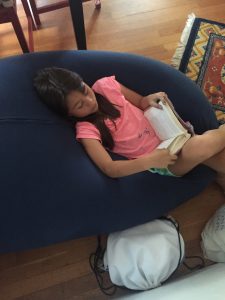 Last week I took my daughter to a local book store to spend a gift card she received for her birthday. My daughter loves books and had a hard time deciding what she wanted most, to purchase the final books in one of her existing collections or get something totally new.
While I was in a different section, my daughter engaged the children’s department manager in a book discussion. Evidently sharing with the woman all of her latest good-reads, which included much of the Percy Jackson series by Rick Riordan, all of the Harry Potters, and several non-fictions like I Am Malala and A Long Walk to Water.
When I arrived back on the scene, the woman commended me for raising such a voracious reader and said she was amazed that my daughter went to public school, being convinced that only private schools could produce such a 3rd grade equivalent.
I didn’t know if I should be flattered or offended.
The woman, who was in her late 50’s, was a retired educator herself and clearly had a deep passion for books and strong opinions about appropriate reading levels. She impressed upon me that many of my daughter’s book choices were advanced for her age and encouraged me to consider steering her away from further indulgences.
This sentiment concerned me because, until recently, I had kept close tabs on what my children were reading and most of the advanced books were ones we read together. But lately, my daughter had been zooming ahead of me, finding pockets of reading time at school and also before lights out at night.
Admitedly, I hadn’t read any of the Percy Jackson books. Knowing that the books had been made in to PG-13 movies did have me somewhat concerned about content but was I really hearing this book specialist right? Was she really trying to stymie my child’s enthusiasm for reading by directing her choices?
The woman was trying to point out that my daughter is only a third grader once and there were plenty of sweet, age-appropriate books out there for her to indulge in. Didn’t I want to save these 6th, 7th and 8th grade books for later?
I really had to think about this.
After all aren’t I always trying to slow my daughter’s maturity? Aren’t I the same mother that won’t let her watch teen television shows because they’re too sassy and full of content ahead of her age? Could books be presenting the same issue?
I’ve grappled with this for the better part of 7 days now. What are the demigods in Percy Jackson doing up there at Camp Half Blood? Aside from the reality of Malala Yousafzai getting shot point blank by the Taliban, what fictional characters might be playing out scandalous scenes in my daughter’s young mind from The Secret Benedict Society?
Does it make me a less engaged parent if I don’t keep my finger on the pulse of my childrens’ literary lives? Do I need to give up my own sacred reading time to be sure I’m on topic with my kids?
A writer friend of mine told me once that the difference between books and movies was that movies spoon feed us all of the images and visuals in a story whereas books let our imaginations fill in the scenery.
When kids read books with ideas or content beyond their experience levels, their minds fill in the pictures age appropriately.
I saw this first hand when My daughter read Harry Potter and the Sorcerer’s Stone in first grade without having bad dreams but when she saw the movie in second grade, she had nightmares about the final images of Voldemort for months.
I love my daughter passion for reading and I’m proud of her advanced and eclectic book selections but now there’s a little nagging voice whispering in my ear every time she picks up a new and unfamiliar novel.
And in the end, instead of helping us find a few new, good books, I think the well-intentioned saleswoman may have done more harm than good.
Where do you stand with letting your children read ahead of their age level? Do you think this saleswoman had a point?
This is an original post for World Moms Blog from our senior editor and mom to two, Kyla P’an.
The image used in this post is credited to the author.
Kyla was born in suburban Philadelphia but spent most of her time growing up in New England. She took her first big, solo-trip at age 14, when she traveled to visit a friend on a small Greek island. Since then, travels have included: three months on the European rails, three years studying and working in Japan, and nine months taking the slow route back from Japan to the US when she was done. In addition to her work as Managing Editor of World Moms Network, Kyla is a freelance writer, copy editor, recovering triathlete and occasional blogger. Until recently, she and her husband resided outside of Boston, Massachusetts, where they were raising two spunky kids, two frisky cats, a snail, a fish and a snake. They now live outside of Lisbon, Portugal with two spunky teens and three frisky cats. You can read more about Kyla’s outlook on the world and parenting on her personal blogs, Growing Muses And Muses Where We Go
More Posts - Website
Follow Me:

by Tara Wambugu | Jun 17, 2015 | 2015, Africa, Family, Kenya, Living Abroad, Motherhood, Parenting, Tara Wambugu, World Interviews
Where in t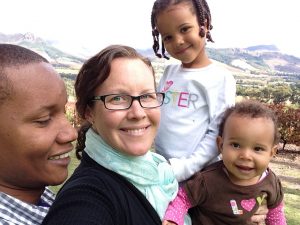 he world do you live? And, are you from there?
I live in Nairobi, Kenya. I was born and raised in the US, but I’ve been living abroad for the better part of the past 15 years.
What language(s) do you speak?
English is my mother tongue, and I speak fluent French, as well as (very) basic Kiswahili.
When did you first become a mother (year/age)?
I first became a mother in 2011 when I was 34 years old. I now have two daughters.
Are you a stay-at-home mom or do you work?
Much to the surprise of many of my friends and former colleagues, I decided to stay home with my kids. I feel incredibly lucky to have been able to stay home with them, and being their mom is the most rewarding (and challenging!) job I’ve ever done.
Why do you blog/write?
I started blogging a couple of years after I moved to Nairobi. As I settled in to my adopted home, I realized that I had gained a great deal of insider information about raising a family in Nairobi. A good friend often asked for my advice about life with kids in Kenya and frequently told me, “You should start a blog!” I finally listened to her, and Mama Mgeni was born. “Mgeni” is a word in Kiswahili meaning foreigner, guest, visitor or stranger. I might still be mgeni, but Kenya has very much become my home!
What makes you unique as a mother?
To be honest, I don’t feel very unique. Like all mothers, I adore my children, I can be driven completely mad by my children, I want the best for my family, and I often fear that I’m messing it all up. Motherhood brings us all together, no matter what culture we’re from or what part of the world we live in.
What do you view as the challenges of raising a child in today’s world?
Today’s families have very fast-paced lives, with a constant onslaught of electronic entertainment. It can be a huge challenge to slow down and do things together as a family, without being distracted by phones, computers or TV. Parents need to set a good example, though often we parents are just as mesmerized by gadgets as our children are.
How did you find World Moms Blog?
I found World Moms Blog through reading fellow contributor Kim Siegal’s blog, Mama Mzungu. I clicked through, and I’ve been a fan ever since!
This is an original post to World Moms Blog by Tara Wambugu, our new contributor from Kenya.
ABOUT TARA
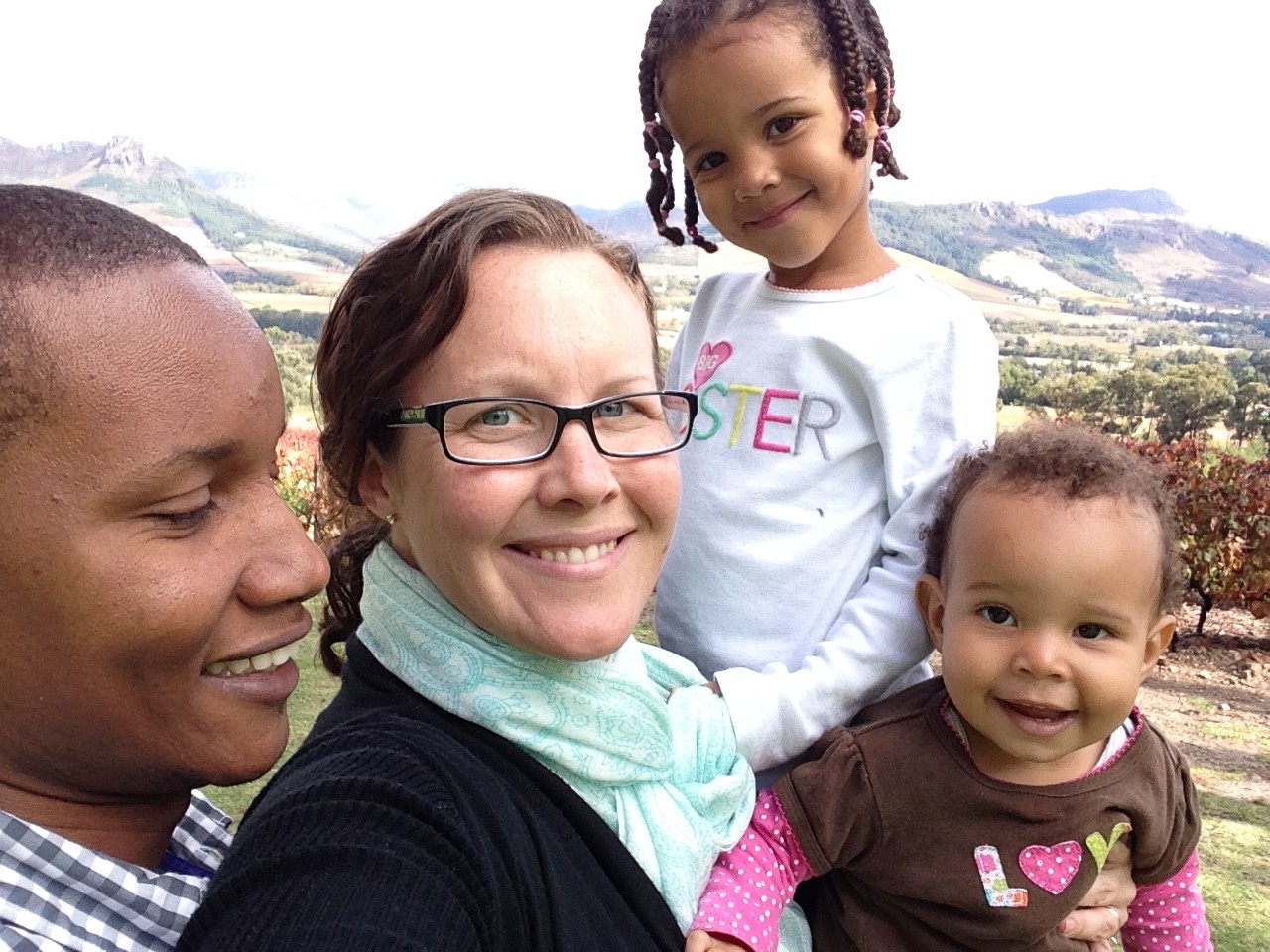
Tara Wambugu is a wife, a mother of two, and a Kenya-based lifestyle blogger covering parenting, family life, travel, and more. A former aid worker, Tara has worked in various countries in Europe, Central Asia, Africa, and Central America. She is now a stay-at-home mom living in Nairobi with her husband and their two sassy little girls. Follow Tara and her family’s adventures on her blog, Mama Mgeni, and connect with her on Facebook, Twitter and Instagram.
Tara Wambugu is a wife, a mother of two, and a Kenya-based lifestyle blogger covering parenting, family life, travel, and more. A former aid worker, Tara has worked in various countries in Europe, Central Asia, Africa, and Central America. She is now a stay-at-home mom living in Nairobi with her husband and their two sassy little girls. You can follow Tara and her family’s adventures on her blog, Mama Mgeni.
More Posts - Website
Follow Me: