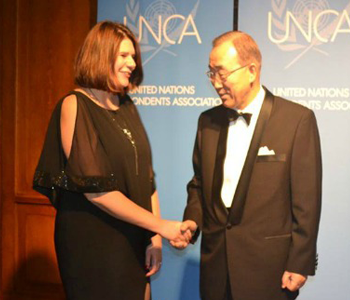
by Sophie Walker (UK) | Sep 18, 2013 | 2013, Being Thankful, Competition, Health, Inspirational, International, Life Lesson, Sophie Walker, Sports, UK, Uncategorized, Womanhood, Women's Rights, World Events, World Motherhood
 Hurrah for Diana Nyad!
In a few short weeks she has overturned long-established ideas about age and ability and strength and given us all a reason to keep swimming.
Nyad, in case you’ve been looking the other way, is the 64-year-old woman who recently became the first person to swim the 110 miles from Cuba to the U.S. without a shark cage, taking almost 53 hours.
This would be a marathon effort at any time, but when you consider that it was her fifth attempt over some forty years; that she had to wear a mask to protect her from jellyfish stings; that she took in so much sea water it caused her to vomit constantly for almost all of that 53 hours; that she arrived finally with face and lips swollen from sun and sea water – well, then her achievement, and her insistence not to be deflected from her aim, would seem to reflect almost superhuman levels of endurance.
The word endurance does not typically bring to mind 64-year-old women. In our culture, it is often used to describe young men – runners, rowers and cyclists at the peak of their profession or pushy capitalists doing extreme sports to fill that adrenaline void when Wall Street is closed.
Google “Endurance” and up come pictures of young, lean, tanned male muscle in a celebration of machismo as traditional now as images of mustachioed weight-lifters once were in Victorian times.
The same web search also shows sepia-tinged photographs of the tall-masted Victorian adventure ship christened Endurance, on which British polar explorer Ernest Shackleton set off for Antarctic expeditions in the last century. (Twenty-first century sailor Ellen MacArthur’s solo circumnavigation of the globe strangely does not feature.)
Nonetheless, I think many women, hearing Nyad’s achievement, will have given a little nod, and maybe a small smile, of understanding. Many more will never hear of her, yet understand without discussion the will that kept Nyad going.
Though they may not be sports fanatics, or travelers with a yen for the toughest destinations, many women set their own personal standards of endurance in their day-to-day existences.
Their marathon may consist of walking for hours to find water and food in conditions of extreme poverty and hunger. Their endurance training may consist of watching their children die for the lack of a cheap vaccine. Their 53-hour record may be for the time worked within a dangerous and miserably uncomfortable factory, to earn a tiny amount with which a family can just about be supported.
For the luckier ones, endurance may just mean a bleak commute, juggling the needs of employers and families and ever-mounting bills. It may mean keeping smiling when a child is in pain, it may mean getting up for the fifth time in one night to attend to small, fevered offspring while knowing that big important morning meeting is looming. It may mean getting over the disappointment when that male colleague got that promotion. It may mean an ability to keep walking with head high when the cat calls keep coming.
Endurance can mean many things. Diana Nyad has reminded us that it is not an exclusively male domain. Already crowds of cynics are assembling to cast doubt on Nyad’s achievement, wondering how an old woman could have completed that swim in that time. Clearly her next endurance test lies just ahead.
But whatever the outcome, she has broadened the parameters of what the will to keep going looks like. And that is no small feat, either.
This is an original post to World Moms Blog from our writer in the UK and mother of four, Sophie.
The image used in this post is credited to Alan Cleaver. It holds a Flickr Creative Commons attribution license.

Writer, mother, runner: Sophie works for an international news agency and has written about economics, politics, trade, war, diplomacy and finance from datelines as diverse as Paris, Washington, Hong Kong, Kabul, Baghdad and Islamabad. She now lives in London with her husband, two daughters and two step-sons.
Sophie's elder daughter Grace was diagnosed with Asperger Syndrome several years ago. Grace is a bright, artistic girl who nonetheless struggles to fit into a world she often finds hard to understand. Sophie and Grace have come across great kindness but more often been shocked by how little people know and understand about autism and by how difficult it is to get Grace the help she needs.
Sophie writes about Grace’s daily challenges, and those of the grueling training regimes she sets herself to run long-distance events in order to raise awareness and funds for Britain’s National Autistic Society so that Grace and children like her can blossom. Her book "Grace Under Pressure: Going The Distance as an Asperger's Mum" was published by Little, Brown (Piatkus) in 2012. Her blog is called Grace Under Pressure.
More Posts

by World Moms Blog | Sep 16, 2013 | 2013, Adoption, Adoptive Parents, Africa, Being Thankful, Cultural Differences, Discipline, Ethiopia, Family, Guest Post, Health, Humanity, Humor, Inspirational, International, Kids, Motherhood, Multicultural, Netherlands, Parenting, Special Needs, Uncategorized, World Motherhood, Younger Children
 Sometimes I’m really weary of explaining. To grannies in the supermarket. To teenage girls at the playground. To fellow mums at school.
My daughter is clearly adopted, yes. She’s from Ethiopia, yes. She’s had a rough start, yes. She’s lost part of her eyesight, yes. And she’s got some countless more issues, yes.
But she’s still a four year old. And I’m her mother. I’m raising her my way. Just like I’m raising her big brother, who is blond and looks a bit too much like me.
The big difference between raising my daughter and raising my son, is that people seem to feel a kind of responsibility towards my girl. It feels like adopted children are in a way public.
I do understand how we stand out, in our not so worldly little town. We are getting used to the extra attention she brings with her, although I admit I have been thinking to teach her to growl when a stranger touches her hair and skin unasked.
We were prepared for all this. We knew we were going to feel like we have arrows flashing around our heads when taking her out. Now that she’s been with us for two years, we’ve all grown a thick skin, filled with humor. We have a series of catchy replies to go with all the ridiculous questions. The next one who dares to ask me what we feed her, will be answered ‘grass’, without even a blink.
But I still can’t really cope with all the unwanted ‘advice’ we get about raising her. When my son was little, I never ever had some stranger giving him candy or cookies. I never had to explain myself in the supermarket when I refused to let him take everything he wished for. And I certainly didn’t have to listen to people telling me how neglectful I was for letting him cry out a tantrum.
With my daughter, I do have those encounters. This one time in the supermarket, I was truly abashed. I had just taken away some nasty sugar bombs from my daughter’s hands and put them back, much against the little miss’s wishes. An elderly lady came over, took the candy and handed them over to my girl again. I was confused, believing she misunderstood. So I explained I didn’t want to buy that rubbish for her. At that moment she cursed me for being so horrible towards that poor little black girl that has been hungry all her life. She put the candy in my cart, ordered me to buy it, and took off while nodding her head.
At such encounters – yes, plural – I have the urge to scream.
For one thing. She’s NOT a poor little girl. She’s in most ways an ordinary four year old preschooler. She can throw the worst tantrums I ever witnessed, just because I can’t peel an apple while driving my car or because I can’t make the Easter bunny magically appear in August. The last one was about having only six colors of nail polish to choose from. Poor girl indeed.
But most importantly, I’M THE ONE raising that ‘poor little girl’. Of course we are aware of her issues, mostly the ones regarding attachment and anxieties. We try to give her everything she needs, truck loads of patience and care which unfortunately aren’t always replenished in time. But she doesn’t need everything she wants. Just like any other child doesn’t. Unless you plan to end up with a spoiled brat that demands a yellow sports car at age eighteen.
Spoiling her will not make right all the things she missed out in the first two years of her life. Maybe that sounds harsh and loveless, but I can assure you it isn’t meant that way. I cry with her when she mourns her lost heritage, when she is homesick. I’ve swallowed away rivers of tears all those times I had to explain her history to medical doctors and hospital professors.
But I can’t raise my daughter based on pity alone.
This is a first-time, guest contribution to World Moms Blog from our friend and mother of The Penguin and the Panther in Belgium, Katinka. Her Flemish blog is in transition over to an English-only blog. Stay posted to World Moms Blog for more from Katinka.
The photograph of the author’s daughter used in this post is credited to the author.
World Moms Blog is an award winning website which writes from over 30 countries on the topics of motherhood, culture, human rights and social good. Over 70 international contributors share their stories from around the globe, bonded by the common thread of motherhood and wanting a better world for their children.
World Moms Blog was listed by Forbes Woman as one of the "Best 100 Websites for Women 2012 & 2013" and also called a "must read" by the NY Times Motherlode in 2013. Our Senior Editor in India, Purnima Ramakrishnan, was awarded the BlogHer International Activist Award in 2013.
More Posts

by Frelle (USA) | Sep 13, 2013 | Friendship, Health, Home, Homeschooling, Kids, Motherhood, Parenting, Working Mother, World Motherhood
 The truth about motherhood is that no one prepared me for this.
No, really.
Have you ever actually admitted that, out loud? That you feel lost, unprepared, five years behind where you “should” be in raising your children?
I just did. (more…)

Jenna grew up in the midwestern US, active in music and her church community from a young age. She developed a love of all things literary thanks to her mom, and a love of all things science fiction thanks to her dad. She left the midwest in her early twenties and has lived in the south ever since.
On her blog, she tries to write words that make a difference to people. Long before she attended college to major in Special Ed and Psychology, she became an advocate for special needs and invisible disabilities. She's always been perceptive of and encouraging to those who struggle to fit in. Having been through several dark seasons in her own life, she's found empowerment in being transparent and vulnerable about her emotions, making deep and lasting friendships, and finding courage to write from her heart. Her biggest wish is to raise her kids to be compassionate people who love well.
She's been online since 1993, with a total of 19 years of social media exposure. Having friends she doesn't know in real life has been normal for her since her junior year in college, and she's grateful every day for the ways technology helps her stay in touch with friends from all over the world.
Jenna lives in a suburb of Raleigh, North Carolina, and is a freelance writer and a stay at home single mom to 3 girls and a boy. She blogs at MadeMoreBeautiful.comMadeMoreBeautiful.com.
More Posts - Website
Follow Me:


by Olga Mecking | Sep 12, 2013 | Multicultural, Netherlands, Preschool, Technology, Uncategorized, World Moms Blog, World Motherhood
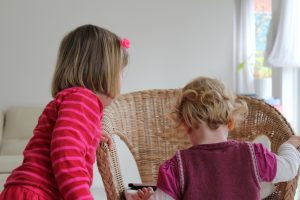 I am raising digital natives and I love it. Technology is a big part of our lives. My brother-in-law once jokingly asked: “Is there a pen in this highly digitalized household?”
“iPad” was among my now 2-year old’s first 50 words. When we Skype with my parents, sometimes my 4-year old gets tired and tries to swipe my father’s image away because she thinks that my laptop has a touchscreen.
There are many ways to approach digitalization. Some parents, bloggers and researchers focus on the negative impact digital technology (and technology in general) can have on our lives. They give tips on reducing screen time, warn against oversharing and treat technology as something that needs to be tightly controlled.
Others are amazed by the opportunities that technology offers us. They mention the community- building aspects of social media platforms, the opportunity to access information everywhere and at any time, and remark that our lives have been made much easier by digital technology.
Where do I stand on this? More in the technology-is-awesome camp.
As an expat, I appreciate the possibilities to not only hear my parents’ voices, but to also see them- and they can see the children. I can use my iPad to do yoga with the children, and to connect with them that way. We don’t have a TV, but instead we use our computers to watch TV series and movies, and read the news. I love taking pictures and I have a digital SLR. That way, I can take tons of photos to choose the very best. And I haven’t even touched on the great advantages I get from blogging. My hands rebel when I try to draw or paint, but my computer allows me to do just that.
I view technology as a tool that can be used to our advantage without taking control over our lives. I think that there is a time and place for everything. I love the term “digital natives”. Just as our children can teach us how to speak another language, we can learn to use all these wonderful devices and find delight in using them.
On the other hand, we can teach children to use technology and social media responsibly. I also think that we can teach them the world of paper books and sounds without a picture, and the world outside of the house rather than the world inside of their devices.
To me it is obvious that technology has much to offer in terms of education and play. But I believe that through technology we not only can connect with a device, but with our children (and grandchildren!) as well.
What is your approach to modern technology? Do you love it or hate it?
This is an original post to World Moms Blog from our writer and mother of two in the Netherlands, Olga Mecking.
The photograph used in this post was taken by the author.
Olga is a Polish woman living in the Netherlands with her German husband. She is a multilingual expat mom to three trilingual children (even though, theoretically, only one is trilingual since she's old enough to speak). She loves being an expat, exploring new cultures, learning languages, cooking and raising her children. Occasionally, Olga gives trainings in intercultural communication and works as a translator. Otherwise, you can find her sharing her experiences on her blog, The European Mama. Also take a while to visit her Facebook page .
More Posts - Website
Follow Me:

by Mama B (Saudi Arabia) | Sep 11, 2013 | 2013, Cultural Differences, Culture, Family, Family Travel, Grandparent, Home, Life Balance, Saudi Arabia, Uncategorized, World Motherhood
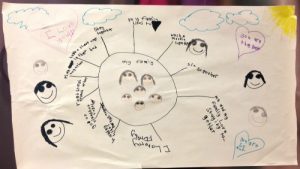 The first week of school, after a two and a half month summer, is nearly over and we are slowly getting into the swing of things.
I love the schedules, the school calendar, the time tables. The order of it all is just so… ahh… comforting! It only takes a short while before I start dreaming of our next break, but being back home is such a blessing.
There is a feeling I get when landing back in Riyadh, which is like sitting back in your favorite chair that has moulded its self to your body perfectly. Everything fits into the right place. It is an enormous relief, no matter how much fun we were having, to be back home where I know where everything is if I need it.
When I am traveling I feel totally disconnected. My life here revolves around my family – ‘my tribe’ as I call them. This is not only my ‘mini tribe’, consisting of my husband and children, but of my whole tribe of mother, father. sisters, sisters in law, brothers in law, cousins, aunts and uncles. It is a foreign feeling to be somewhere without the them for a long while.

Mama B’s a young mother of four beautiful children who leave her speechless in both, good ways and bad. She has been married for 9 years and has lived in London twice in her life. The first time was before marriage (for 4 years) and then again after marriage and kid number 2 (for almost 2 years). She is settled now in Riyadh, Saudi Arabia (or as settled as one can be while renovating a house).
Mama B loves writing and has been doing it since she could pick up a crayon. Then, for reasons beyond her comprehension, she did not study to become a writer, but instead took graphic design courses. Mama B writes about the challenges of raising children in this world, as it is, who are happy, confident, self reliant and productive without driving them (or herself) insane in the process.
Mama B also sheds some light on the life of Saudi, Muslim children but does not claim to be the voice of all mothers or children in Saudi. Just her little "tribe." She has a huge, beautiful, loving family of brothers and sisters that make her feel like she wants to give her kids a huge, loving family of brothers and sisters, but then is snapped out of it by one of her three monkeys screaming “Ya Maamaa” (Ya being the arabic word for ‘hey’). You can find Mama B writing at her blog, Ya Maamaa . She's also on Twitter @YaMaamaa.
More Posts

by hjunderway | Sep 9, 2013 | Culture, Expat Life, France, World Motherhood, Younger Children
 Two years ago, I said goodbye to the 100+ friends that had started off as co-workers and quit my job in preparation to leave the United States and move with my husband and son to Paris, France.
Working in the mental health field, where burnout rates are a true reality and there are constant shifts in schedules and treatment, we had a saying; “Change is hard.” We said this a thousand times to help solidify the “change” in our minds and to mentally prepare ourselves for the differences between the experiences we had before the transition and the ones we braced ourselves for afterwards.
Change is hard. Again my family is faced with major changes as our expatriate contract is unexpectedly ending and we are returning home to the United States. However this time, we are leaving with a four-year old who attends school daily, has friends, and identifies Paris as “home.” Our son speaks two languages, prefers baguette to sandwich bread, and thinks everyone has gouter at 4:00 p.m.
When we arrived in Paris, HJ was only two years old and to him, home was wherever his parents and toys were. We had to do very little to prepare him for the transition, but realizing that he is now a little person with thoughts and most importantly, feelings, preparation to move back to the United States will take on much more of a significance for us.
How do you prepare a young child for such a big change? Do you tell them months in advance, or do you wait until the week before? Do you play up the excitement of the move or downplay it to ease anxieties?
As a therapist, and most importantly, as a mother, I feel it truly depends on the child. For HJ, waiting approximately two weeks before the movers come to pack up our apartment for the overseas shipment will be the right time. For younger children, this might be too long of a time frame for them to understand and for older kids, who are more emotionally invested in their expatriate community, may need substantially more time to process.
My son doesn’t understand weeks or months yet. He knows “now,” “soon,” and “later.” So for him and for children who don’t understand time frames yet, parents can utilize a paper chain by simply cutting strips of colored paper and stapling them together to form a chain. Each link represents a day; link enough to cover the amount of time you have before the transition day arrives. For older kids, they can write something they are excited about or conversely, sad about the transition. Each day as you move closer towards the change, you can rip off a link in the chain, and kids can visually see the transition day as it approaches.
Once your time line has been established, the process of understanding the change can begin, which can be accomplished in a variety of ways. The first is through writing a social story; this is a story you can write in a basic word document that will outline the specifics of the upcoming change.
For our family, we’ll talk about returning home to America, feature photos of our home in the US as well as those of preferred family members. The focus will be on what things will change for our son when we leave. Including pictures of his new school and perhaps of the teachers who will be working with him will be helpful. We’ll also emphasize the fact that at school, his teachers and classmates will speak English, which is a huge change for our son. Another way to help prepare for the upcoming change is to have your child participate in packing, allowing them to feel like they have control over the change. For our son, this means having him pack his own suitcase of preferred clothing and toys.
The second thing is to, in essence, mourn the loss of the experience your child has had. Allowing them to share feelings of sadness and loss in regards to saying goodbye to friends they’ve made is an important part of the process. Depending on the age of your child or their emotional development, it may be helpful to purchase an address book, gathering mailing/email addresses, as well as Skype names. For close friends, planning Skype dates ahead of time can be helpful and gives kids something to look forward to.
Another way to embrace and remember the specifics of the current experience, it may be helpful to spend time seeing favorite places, gathering mementos, and taking lots of pictures. Using online software like Shutterfly, you can create photo books for children to look at if they are feeling sad after the transition.
Change is hard, and by sharing this process with my son, I’m hopeful that I too can prepare myself for the transition from France back to America!
Moms, what are some tips you might have to help moms like me help their children with changes and transitions?
This is an original post for World Moms Blog by Jacki of HJUnderway in Paris, France, who is preparing to move back to the United States with her husband and son, HJ, aged 4.
The photograph used in this post is credited to the author.
Jacki, or “MommaExpat,” as she’s known in the Internet community, is a former family therapist turned stay-at-home mom in Paris, France. Jacki is passionate about issues as they relate to mothers and children on both domestic and international scenes, and is a Volunteer Ambassador for the Fistula Foundation. In addition to training for her first half marathon, Jacki can be found learning French in Paris and researching her next big trip. Jacki blogs at H J Underway, a chronicle of her daily life as a non-French speaking mom in France.
More Posts