by Susie Newday (Israel) | Jul 23, 2014 | 2014, Cancer, Death and Dying, Inspirational, Israel, Uncategorized, World Moms Blog

Had she not been a patient of mine and had my eye not been trained to see the telltale insults that cancer leaves on a body, I never would have known that her life was anything but perfect.
There are people like that in the world. People who smile through the worst. People who bring light to others and who know how to appreciate every moment with a vitality most of us lack.
She was one of the special ones. A special person and a patient with whom I connected on a deeper level. I was there to help guide her, but she was there to teach me about gratitude, optimism, tenacity, acceptance, love, courage and happiness.
She was an inspiration and a joy to be around. How I hoped she would be one of the few to beat the odds of metastatic breast cancer. And it looked like she might because she never stopped planning for the future or living her life in the present.
Unlike other patients and friends of hers who closed off the world or shut down when things took a turn for the worse, she never lost her huge infectious smile, energy, positive attitude or sparkle in her eyes.
Except for the last few days, and even then there was no self pity, just strength and determination. She was dying, in pain and in and out of consciousness but still fighting to hold on until her last wishes were fulfilled. She wanted her 8 year old daughter to come and say goodbye to her so her daughter would have some closure and she wanted her month old son, born to a surrogate mother, to be circumcised in Jewish tradition.
And she fought with her body to hold on. She saw her daughter for the last time and as soon as her son was circumcised later that same day, she took her last breath and our world was left a little dimmer as the light and joy that was her was released from her pain.
My only comfort is that she left behind an amazing family. A husband no less special than she, a daughter, a son, a mother, 2 sisters and a brother who all loved her deeply and will make sure that her special light and her precious gifts are not forgotten.
Every person who had the privilege of knowing her will never forget her, because although her years on this earth were short, she lived them to the fullest in a way many of us will never succeed in doing.
In these heartbreaking days in Israel, as we suffer our own private losses as well as national losses we choose to make our own, I think about my patient and the 29 young Israeli soldiers who died in the prime of their lives while fighting terrorists. Their deaths are more than just a grave loss. I think that their deaths are meant to be a “living” reminder for me. A reminder that it’s not how long you live, but rather how you live those years that you are given.
May all the families who are mourning the unfathomable loss of their loved ones somehow find the strength to continue to live life in the way they did.
And now I’m asking you all, how well are you living your years?
This is an original post to World Moms Blog by our contributor, Susie Newday in Israel. You can find her on her blog New Day New Lesson.
Photo credit to author.
Susie Newday is a happily-married American-born Israeli mother of five. She is an oncology nurse, blogger and avid amateur photographer.
Most importantly, Susie is a happily married mother of five amazing kids from age 8-24 and soon to be a mother in law. (Which also makes her a chef, maid, tutor, chauffeur, launderer...) Susie's blog, New Day, New Lesson, is her attempt to help others and herself view the lessons life hands all of us in a positive light. She will also be the first to admit that blogging is great free therapy as well. Susie's hope for the world? Increasing kindness, tolerance and love.
You can also follow her Facebook page New Day, New Lesson where she posts her unique photos with quotes as well as gift ideas.
More Posts - Website
Follow Me:


by World Moms Blog | Jul 7, 2014 | Uncategorized
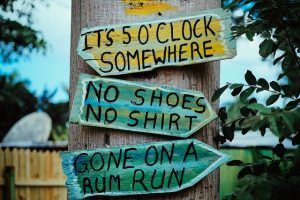 See you in two weeks with new and fresh posts from around the world!!
We’re on our annual summer/winter Blogcation’ and we’ll be back on Monday, July 21st!
In the meantime, we hope you’ll enjoy our daily dose of previous WMB posts!
World Moms Blog is an award winning website which writes from over 30 countries on the topics of motherhood, culture, human rights and social good. Over 70 international contributors share their stories from around the globe, bonded by the common thread of motherhood and wanting a better world for their children.
World Moms Blog was listed by Forbes Woman as one of the "Best 100 Websites for Women 2012 & 2013" and also called a "must read" by the NY Times Motherlode in 2013. Our Senior Editor in India, Purnima Ramakrishnan, was awarded the BlogHer International Activist Award in 2013.
More Posts

by Dee Harlow (Laos) | May 29, 2014 | Awareness, Breastfeeding, Food, Health, Humanitarian, Laos, Maternal Health, Millennium Development Goals, Nutrition, Uncategorized, World Voice, Younger Children
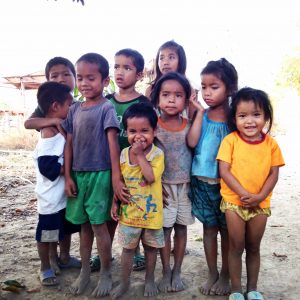 While I still have the opportunity to write another post for the WMB community before leaving Laos later this year, I feel compelled to tell you about child nutrition and the problem of stunting in Laos because stunting is a seemingly invisible problem that can go unnoticed unless special attention is drawn to highlight the issue.
Ethnically, most Southeast Asian people are shorter and have a smaller frames than most other races throughout the world. This fact makes it easy to say that Lao babies and children tend to be small or smaller because of their race.
Yet at first glance Lao children appear to be healthy (and super cute), a closer look and personal interaction will almost always reveal that the children are a few years older than what you had first assumed. I recently met an adorable girl in a northern village at a school where I delivered books by boat since there is no road access to her village. Upon speaking with her (in Lao) I was impressed by how well behaved, articulate and “mature” she was for what I assumed to be a 6-year old. (I have two 4-year old twins so I was instantly optimistic about their potential in just two short years to be as well behaved as this girl.) She turned out to be 10-years old. This has happened time and time again to me, to my colleagues, and to many newcomers to Laos.
Lao children are among the most undernourished in Southeast Asia with 44% stunting of children under 5-years old. It is the single largest contributor to infant and child mortality in the country with 59% of all child deaths related to nutritional deficiencies. Chronic malnutrition predisposes children to higher morbidity and mortality, lower educational attainment, and reduced workforce productivity.
For a country experiencing rapid economic growth and increasing income disparities, fierce external human resource competition puts the country at risk of leaving a majority of the Lao population behind others who will be more able to keep apace. Stunting is a problem that needs be addressed for the immediate wellbeing of Lao children and to be resolved for the future potential of the Lao people.
The Lao government is working closely with experts and development partners on how to tackle this important issue. It is not easy. Poor breast-feeding and weaning practices are widespread. Almost all mothers give food supplements (such as chewed glutinous rice), and pure water, to infants within a few weeks of birth. Harmful practices (such as discarding colostrum) and other food taboos for pregnant women reduce disease resistance for newborns and increase fetal undernutrition. Micronutrient deficiencies, inadequate intake of vitamin A, anemia and iodine deficiency, all further hinder child development.
The current health system is not only faced with challenges of delivering micronutrients, immunizations and necessary vitamins to the most vulnerable population, but they are additionally burdened by the daunting task of changing people’s behaviors to improve dietary habits, increase nutritional intake, and overcoming cultural belief and religious belief obstacles to improved nutrition status among rural and multi-ethnic communities. The task is daunting.
What is being done and what needs to be done?
There are some great organization here making slow but successful strides on a small-scale basis. UNICEF, WFP, IFAD, Save the Children, the Scale Up Nutrition initiative and others who are collaborating closely with government health officials, but resources are scarce, especially in an often overlooked country like Laos.
- We can channel financial support to these organizations for their work on nutrition in Laos.
- We can lobby our governments to increase foreign assistance resources to address the poor state of healthcare in Laos (e.g., Laos is not one of the United States’ ‘priority countries’ receiving Global Health Initiative (GHI) funding. Ask U.S. representatives, Why not?)
- We can voice our concern to private and public interests who are taking advantage of opportunities in Laos to improve their social welfare practices by investing in better healthcare in communities where they pursue their business interests.
- We can ask the question to anyone willing to listen about who should be accountable to improving the welfare of children beginning their lives under such great odds in Laos.
Hopefully someday, someone will listen and take action.
This is an original post to World Moms Blog by our mother of twins writer, Dee Harlow in Vientiane, Laos. You can always find her writing on her blog, Wanderlustress.
Photo credit attributed to the author.
One of Dee’s earliest memories was flying on a trans-Pacific flight from her birthplace in Bangkok, Thailand, to the United States when she was six years old. Ever since then, it has always felt natural for her to criss-cross the globe. So after growing up in the northeast of the US, her life, her work and her curiosity have taken her to over 32 countries. And it was in the 30th country while serving in the Peace Corps in Uzbekistan that she met her husband. Together they embarked on a career in international humanitarian aid working in refugee camps in Darfur, Sudan, and the tsunami torn coast of Aceh, Indonesia.
Dee is now a full-time mother of three-year old twins and continues to criss-cross the globe every two years with her husband who is in the US Foreign Service. They currently live in Vientiane, Laos, and are loving it! You can read about their adventures at Wanderlustress.
More Posts

by Fiona Biedermann (Australia) | Apr 28, 2014 | Awareness, Child Care, Childhood, Family, Health, Human Rights, Life Lesson, Loss of Child, Oceania, Parenting, Relationships, Safety, Tragedy, Uncategorized, World Motherhood, Younger Children
As parents I’ve always believed that all of us want our children to achieve their full potential and to do amazing things with their lives, we also never want for them to be fearful of anything, real or imagined.
But what happens when a child’s fear is not imagined and is in fact very real. When the one thing they’re most fearful of is the person who they should be able to trust the most?
A story in the news this week in Adelaide has parents—actually not just parents but every living, breathing individual—up in arms over the treatment of a four-year-old little girl in 2012, who died as a result of the cruel treatment dished out by her mother and her boyfriend.
As the story is told, they put this little girl on a 50kg motorbike and over a period of three days made her ride it around the backyard while they videotaped it for their own enjoyment. Despite her terror and numerous crashes, they kept picking her up and putting her back on.
A final crash into a tree at almost 40km/h caused serious injury and despite complaining of her injuries when they put her to bed they did nothing. The following day she slipped into unconsciousness and they waited a further eight hours before seeking help, turning instead to Google for answers about what to do when someone is unconscious. She died as a result of them not seeking medical assistance.
There are many more facts, there’s much more to the story and there’s also a history of social welfare intervention—but nobody actually stepped in and took this child away from her mother, nobody in fact did anything to save her despite their knowledge that things weren’t quite right.
This week, the mother and her boyfriend were both sentenced, with the mother receiving an eight-year prison sentence with a non-parole period of just under five years. That’s a measly year in prison for every year her child was alive.
It’s a pitiful and sad sentence but sadly I think it’s also indicative of the ‘hands off’ society that we’re now living in.
I understand that in this day and age we don’t want to get involved, we mind our own business and we look after our own. But I also think it’s a sad state of affairs when, as individuals, we shy away from getting involved when an innocent and trusting little girl is left in the clutches of such disturbed people.
I also think it’s a travesty of mammoth proportions that with all our laws and child protection agencies that nobody saved this little girl.
I know bad things happen to small children and it makes my stomach churn each and every time I hear about one of them. Little Chloe Valentine was just one of many, who as a society we all failed to protect. (Please be aware that I have not linked to any of the footage or the story as I find it too upsetting to watch or read about)
No I didn’t know her personally but as a parent who cherishes her own children and grandchildren it makes me sick to even hear about it. I will stand up and get involved when something is going on around me which I know to be wrong. These children are our future and just because they don’t have a voice doesn’t mean we can’t do something about it.
As a result of this case, Adelaide will see a total overhaul of child protection laws with an inquest into the failure of social welfare to intervene. For little Chloe, it’s a case of too-little-too-late, but one can only hope that we can all learn from this and prevent this kind of thing ever happening again.
I know that sometimes we should stay out of things which aren’t our business but in this case would you have gotten involved?
This is an original World Moms Blog post by Fiona from Inspiration to Dream of Adelaide, South Australia.
The image used in this post is credited to .craig. It holds a Flickr Creative Commons attribution license.

Fiona at Inspiration to Dream is a married mother of three amazing and talented MM’s (mere males, as she lovingly calls them) aged 13, 16 and 22, and she became a nana in 2011!
She believes she’s more daunted by becoming a nana than she was about becoming a mother! This Aussie mother figures she will also be a relatively young nana and she’s not sure that she’s really ready for it yet, but then she asks, are we ever really ready for it? Motherhood or Nanahood. (Not really sure that’s a word, but she says it works for her.)
Fiona likes to think of herself as honest and forthright and is generally not afraid to speak her mind, which she says sometimes gets her into trouble, but hey, it makes life interesting. She’s hoping to share with you her trials of being a working mother to three adventurous boys, the wife of a Mr Fix-it who is definitely a man’s man and not one of the ‘sensitive new age guy’ generation, as well as, providing her thoughts and views on making her way in the world.
Since discovering that she’s the first blogger joining the team from Australia, she also plans to provide a little insight into the ‘Aussie’ life, as well. Additionally, Fiona can be found on her personal blog at Inspiration to Dream.
More Posts

by Ecoziva (Brazil) | Apr 7, 2014 | Brazil, Environment, Millennium Development Goals, Nature, Social Good, Uncategorized, World Interviews, World Motherhood
This post follows up on WMB’s eight-month campaign to raise awareness for the eight Millennium Development Goals (MDGs). In this post, we reflect on MDG #7: Ensure Environmental Sustainability. The following is an interview with Silvio Rocha Sant’Ana, president of the Esquel Group.

World Moms Blog: What are some examples of how the Esquel Group supports environmental sustainability?
SRS: We have been working with other civil society organizations (CSOs) and governmental institutions in the fields of adapting to climate change, combating desertification (in Northeast Brazil), designing proposals for public policies on these matters, and dialoguing directly with financial agencies (public and private) in order to make them more adjusted to sustainability criteria.
How can mothers help support your organization in achieving MDG #7?
SRS: It is a new question for me. Thinking aloud: mothers have a fine sense of survival and can operate in adverse conditions much better than men. We work with a lot of very poor mothers (especially at the Pastoral da Criança and the microfinancing project). The way they think (and act), their relationship to the environment, the ability to allocate resources in the difficult social conditions they live in – all of this is a continuous lesson we can learn from. In fact, it would be interesting to have an environment that would enable us to maximize their teachings and contributions.
What countries does the Esquel Group mainly work in?
Silvio Rocha Sant’Ana: Esquel is currently active in the USA, Ecuador and Brazil. Each organization is independent, and defines its own agenda; we have common concerns and themes.
How does Esquel Group bridge the gap of joining people in economic development?
SRS: We have developed many activities in different fields. In Brazil we have focused in the Northeast region (where there are severe environmental and social restrictions), on children aged 0-6 years in Brazil, and in the field of technical support. We also work closely with the Pastoral da Criança, including microfinancing for employment and income generation (mainly for women).
What is the Esquel Task Force?
SRS: The Esquel Task force is an initiative from the USA Esquel Group and fosters dialogue, advocacy and lobbying among American and Latin American organizations.
Is there a specific example in Brazil where Esquel made a big impact when it came to the environment?
SRS: There is a very famous Project in Brazil called “1 million cisterns” – tanks to collect rain water in the semi-arid region of Brazil. Esquel has had a leading role in building up this project and the related public policies. It is considered an extraordinary and successful case of public-private cooperation and has mobilized, to date, more than US$200 million. It is a project managed entirely by CSOs and its main goal is to create a new pattern of social wellbeing in the semi-arid region, with full respect to environmental conditions.
What would you say are the greatest environmental issues facing Brazil today?
SRS: Adaptation to climate changes and associated cultural adjustments within an “economic and social environment”, which favors “economic growth” above all things (including social and environmental welfare).
What is the unifying theme of all Esquel’s activities worldwide?
SRS: The unifying theme of Esquel’s activities is the strengthening of civil society, specifically citizen organizations that further democracy.
This is an original interview post for World Moms Blog by our writer in Brazil, EcoZiva.
For more about the Esquel Group, visit their website at http://esquel.org/.
Eco, from the greek oikos means home; Ziva has many meanings and roots, including Hebrew (brilliance, light), Slovenian (goddess of life) and Sanskrit (blessing). In Brazil, where EcoZiva has lived for most of her life, giving birth is often termed “giving the light”; thus, she thought, a mother is “home to light” during the nine months of pregnancy, and so the penname EcoZiva came to be for World Moms Blog.
Born in the USA in a multi-ethnic extended family, EcoZiva is married and the mother of two boys (aged 12 and three) and a five-year-old girl and a three yearboy. She is trained as a biologist and presently an university researcher/professor, but also a volunteer at the local environmental movement.
More Posts
by Nancy Sumari | Apr 2, 2014 | Awareness, Food, Humanity, Nancy Sumari, Parenting, Uncategorized, World Moms Blog
Living in a developing country and being blessed enough to be able to work, provide for your family and get by, is considered lucky.
In Tanzania people are considered poor when their consumption is below than the national poverty line. Consumption includes all goods that are bought, as well as those produced and consumed at home. This includes food, household equipment, clothing, personal effects, personal care, recreation, cleaning, domestic services, contributions, fuel, petrol and soap.
Over the years, I have always had a sense of responsibility and felt the urgency to work towards bridging gaps in poverty, through advocating for education and engaging in activities, big and small, in sectors like health and social change in an attempt to bridge this gap.
After having my daughter, I understand the notion that every parent wants the very best for their child. It does not escape me how truly blessed we have been to be able to provide for her. What I’m struggling with now is excess, conservation as well as teaching her to understand that she really is no different than another young girl from the other side of town who does not have the luxury of being able to enjoy three healthy meals a day and who cannot afford to go to school. I hope to be able to awaken this sense of responsibility towards poverty and the gaps in society in my daughter.
One evening, I came home after a visit to a school in Dodoma, the country’s capital, where I had been working to raise funds for building a girls’ hostel. These students were going through horrors every day; from 16 kilometer walks to and from school, to living in deplorable conditions, to being subject to burglary and rape. It was really weighing in on me.
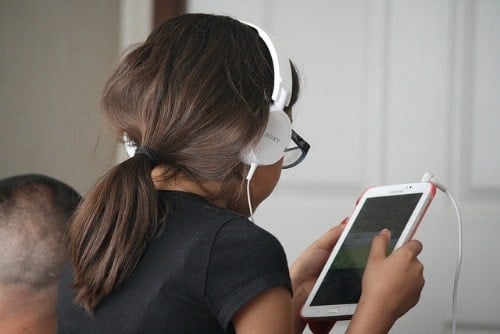
I walked in to find my younger brother and my daughter watching TV with the sound on really loud. She was playing a game on the iPad and lights were on all around the house. Excess. They had just had dinner and both seemed to be almost just laying there. or me that was a turning point. Things had to change. Scaling down was imminent.
High on our agenda these days is use of only what we need. Above all is practicing gratitude. When she is old enough to understand, I will introduce her to the reality of the way things are in the world.
It really strikes me though, time and time again, just how different lives are. Not to bite the hand that feeds me, but it seems almost unfair that some have so much while others have so little. What makes us special to be the “Haves” and them the “Have Nots”?
My struggle these days is just to try and get it.
What are your thoughts? How do you teach your kids about giving back?
This is an original post by Nancy Sumari from Tanzania. You can find more of her writing at Mama Zuri.
Photo credit to Wheeler Cowperthwaite