by Meredith (USA) | Apr 25, 2014 | 2014, Awareness, Communication, Education, Family, Gun Violence, Kids, Life Lesson, Motherhood, Parenting, Safety, School, Tragedy, USA, World Motherhood, Younger Children

Growing up in Illinois, when I was in elementary school, it was commonplace for our school to have several emergency drills in case there was a tornado. We knew to hide under our desks and cover our heads with our hands and wait until the drill was over. The thought behind the drill was that we would be ready if a disaster ever struck. We followed up with fire drills as well. We prepared for what we knew could happen but hoped would never happen to us… (more…)
Meredith finds it difficult to tell anyone where she is from exactly! She grew up in several states, but mainly Illinois. She has a Bachelor of Science degree in Elementary Education from the University of Illinois at Champaign/Urbana which is also where she met her husband. She taught kindergarten for seven years before she adopted her son from Guatemala and then gave birth to her daughter two years leter. She moved to Lagos, Nigeria with her husband and two children in July 2009 for her husband's work. She and her family moved back to the U.S.this summer(August 2012) and are adjusting to life back in the U.S. You can read more about her life in Lagos and her adjustment to being back on her blog: We Found Happiness.
More Posts

by Olga Mecking | Apr 21, 2014 | 2014, Awareness, Being Thankful, Bilingual, Communication, Family, Health, Humanity, Humor, Kids, Language, Life Balance, Maternal Health, Motherhood, Netherlands, Parenting, Siblings, World Motherhood, Younger Children
 One of my very favourite human qualities is a sense of humour. I must confess that I sometimes find people lacking this wonderful quality, as boring. It isn’t nice of course but I believe a sense of humour is paramount to any human’s well being or even survival. Especially if you’re a mom.
I love all kinds of humour: simple, sophisticated, absurd, or even black humour. By the latter, I mean of course, serious matters that are funny.
When my days are filled with screams and cries and tantrums, the only thing that keeps me afloat is laughing about it. And when I share my pearls of wisdom on Facebook, not only does it make me feel better, it makes others feel better, too. I also love reading snarky, funny, honest posts that make me nod my head in agreement. When times are hard, humour helps me survive.
We all know that parenting is tough and humour can help with that as well. I, for one, rely heavily on it. When my daughter refuses to put on her jacket, I ask her to put on her pj’s. Then her bathing suit. Then her bathrobe. She laughs, says no to all I suggest and puts on her jacket without any problems. That is, obviously provided that I actually remember to laugh instead of to yell.
I often try to persuade my big girl that I have 10 legs. She kindly and patiently explains that no I really can’t have 10 legs. “Why?” I ask her. She tries to explain that humans only have 2 legs but to no avail. I really need to know why I only have 2 legs, not 10. I mean, 2 legs, how lame is that! At some point, she cracks up and so do I and we both laugh until we can’t laugh anymore.
So you see, it is not very surprising that I want my children to have a sense of humour and a big one at that. Puns, laughter and jokes are normal in our house. And already, I begin seeing it in my children. For instance, I loved a recent conversation with my three-year old.
“Mama?”- she asks me, with a glint in her eye, and a smile playing in the corner of her mouth.
“Yes, J?”- I answer, wondering what she’s going to say.
“Mama?”- she repeats, her tone still serious but the smile more visible.
“Yes, J?”- I repeat, not sure what to think of it.
“Pee-Pah-Paw!” she says, out of nowhere, her laughter filling the house. “Pee-pah-paw”- I say, and soon the whole family joins her till our bellies hurt.
My baby has a mischievous smile that makes my heart melt. When he laughs, I think I’m the luckiest mom on Earth. I ‘m sure that he too will grow up to have a sense of humour, just like his sisters.
I especially love when they make multilingual jokes, like “Ja-vocado” and “Nie-vocado” (“ja” is “yes” in German while “nie” means “no” in Polish). When asked what a ja-vocado is, my eldest daughter said that it’s a fruit that is yellow on the outside and pink on the inside and it is sweet and very delicious and that she likes it a lot.Funny that she can imagine liking fruit that doesn’t even exist.
I am always surprised how many functions humour can have: it can help you through tough times. It can turn a rejection into cooperation, in children and adults alike. It makes children clever and great with languages. It makes us see things in a different way.This is why I feel it is so important.
I’m not funny all the time, though and that’s fine. It’s OK to be sad sometimes. I won’t pretend that my day is better than it is. But when I remember, I find in myself the strength to stick my tongue out at the universe and say: “Pee-Pah-Paw”. And laugh until my belly hurts.
Are you raising your kids to have a sense of humour or appreciate humour?
This is an original post to World Moms Blog from our writer in the Netherlands, Olga Mecking.
The image used in this post is credited to cherijoyful. It holds a Flickr Creative Commons attribution license.
Olga is a Polish woman living in the Netherlands with her German husband. She is a multilingual expat mom to three trilingual children (even though, theoretically, only one is trilingual since she's old enough to speak). She loves being an expat, exploring new cultures, learning languages, cooking and raising her children. Occasionally, Olga gives trainings in intercultural communication and works as a translator. Otherwise, you can find her sharing her experiences on her blog, The European Mama. Also take a while to visit her Facebook page .
More Posts - Website
Follow Me:


by Salma (Canada) | Apr 18, 2014 | 2014, Death and Dying, Kids, Life Lesson, Loss of Child, Motherhood, Religion, Salma, World Motherhood, Younger Children
 We read about it as young children in folklore and fairy-tales. If we grew up in religious homes, we were taught about various aspects of it, without a full understanding of what it all meant. While I have a different outlook at this stage in my life, I try to shield my children from the pain of it. We can all agree that death (or the idea of dying) is scary.
In January 2010 I became a Peer Infant Loss Support Worker; two months later I was pregnant with my first Rainbow baby. Last year I applied to volunteer at a palliative care facility. Having dealt with loss, being younger than most of the volunteers, and since I was going through the process of grieving my infant son who passed away in 2009, the coordinator was sure that I was just what the program needed. Interestingly, I became pregnant soon after. Call me superstitious, however, at this point, I came to one conclusion – I’d had enough with death – I needed a break. I quickly resigned.
While my resignation was totally unreasonable and my actions irrational, I never looked back until I gave birth to a healthy baby girl. After the death of my father in 1993 I began thinking about death; but it wasn’t until the death of my infant son that I began searching, speaking and learning about the practices, rituals and beliefs surrounding life and death. For instance, before my son’s death, I knew nothing about Islamic burial practices. My husband, who had been to a couple of funerals also had no idea what to do. Our lack of knowledge, coupled with grief made it extremely difficult to process the practice of what was being done and why.
It was not until after the death and burial, that I truly began to understand the Islamic view on death and dying. Muslims believe that human existence continues after death in the after-life, and that we are judged on our actions from this life. We are taught to prepare for the after-life by doing good deeds in this life. Upon death, the corpse is washed by family members, shrouded in a white cloth, buried on its right side, with the head facing Mecca.
After our experience I began to ask questions about death and dying. While I am by no means an authority on these practices, I have connected with many women who have shared their experiences. In our dialogue, I have learned about Tibetan Buddhist rites of passage and the Tibetan Book of the Dead, various Christian ideas like Catholicism’s idea of purgatory and resurrection. I also learned about practices, like Balinese Hinduism death towers and the Jewish ritual of Shiva.
Death is frightening. Words like eternal life and afterlife can be comforting and scary simultaneously, especially for those of us who connect these words with thoughts of retribution and judgement. A few years ago, a Social Worker noted: “…parents aren’t supposed to bury their children.” I’ve heard this before, but I don’t really believe or subscribe to this thought. I learned that life is a journey, and we are all here for different reasons. Sometimes our road takes us farther than others.
So has my experience with burying a loved one made it easier for me to swallow the concept of my mortality? Has my cross-cultural knowledge made it easier to speak about it? Not really. Without a doubt, death is central to our existence. I am not blind to the reality of it, especially when it seems imminent (watching a friend or family living with serious diseases), but I don’t want to deal with it unless I have to.
What practices/beliefs about death and after-life do you hold?
This is an original post written for World Moms Blog by Salma. You can find Salma blogging at Party of Five in Calgary.
Photo credit to the author.

An Imperfect Stepford Wife is what Salma describes herself as because she simply cannot get it right. She loves decorating, travelling, parenting,learning, writing, reading and cooking, She also delights in all things mischievous, simply because it drives her hubby crazy.
Salma has 2 daughters and a baby boy. The death of her first son in 2009 was very difficult, however, after the birth of her Rainbow baby in 2010 (one day after her birthday) she has made a commitment to laugh more and channel the innocence of youth through her children. She has blogged about her loss, her pregnancy with Rainbow, and Islamic life.
After relocating to Alberta with her husband in 2011 she has found new challenges and rewards- like buying their first house, and finding a rewarding career.
Her roots are tied to Jamaica, while her hubby is from Yemen. Their routes, however, have led them to Egypt and Canada, which is most interesting because their lives are filled with cultural and language barriers. Even though she earned a degree in Criminology, Salma's true passion is Social Work. She truly appreciates the beauty of the human race. She writes critical essays on topics such as feminism and the law, cultural relativity and the role of women in Islam and "the veil".
Salma works full-time, however, she believes that unless the imagination of a child is nourished, it will go to waste. She follows the philosophy of un-schooling and always finds time to teach and explore with her children. From this stance, she pushes her children to be passionate about every aspect of life, and to strive to be life-long learners and teachers. You can read about her at Chasing Rainbow.
More Posts - Website
by Nihad | Apr 16, 2014 | 2014, Childhood, Egypt, Human Rights, Kids, Teenagers, The Advocates of Human Rights, Tragedy
 Zeina was a 5-year-old girl living with her family in Port Said, a city on the Suez Canal in Egypt. She was the youngest of three children.
One fateful day, Zeina was playing in front of the door of her apartment. The porter was going to the roof of the building and by chance, the lift stopped at the floor where Zeina was playing. He found her playing alone with no one watching her, so he took the girl with him to the roof. On the roof was another guy, a friend of the porter, waiting for him. There was something on their minds that Zeina didn’t and couldn’t possibly know.
Their intention was to violate the innocence of that beautiful and chubby child. They wanted to rape her, but they couldn’t as she started to scream. They then quickly realized that her mother had found out that she was missing and all the buildings’ inhabitants had started looking for her in the street. To hide what they had done, the two guys decided to get rid of Zeina, so they threw her from the seventh floor to the back of the building.
The cold-hearted criminals then came downstairs pretending not to know anything about her and went to look for Zeina with the family. The family eventually found the little girl bleeding in the back area of the building and took her to the hospital but she died. The police investigated, found Zeina’s killers and arrested them. They were accused of killing her.
The family—as did everyone following Zeina’s story—expected the criminals to be condemned to death but instead they were condemned to only 15 years in jail. It was shocking for all of us but the problem is that the two accused guys were a few months under age 18 and there is a law that prevents condemning any young man below 18 to death no matter what his crime is.
The criminals were laughing, smiling and showing the victory sign inside their cell, while Zeina’s poor mother was screaming and crying very hard. The judge apologized to Zeina’s family as he could do nothing about it, it’s the law. Even the father of one of the killers said “My son deserves to be condemned to death 5 times for his crime”.
The story of Zeina summarizes the story of hundreds, thousands or maybe millions of children who are sexually abused every day all over the world.
And sadly, Zeina’s story is not the only one. A few months later another little girl named Hoda was raped mercilessly, choked to death and beaten with a stone to her head. Hoda was just 4.5 years-old playing in front of her house in her village in Meniah, a city in Upper Egypt. Hoda was raped and killed by her neighbor. Her dead body was found totally naked and bleeding in a house under construction.
A few days before Hoda was raped and killed, Eman a 13 years old girl was killed as well. The criminal choked her to death after failing to rape her and to be sure she died he stabbed her with a knife several times and then threw her body in the canal. Her family found her the following day, floating on the surface of the water. The guy accused of her murder is her father’s cousin, a member of the family. Hoda and Eman’s murderers may be condemned to death as they are over 18 years old.
Every few weeks we wake up with another story of a new Zeina in the newspapers, a young child or a teenage girl who is raped and killed mercilessly by a teenager or an adult. Not only has the child been put through horrors no one should know, but the whole family continues to suffer the pain of loss and the guilt of not being able to protect their child.
Zeina’s mother on TV, apologized to her young daughter for not being there to protect her and save her when she was screaming and calling for help. I couldn’t control my tears when I watched that. Sometimes there is also shame on the family’s part that their daughter has been raped. This is especially true in rural areas. Eman’s family was relieved when they realized that the criminal failed to rape her. It was obvious in their words when they announced that on the TV with great pride and honor.
Sexual abuse against children is something that any family could fall victim to because we seem unable to protect children from it`. There seems to be no end in sight for the heartbreak that families have to cope with when their innocent child is violated or hurt.
ًFor me, what is shocking about these crimes is that when the criminal is under 18 years old he is considered a child and the Egyptian child law (according to The Convention on the Rights of the Child, CRC) can’t condemn any of them to more than 15 years in jail no matter what their crime is.
This law protects the criminal child but what about the victim child? Aren’t we aggrieving them? Don’t they and their families deserve more justice and more sympathy? How can a law protect the rights of the criminal and ignore the rights of the victim?
Have there been any similar crimes in your country? What were your feelings about how the victim’s family viewed the situation?
This is an original post for World Moms Blog by Nihad from Alexandria, Egypt. Nihad blogs at Aurora Beams Life Coaching.
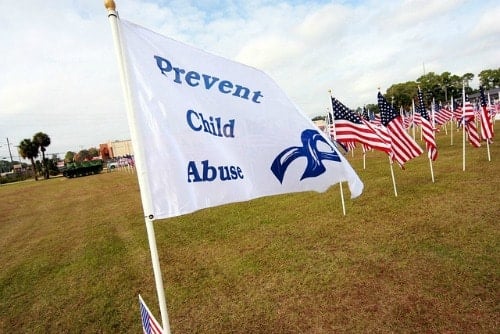
Photo credit: Bruce Tuten

Nihad is an Egyptian woman, who was born and has lived her whole life in Alexandria, Egypt. She says, “People who visited this city know how charming and beautiful this city is. Although I love every city in Egypt, Alexandria is the one I love the most.”
She is a software engineer and has worked in the field for more than twenty years. But recently she quit her job, got a coaching certificate and she is now a self employed life and career coach. She says, “I believe that women in this era face big challenges and they are taking huge responsibilities. That's why I have chosen my niche -- women looking for happiness and satisfaction. I help and support them in making whatever change (career change, life change, behavior change, belief change…) they want to bring more satisfaction and happiness in their lives.”
Nihad is a mother of two lovely boys, 15 and 9 years old. She states, “They are the most precious gifts I have ever had. I madly love them, and I consider them the main source of happiness in my life.”
Our inspiring mother in Egypt can also be found at Aurora Beams Life Coaching.
More Posts

by Alison Fraser | Apr 15, 2014 | 2014, Africa, Canada, Education, Girls, Human Rights, International, Kids, Life Balance, Life Lesson, Motherhood, Philanthropy, Poverty, Social Equality, Social Good, Womanhood, Working Mother
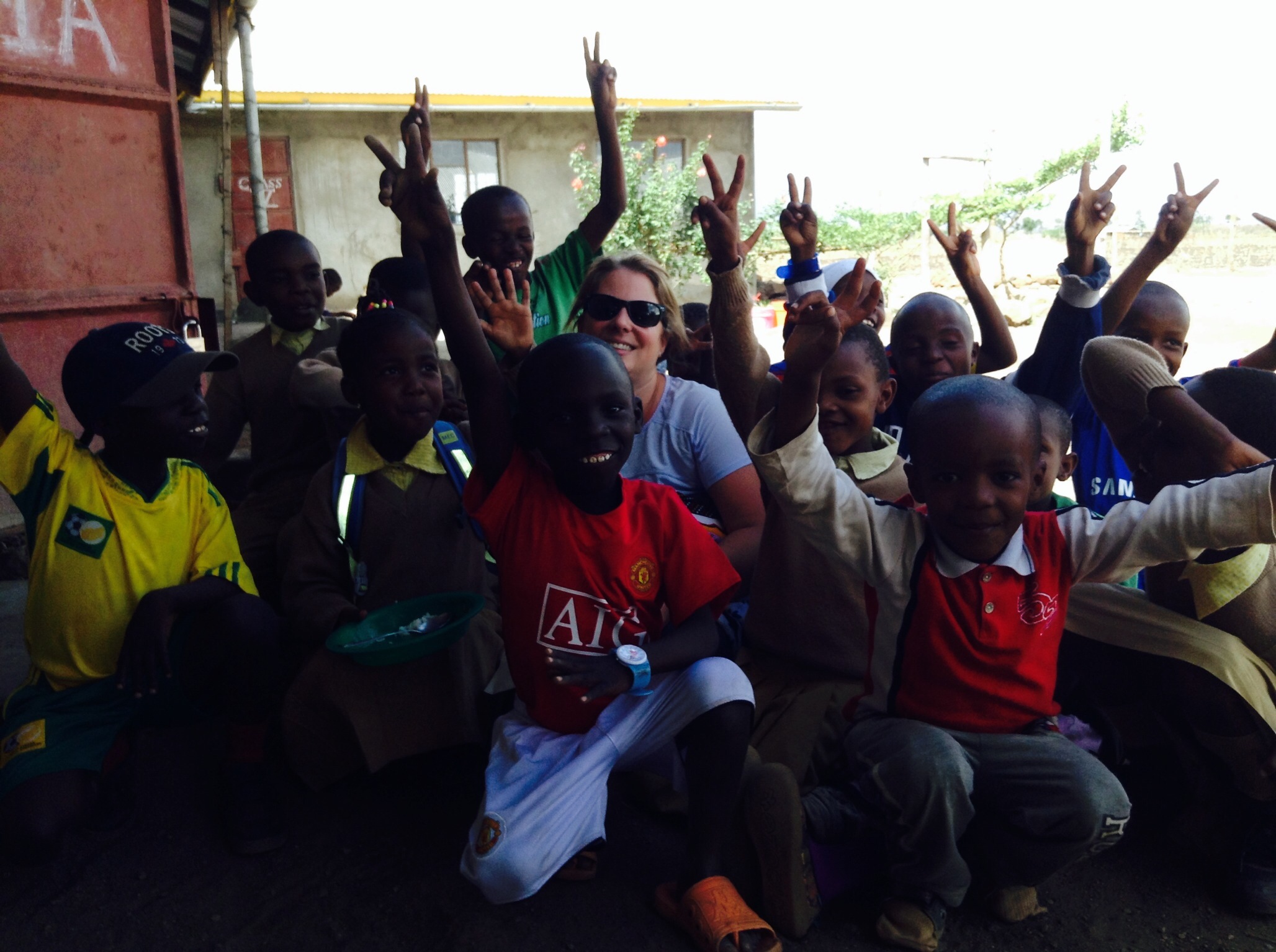
Last November, I visited Tanzania to meet all of the students of the Mom2Mom Africa program, a not for profit organization that I started a short while ago. I remember visiting and spending time with all of the students in the program, and they would refer to me as “Mama”. This is common, and initially I didn’t give it much thought. But, I vividly remember the school director telling me that all of these students are just like my “children”. He said, go back to Canada knowing that you have more than 40 children here in Tanzania! It was so touching, and brought tears to my eyes…yet at the same time, the responsibility of it all was so terrifying. Could I meet their expectations? Could I really be a “good” mama to all of these little ones?
You see, I have three little girls of my own back at home. My time is stretched thin providing for them. Could I really be a good mommy and mama? I struggle daily with how to balance both.
People often talk about mommy guilt. It is a concept I understand all too well, being a working mom. I have made many concessions in my career in order to balance work and family.
I work a reduced work week so that I can spend as much time with my girls as possible. So far, it works for us.

But now, I struggle to balance the pressures that come with my not for profit organization work, especially being a mama to these Tanzanian children who stole my heart last November. I am constantly worrying about them, working to secure funding to send them to school, and keeping tabs on their families, many of whom struggle with illness. I spend countless hours on this; late nights and weekends. And, I love every minute of it. But, it does take time away from my little girls…and that causes guilt…mommy guilt. Should I be spending less time working on Mom2Mom Africa and more time with my children…and then other times, I worry about the exact opposite. It seems like I am forever in guilt mode. When I am in Canada, I worry about the children in Tanzania. Yet, booking my next trip to Tanzania in July caused major guilt. I can’t win.
So, I talked to my daughters about this recently. I tried to explain how being a mama and mommy can be really difficult. Thankfully, all three of my girls were supportive beyond their years. My girls are my world. And my work in Tanzania, and the children there, are always in my heart, and mind. I just have to do the best I can at balancing both worlds and hope that I succeed.
I think mommy guilt is a common thread that all of us moms feel at one time or another. We are likely too hard on ourselves and most often are doing a better job than we actually give ourselves credit for. And in the end, I think I can be both a mommy and mama. I just have to be conscious of keeping a healthy balance between both! And I now know my girls will help me keep it all in check! Knowing I have their support eases the mommy guilt, and lets me instead channel that energy into being a good mommy and mama! Or at least the best one that I can be!
Mom2Mom Africa has just launched an indiegogo campaign to build a new school and implement a food program at one of the schools they send students to in the Mom2Mom Africa program. Click HERE if you would like to be a part of this exciting campaign.
Can you relate to the “Mommy Guilt” dilemma?
This is an original post written for World Moms Blog By Mom2Mom Founder Alison Fraser.
Alison Fraser is the mother of three young girls ranging in age from 5 to 9 years old. She lives with her family in Cambridge, Ontario, Canada. Alison works as an Environmental Toxicologist with a human environment consulting company and is an active member of the Society of Environmental Toxicology and Chemistry (SETAC). She is also the founder and director of the Canadian Not for Profit Organization, Mom2Mom Africa, which serves to fund the school fees of children and young women in rural Tanzania. Recently recognized and awarded a "Women of Waterloo Region" award, Alison is very involved in charitable events within her community including Christmas Toy and School Backpack Drives for the local foodbank.
More Posts - Website
Follow Me:

by Karyn Wills | Apr 14, 2014 | 2014, Awareness, Being Thankful, Brothers, Communication, Family, Kids, Life Lesson, Motherhood, New Zealand, Older Children, Parent Care, Siblings, World Moms Blog, World Motherhood
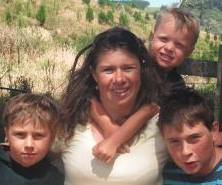
The author with her three boys
When my boys were small, it was easy to find ways for them to nurture. They all had dolls and stuffed animals to care for and I tried hard to let them hug me whenever they wanted, even when it was really inconvenient or awkward, or snotty, or tiring for me.
But it got harder, when they got older. Dolls gave way to LEGO and cars, then Nerf guns and Minecraft. Time away from me at kindy or school, or play-dates or sport, meant the hugs, while no less enthusiastic, were less frequent. I realised I had to be more lateral in seeing their nurturing: Life had changed and they had grown beyond my initial, pre-baby, plans and ideas.
It came to me in a flash of understanding, a few weeks ago, how much their being in service to me, is their way of nurturing and this is what I now focus on, for this part of their growth and development.
The times when they tell me to sit on the sofa and do nothing, I need to listen to them and do as they wish. And while I have always accepted their offerings of daisies and dandelions picked from the lawn and scrunched in tiny hands, I now have to accept them pouring my wine and cooking my dinner – without my input.
The times they volunteer to do these things, I need to keep my directions to myself and my appreciation flowing – despite my discomfort at sitting still while they work and despite the painful slowness with which they perform these tasks.
I have also learned to accept them opening doors for me. They do this not because they think I can’t manage to do so for myself, but because it’s a way they can show me that they care for me.
And I accept their offerings, not because I think I deserve this gesture because of my gender, or my age, or my position as grand dame in their lives, but because I see it for what it is: Nurturing of me, and something to be valued and encouraged.
Apologies have also become a point of nurturing. In our house, they are seen not as just social niceties and empty words, but as a starting point for repairing a battered emotional bond. After an apology-needing moment they almost always ask, “How can I make things better?” And are wonderful at showing they really do mean their words via their actions. They nurture their relationship with me, as I do with them.
No, they aren’t angel children who do these things all the time. They still need direction and they can be down right horrid. They are often disorganised and they are often messy, noisy and silly. But they do show their ability to nurture in a variety of ways. I just have to look at their actions from a different perspective, and accept their gestures as signs of the loving emotion behind them.
How do your children show you they care?
This is an original post to World Moms Blog from our writer in New Zealand and mother of 3 loving boys, Karyn.
The photograph used in this post is credited to the author.
Karyn is a teacher, writer and solo mother to three sons. She lives in the sunny wine region of Hawke’s Bay, New Zealand in the city of Napier.
More Posts