by World Moms Blog | Apr 3, 2015 | 2015, Motherhood, Parenting, To-Wen Tseng, Working Mother, World Moms Blog Writer Interview, Younger Children
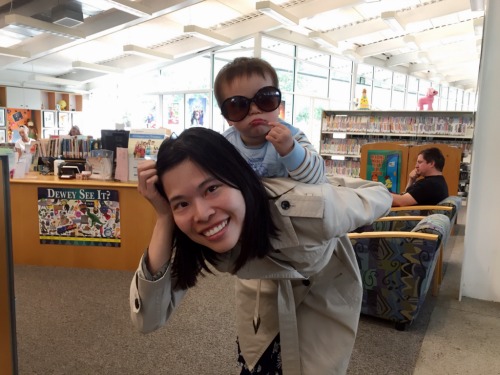
Where in the world do you live? And, are you from there?
I currently reside in San Diego, CA, USA. I am originally from Taipei, TAIWAN.
What language(s) do you speak?
Mandarin Chinese, English, and Japanese.
When did you first become a mother?
I first became a mother in 2013 at the age of 33.
Are you a stay-at-home mom or do you work?
I’m a work-from-home mom.
Why do you blog/write?
I am a writer and I write for a living. I started to blog back in 2009 when a publisher in Taiwan invited me to. My blog then titled “The World According to To-wen” was all about my experience as a criminal/disaster reporter. It made the final list of 2011 Global Chinese-language blog awards; later became a book which was sold more than 80,000 copies in China and Taiwan.
But things changed four years later when I became a mother. When returned to my previous newsroom after giving birth, I got a rude awakening which inspired me to advocate for women and children’s rights. I changed my blog title to “I’d rather be breastfeeding” and started to blog about my message to other mothers (or fathers) who share my values.
What makes you unique as a mother?
Every mother is unique, or no mother is unique. I am no exception. Mothers believe in different things and compete with one another in many different ways. But no matter what we believe, we love our children. I love my child just like other mothers do. I am not particularly unique.
What do you view as the challenges of raising a child in today’s world?
There are many and I consider temptation the biggest one. My son is barely two years old and I’m working hard to teach him to resist candy. Surely our culture is strutted with candy and other junk foods. Every so often, I feel that I’m fighting against the whole world just to protect my child from junk foods.
And I imagine as he grows up, there will be other temptations: TV, pornography, drugs, unsafe sex…the list goes on and on. Since I cannot be a food police or Internet police around him 24/7, I need to raise him as a person with integrity and strong will power to resist these temptations.
Not only children, but parents in today’s world need to learn to deal with temptation. It’s harder for today’s parents to resist the convenience that infant formula, or iPad, or smart phone has to offer. None of us want to be that mother who stares at her iPhone when “playing” with children in the park or the mother who simply gives a fuzzy child an iPad and say “here, just be quiet for a minute!” Unfortunately, sometimes an iPad seems to be the easiest solution.
The challenge of temptation. Definitely a big one.
How did you find World Moms Blog?
I don’t remember. I’ve known about World Moms Blog for a couple of years and was a reader even before I became a mother but never thought of writing for the blog. Maybe I just went across the blog somehow when surfing the internet. I really can’t remember. But I’m definitely thrilled to be part of the team!
This has been an exclusive World Moms Blog interview with our new writer To-wen Tseng. She can be found writing at her blog “I’d rather be breastfeeding” and on Facebook and Twitter.
Photo credit to Mu-huan Chiang.
World Moms Blog is an award winning website which writes from over 30 countries on the topics of motherhood, culture, human rights and social good. Over 70 international contributors share their stories from around the globe, bonded by the common thread of motherhood and wanting a better world for their children.
World Moms Blog was listed by Forbes Woman as one of the "Best 100 Websites for Women 2012 & 2013" and also called a "must read" by the NY Times Motherlode in 2013. Our Senior Editor in India, Purnima Ramakrishnan, was awarded the BlogHer International Activist Award in 2013.
More Posts

by World Moms Blog | Apr 2, 2015 | 2015, Awareness, Being Thankful, Boys, Celebrations, Childhood, Culture, Guest Post, Health, Identity, India, Inspirational, Life, Life Lesson, Milestones, Motherhood, Priorities, Time, World Motherhood, Younger Children
 One moment everything seemed fine and the next I was creating a little puddle of tears on my Yogasana mat.
I emerged from the yogasana pose to find unexpected sobs bursting through my throat, catching me completely unawares. A little part of my mind wondered what this was all about. And then I realized this was probably because of a niggling dissonance within, a reaction to a new milestone in my son’s growth that had not yet been completely accepted or acknowledged. This is what had led to the sudden grey cloud near the heart, that burst through as tears.
This morning, as Abhishek, my son, was having his breakfast before leaving for school, he called out to me saying that there seemed to be a gap between his two lower incisors. I touched a tooth and immediately found it was loose. The milk tooth would soon fall. We grinned and Abhi told me about how Kirti, his school mate, already had two teeth missing. I thought of a couple of his other friends, senior to him by a year, wearing gap-toothed smiles with part-embarrassment, part -pride. Now he would be a part of that gang too.
As we waited at the bus-stop for his school bus, we talked of the concept of the tooth-fairy. We both agreed that the concept was “cute”. I bid him bye, returned home and resumed my morning chores.
But somewhere in the heart, deep, deep down, the unarticulated thought had arrived – our little baby is about to lose his baby teeth. How did the years fly by so fast? And that would have been the genesis of the tears.
The innocence and unsullied grace of childhood are truly magical and seem long-lasting. But the pace of change and growth can actually be so rapid, that the heart can seem overwhelmed. Scarcely does a new milestone–a habit, a skill, or a new activity–set in, than the “Finish” line for that zooms forward, and before one knows it, it is time to say goodbye to yet another phase of one’s child’s growing years.
So much to cherish and so little time! It seems like it was only yesterday that I was rhapsodizing over Abhishek’s four new, shiny little teeth and feeling nostalgic about toothless, gummy smiles. And now it’s time for those very teeth to go!
“So what?”, one may wonder. A purely practical approach to this whole thing would be that his physical growth is going on fine and that I ought to be feeling reassured!
But to me it seems to be much more than that. His shaky little tooth tells me a lot of things. It reminds me that he is growing up quickly and that the only mandate I have been given from the Universe is to give him love, pure and unadulterated, intense and in every moment. It shows me the passage of the seasons of time – the travails of toddler-hood have given way to heart-touchingly earnest attempts at responsibility for this sweet-yet-solemn almost-six-year-old.
But most of all, the tooth reminds me that “this too shall pass!”
So must change be heralded by tears? Not at all. Something tells me that some of the tears were tears of regret, for all those “Not now please, I am busy” moments, when I allowed temporary realities to hijack my energies away from the greater priority of sharing my time and care with him.
Those moments are irretrievable and all I can hope is that this tooth has taught me a valuable learning. And then there were a few tears of concerns: am I ready to guide him right as he reaches a new phase of growth? As ready as I will ever be, I guess.
And then there were tears of joy: my little one, darling creature of the Universe, is growing up.
Motherhood seems like a permanent stage of “Work in Progress”. There is no “Finished Product”, just a heart that smiles, cries, is pulled and stretched and learns to give some more.
This is an original guest post from Piya Mukherjee in Mumbai, India; Mother, Corporate Trainer, Director.
The image used in this post is attributed to Stephanie Sicore of Young@Art. It holds a Flickr Creative Commons attribution license.
World Moms Blog is an award winning website which writes from over 30 countries on the topics of motherhood, culture, human rights and social good. Over 70 international contributors share their stories from around the globe, bonded by the common thread of motherhood and wanting a better world for their children.
World Moms Blog was listed by Forbes Woman as one of the "Best 100 Websites for Women 2012 & 2013" and also called a "must read" by the NY Times Motherlode in 2013. Our Senior Editor in India, Purnima Ramakrishnan, was awarded the BlogHer International Activist Award in 2013.
More Posts

by Ecoziva (Brazil) | Mar 26, 2015 | 2015, Awareness, Being Thankful, Brazil, Environment, Family, Gardening, Gratefulness, Home, Inspirational, Kids, Life, Life Balance, Marriage, Motherhood, Moving, Nature, Parenting, Relocating, Stress, Weather, World Motherhood
 When we first married we lived in an apartment in the heart of a big metropolis. It was practical to live near everything we needed and be able to do all of our errands by foot or bus (in fact, we had no car and walked to work). However, we missed having green. We started looking for a house in a nice region on the outskirts of the metropolitan area, near a forest reservation.
When we finally found a place we could afford to rent it wasn’t exactly your typical house. The owner had built two tiny guest houses in the back of a property he had initially planned to build a regular house in the front of later on; but that never happened.
On the upside we were living glued to a fragment of Atlantic rainforest and our son now had a huge garden to play in. On the downside, the house wasn’t exactly practical.
One of the guest houses had two rooms, a kitchen and a terrace. There we installed our son’s room and ours. However, the kitchen was so small it would only fit the fridge OR the stove, so we had to put the fridge in the second guesthouse and crossover all the time, sun or rain.
The second guesthouse, in turn, had a living room/terrace, one room (which became our library/office), the main bathroom and a pantry of sorts (we squeezed in the fridge instead). The roof had no lining, which wouldn’t be a problem if we didn’t have constant animal visitors coming in (lots of funny stories about that!).
Later on, when we were able to buy the our place, we decided to apply our limited funds to adapt the two guesthouses. An architect friend did his best to join them together into a single, more conventional house.
Our bedroom was expanded and incorporated the tiny kitchen and part of the terrace. A living room was built to join the two houses, which took the shape of a “J”. The main bathroom and former pantry gave place to the new kitchen. Part of the terrace became the laundry room. We lined the roof, installed mold-proof open wardrobes, and installed a large bathtub where our two other children were later to be born.
Nevertheless, all of this did not happen at one time. As I said, we had limited funds and every time these funds began to wane we had to stop.
At three different and stressful moments a lot of work was done in the house, including once, when during three very challenging months, we had to live at my mother-in-law’s.
Now, years later, we still live in a very unconventional house.
Besides the bedrooms, we never put in windowpanes or doors. The terrace/living room still opens completely into the forest – a curse and a blessing all at once! And even though our financial situation has improved considerably over the past few years, it has been four years since our last attempt at home improvement.
Aside from the occasional efforts to clean/fix the roof from the huge amount of leaves we get, we haven’t done much. Every time we think of all the stress involved we decide to postpone any kind of big project.
Despite everything, I love my house and its garden. I believe things will get better as our children grow older and we have more time and energy for housekeeping and improvement. My husband, on the other hand, thinks there is no way to make this house work and we should just move elsewhere, even though he also loves the closeness to the forest. The truth is he would like to live on a small farm, although I have safety concerns. Thus, every once in a while we go house or farm hunting.
Stay tuned! Part 2 coming soon…
How about you, what are your stories with house remodeling and moving? Please share below?
This is part 1 of a two part, original post to World Moms Blog from our contributor and mom of three in Brazil, Ecoziva.
The image used in this post is attributed to Karen Roe. It carries a Flickr Creative Commons attribution license.
Eco, from the greek oikos means home; Ziva has many meanings and roots, including Hebrew (brilliance, light), Slovenian (goddess of life) and Sanskrit (blessing). In Brazil, where EcoZiva has lived for most of her life, giving birth is often termed “giving the light”; thus, she thought, a mother is “home to light” during the nine months of pregnancy, and so the penname EcoZiva came to be for World Moms Blog.
Born in the USA in a multi-ethnic extended family, EcoZiva is married and the mother of two boys (aged 12 and three) and a five-year-old girl and a three yearboy. She is trained as a biologist and presently an university researcher/professor, but also a volunteer at the local environmental movement.
More Posts

by World Moms Blog | Mar 20, 2015 | 2015, Awareness, Babies, Being Thankful, Caring, Communication, Eva Fannon, Family, Food, Girl Child, Girls, Gratefulness, Health, Humanity, International, Kids, Motherhood, Older Children, Parenting, Tinne, World Motherhood, Younger Children
 Today is International Day of Happiness! We at World Moms Blog know the importance of connecting with other people. In our technology driven societies, it becomes very easy to send a text message, an email, or to click “Like” on someone’s Facebook status…but does that actually make us feel like we made a personal connection with that person? Truly connecting is not as easy!
For International Day of Happiness this year, the theme is focusing on your connections with others. To help you think about conversation starters, or ways to connect with others on a more personal level, we asked our fabulous contributors this question: “What brings you happiness?” Read on to see some of their responses. (more…)
World Moms Blog is an award winning website which writes from over 30 countries on the topics of motherhood, culture, human rights and social good. Over 70 international contributors share their stories from around the globe, bonded by the common thread of motherhood and wanting a better world for their children.
World Moms Blog was listed by Forbes Woman as one of the "Best 100 Websites for Women 2012 & 2013" and also called a "must read" by the NY Times Motherlode in 2013. Our Senior Editor in India, Purnima Ramakrishnan, was awarded the BlogHer International Activist Award in 2013.
More Posts

by Dee Harlow (Laos) | Mar 18, 2015 | Africa, AIDS, Health, International, Maternal Health, Motherhood, World Moms Blog, World Motherhood
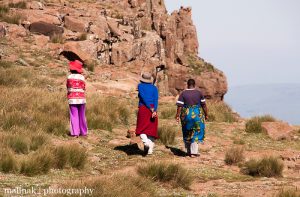 Now that our family has settled in nicely to life in Maseru, the capital city of Lesotho, I can turn outwards to learn more about the country and its people.
The first thing that I had to learn to keep straight was how to call the people and their language:
- the country is Lesotho
- the people are Basotho
- the language is Sesotho
So, the Basotho live in Lesotho and speak Sesotho. Clear?
Of course, as a mother, I’ve been looking closely at the world of mothers here. I’m curious about our similarities, differences, and challenges.
The Sesotho designation to all adult married women is “‘M’e,” which means ‘mother’. I miss being called “Madame” as was the case in Laos, but I quickly grew accustomed to “‘M’e.” (Except when adult men would translate it into English and call me “Mommy” in their deep baritone voices, which at first sounded creepy.) I have had to remember that it is a sign of showing respect to call me “Mommy”, and doubly so because they are going through the trouble of translating it into my language.
Indeed, “the mother” appears to be a very well-respected position in the Basotho household and society. At least outwardly. The women walk tall and proud, and are commanding in speech. This elicits a certain degree of deference and respect–at least from me anyway! The women here are definitely not of the American custom of making you their BFF with reassuring agreements, nods, and smiles, and setting the next date for coffee and friending you on Facebook right away. It is more of a distant and courteous “I like you”, and reminds me of first meeting northern Europeans, the layers peeling away into jokes and smiles the more you meet and truly get to know one another.
Despite the outward display of respect for ‘M’e, however, are some staggering statistics for the health status of women in Lesotho. According to a gender-based violence (GBV) prevalence survey conducted in 2013, 86% of women have experienced GBV in their lifetime. This figured is viewed as a gross underestimation since the survey revealed that only 2-3% of respondents reported the violence, and only 1% of those raped by non-partners ever reported the rape to the police or health care workers.
Another astounding statistic is HIV prevalence among women in the country. Adult HIV prevalence is estimated at 23.6% (the second highest in the world), according to a 2009 United Nations study. Moreover, women are more likely to be HIV+ than men (27% vs. 18% respectively). And due to maternal transmission of HIV, approximately 15,000 HIV+ women deliver children each year, with 40% of these children becoming infected.
Some might say that the social and economic roots to both of these issues for women in Lesotho are due to the poor state of the Lesotho economy, where 57% of the population live below the poverty line and 25% are unemployed. This has led to worker migration seeking job opportunities in surrounding countries, areas also experiencing high HIV rates. Out of a total population of barely 2 million people, 25% are estimated to work in South Africa’s formal and informal sectors. This has implications for cross-border HIV transmission through risky sexual behavior by migrants, as well as by partners left at home in two of the highest HIV prevalent countries in the world.
Perhaps it is the very personal and private issues of violence and HIV that explain what I’ve observed here as very close female bonds. At social gatherings, the women and men tend to self-segregate. Not due to any religious beliefs (the Basotho are predominantly Christian), or traditional practices. Rather, it appears to me that a circle of women is where they find trust, openness and support for what they all experience and fear. From what I can see, it is a very close bond that is essential to every woman here. To be let in will take more than hosting coffee and being Facebook friends. In the meantime, I stand with them in the spirit of womanhood and motherhood, from afar for now.
Do women in your country/culture have exceptionally strong social bonds? What do you think it is attributed to?
This is an original post to World Moms Blog by our mother of twins writer, Dee Harlow, currently living in Lesotho. You can also find her on her blog Wanderlustress.
Photo credit, with permission, attributed to Malinak Photography, all rights reserved. This photo has a creative commons noncommercial share alike license.
Sources:
CIA World Factbook
Wilson, FHI, USAID, IMPACT, Lesotho and Swaziland: HIV/AIDS assessments at cross-border and migrant sites in Southern Africa, 2002
Joint United Nations Programme on HIV/AIDS, Together We Will End AIDS, 2012
The Ministry of Gender Youth Sports and Recreation, Lesotho Bureau of Statistics and Gender Links, Findings of the Lesotho Violence Against Women Baseline Study, 2014
UNICEF, Lesotho National Strategic Plan for Elimination, 2011
The World Bank Data
One of Dee’s earliest memories was flying on a trans-Pacific flight from her birthplace in Bangkok, Thailand, to the United States when she was six years old. Ever since then, it has always felt natural for her to criss-cross the globe. So after growing up in the northeast of the US, her life, her work and her curiosity have taken her to over 32 countries. And it was in the 30th country while serving in the Peace Corps in Uzbekistan that she met her husband. Together they embarked on a career in international humanitarian aid working in refugee camps in Darfur, Sudan, and the tsunami torn coast of Aceh, Indonesia.
Dee is now a full-time mother of three-year old twins and continues to criss-cross the globe every two years with her husband who is in the US Foreign Service. They currently live in Vientiane, Laos, and are loving it! You can read about their adventures at Wanderlustress.
More Posts

by Shaula Bellour (Indonesia) | Mar 12, 2015 | 2015, Awareness, Being Thankful, Exercise, Expat Life, Family, Health, Hobby, Identity, Indonesia, Inspirational, Life, Life Balance, Life Lesson, Living Abroad, Maternal Health, Me-Time, Motherhood, New Year's Resolutions, Parenting, Responsibility, Running, School, Shaula Bellour, Womanhood, World Motherhood
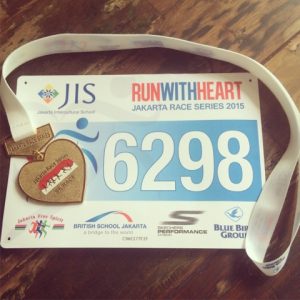 Last Sunday I ran my first 5K race. I still can’t believe that I actually did it – and in the tropical heat, no less. Although I have vaguely considered it a worthy goal, running an actual race wasn’t on my radar even two months ago.
It turns out that 2015 is the year of living dangerously…out of my comfort zone.
My kids often talk about being “risk-takers”. It is one of the ten traits included in the school Learner Profile and students are encouraged to be inquirers, knowledgeable, thinkers, communicators, principled, open-minded, caring, risk-takers, balanced, and reflective. While these traits are all deemed equally important, being a risk-taker is a concept that seems to be especially resonant outside of school too: “I am a risk-taker: I am willing to make mistakes. I am confident and have the courage to try new things.”
For my generally confident (and fruit-averse) daughter, this might mean: “Look Mommy, I’m a risk-taker, I’m eating a mango!” My son takes a more reflective approach – acknowledging when he feels nervous about doing something and emboldening himself with his risk-taker status to eventually take the plunge. Though risk-taking will probably have a different connotation when they are older, I embrace what it means for them now – trying new things and not being afraid to make mistakes.
It’s an important lesson for grown ups, too.
In January, after three years of living in Jakarta, I was starting to feel like my daily life was becoming somewhat routine. Gym, work, grocery store, repeat. To change things up, I found myself saying YES to things that I might not usually consider.
When a friend asked if I wanted to join their early morning running group, I said YES. I knew that the group would likely be too advanced for me but figured that I wouldn’t know if I didn’t try. “What’s the worst that could happen?” I asked myself. I would walk, that’s it. I did walk some at first, but I set my own goals and improved each week. Now we’re training for a 10K.
When another friend asked if I would like to be part of their dance group for an upcoming fashion show event, I said yes to that too. Other friends and even my husband were surprised. Performing a dance routine in front of a huge crowd is WAY beyond my comfort zone, but again I thought: “Why not?” In this case I try not to think about the worst that could happen (falling off the stage comes to mind) but I’m proud of myself for doing it and am actually looking forward to the big night.
I’ve continued with the YES theme in other areas of my life and have already seen positive changes: improved health, new friendships, new possibilities. I’ve realized that pushing my boundaries in this way is also about adjusting my own perceptions of myself. “Oh, but I’m not a runner,” I would repeatedly explain, trying to somehow qualify my actions.
Well now I am a runner. And a dancer. Among many other things.
Life begins at the end of your comfort zone.
Our kids may not recognize some of the bigger risk-taking decisions we’ve made (like moving our lives halfway around the world), but it’s often the smaller actions that resonate the most.
It feels good for them to see that I can be a risk-taker too – I can be afraid sometimes and I can also be brave, just like they are.
When I walked in the door after the race, finisher’s medal around my neck, both kids jumped up from the couch with wide eyes. “Mommy!” my daughter exclaimed, “I didn’t know you would win the race!”
Not exactly…but YES! In my own way, I did.
What risks are you putting out there for yourself this year? How are you embracing these challenges?
This is an original post for World Moms Blog by our mom of twins in Jakarta, Indonesia, Shaula Bellour.
The image used in this post is attributed to the author.
Shaula Bellour grew up in Redmond, Washington. She now lives in Jakarta, Indonesia with her British husband and 9-year old boy/girl twins. She has degrees in International Relations and Gender and Development and works as a consultant for the UN and non-governmental organizations.
Shaula has lived and worked in the US, France, England, Kenya, Eritrea, Kosovo, Lebanon and Timor-Leste. She began writing for World Moms Network in 2010. She plans to eventually find her way back to the Pacific Northwest one day, but until then she’s enjoying living in the big wide world with her family.
More Posts