by Fiona Biedermann (Australia) | Apr 28, 2014 | Awareness, Child Care, Childhood, Family, Health, Human Rights, Life Lesson, Loss of Child, Oceania, Parenting, Relationships, Safety, Tragedy, Uncategorized, World Motherhood, Younger Children
As parents I’ve always believed that all of us want our children to achieve their full potential and to do amazing things with their lives, we also never want for them to be fearful of anything, real or imagined.
But what happens when a child’s fear is not imagined and is in fact very real. When the one thing they’re most fearful of is the person who they should be able to trust the most?
A story in the news this week in Adelaide has parents—actually not just parents but every living, breathing individual—up in arms over the treatment of a four-year-old little girl in 2012, who died as a result of the cruel treatment dished out by her mother and her boyfriend.
As the story is told, they put this little girl on a 50kg motorbike and over a period of three days made her ride it around the backyard while they videotaped it for their own enjoyment. Despite her terror and numerous crashes, they kept picking her up and putting her back on.
A final crash into a tree at almost 40km/h caused serious injury and despite complaining of her injuries when they put her to bed they did nothing. The following day she slipped into unconsciousness and they waited a further eight hours before seeking help, turning instead to Google for answers about what to do when someone is unconscious. She died as a result of them not seeking medical assistance.
There are many more facts, there’s much more to the story and there’s also a history of social welfare intervention—but nobody actually stepped in and took this child away from her mother, nobody in fact did anything to save her despite their knowledge that things weren’t quite right.
This week, the mother and her boyfriend were both sentenced, with the mother receiving an eight-year prison sentence with a non-parole period of just under five years. That’s a measly year in prison for every year her child was alive.
It’s a pitiful and sad sentence but sadly I think it’s also indicative of the ‘hands off’ society that we’re now living in.
I understand that in this day and age we don’t want to get involved, we mind our own business and we look after our own. But I also think it’s a sad state of affairs when, as individuals, we shy away from getting involved when an innocent and trusting little girl is left in the clutches of such disturbed people.
I also think it’s a travesty of mammoth proportions that with all our laws and child protection agencies that nobody saved this little girl.
I know bad things happen to small children and it makes my stomach churn each and every time I hear about one of them. Little Chloe Valentine was just one of many, who as a society we all failed to protect. (Please be aware that I have not linked to any of the footage or the story as I find it too upsetting to watch or read about)
No I didn’t know her personally but as a parent who cherishes her own children and grandchildren it makes me sick to even hear about it. I will stand up and get involved when something is going on around me which I know to be wrong. These children are our future and just because they don’t have a voice doesn’t mean we can’t do something about it.
As a result of this case, Adelaide will see a total overhaul of child protection laws with an inquest into the failure of social welfare to intervene. For little Chloe, it’s a case of too-little-too-late, but one can only hope that we can all learn from this and prevent this kind of thing ever happening again.
I know that sometimes we should stay out of things which aren’t our business but in this case would you have gotten involved?
This is an original World Moms Blog post by Fiona from Inspiration to Dream of Adelaide, South Australia.
The image used in this post is credited to .craig. It holds a Flickr Creative Commons attribution license.

Fiona at Inspiration to Dream is a married mother of three amazing and talented MM’s (mere males, as she lovingly calls them) aged 13, 16 and 22, and she became a nana in 2011!
She believes she’s more daunted by becoming a nana than she was about becoming a mother! This Aussie mother figures she will also be a relatively young nana and she’s not sure that she’s really ready for it yet, but then she asks, are we ever really ready for it? Motherhood or Nanahood. (Not really sure that’s a word, but she says it works for her.)
Fiona likes to think of herself as honest and forthright and is generally not afraid to speak her mind, which she says sometimes gets her into trouble, but hey, it makes life interesting. She’s hoping to share with you her trials of being a working mother to three adventurous boys, the wife of a Mr Fix-it who is definitely a man’s man and not one of the ‘sensitive new age guy’ generation, as well as, providing her thoughts and views on making her way in the world.
Since discovering that she’s the first blogger joining the team from Australia, she also plans to provide a little insight into the ‘Aussie’ life, as well. Additionally, Fiona can be found on her personal blog at Inspiration to Dream.
More Posts

by Purnima Ramakrishnan | Apr 22, 2014 | 2014, Awareness, Brazil, Environment, Human Rights, Humanitarian, Purnima, Social Good, Water, World Moms Blog
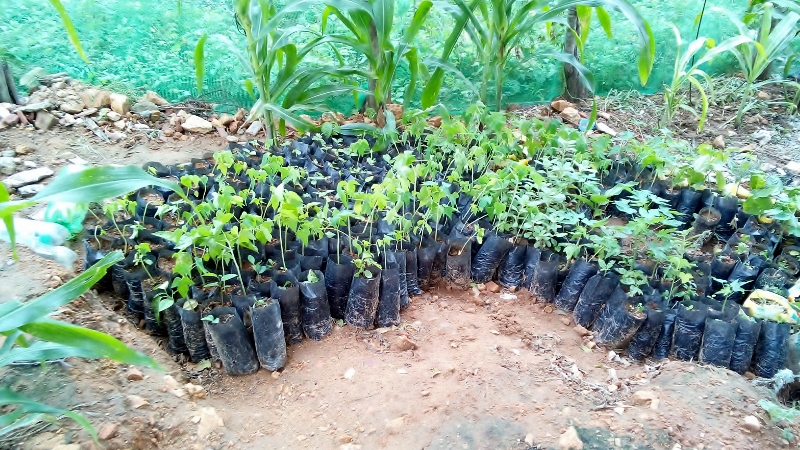
Photo of Celia’s saplings by Purnima Ramakrishnan
“Universal access to water is a right to all and now it is just on our doorsteps” said farmer Celia. I was traveling as a International Reporting Project Fellow, and we had just arrived in the semi-arid city of Cumaru, in the North-Eastern state of Pernambuco.
We had lunch at Joelma’s place who is a farmer in Cumaru. She made delicious rice, palma salad with lots of vegetables in it (a variety of sustainable cacti, native to the lands and which is used to feed both livestock and people). And then we went to her sister-in-law, Celia’s farm. Celia is also a farmer.
When Celia was six years old, she used to go downhill and carry water back up to her home in pots and buckets, and she recalls them being very heavy. When she cajoled her father, he sometimes let her use a donkey to bring it back home. This, the six-year-olds woke up at 3 AM every day to do. I have an 8-year-old at home, and I cannot imagine giving him such a life.
Today though, she is grateful that she can give her own two-year-old, a better life, thanks to the Cisterns project.
The average rainfall in these semi-arid lands varies from 200 to 800 mm, which is very irregular for habitation. Moreover, the amount of evaporation in these lands is three times higher than the rainfall. Hence it becomes even more important to capture the rainwater for families during the dry season. This is the concept of the Cisterns project.
The ASA (Articulation Brazilian Semi-Arid) is a network of social organisations operating in the Northeast of Brazil which aims to “empower civil society to build participatory processes for sustainable development and cope with the semi-arid land based on cultural values, and social justice.”
ASA was born from accumulated experience of organisations and social movements that have worked for years in the perspective of living with the Semi-arid climate. In 1999, the ASA presented a joint project for the Semi-arid to the society and the government, and thus the Articulation became a network.
In 2003, ASA launched P1MC (Program One Million Rural Cisterns), which aims to build 1 million water reservoirs to meet the needs of 5 million families. Currently there are 500 thousand reservoirs and the program has graduated into a public policy adopted by the Federal Budget.
These water reservoirs or cisterns are of two types. Every family has cisterns with a capacity of 16,000 litres of water for domestic use and another of 52,000 litres of water for farming and livestock use. The technology employed here is called social-technology and basically collects water from the rooftops and harvests the rainwater. The families are given a course in water management and are also requested to take a course in farming in semi-arid.
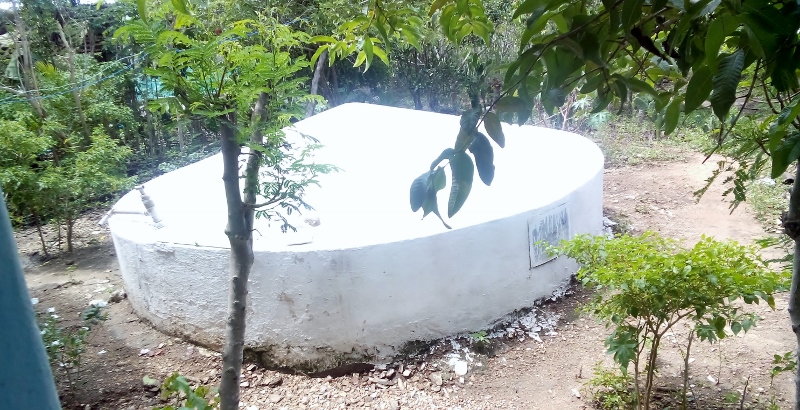
Photo of a 16000 litre cistern by Purnima Ramakrishnan
Celia says, she is now employed and this has brought about female empowerment along with water, and agriculture, all because of the cistern on her doorstep.
She cultivates small saplings and sells it to the other farmers. She grows corn, papaya, oranges, tangerine, beans, cashew, Umbu, tamarind, and many other things. She also sells the produce (though now too much) in the market and to other farmers. Her husband works in construction department in the town, whereas she lives in the village doing her farming with her two-year-old. She hopes to give a better life to her son.
She has been taught in her course to cultivate three types of plants, she says. The first is the native plants which thrives well on the soil of the area with not much dependency, and is more suited to the semi-arid climate like the Umbu. Then the plants which are not suited to the area, like corn, for which abundant water is available from the cisterns. And the third type is the plants for the livestock like Palma. This ensures that the plants give back to nature what they take from it. The soil gets enriched and also nurtures the plants. It is a two-way process.
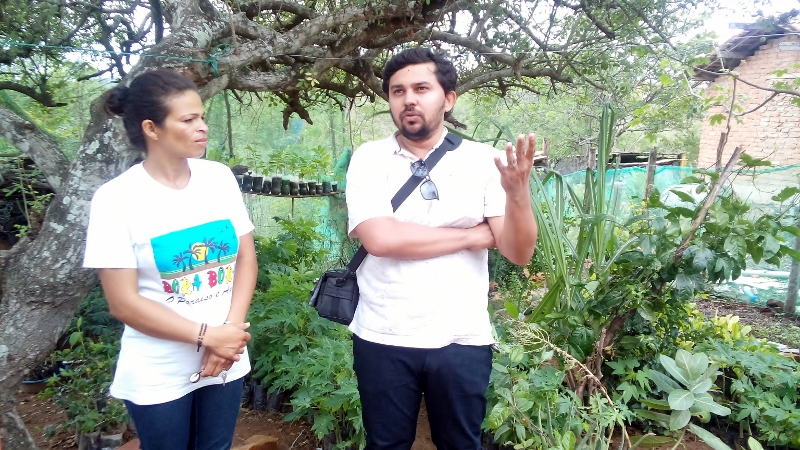
Carlos-explaining-about-the-cisterns-and-farmer-Celia-looking-on Photo by Purnima Ramakrishnan
This seed of change stimulated by social organisations that operate in the region have prompted the development of coexistence of half-barren lands with practical goals absorbed by the government to promote sustainable living.
We asked Carlos, the program coordinator of ASA in the region, “Is this a solution for food security?” He said it is much more than that. It is a solution for independence, female empowerment because of employment in one’s own farm, it is a way to make the semi-arid a much greener place to live, it is a solution to democratize water, and make it a universal right, not a consumer product.
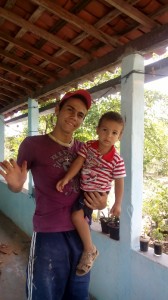
Celia’s son and nephew, Photo by Purnima Ramakrishnan
I remember that water was more expensive than beer in my hotel. And I now knew why! One should not pay to have to drink water, he said.
This concept can be embraced in many developing semi-arid regions.
On this Earth Day, let us pledge to make our cities greener and conserve water. Let us spread such buds of change through social media, and other channels.
How do you plan to honor this Earth Day?
This is a post written by Purnima Ramakrishnan on her #BrazilMDGs trip to Brazil as a fellow of Journalism with the International Reporting Project.
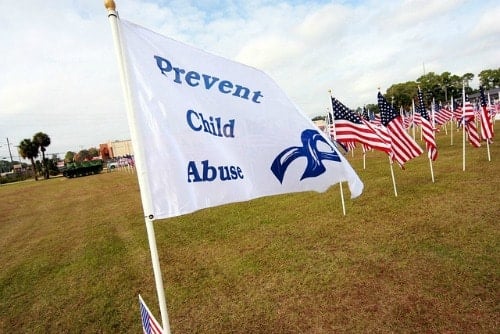
by Nihad | Apr 16, 2014 | 2014, Childhood, Egypt, Human Rights, Kids, Teenagers, The Advocates of Human Rights, Tragedy
 Zeina was a 5-year-old girl living with her family in Port Said, a city on the Suez Canal in Egypt. She was the youngest of three children.
One fateful day, Zeina was playing in front of the door of her apartment. The porter was going to the roof of the building and by chance, the lift stopped at the floor where Zeina was playing. He found her playing alone with no one watching her, so he took the girl with him to the roof. On the roof was another guy, a friend of the porter, waiting for him. There was something on their minds that Zeina didn’t and couldn’t possibly know.
Their intention was to violate the innocence of that beautiful and chubby child. They wanted to rape her, but they couldn’t as she started to scream. They then quickly realized that her mother had found out that she was missing and all the buildings’ inhabitants had started looking for her in the street. To hide what they had done, the two guys decided to get rid of Zeina, so they threw her from the seventh floor to the back of the building.
The cold-hearted criminals then came downstairs pretending not to know anything about her and went to look for Zeina with the family. The family eventually found the little girl bleeding in the back area of the building and took her to the hospital but she died. The police investigated, found Zeina’s killers and arrested them. They were accused of killing her.
The family—as did everyone following Zeina’s story—expected the criminals to be condemned to death but instead they were condemned to only 15 years in jail. It was shocking for all of us but the problem is that the two accused guys were a few months under age 18 and there is a law that prevents condemning any young man below 18 to death no matter what his crime is.
The criminals were laughing, smiling and showing the victory sign inside their cell, while Zeina’s poor mother was screaming and crying very hard. The judge apologized to Zeina’s family as he could do nothing about it, it’s the law. Even the father of one of the killers said “My son deserves to be condemned to death 5 times for his crime”.
The story of Zeina summarizes the story of hundreds, thousands or maybe millions of children who are sexually abused every day all over the world.
And sadly, Zeina’s story is not the only one. A few months later another little girl named Hoda was raped mercilessly, choked to death and beaten with a stone to her head. Hoda was just 4.5 years-old playing in front of her house in her village in Meniah, a city in Upper Egypt. Hoda was raped and killed by her neighbor. Her dead body was found totally naked and bleeding in a house under construction.
A few days before Hoda was raped and killed, Eman a 13 years old girl was killed as well. The criminal choked her to death after failing to rape her and to be sure she died he stabbed her with a knife several times and then threw her body in the canal. Her family found her the following day, floating on the surface of the water. The guy accused of her murder is her father’s cousin, a member of the family. Hoda and Eman’s murderers may be condemned to death as they are over 18 years old.
Every few weeks we wake up with another story of a new Zeina in the newspapers, a young child or a teenage girl who is raped and killed mercilessly by a teenager or an adult. Not only has the child been put through horrors no one should know, but the whole family continues to suffer the pain of loss and the guilt of not being able to protect their child.
Zeina’s mother on TV, apologized to her young daughter for not being there to protect her and save her when she was screaming and calling for help. I couldn’t control my tears when I watched that. Sometimes there is also shame on the family’s part that their daughter has been raped. This is especially true in rural areas. Eman’s family was relieved when they realized that the criminal failed to rape her. It was obvious in their words when they announced that on the TV with great pride and honor.
Sexual abuse against children is something that any family could fall victim to because we seem unable to protect children from it`. There seems to be no end in sight for the heartbreak that families have to cope with when their innocent child is violated or hurt.
ًFor me, what is shocking about these crimes is that when the criminal is under 18 years old he is considered a child and the Egyptian child law (according to The Convention on the Rights of the Child, CRC) can’t condemn any of them to more than 15 years in jail no matter what their crime is.
This law protects the criminal child but what about the victim child? Aren’t we aggrieving them? Don’t they and their families deserve more justice and more sympathy? How can a law protect the rights of the criminal and ignore the rights of the victim?
Have there been any similar crimes in your country? What were your feelings about how the victim’s family viewed the situation?
This is an original post for World Moms Blog by Nihad from Alexandria, Egypt. Nihad blogs at Aurora Beams Life Coaching.
Photo credit: Bruce Tuten

Nihad is an Egyptian woman, who was born and has lived her whole life in Alexandria, Egypt. She says, “People who visited this city know how charming and beautiful this city is. Although I love every city in Egypt, Alexandria is the one I love the most.”
She is a software engineer and has worked in the field for more than twenty years. But recently she quit her job, got a coaching certificate and she is now a self employed life and career coach. She says, “I believe that women in this era face big challenges and they are taking huge responsibilities. That's why I have chosen my niche -- women looking for happiness and satisfaction. I help and support them in making whatever change (career change, life change, behavior change, belief change…) they want to bring more satisfaction and happiness in their lives.”
Nihad is a mother of two lovely boys, 15 and 9 years old. She states, “They are the most precious gifts I have ever had. I madly love them, and I consider them the main source of happiness in my life.”
Our inspiring mother in Egypt can also be found at Aurora Beams Life Coaching.
More Posts

by Alison Fraser | Apr 15, 2014 | 2014, Africa, Canada, Education, Girls, Human Rights, International, Kids, Life Balance, Life Lesson, Motherhood, Philanthropy, Poverty, Social Equality, Social Good, Womanhood, Working Mother
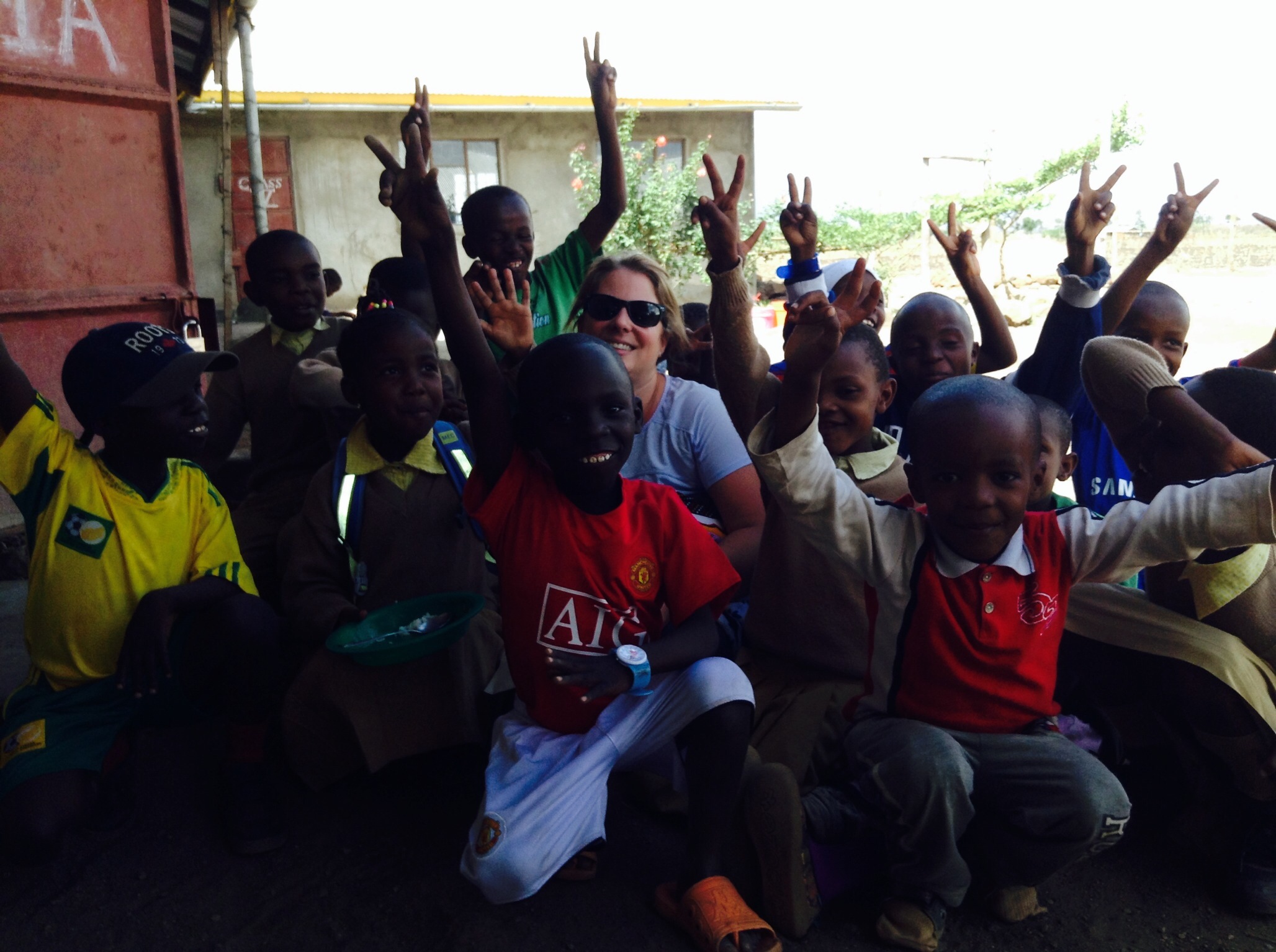
Last November, I visited Tanzania to meet all of the students of the Mom2Mom Africa program, a not for profit organization that I started a short while ago. I remember visiting and spending time with all of the students in the program, and they would refer to me as “Mama”. This is common, and initially I didn’t give it much thought. But, I vividly remember the school director telling me that all of these students are just like my “children”. He said, go back to Canada knowing that you have more than 40 children here in Tanzania! It was so touching, and brought tears to my eyes…yet at the same time, the responsibility of it all was so terrifying. Could I meet their expectations? Could I really be a “good” mama to all of these little ones?
You see, I have three little girls of my own back at home. My time is stretched thin providing for them. Could I really be a good mommy and mama? I struggle daily with how to balance both.
People often talk about mommy guilt. It is a concept I understand all too well, being a working mom. I have made many concessions in my career in order to balance work and family.
I work a reduced work week so that I can spend as much time with my girls as possible. So far, it works for us.
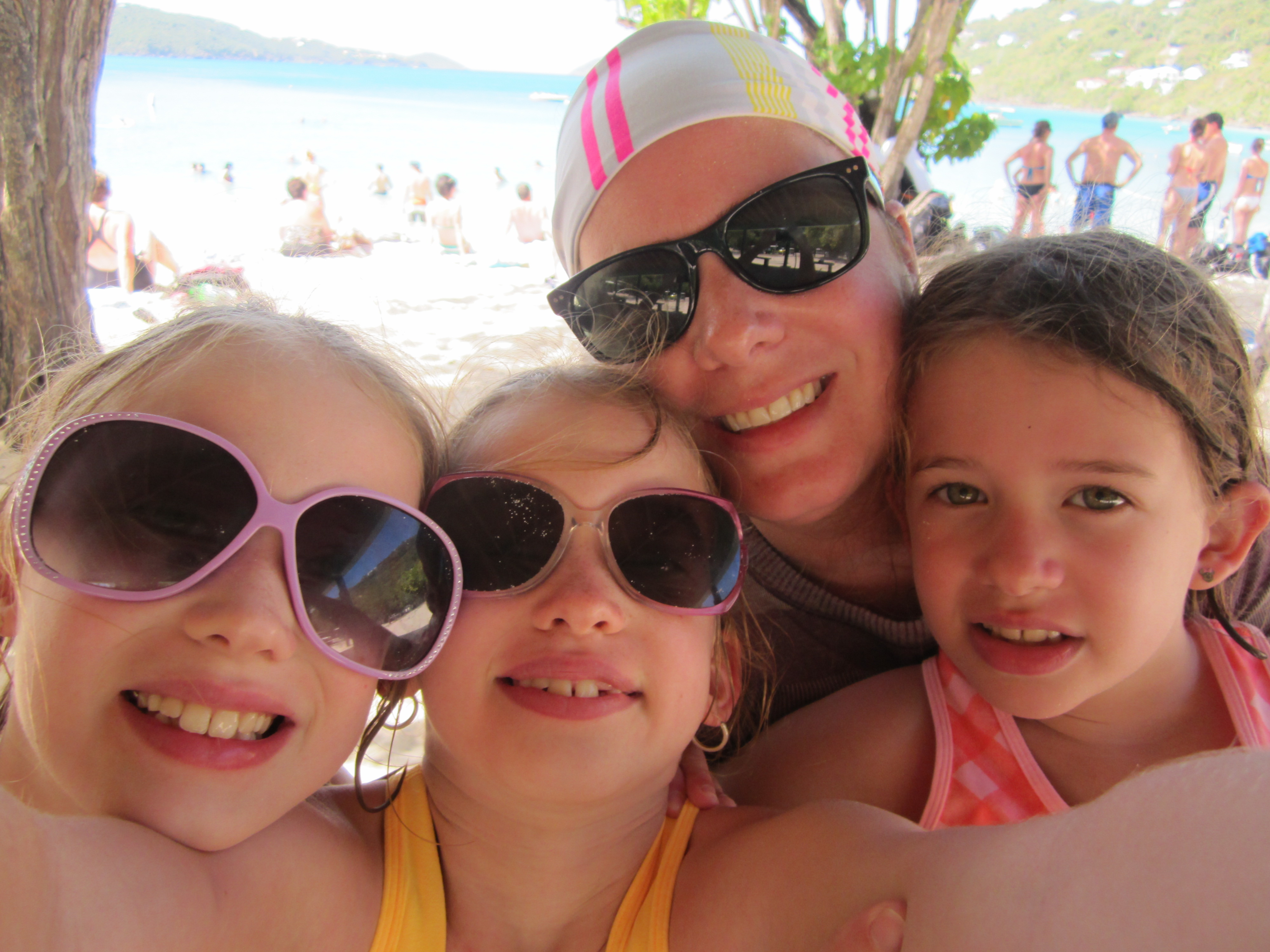
But now, I struggle to balance the pressures that come with my not for profit organization work, especially being a mama to these Tanzanian children who stole my heart last November. I am constantly worrying about them, working to secure funding to send them to school, and keeping tabs on their families, many of whom struggle with illness. I spend countless hours on this; late nights and weekends. And, I love every minute of it. But, it does take time away from my little girls…and that causes guilt…mommy guilt. Should I be spending less time working on Mom2Mom Africa and more time with my children…and then other times, I worry about the exact opposite. It seems like I am forever in guilt mode. When I am in Canada, I worry about the children in Tanzania. Yet, booking my next trip to Tanzania in July caused major guilt. I can’t win.
So, I talked to my daughters about this recently. I tried to explain how being a mama and mommy can be really difficult. Thankfully, all three of my girls were supportive beyond their years. My girls are my world. And my work in Tanzania, and the children there, are always in my heart, and mind. I just have to do the best I can at balancing both worlds and hope that I succeed.
I think mommy guilt is a common thread that all of us moms feel at one time or another. We are likely too hard on ourselves and most often are doing a better job than we actually give ourselves credit for. And in the end, I think I can be both a mommy and mama. I just have to be conscious of keeping a healthy balance between both! And I now know my girls will help me keep it all in check! Knowing I have their support eases the mommy guilt, and lets me instead channel that energy into being a good mommy and mama! Or at least the best one that I can be!
Mom2Mom Africa has just launched an indiegogo campaign to build a new school and implement a food program at one of the schools they send students to in the Mom2Mom Africa program. Click HERE if you would like to be a part of this exciting campaign.
Can you relate to the “Mommy Guilt” dilemma?
This is an original post written for World Moms Blog By Mom2Mom Founder Alison Fraser.
Alison Fraser is the mother of three young girls ranging in age from 5 to 9 years old. She lives with her family in Cambridge, Ontario, Canada. Alison works as an Environmental Toxicologist with a human environment consulting company and is an active member of the Society of Environmental Toxicology and Chemistry (SETAC). She is also the founder and director of the Canadian Not for Profit Organization, Mom2Mom Africa, which serves to fund the school fees of children and young women in rural Tanzania. Recently recognized and awarded a "Women of Waterloo Region" award, Alison is very involved in charitable events within her community including Christmas Toy and School Backpack Drives for the local foodbank.
More Posts - Website
Follow Me:


by Purnima Ramakrishnan | Apr 11, 2014 | 2014, Brazil, Human Rights, Humanitarian, Humanity, Purnima, Social Equality, Social Good, The Alchemist, World Moms Blog, World Voice
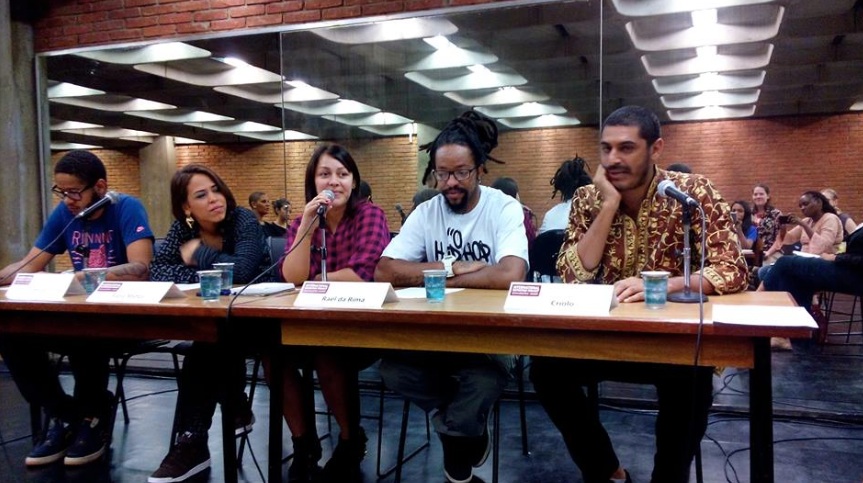
Centro Cultural Sao Paulo
Our visit to Sao Paulo with The International Reporting Project was coming to a close. After a very hectic day of Community heath visits and chatting with doctors, nurses, and community health workers, we just had to do something very cool. And what nicer thing than to rap our way into it?
We met the awesome International acclaimed Brazilian rap group at Centro Cultural Sao Paulo, and it was a great honor to be in their presence.
In the 1990s a musical style known as rap consciencia (socially conscious rap) originated in Brazil. These days it is making huge waves and improving the lives of people by making them socially conscious of their choices, their lifestyles, rights, issues, and gently coaxes them to dream of things which generally are taboo to dream about, for the Afro-Brazilian ethnicity.
Criolo was 11 years old when he started writing lyrics and now he has chart busters in London, New York and Paris. At the tender age of 11 he wrote about social issues. Social inequality is a major problem in Brazil. There is still prejudice across Brazil.
Criolo said, “there are so many ways to live. To wake up, to eat, to get to work and then get some money and then to eat again, is one way. If that is to live, it means people sell themselves for some food and money. That is just a process. Stop it. Live life. Let us talk about ourselves, our passions and aspirations and our joys.”
Rael da Rima was 11 when his music band used to talk about social injustice, racism, and equality to all. He talked a little bit about his personal life, and how rap music changed his life, and the lives of people living around him.
He said, “I give you an analogy for the social inequalities in Sao Paulo. Some people use this mineral water (indicating the drinking water on the table) to wash their BMW cars, and yet some do not have access to clean drinking water. Sao Paulo is a city of extreme contrasts. I sing so that people consciously become aware of their own lives and strive to improve it.”
Rael singing of his passion for rap music:
Emicida says, “When I was young, to get into college was not something youngsters would think about. Just to let the day go by was an accomplishment. Nowadays when I walk through the favela(slum) I grew up in, I am so happy to see the youngsters talking about their dreams of being in college and to get a ‘real’ job. When slavery was abolished, it was both a curse and boon. A curse because people were pushed into poverty and violence with no support system, a lot of confusion, and no real understanding of what was happening in society or the political and economic scenario of the country. My rap is to inspire people to talk about their dreams, how to get out of social inequalities and to be truly free. In everyone there is a human being and I wish for each one to know it. Through rap music, the magic of communication is established, and people are inspired to know themselves as such.”
Emicida singing for World Moms Blog
Flora Matos was 18 when she decided to move to Sao Paulo from Brasilia. She sings so people are free of sexual prejudice. She says her music always speaks of love – love for all kinds of people – love for humanity as a whole and breaking anything which could make people hate each other.
Flora Matos singing of love – love for people, passions, and love for all of humanity
These musicians and others like them are not people who sign on big labels or crave all of the fame and popularity. They just want justice, recognition of the minorities as human beings, and some peace for their community. And they do it through rap music.
They sing about poverty, prejudice, abuses of various types, about the blacks and whites in Brazil, and the classes. Flora said, all her numbers are characterized by experiences, either her own, a friends or someone she knows about. So this idea of communication which Emicida says – that is the magical bond – is established. This communication through music is not just passing of information or ideas or activism – it is an expression to bond humanity, a gentle prod to awake, and be aware. So through the actual performance the listeners carry back this vital element of being part of the movement.
So even though they do not directly change anything, or may not be able to give statistics and figures, they change attitudes, and invest in developing agents of change – which is a very vital thing to forge a developing society, progressing towards success.
I am not a big fan of music, not even Indian music, but that day I promised Criolo I would look him up on Youtube. He was mildly surprised to know that I came for a meeting with rap artists when I was not into music at all. I explained that it was because I learnt they worked for social causes through music, and I was interested in that. He wished me luck and said he would look up World Moms Blog too and we parted.
Just for fun, I also recorded some street musicians the other day in Sao Paulo’s Avenida Paulista, one of the poshest locality in Sao Paulo. I cant help sharing the below one.
This is an original post to World Moms Blog by Purnima Ramakrishnan, our Indian mother writing from Chennai, India. Her contributions to the World Moms Blog can be found here. She also rambles at The Alchemist’s Blog.
Photo credit to the author.
Purnima Ramakrishnan is a fellow of Journalism with the International Reporting Project (IRP), reporting from Sao Paulo, Brazil. Follow on Twitter at #BrazilMDGs

by Elizabeth Atalay | Apr 1, 2014 | Awareness, Being Thankful, Cooking, Food, Health, Humanitarian, International, Life Lesson, Nutrition, Poverty, Social Good, Uncategorized, World Events, World Moms Blog, World Motherhood
www.livebelowtheline.com
One could barely think straight after five days she was so hungry. Another who is pregnant, was sapped of all energy after only one day. Me, I caused a stink at the grocery store checkout over 65 cents, …..yes, we were impacted. I don’t think any of us will think of extreme poverty in the same way ever again.
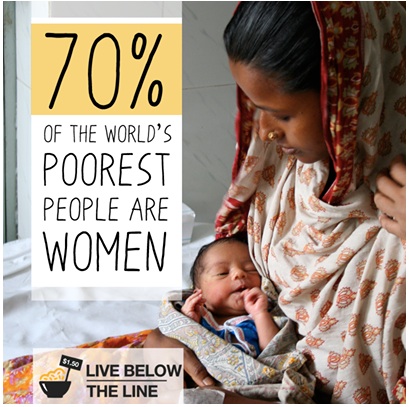
Live Below The Line is a campaign created to change the way that people think about extreme poverty. The World Bank defines extreme poverty as living on under $1.25 per day, something that 1.2 billion people in the world currently survive on. These are the poorest of poor, and to truly understand what it means to live that way, you need to experience it. Five World Moms took on the challenge, and in each of our own words here is what we found:
Hannah Ashton – USA
I’m six months pregnant, which is hard enough in itself, particularly when my day is spent running round after my toddler, Maggie, and I hadn’t been sleeping very well, for just one day, I thought I would give the challenge a go. I could, of course, always stop, unlike the many pregnant women around the world, who sadly don’t have that option.
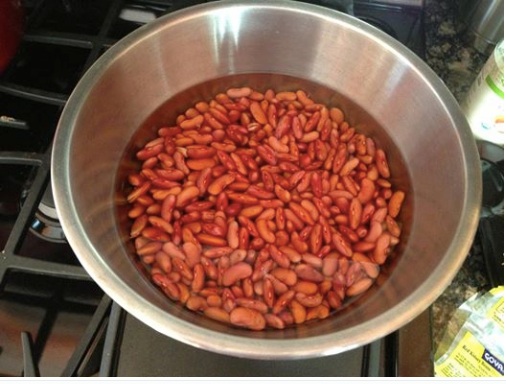
The day started well enough with oatmeal made with water, 2/3rds of a banana and a mug of green tea. I used the tea bag to make 3 more mugs of tea which were like green water by the third and fourth cup. This filled me up until lunchtime which was a kidney bean and carrot burger, using the recipe from “a girl called jack blog”, 1 oz. rice and two flatbreads. Immediately after eating lunch I was still hungry. It was a small amount of food and there was no more food until dinner. I generally eat dinner with my husband when he gets home from work at 8pm. Instead I was too hungry so I ate at 5:30 with Maggie when she ate her dinner. My dinner was a kidney bean, carrot, onion and tomato stew with 2 oz rice. Even though I had soaked the kidney beans overnight, boiled them for 20 minutes and let them simmer in the stew for an hour, they were still very hard, but I ate it all anyway.
Later, as my husband cooked himself a delicious looking steak sandwich, a radish salad and drank a glass of red wine, I cooked up my two remaining flatbreads and made a fresh mug of green tea. “It’s like we’re living in two different worlds tonight,” he commented.
At 3 am I woke up with a splitting headache and was extremely hungry. I came downstairs, took two Tylenol and had a large piece of the blueberry pie that was left over from the weekend. The next day, it is fair to say I really struggled even though the challenge was over. The LBTL diet of the day before had really affected me. I rang my husband at work in tears asking him to please come home from work earlier to help with Maggie’s bedtime routine as I didn’t have the energy to do it by myself (I have a nightly battle with teeth brushing but usually take it in my stride). I had to cancel a play date with a friend and I went to bed at 8:30. It was only by Wednesday, that I felt back to normal.
I’ve not known what it’s like to be really hungry before; I’ve never dieted or not had enough money for food. I can’t say if I was affected by this challenge more than others because I’m pregnant. In a few years, I plan to revisit the challenge and complete the five days. What I can say is the experience has profoundly affected me. No one should have to function on such little calories and the thought of a child having to go through this, especially, is completely heart breaking.
| Item |
Total cost ($) |
Per day ($) |
| 1 lb. dried kidney beans |
1.69 |
0.34 |
| 1 lb. white rice* |
1.07 |
0.21 |
| 24 oz. tomato sauce with basil and garlic |
1.00 |
0.20 |
| 5 instant apple and cinnamon oatmeal* |
0.89 |
0.18 |
| 1 lb. carrots |
0.66 |
0.13 |
| 1 lb. flour* |
0.65 |
0.13 |
| 1 lb. bananas |
0.59 |
0.12 |
| 10 green tea bags* |
0.50 |
0.10 |
| 0.5 lb. onions |
0.33 |
0.07 |
| Total |
7.38 |
1.48 |
*items bought with a friend so we could split the cost.
Deborah Quinn- Abu Dhabi
When I agreed to try living below the line for a day, I mostly had in mind trying to teach my kids about their relative privilege—that their status as “picky eaters” was in fact the ultimate luxury, given that a person only refuses one kind of food if he knows that another sort of food is available. In Abu Dhabi, where I live, $1.50 converts to about 5 dirhams, or about the cost of a large loaf of bread. I had decided that I would make a sort of vegetable, and as I selected one onion from India, one potato still crusted with dirt from Lebanon, two small carrots grown here in the UAE, I wondered whether the people who picked the vegetables were themselves living below the line in those countries.
My “soup” consisted of a chopped carrot, onion, and potato simmered in water with a bullion cube for flavor. I confess that I used my immersion blender to puree the vegetables when they were soft, so that the soup felt a bit thicker and more filling. I used another onion and some dried staples—lentils and rice—to make mejadra, a dish from Ottolenghi’s Jerusalem cookbook. Families all over this region have their own mejadra recipe, each with slightly different proportions of spices, but the dish is quintessential feed-a-lot-of-people-on-not-much: fried onions stirred into lentils and rice. With my soup and my lentils and rice, I wasn’t hungry, but I wasn’t terribly satisfied, either: I wanted sugar, I wanted coffee, I wanted fresh green lettuce and ripe tomatoes.
I thought about the migrant workers in Abu Dhabi, who come from desperately poor towns in places like Goa, Kerala, Islamabad, or Peshawar, who work here for a pittance but are nevertheless making more money than they would at home. What are they filling their bellies with, in order to face another day of work in Abu Dhabi’s broiling sunshine? And given the world’s insistence—and reliance—on global capitalism, with its relentless emphasis on bottom line profits, how will we ever bring about permanent change, so that boullion soup is something you eat only when you have an upset tummy and not because it’s all you can afford?
Alison Fraser- Canada
My first attempt at living below the poverty line was much more challenging than I had anticipated. I had visions of making creative dishes to spread the $1.50 as thin as possible. It didn’t work. The bottom line is that $1.50 doesn’t get you much in terms of food in Canada. My meals consisted of small spooned amounts of peanut butter just to keep me going. I tried to drink lots of water to conquer the hunger, but that didn’t help much either. Fruit and vegetables were much too expensive to include in my meal plan, as winter in Canada results in costly produce.
In the end, my mind kept drifting back to my time in Tanzania where I met women who lived below the poverty line every single day. Some of these women were sick, and were forced to choose between their life and the needs of their children, as many HIV medications can only be taken with food. I can’t even imagine having to make that choice. So unfair.
This was an incredibly emotional experience and next year, I am determined to do it for more than just one day.
Elizabeth Atalay- USA
I could feel the color rising in my cheeks as the cashier called over the store manager. I had $7.50 to spend for my five day Live Below The Line food budget, and the misleading sale sign had just caused my order to ring up 65 cents over my carefully calculated bill. I could see them exchanging exasperated looks as I explained that the (crappy) instant coffee I had purchased was advertised for less than it rang up. The hunger pangs I felt later in the day were not what stuck with me from this challenge, those took place in the privacy of my home. It was the sting of humiliation as the line of people behind me built up while I caused a scene over 65 cents at the grocery store. I was mortified, and imagined having to swallow my pride like this on a regular basis. I can describe the tightening in my chest, the flush of my cheeks, and acid rising in my throat better than I can explain the emotion that moment made me feel…powerless, small, ashamed? The manager explained that the sale was only for purchases of $25 or more. They said they would give it to me anyways since I had told them, without going into detail, that I only had $7.50 to spend, and it was false advertising. As much as I wanted to save face, I certainly wasn’t going to take the time to try to explain that I was doing it as part of the Live Below The Line campaign then, with the impatient crowd waiting for their turn. I plan to take the full 5 day challenge when it officially runs between April 28- May 2nd. After doing it for just one day I can see how impactful it is in deepening empathy, and understanding on the issue of hunger, and what it means to live in poverty.

What $7.50 bought after sales, coupons, and making a scene.
Jennifer Burden- USA
They (LBL) got me. Big time. I’ve read about poverty, tweeted about it, gone to the far reaches of Uganda with the Shot@Life campaign, where I met children who are fed their one and only meal a day at school. I’ve also donated to local food banks, here, in NJ, USA. I felt like I knew how important it is that there are people near and far who go hungry and that 1.2 billion people on the planet live below the poverty line, and that I was doing enough. So, like a “know-it-all teenager” I naively went into this challenge thinking that I wouldn’t really learn much. Boy, was I wrong. Really wrong.
Originally, I signed up for a day of the Live Below the Line Challenge, and then, by Day 2, I had
committed myself to the full challenge — 5 days. I thought I’d be celebrating on Day 5 that I had gotten that far, but there was a whole transformation. Check out my video from Day 5:
Every global health advocate, college student, mom, dad, teen, blogger, journalist, CEO, teacher, living human who is living above the poverty level, etc., should consider experiencing the challenge. The impact on eliminating world poverty would be profound if even more people were involved. It would be incredible. The challenge was a REAL eye-opener and new motivator for me. You’ve gotta do this!!!!!
Visit our World Moms Blog Team Live Below The Line Page to benefit UNICEF, where you can donate to help those less fortunate, or see the impact we’ve already made in the challenge.
The Live Below The Line Challenge will run from April 28th to May 2nd and you can
sign up here as an individual or team.
Will you take the challenge?This is an original post written for World Moms Blog by Elizabeth Atalay, Jennifer Burden, Hannah Ashton, Deborah Quinn, and Alison Fraser.

Elizabeth Atalay is a Digital Media Producer, Managing Editor at World Moms Network, and a Social Media Manager. She was a 2015 United Nations Foundation Social Good Fellow, and traveled to Ethiopia as an International Reporting Project New Media Fellow to report on newborn health in 2014. On her personal blog, Documama.org, she uses digital media as a new medium for her background as a documentarian. After having worked on Feature Films and Television series for FOX, NBC, MGM, Columbia Pictures, Warner Brothers, 20th Century Fox, and Castle Rock Pictures, she studied documentary filmmaking and anthropology earning a Masters degree in Media Studies from The New School in New York. Since becoming a Digital Media Producer she has worked on social media campaigns for non-profits such as Save The Children, WaterAid, ONE.org, UNICEF, United Nations Foundation, Edesia, World Pulse, American Heart Association, and The Gates Foundation. Her writing has also been featured on ONE.org, Johnson & Johnson’s BabyCenter.com, EnoughProject.org, GaviAlliance.org, and Worldmomsnetwork.com. Elizabeth has traveled to 70 countries around the world, most recently to Haiti with Artisan Business Network to visit artisans in partnership with Macy’s Heart of Haiti line, which provides sustainable income to Haitian artisans. Elizabeth lives in New England with her husband and four children.
More Posts