by Katinka | Jul 28, 2014 | 2014, Adoption, Adoptive Parents, Being Thankful, Belgium, Birth Parents, Childhood, Contest, Cooking, Cultural Differences, Discipline, Ethiopia, Family, Food, Health, Kids, Life Balance, Motherhood, Multicultural, Nutrition, Parenting, Siblings, World Motherhood, Younger Children
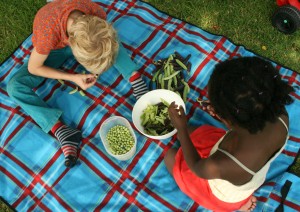 I’ve yet to meet a mom who is not monitoring her kid’s eating habits. Some might even be obsessed over it, others just make sure their kids eat enough or don’t overeat. Food can be filled with cultural, health or moral values and seems an important subject in most families I know.
Every single one of the moms I know, seems to have her personal truth about food, or is at least searching for it. I know quite a few moms who vouch for strict vegetarianism, sugar free, all organic, low-carb, macrobiotic, low-fat or a mix of those. Others cook without lactose, gluten, sugar, eggs, nuts, soy and other allergy or intolerance boosters, by necessity or by conviction. But there’s also quite a number who just like to stick to their grandmothers’ favourite mashed potatoes with pork chops and piccalilli, because that’s what they were raised with.
Myself, I mix quite a bit of the above. My life is all about compromises. As a student, I used to be vegetarian, but now we eat vegetarian for only about 3 days a week. I also restrict the amount of lactose, because of my daughter’s (mild) intolerance. I make sure they eat at least one piece of fruit per day, but most days it’s two or three. And because we are Belgian, we have our two-weekly take out of ‘French’ fries, which originally came from Belgium. Or maybe even from Flanders.
I would not call myself obsessed, but I do keep a detailed mental track of what my kids eat in a day, and try to compensate by the 80/20 rule I adopted from a fellow World Mom: if they eat healthy for 80% of the time, that will make up for the 20% they eat junk.
When a mom has found her personal truth about food, obviously she wishes for her kids to eat by it; which they aren’t likely to do without a struggle. Not after they’ve tasted the Belgian fries, they won’t.
When my oldest was younger, I used to think I had it all together though. He ate whatever vegetable I gave him and his favourite dish was Brussels’ sprouts. I even recall quite some occasions on which I, the former vegetarian, bribed him into eating his meat by promising him an extra stem of broccoli. After a while, even the meat didn’t pose a problem anymore. He would eat whatever I served him.
Those good old days are over now.
It all started when our daughter arrived, age 2.5. She came from Ethiopia and was not used to our diet, not mentally, but also not physically. The first time I served her something green, she just threw it on the floor. Not out of a whim, but because she was clearly convinced it was not edible. She even tried to take it out of my mouth. Having been fed mashed dishes all her life, she was also not used to chewing. She did like bread and she did her best chewing it, but we had to take her to a physiotherapist to sooth her jaw pains. So we customized our cooking to her and introduced new stuff every once in a while. The one dish that never posed a problem was, indeed, our Belgian fries.
Meanwhile, our son, then 5, seemed to finally grasp that there was such a thing as rejecting food. I don’t know whether it was his sister’s example, the TV shows he started watching, his classmates or just normal evolution, but he started getting more selective each month. He also ate with his hands more often, just like his sister was used to. I went from having one kid with excellent eating habits to two picky, messy eaters.
After two years of convincing myself it was just a phase, this year I started implementing some strategies to get them to eat more balanced. Ultimately, what they were eating wasn’t all that bad but I was getting tired of the drama and the struggle to get them to eat what I believed was good for them. And most of all, I wanted them to develop the discipline to choose healthy by themselves, and not just because I ordered or rewarded them.
First, I tried the Yucky List. A colleague of mine had it at home, and it worked perfectly for her family. The idea is that it is only natural to have different tastes and that you don’t need to like everything. The concept is that each family member can have three dishes they really don’t like, on that list. When it is served, they are allowed to refuse it and have bread instead. Or hope for a mom who cooks two different dishes in advance. Of course over time, you can change your preferences but when a fourth dish you don’t like is served to you, you have to eat it, before you can put it on the list (replacing another).
It seemed promising but after a few weeks, the kids started to change their list about every other day. Way too many family dinners were filled with ‘I will put this on my yucky list for sure!’ and a lot of moaning and struggling, which didn’t really lighten the mood as I had hoped it would. We might pick it up again when they are older but for now, it doesn’t work for us.
After that, I changed my strategy to handing out a Yucky Coupon, Bah Bon in Dutch. I borrowed the idea from a friend who used to do cooking for youth camps. At these camps, each of the kids was given one Bah Bon for the duration of the camp. They could hand it in if they didn’t want to eat one of the meals that was cooked for them. Of course, they only could do that once. And the ones who still had the Bah Bon at the last day of camp, could hand it in, in exchange for ice cream.
So that’s how we do it now and it works like a charm! The kids both have their weekly Bah Bon, which is very conveniently posted on the magnetic wall next to the dinner table. Whenever they complain about dinner (or lunch or breakfast), we just point to their Bah Bon and remind them they can hand it in if they wish. No strict words, just giving them a choice and a visual reminder. Our son hasn’t missed his Sunday ice cream once. Our daughter has, once, and she’s not likely to miss another.
Of course, this will only work if ice cream is really a treat for your kids. Mine don’t really get candy or other sweets that often, so for them this works perfectly.
And of course, it’s still kind of a bribe. But I like it much more than the daily ‘If you don’t eat it, you can’t have desert’ bribe. For one, because we don’t have desert every day. Second, because they have to manage the discipline to work all week for their ice cream, rather than getting an instant reward. Third, because I don’t exactly sell the ice cream as a bribe or reward but rather as an interpretation of the 80/20 rule: if they eat healthy and balanced all week, it is all right to have something unhealthy every once in a while.
Most importantly, I like this system because the kids themselves really like this system. They like being in control of what they (don’t) eat without any pressure from us, and most of all they absolutely love our weekly ceremony when they officially hand in the Bah Bon they saved in exchange for their well deserved treat.
Do you have a personal or cultural take on the food you serve your kids? And do you need similar strategies to convince them about it?
This is an original post to World Moms Blog by K10K from The Penguin and The Panther.
The picture in this post is credited to the author.
If you ask her about her daytime job, Katinka will tell you all about the challenge of studying the fate of radioactive substances in the deep subsurface. Her most demanding and rewarding job however is raising four kids together with five other parents, each with their own quirks, wishes and (dis)abilities. As parenting and especially co-parenting involves a lot of letting go, she finds herself singing the theme song to Frozen over and over again, even when the kids are not even there...
More Posts

by Tara Bergman (USA) | Jul 25, 2014 | 2014, Kids, Motherhood, Parenting, Tara B., Transportation, Travel, USA, Vacationing, World Motherhood, Younger Children
 It was the final leg of our most recent trip. It should have been a 5 ½ hour direct flight, but due to weather delays, it ended up being 8 hours inside a plane. My husband and I were traveling with our sons, ages 8 and 4, and we were seated on opposite sides of the same row. I was seated with my 4 year old and an older woman. In front of us was a family: mom, dad, 4 year old boy, and a girl approximately 15 months old on the mom’s lap. It was an evening flight, and the kids in front of me were in pj’s, clearly indicating the parents’ hope that they would fall asleep upon take off. Things couldn’t have gone more differently. (more…)
Tara is a native Pennsylvanian who moved to the Seattle area in 1998 (sight unseen) with her husband to start their grand life adventure together. Despite the difficult fact that their family is a plane ride away, the couple fell in love with the Pacific Northwest and have put down roots. They have 2 super charged little boys and recently moved out of the Seattle suburbs further east into the country, trading in a Starbucks on every corner for coyotes in the backyard. Tara loves the outdoors (hiking, biking, camping). And, when her family isn't out in nature, they are hunkered down at home with friends, sharing a meal, playing games, and generally having fun. She loves being a stay-at-home mom and sharing her experiences on World Moms Network!
More Posts

by Meredith (USA) | Jun 27, 2014 | 2014, Childhood, Family, Home, Kids, Life Lesson, Motherhood, Parenting, Siblings, Toys, USA, World Motherhood, Younger Children
 Summer break is upon us once again. With summer, comes sleeping in, summer vacations, and eating sweet watermelon every day. However, there is something else that sneaks its evil little way into summer as well…. (more…)
Meredith finds it difficult to tell anyone where she is from exactly! She grew up in several states, but mainly Illinois. She has a Bachelor of Science degree in Elementary Education from the University of Illinois at Champaign/Urbana which is also where she met her husband. She taught kindergarten for seven years before she adopted her son from Guatemala and then gave birth to her daughter two years leter. She moved to Lagos, Nigeria with her husband and two children in July 2009 for her husband's work. She and her family moved back to the U.S.this summer(August 2012) and are adjusting to life back in the U.S. You can read more about her life in Lagos and her adjustment to being back on her blog: We Found Happiness.
More Posts

by Susan Koh | Jun 26, 2014 | 2014, Life Balance, Me-Time, Motherhood, Singapore, Susan Koh, Working Mother, World Motherhood
Keeping The Joy
I may be a working mom balancing between family and work, but I’m certainly no super mom. In Singapore, where the population is not reproducing fast enough, our government has gone to great lengths to encourage couples to get married and start a family. And after the ladies have given birth, they are encouraged to return to the work force, as human capital is pretty much our only “resource” in the nation. So like a huge majority of women, I took on a role as a full-time working mom and promptly returned to work after my maternity leave ended after four months.
Unlike most parents who leave their child in the care of their parents or in-laws, my daughter, Sophie, went to infant care at merely four months old. This was after weighing our options very carefully then, as we didn’t live with or near our parents, and we didn’t want to have a live-in helper or nanny. It wasn’t easy initially, and I can’t even remember how many sleepless nights I had when I questioned if I made the right decision to return to work, especially when Sophie fell ill or when I saw her cry when I dropped her off at the childcare center. But today, when I see how Sophie has blossomed to an independent, sociable and sensible pre-schooler, it makes me feel happy that she’s turned out better than what we prayed for and expected.
Being a working mom certainly has its challenges and the one that tops the list for me is not having enough time in a day. So here are some tips on how I manage it without losing my joy.
You Can Do Anything
Be fully present
Once I am back from work, I’m 100% devoted to being a mom. I’m thankful that I have supportive bosses and colleagues who understand this, so they never make demands that I have to put in extra hours unless it’s crunch time in the office.
You know what they say about quality time being more important than quantity time? And for working moms it’s so true because, otherwise, we’ll always be beating ourselves up about the lack of time spent with our kids. Screen time is kept to a minimum, so that we spend good quality time together.
And maybe because Sophie is a girl, we enjoy spending time before bedtime sharing how our day went, reading books or even playing games when we feel up to it. But I’ll be totally honest and also say that we do use the TV and iPad as a nanny at times, especially when we have chores to do or when we ourselves just want a mental break on exhausting days.
Train your kids to be independent
With no help at home, Sophie is naturally trained to pick up after herself. When she was younger, we’ll give her little rewards like stickers as an incentive when she keeps her toys, folds the laundry and takes her dishes to the kitchen.
As she gets older, she’s learned that she has a responsibility to help around the house. Of course, I’ll still reward her with praises and appreciation, and she’s come to learn that she needs to do so without expecting anything in return. And these days, she’s on auto pilot-mode and will chip in around the house.
Manage your expectations
I used to strive to do everything perfectly as a mom and had a problem letting go. But when you only have that many hours in a day, I’ve learnt that I need to let go if I want to keep my sanity and my joy. So that means, closing an eye to the unfolded laundry, the times when I can’t cook dinner for the family, the mess at home, and yes, even the dirt at home.
I could get hung up about all these things and stay up late into the night to finish the chores and start the whole routine again the next day, but I know I’ll also feel very miserable and start to loathe it all. So my mantra is simply to do what’s necessary and be happy. After all, as moms, we can do anything but not everything.
Besides, when I get stressed over all the chores, my husband hears no end of complaining and which husband appreciates that? So for him, his mantra is, a happy wife, a happy life.
Schedule me-time
I know it’s crazy to even think that working moms even have any me-time. But it is absolutely crucial to find time for myself to recharge. My me-time can be anything from going for a jog, to having a nice haircut, or even a catch up session with my girlfriends. This year, I’ve started a new hobby, Project Life, and it’s so therapeutic to look back at my life in photos and pen down the memories behind them. Plus, it’s a way of recording life so that nothing slips by and a reminder for me to cherish every moment.
So there you have it – some of my sanity tips for working moms on how to keep your joy. It’s not easy being a working mom, and I know that the person who makes it possible is my dearest hubby who is ever supportive of my decision. He’s every bit the modern husband and daddy in the 21st century who is not afraid to roll up his sleeves to do his part in parenting but also to chip in around the house. And while, he shakes his head when I tell him I still have hopes to be a domestic goddess, I know he’s glad that I’m working to bring in the dough for the family so that we can enjoy our family holidays and have my own shopping money and savings.
Are you a working mom too? If so, what are your top tips to keeping your joy as a working mom?
This is an original post by Susan Koh for World Moms Blog. She’s loves to travel and blogs passionately about parenting, marriage and relationship and leading a healthy life at www.ajugglingmom.com.
Photo credit to the author.
Susan is from Singapore. As a full-time working mom, she's still learning to perfect the art of juggling between career and family while leading a happy and fulfilled life. She can't get by a day without coffee and swears she's no bimbo even though she likes pink and Hello Kitty. She's loves to travel and blogs passionately about parenting, marriage and relationship and leading a healthy life at A Juggling Mom.
More Posts

by Susie Newday (Israel) | Jun 25, 2014 | 2014, Israel, Life Balance, Motherhood, Parenting, Relationships, Susie Newday, World Moms Blog, World Motherhood

I feel like a tightrope artist struggling to walk the fine line of life.
Not just a lone tightrope artist finding her balance without an audience but one who is trying to navigate in between a myriad of other tightrope artists, each of us attempting not to fall down. Life really is a balancing act, and not just because of all the daily tasks we each have loaded on our plates.
Life is a gentle precarious balance between right and wrong, love and hate, acceptable and unacceptable, pleasure and pain, righteousness and irreverence, wants and needs.
Every single thing we say and do has the potential to hurt someone or to make them feel happy. The potential to be viewed as right or wrong. The potential to be hailed and brilliant or to be regarded as dumb. The tricky part is that you can perceive something or mean something one way and it can be perceived in a totally opposite way.
And when then happens you get blindsided and knocked down, yet somehow you have to find the strength to get back up on that fine line of life and regain your composure and balance. It’s not an easy feat since it can happen quite often and each time you fall or get pushed over, you are left with invisible scars that leave you more afraid and more vulnerable.
I think of all the times I have caused others pain and all the times I have been hurt. I worry about the scars I’m inadvertently inflicting on my children because I’m not skilled enough to stay balanced on that fine line and because I stray from that fine line time and time again. But I’m human and need to learn to forgive myself.
Walking that fine line is scary.
How often do you fall down?
This is an original post to World Moms Blog by our contributor, Susie Newday in Israel. You can find her on her blog New Day New Lesson.
Photo Credit: Tauno Tõhk / 陶诺 ? Flickr Creative Commons
Susie Newday is a happily-married American-born Israeli mother of five. She is an oncology nurse, blogger and avid amateur photographer.
Most importantly, Susie is a happily married mother of five amazing kids from age 8-24 and soon to be a mother in law. (Which also makes her a chef, maid, tutor, chauffeur, launderer...) Susie's blog, New Day, New Lesson, is her attempt to help others and herself view the lessons life hands all of us in a positive light. She will also be the first to admit that blogging is great free therapy as well. Susie's hope for the world? Increasing kindness, tolerance and love.
You can also follow her Facebook page New Day, New Lesson where she posts her unique photos with quotes as well as gift ideas.
More Posts - Website
Follow Me:


by Elizabeth Atalay | Jun 24, 2014 | 2014, Africa, Awareness, Babies, Birthing, Ethiopia, Health, Humanitarian, Maternal Health, Millennium Development Goals, Motherhood, Newborn Health, Pregnancy, Save The Children, Social Good, Third Eye Mom, Travel, World Moms Blog, World Voice

We had just spent the night at the source of the Blue Nile River. Lake Tana sits in Bahir Dar, Ethiopia, and as our caravan of Land Cruisers wove through the countryside from Bahir Dar to Mosebo I took in deep gulping breaths of sweet fresh Ethiopian air. The lush colors of our surroundings looked to me like they had been enhanced in Photoshop in the way that everything seemed to pop. How could I feel this emotional connection to place that was never mine? A place I had never been?
Though this is my first time in Ethiopia, the verdant landscape brought me back to other rural parts of Africa I’d traveled through in my youth, similar topographies that had stayed with me ever since. This time I’d returned to the continent as a new media fellow with the International Reporting Project to report on newborn health. World Moms Blog Editor Nicole Melancon of ThirdEyeMom is a fellow on the trip as well, and last week wrote about our initial overview of maternal and newborn health in Ethiopia. Now we were heading to one of the villages housing a Health Post, which serves the local and surrounding population of approximately 3,500 people.
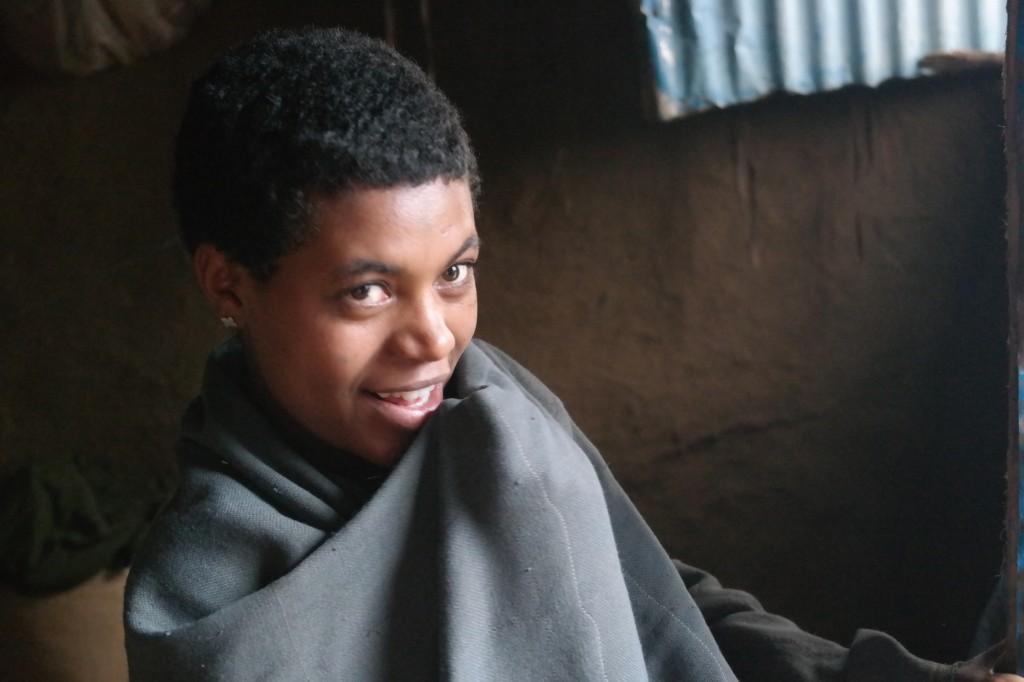
Mosebo Village is part of Save The Children’s Saving Newborn Lives program, and as such is looked to as a model village in the Ethiopian Government’s plan to reduce maternal and newborn mortality. Mosebo is a rural agrarian community that produces wheat, teff and corn. There I met seven-year-old Zina whose mother, Mebrate was about to give birth. Through our translator Mebrate estimated her age to be around 26, and told us that Zina was her first child. For economic reasons she and her husband had waited to have a second. When she had Zina, Mebrate had gone to her parent’s home to give birth, as women in Ethiopia often do. It is estimated that 80% of Ethiopian mothers will give birth in their home, often without a trained health care attendant. Towards the end of Mebrate’s first pregnancy she went to live with her parents as her family instructed, until after the baby was born. In that way her mother could help her deliver, could care for her and the baby, and feed her the traditional porridge after birth. Although there were no complications during her delivery, sadly, many young mothers giving birth at home are not as fortunate. The time period during and around birth are the most vulnerable for the lives of both the mothers and babies. The Saving Newborn Lives Program aims to reduce maternal and newborn mortality beginning with awareness programs and antenatal care on the local level at Health Posts like the one we visited in Mosebo.
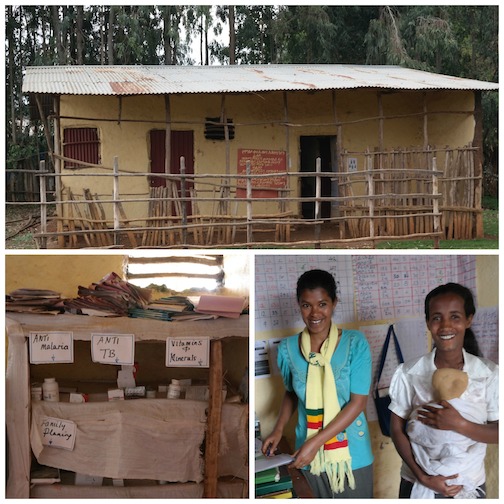
The Mosebo Health Post and Health Extension Workers
We had met Tirgno and Fasika, the two Health Extension Workers at the Mosebo Health Post earlier that day as they showed us the two room interior, and explained their role in improving maternal and newborn health. They work to raise awareness in the community about the importance of antenatal care, and the potential dangers of giving birth at home for both mother and child. Newborn health is interdependent with maternal health, and the most prevalent causes of newborn mortality, infection, Asphyxiation, pre-maturity or low birth weight, and diarrhea can often be avoided with proper care. These days in Mosebo after receiving antenatal care at the Health Post women are then referred to the regional Health Center for deliveries.
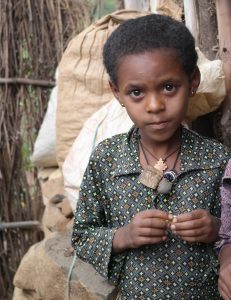
Zina shyly smiled when we ask her how she felt about having a new sibling, she stood straight and tall listening intently as we asked her mother about the babies’ arrival. When Mebrate goes into labor this time, with her second child, she will embark on the walk along rural dirt roads for around an hour to the nearest Health Center to give birth.
Elizabeth Atalay is reporting from Ethiopia as a fellow with the International Reporting Project (IRP). This is an original post written for World Moms Blog.
You can follow all IRP reports by World Moms Elizabeth Atalay & Nicole Melancon at #EthiopiaNewborns

Elizabeth Atalay is a Digital Media Producer, Managing Editor at World Moms Network, and a Social Media Manager. She was a 2015 United Nations Foundation Social Good Fellow, and traveled to Ethiopia as an International Reporting Project New Media Fellow to report on newborn health in 2014. On her personal blog, Documama.org, she uses digital media as a new medium for her background as a documentarian. After having worked on Feature Films and Television series for FOX, NBC, MGM, Columbia Pictures, Warner Brothers, 20th Century Fox, and Castle Rock Pictures, she studied documentary filmmaking and anthropology earning a Masters degree in Media Studies from The New School in New York. Since becoming a Digital Media Producer she has worked on social media campaigns for non-profits such as Save The Children, WaterAid, ONE.org, UNICEF, United Nations Foundation, Edesia, World Pulse, American Heart Association, and The Gates Foundation. Her writing has also been featured on ONE.org, Johnson & Johnson’s BabyCenter.com, EnoughProject.org, GaviAlliance.org, and Worldmomsnetwork.com. Elizabeth has traveled to 70 countries around the world, most recently to Haiti with Artisan Business Network to visit artisans in partnership with Macy’s Heart of Haiti line, which provides sustainable income to Haitian artisans. Elizabeth lives in New England with her husband and four children.
More Posts